It seems to be that everyone has that one coworker that they can’t seem to get along with, but here are a few tips to help you along the path of dealing with a difficult coworker.
Today’s post is by Kourtney Whitehead, author of Working Whole. This is an archived guest post, originally published in 2020.
We’ve all worked with someone who makes us roll our eyes, cringe when we see their name in our inbox, or dread an upcoming meeting. A difficult co-worker can be unavoidable, but we can gain new perspective on how to work with them.
If there’s one thing I’ve learned from coaching hundreds to people through job changes, is that difficult coworkers can undermine your career trajectory as well as job satisfaction. Should you find yourself in this situation, here are five tips to make sure you’ve done all you can to turn these negative workplace interactions into productive and positive ones.
Look for root causes. When working with a difficult colleague, we tend to let our negative emotions cloud our ability to make clear observations. This can be compounded if we find ourselves surrounded by others that are quick to offer their own assessment of the person or explanations for the friction between you. Resist the urge to jump to conclusions about what is driving the negative behavior. Spend time learning as much as you can about the life experiences and background of the difficult colleague. If you can engage in a firsthand discussion, that is preferred. But you can learn a lot, even from a distance, if you are paying attention without the chatter of preconceived opinions running through your head. Observe the behavior and question the assumptions you’ve made about it. Behaviors that were previously interpreted as a desire to outsmart everyone, may be masking a fear of being exposed or caught unprepared. Be on the lookout for these kinds of discoveries and shifts in perspective.
https://i0.wp.com/www.thoughtleadersllc.com/wp-content/uploads/2019/06/20200203-Annoyed-Woman-e1560880296424.jpg?fit=1281%2C1416&ssl=114161281Trevor Joneshttps://www.thoughtleadersllc.com/wp-content/uploads/2022/04/logo.pngTrevor Jones2025-11-17 08:02:262025-11-17 03:25:19Five Tips to Deal With a Difficult Coworker
Technology has been an integral part of our lives for years now, but what happens when technology starts to make doing work even more difficult.
Today’s post is by Dr. Brian Smith, author of Individual Advantages. This is an archived guest post originally published in 2019.
Patience is waning in all aspects of human interaction; impatience is being felt throughout the whole of society. Society today—today being defined as the late 1980s to the present—has undergone a rapid evolution in information collection, manipulation, storage, and presentation. Life has been transformed into an environment where information is readily available on demand.
As technology has become the focal point for most of the developed world, costs for said technology have decreased rapidly—making them more readily available for people of all ages. As businesses and humans have started to rely more heavily on technology, our personal expectations have been raised across the board in every aspect of our lives. It is this fundamental change in expectation where I identified the topic for my dissertation (in 2001) long before it became a common human problem: Technology Induced Attention Deficit Disorder (TIADD).
When I argued my dissertation about TIADD, I was designing and implementing ERP systems and working with companies to manage the organizational change being caused by technology’s effect on humans. Internet access rates were increasing, and you could get a 128k baud rate at home and 1,544k baud rate at work.
From 2001 to now, we have seen data speeds increase more than fiftyfold. We have also expanded the influence of technology from the workplace, to home, to our back pocket. This transformation in data delivery has created the constant need for immediate gratification of knowledge; we need answers this instant. This need for immediate gratification has a negative effect on human relationships in all aspects of human interaction: from quality to quantity.
Innovation thrives on meaning, but superficial innovation talk can lead to stress and fatigue, and thus less creativity, in a company culture.
Today’s post is by Alf Rehn, author of Innovation for the Fatigued. This is an archived post, originally published in 2020.
It is common knowledge that talking the talk is easier than walking the walk. What we still tend to miss is that sometimes, the talk can actually hinder the walk, and in my research I’ve found that this holds particularly true in the field of corporate innovation. Here, excessive and repetitive innovation talk can trigger two issues that are harmful to organizations but have received scant attention: Innovation stress and innovation fatigue. Both can act as powerful barriers to take action on and engage with innovation, yet managers often respond to these by even more innovation talk. This can in turn create a vicious circle, one which can turn an organization’s creative culture toxic.
What, then, is innovation fatigue? In brief, it stands for a situation where invocations of innovation and exhortations for involvement with the same no longer creates engagement but rather tedium and tension. As an example, in one major corporation I worked with, a mid-level manager could easily recall at least 12 separate ongoing innovation initiatives in the organization, and when I asked him how many past such he could recall, he gave up after about 20, but insisted that there had been countless more. This was only the initiatives. He could also recall numerous innovation consultants, speeches from top executives about the importance of innovation, and various creativity workshops with “all kinds of silly games”. He grimaced throughout the listing of these.
Friction can be helpful. Without it, we would slide around uncontrollably. But too much friction can prevent us from moving forward or changing direction.
Today’s post is by James Millar, author of Building Bridges. This is an archived post originally published in 2019.
Friction can be helpful. Without it, we would slide around uncontrollably. But too much friction can prevent us from moving forward or changing direction.
Sir Isaac Newton observed that a body at rest stays at rest unless it is acted upon by an unbalanced force. But this is not just true for physical objects. We have all experienced friction in other parts of our lives. For instance, when we procrastinate or make excuses, we may not apply enough force to overcome friction inherent in the status quo.
For more than a decade, I’ve seen the benefits that executives can derive from ongoing, authentic conversations with peers. And I have come to believe that every professional should belong to at least one network of trusted peers who meet regularly to exchange ideas, explore new perspectives, and maybe even share a few laughs. Yet few professionals seem to enjoy the benefits such a group can offer. I’ve often wondered why. And I’m starting to think it comes down to friction.
https://i0.wp.com/www.thoughtleadersllc.com/wp-content/uploads/2025/10/20251026-Annoyed-Man.jpg?fit=1920%2C1280&ssl=112801920Trevor Joneshttps://www.thoughtleadersllc.com/wp-content/uploads/2022/04/logo.pngTrevor Jones2025-10-27 08:02:272025-10-26 22:54:485 Sources of Friction That Impede Peer Conversations—And How to Overcome Them
Dogs can teach us a thing or two. Have you ever thought about how to apply canine behavior to your leadership style? There are interesting approaches your dog would encourage you to try if you want to be a better leader.
Today’s post is by Krissi Barr, co-author of The Fido Factor: How to Get a Leg Up at Work. This is an archived post originally published in 2018.
If you’re like most Americans you love dogs. Unlike a goldfish won at a church festival, people form deep and meaningful relationships with their canine pals.
So what does any of this have to do with leadership? As it turns out, a lot.
Leadership is more art than science, and more emotion than logic. The actions and behaviors that roll up to form an effective leader, when you boil them down, are actually pretty simple. And they are very similar to why we love dogs so darn much.
Dogs are faithful, inspirational, determined and observant. These four core qualities—the Fido Factors—are the basis of the unexpected reason why we can learn leadership lessons from dogs.
Take a dog’s tail. It’s a crystal clear barometer of how they are feeling. Happy and it wags like crazy, guilty and it curls under out of shame. Dogs are simply incapable of hiding how they feel. They can’t lie.
Not so much with humans. Like a professional poker player, most of us have gotten very good at hiding our emotions in the workplace. And while there are times when that’s a good thing, more often than not we’d benefit from wagging our tail a little more.
Dogs don’t hide how they feel. Take a typical day coming home after work. There to greet you at the front door is your dog. His smiling face, a slobbery tennis ball in the mouth and a wagging tail tell you in no uncertain terms how happy he is to see you. This wear-it-on-the-collar approach to life is one of the reasons we love them so much.
Great leaders at work do the same. Well, maybe not the slobbery tennis ball. They aren’t afraid to open up and show emotion. As a result, coworkers feel a stronger connection to the cause.
Ask yourself this: when one of your associates comes back to the office after a long day in the field, how do you react? Do you wag your tail and celebrate their successes or do you hide your tail in your office so no one can see how you really feel?
https://i0.wp.com/www.thoughtleadersllc.com/wp-content/uploads/2025/10/20251021-Dog.jpg?fit=1920%2C1442&ssl=114421920Trevor Joneshttps://www.thoughtleadersllc.com/wp-content/uploads/2022/04/logo.pngTrevor Jones2025-10-21 08:02:382025-10-21 01:38:41Be a Better Leader by Wagging Your Tail
Today’s post is by Patrick Stroh, author of Business Strategy; Plan, Execute, Win! This is an archived post that was originally published in 2014.
After 20 plus years of life in corporate America, it was time for a bit of a sabbatical. Or maybe better said, it was time to knock some stuff off my bucket list. You know, that list of things that we’ve always said we’ll do someday, but “someday” gets further and further away and our life gets busier and busier and we just don’t seem to have the time, even though we know they are important endeavors. Well, enough – someday is today! I made a commitment to get a couple things knocked off my bucket list – and that is exactly what I’ve done and I think you’ll find a couple of these stories interesting and maybe applicable to you.
First, I’ve always wanted to write a book on business strategy since that is what I love to do most – conduct due diligence, take an executive leadership team through a thoughtful and worthwhile process, create a strategy including innovation, product/service evolutions, generate financial scenarios and then when we are ready, to execute the plan! The key being, to actually EXECUTE the plan and make adjustments as needed. So I finally sat down and wrote the book, but in a very approachable way which entertains while it educates. Think about learning key business strategy tips from the movies, the bible, from growing up on a farm and other eclectic venues. It’s worth a read – trust me.
A second item on my bucket list was to get some real, technical training as a chef. I had cooked my way through college years ago and have become a self-proclaimed foodie. I would take clients out to eat at high end establishments and many times think, “I could make that.” Or, “I could make that better.” Well, now I’ve gotten my chance. When I’m not consulting or writing, I’m taking classes at Le Cordon Bleu in Minneapolis/St. Paul on classical French techniques and dishes. What a blast! And while it’s not always as easy as some chefs make it look, I love it! It’s instantly rewarding to see someone swoon over your creation and enjoy how you have transformed some basic ingredients. So, what does being a chef have to do with business strategy and what should you learn from this? Good question, let me make a simple, but oh so important correlation.
https://i0.wp.com/www.thoughtleadersllc.com/wp-content/uploads/2025/10/20251014-Chef-Holding-Flaming-Pan.jpg?fit=1920%2C1280&ssl=112801920Trevor Joneshttps://www.thoughtleadersllc.com/wp-content/uploads/2022/04/logo.pngTrevor Jones2025-10-14 08:02:072025-10-14 03:03:04Business Execution Lessons from the Kitchen
In staffing a new facility, by emphasizing talent rather than experience, we eliminated a major barrier to employment and increased our diversity. Can you take the same approach and have the same impact on your organization?
Today’s post is by Larry Sternberg, co-author of Managing to Make a Difference. This is an archived post, originally published in 2017.
Despite research concluding that experience is a poor predictor of professional success(1), in too many situations, organizations designate experience as an absolute “must have,” a ticket to admission, in the hiring process. But lack of experience is the only deficiency that is guaranteed to correct itself over time.
If you hire someone today who has zero experience, I guarantee you that three years from now he or she will have three years of experience. In most cases (I know there are exceptions) elevating experience to a “must have” is simply unwise. In the worst cases, experience requirements become a significant barrier to employment and diminish diversity. But organizations continue to overemphasize experience anyway.
In the mid 1980’s I was Vice President of Human Resources for a newly formed company, The Portman Hotel Company, which was owned by the well-known architect and real estate developer, John Portman. Our first hotel was under construction near Union Square in San Francisco. Mr. Portman made it clear that he expected us to deliver truly extraordinary service. We, the operating team, were challenged to go beyond the current thinking about how to run a luxury hotel. And we were not merely encouraged to do so – we were supported.
Extraordinary service requires extraordinary people. We had to hire 350 people to staff this hotel, and it was evident to us that traditional methods of recruiting and interviewing candidates were inadequate for this challenge. We engaged a firm that specialized in measuring aptitude (they called it “talent”), and we decided to de-emphasize the importance of experience, which substantially expanded our candidate pool. We contacted almost every organization in San Francisco whose mission included helping their constituents find jobs. We said, “Send your people. No experience necessary.”
By focusing on talent rather than experience, we removed one of the most common barriers to employment and thus increased the likelihood of diversity. And the outcome was much better than any of us had hoped. The demographics of our 350-person staff were to the percentage point the demographics of the city of San Francisco.
https://i0.wp.com/www.thoughtleadersllc.com/wp-content/uploads/2025/10/20251006-Resume.jpg?fit=1920%2C1280&ssl=112801920Trevor Joneshttps://www.thoughtleadersllc.com/wp-content/uploads/2022/04/logo.pngTrevor Jones2025-10-07 08:02:582025-10-06 22:42:31Increase Diversity by Focusing on Talent
Employees need to know that what they do matters—how it matters, where it matters, how long it matters, for whom it matters, and why it matters.
Today’s guest post is by Wendy Lipton-Dibner, author of What MATTERS Matters Most.
They’d tried everything from bonuses to retreats, and while each intervention produced motivational boosts, the results were always short-lived.
In the meantime, disengagement was spreading throughout the organization, and their frustration was growing by the day.
“Nothing we do matters,” Brian sighed.
“Wait, that’s it!” Kathy exclaimed. “I bet that’s what everyone thinks!
“If our employees believe nothing they do matters, then why would they bother to step up?
“We need to give our entire team proof that what they do really matters.”
They called a lunch meeting for the following week and when they arrived, the auditorium was packed.
Kathy picked up the microphone. “Raise your hand if making an impact in people’s lives is important to you.”
Nearly every hand went up, so Kathy continued.
“Brian and I agree with you. Impact is important, and we think the work each of you do is likely creating a lot of impact.
“In fact, you could be enabling our products and services to deliver way more impact than we ever anticipated.
“It’s entirely possible that your work is creating ripple effects that bring ongoing impacts to multiple areas of our customers’ lives, and we intend to prove it!”
The attendees burst into applause as chants of, “Prove it! Prove it! Prove it!” reverberated throughout the auditorium.
Brian smiled broadly as Kathy instructed each department to make a quick list of the potential impacts their work produces.
The energy was electric as each team moved their chairs together to make a list of their impacts.
Next, Kathy told the group to discuss how they could purposefully infuse impact into existing and future products and services to increase customer engagement, loyalty and growth.
Finally, she invited each department to send a representative up to the stage to read their list.
Each presenter received applause that grew louder with every list that was shared.
“Let’s do a little research study,” Kathy challenged. “Starting today, we want every single one of you to prioritize impact-driven results in everything you do.
“We’ll do this for six months and see how this affects our metrics.
“Thank you for your enthusiasm today. We’ll keep you posted.”
Brian and Kathy stayed for more than an hour, shaking hands with leaders and employees as they expressed congratulations and asked about next steps.
The CMO and CFO stood watching. When everyone had left, they walked up to Brian and Kathy, shook their hands, and said, “Best. Meeting. Ever. What do you need from us?”
Over the next weeks and months, leaders reported increasing engagement among their employees, including increased productivity, initiative, collaboration, innovation, sales, and more.
Six months later, Kathy called the full team together again. This time, she celebrated their significantly increased metrics, spotlighting customer engagement, satisfaction, loyalty, and repeat and referral revenue.
At the close of the meeting, Kathy read a congratulatory email from one of their shareholders, and another from an inspired vendor offering a sponsorship.
Then Brian stepped up to the microphone. “I must confess, I never believed this initiative would work.
“I’m here to tell you guys, you proved me wrong. The impact you made on this organization, and on me personally, is something I will never forget. Thanks everyone!”
This story is just one of many that have shown what can happen when leaders prioritize impact in every area of their organization.
As a social scientist and decades-long organizational strategist, I’ve witnessed the damage employee disengagement inflicts on internal and external stakeholders.
I’ve also spoken with leaders who invested tens of thousands of dollars implementing respected solutions, only to rebound far worse than where they had started.
After serving more than 1,000 organizations in every industry from healthcare to hospitality, my research revealed a missing component that is critical to employee engagement.
The missing piece is also crucial for stakeholder loyalty and ongoing growth.
Bottom line, what leaders have been missing is proof of the ongoing, long-term, Real-World Impact of products and services.
Real-World Impact is the immediate, ongoing, and long-term changes, outcomes, differences, results, events, and experiences that occur after customers, patients, or beneficiaries receive the planned benefits of a product or service.
Employees need to know that the products and services they help research, innovate, develop, design, manufacture, market, sell, deliver, service, and support are creating an ongoing stream of desirable, meaningful, important, potentially life-changing impacts in multiple areas of customers’ lives over time.
Real-World Impact Metrics provide invaluable proof to employees that what they do matters—how it matters, where it matters, how long it matters, for whom it matters, and why it matters.
Real-World Impact Metrics also provide unprecedented proof to customers, patients, and beneficiaries, increasing the value they place on the products they use and the services they receive.
This proof is the missing piece that enables leaders to build and sustain impassioned engagement, unrivaled loyalty, and boundless growth among all stakeholders.
Can it really be that simple? Yes.
Wendy Lipton-Dibner is internationally recognized as the leading authority on Organizational Impact Strategy. President and CEO of Professional Impact, Inc., Wendy is the inventor of the Real-World Impact Metrics // Journey of Impact technology [ProveYourImpact.com], and author of What MATTERS Matters Most™. [WhatMattersMattersMost.com]
Did you enjoy this post? If so, I highly encourage you to take about 30 seconds to become a regular subscriber to this blog. It’s free, fun, practical, and only a few emails a week (I promise!). SIGN UP HERE to get the thoughtLEADERS blog conveniently delivered right to your inbox!
https://i0.wp.com/www.thoughtleadersllc.com/wp-content/uploads/2025/09/20250929-Do-What-Matters-Sign.jpg?fit=1920%2C1280&ssl=112801920Trevor Joneshttps://www.thoughtleadersllc.com/wp-content/uploads/2022/04/logo.pngTrevor Jones2025-09-29 08:02:332025-09-28 23:57:55What Are We Missing???
Business, not busyness: the Wall fuels brutal focus to win big. Build yours to slash egos and chaos, and drive victories in growth and results.
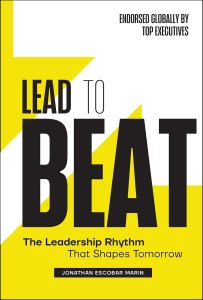
Today’s guest post is by Jonathan Escobar Marin, author of LEAD TO BEAT: The Leadership Rhythm That Shapes Tomorrow.
The meeting room was a pressure cooker, the kind where careers are forged or shattered. The CEO, a wiry woman with a gaze that could cut steel, stood at the head of the table. Her team, a mix of seasoned executives and hungry upstarts, shifted uneasily. The company was bleeding—market share slipping, competitors circling like vultures. She didn’t mince words. “We’re not here to play defense,” she said, voice low but electric. “We’re here to win. And winning starts with focus—brutal, unrelenting focus.”
The CEO had seen this before: a company drowning in its own ambition, chasing a hundred priorities and catching none. Two years ago, she’d taken the helm of a tech firm teetering on irrelevance. The boardroom was a circus of egos, each department head clutching their pet projects like life rafts. Sales wanted flashy campaigns. Engineering demanded endless R&D. Operations begged for supply chain tweaks. The result? A bloated mess of initiatives, none moving the needle. Customers were defecting, and the stock price was a slow-motion car crash.
She introduced a simple way of working backboned in “The Wall”—a simple, ruthless tool to force clarity. Picture a massive board, visible to every employee, where only the most critical missions lived. Not tasks, not busywork—missions. Each had a clear owner, a measurable outcome, and a deadline that loomed like a guillotine. The Wall wasn’t a suggestion; it was the company’s drumbeat. Every week, every team synced in ten-minute huddles, no fluff, just truth: progress, blockers, next steps. Anything not on The Wall was dead to them. “If it’s not mission-critical,” she’d say, “it’s noise. Kill it.”
The first month was brutal. Marketing’s darling ad campaign? Slashed. Engineering’s shiny prototype? Shelved. The CFO, a numbers wizard with a penchant for micromanaging, fought to keep his pet cost-cutting initiative. The CEO stared at him: “Show me how it doubles our market share in six months, or it’s gone.” It didn’t make the cut. The Wall demanded sacrifices, and the CEO was its high priest. She wasn’t cruel, just clear: winning meant saying no to the good to chase the great.
By quarter’s end, the shift was palpable. The company rallied around a few missions guided by three simple north star metrics: one to dominate a key market segment, a second one to streamline delivery to cut costs without gutting quality and service, and a third one looking to the future to become market makers in a new laser-focused segment. The Wall forced alignment. Sales and engineering, once at war, collaborated on customer-driven features. Operations trimmed fat, not muscle. Weekly syncs kept everyone honest—no one could hide behind vague updates or PowerPoint fluff. The C-suite walked the floor, not to micromanage but to show respect for the work that was done, ask questions to provoke reflection, and keep the ambition high and rhythm tight. People were valued, felt valued, and got value from the top leaders.
Three quarters later, the numbers told the story: sales up 11%, customer retention spiking, stock price climbing, costs consistently reduced with service and quality at highest levels, and seamless execution to make a new market where no one had been brave and ambitious enough to get. The Wall had rewired the company’s DNA. Teams weren’t just working; they were working to win. The CEO didn’t talk to people with speeches and promises in TownHalls. With all the learnings, she and the whole leadership team learned to throw away trophies and start over again, sharpening the Wall after a clear Keep, Improve, Start, Stop reflection. “We don’t rest on wins,” she told her team. “We build on them.”
The lesson here is stark: focus is your sharpest weapon, but it demands discipline most leaders lack. Stop chasing every shiny idea. Build your own Wall—physical or digital—and put only your most critical missions on it. Assign clear owners, measurable outcomes, and unambiguous deadlines. Review progress weekly, in short, brutal syncs that expose truth, not egos. By doing less, you achieve more. Eliminate the 80 percent that dilutes the vital 20 percent. This isn’t about busyness; it’s about winning today and building tomorrow.
The CEO’s story isn’t unique. Leaders who win don’t just set goals—they enforce a rhythm of brutal focus and distributed ownership with a mindset obsessed with impact, not activity. They know the world doesn’t reward effort; it rewards results. In a landscape of chaos—fragmented markets, disruptive tech, relentless competition—your ability to zero in on what matters most isn’t just a strategy. It’s survival. So, build your Wall. Strip away the noise. Lead with clarity, hunger, and rhythm. And don’t just play the game—beat it.
Jonathan Escobar Marin, author of LEAD TO BEAT: The Leadership Rhythm That Shapes Tomorrow, has been bridging the nuanced gap between strategy and execution – and between executives and their associates – for the world’s leading corporations for over two decades. His distinguished efforts have resulted in an exceptional track record, marked by over 320 successful transformations across more than thirty-two countries. For more information, please visit https://www.JonathanEscobarMarin.com/
Did you enjoy this post? If so, I highly encourage you to take about 30 seconds to become a regular subscriber to this blog. It’s free, fun, practical, and only a few emails a week (I promise!). SIGN UP HERE to get the thoughtLEADERS blog conveniently delivered right to your inbox!
https://i0.wp.com/www.thoughtleadersllc.com/wp-content/uploads/2025/09/20250909-Business-Wall.jpg?fit=1920%2C1280&ssl=112801920Trevor Joneshttps://www.thoughtleadersllc.com/wp-content/uploads/2022/04/logo.pngTrevor Jones2025-09-09 08:02:282025-09-09 00:38:59Build The Business Wall: Crush The Busyness Noise
Understanding how people want to feel, and delivering on those emotional benefits, can be your greatest competitive advantage.
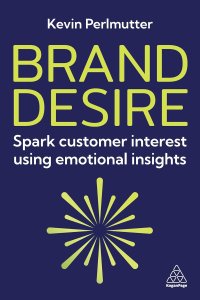
Today’s guest post is by Kevin Perlmutter, author of BRAND DESIRE: Spark Customer Interest Using Emotional Insights.
Do you often wonder how to differentiate your business from the competition?
When many competitive brands are offering very similar products or services, sometimes it’s challenging for a brand to stand apart. Maybe you’ve tried adding new things to your core offering. Maybe you’ve tried increasing your advertising budget to increase awareness of your offering. You may have even thought about or tried lowering your prices, which is unfortunately a race to the bottom.
What I’ve discovered, guiding the evolution of brands of all sizes with leaders who face the same challenge, is that the reasons why people choose a brand’s product or service are not always what the business or brand leaders think.
While there’s a tendency to want to emphasize product and service offering details, we know that people’s decision-making is greatly informed by their emotions, their desires, and their interest in having their needs met.
How do people want to feel?
Maya Angelou famously said, “People won’t remember what you said. People won’t remember what you did. But people will always remember how you made them feel.” This incredible insight is consistently backed up by research. Forrester has reported year over year, for well over a decade, that “emotion is the largest driver of loyalty” for brands – meaning, how a brand experience makes us feel has the most impact on our desire to have that brand experience again.
Think about brand experience in your life. How about the last time you bought a car? Would you enthusiastically go back to that dealership to buy your next car, or will you actively avoid going back? How about working with your accountant or financial advisor? Do they seem ambivalent to your business? Or do they make you feel “valued, appreciated, and respected” – the three most influential positive emotions that lead to loyalty, according to Forrester.
For you and your business, this means that no matter how similar your offering is to that of your competition, you can create meaningful differentiation by addressing how people want to feel through your brand experience. You can also attract people to your brand by letting them know it’s where they can find emotionally compelling benefits.
Differentiating on brand experience
ServiceByte is an example of a brand I’ve worked with where we discovered that brand experience is what sets their work apart, and it is now the anchor for how the brand attracts new customers. ServiceByte is a small business in the New York City area, specializing in managed services IT support for other companies. They provide computer and email help desk support, and, overall, help companies monitor and maintain their IT infrastructure. They have many competitors who do the exact same thing.
When beginning the work with founder Kish Melwani, he told me that he founded ServiceByte with a concierge-style service ethic that prioritizes the customer experience. He did so after recognizing that most IT support teams leave people feeling annoyed or frustrated, fueled by a lack of empathy for the disruption to their business.
Years later, ServiceByte has many loyal customers and a slew of 5-star reviews. However, Kish was still eager to attract more customers and didn’t know how. Up to that point, marketing prioritized the service offering. Kish agreed, it was time to prioritize the emotional benefits of the brand experience.
To understand more about what sets ServiceByte apart, I suggested that, as part of the Insights Discovery phase of my Limbic Sparks® Brand Strategy approach, I interview ServiceByte customers to hear more about the brand experience from their perspective, in addition to other investigations.
Here are some soundbites of what I heard:
“Kish sets a tone, culture, and personality that comes through in the team.”
“Working with ServiceByte reminds me of how I like to do business.”
“We can get our work done knowing the engine runs well.”
Overall, we learned that the most important thing that both ServiceByte and its customers care about is being “Always On.” For ServiceByte that means always monitoring and always enthusiastically providing a good experience. For customers, “Always On” means they care most about their business being up and running – with no downtime.
“Always On” is what I call the Shared Emotional Motivation – what both the brand and its customers are trying to achieve, individually and with each other. As a core input to brand strategy, it led us to the Brand Idea and customer-facing Tagline:
“We Do Our Thing So You Can Keep Doing Yours”
This Brand Idea, by definition, using this emotion-centric brand strategy approach, is a compelling brand benefit and invitation (not an “about us” statement). It lets potential customers know that ServiceByte is where they can get the benefits that we’ve discovered they crave – in this case, business continuity from people who they know have their backs.
It now sets the tone for all brand messaging – in sales materials, on the company website, and in customer support communications. It also ensures that the ServiceByte support technicians are always focused on delivering on the brand promise.
How can you differentiate on brand experience?
The thing to remember is that people are emotionally driven, and understanding the emotional motivations of your customers is the place to start.
Whether you’re ready for a big brand evolution, or you just want to fine-tune your current sales and marketing approach with more relevant and compelling brand messaging, here’s what you can do.
You can embrace what I call a Limbic Sparks Mindset. It involves three questions you can always ask to guide your approach:
What are people’s frustrations, unmet needs, and motivations?
How do people want to feel?
What should your brand say and do to make people’s lives better?
Understanding how people want to feel, and delivering on those emotional benefits, can be your greatest competitive advantage. It can spark interest in your brand and sustain ongoing brand loyalty.
Kevin Perlmutter, author of BRAND DESIRE: Spark Customer Interest Using Emotional Insights, is Chief Strategist and Founder of Limbic Brand Evolution, a brand strategy and neuromarketing consultancy which puts emotional insight at the center of how brands attract and retain customers. Based near New York City, he works with business and brand leaders to create stronger connections between their brand and the people they want to reach.
Did you enjoy this post? If so, I highly encourage you to take about 30 seconds to become a regular subscriber to this blog. It’s free, fun, practical, and only a few emails a week (I promise!). SIGN UP HERE to get the thoughtLEADERS blog conveniently delivered right to your inbox!
https://i0.wp.com/www.thoughtleadersllc.com/wp-content/uploads/2025/08/20250818-Paper-Airplanes.jpg?fit=1920%2C1440&ssl=114401920Trevor Joneshttps://www.thoughtleadersllc.com/wp-content/uploads/2022/04/logo.pngTrevor Jones2025-08-18 08:02:532025-08-18 03:41:03Evolving from Commodity Business to Differentiated Brand
Today’s post is by Michael Henderson, author of Above the Line: How to Create a Company Culture that Engages Employees, Delights Customers and Delivers.
Archived Post: This blog was first published in 2015. We’re bringing it back to spotlight a topic that’s worth revisiting.
A company’s culture plays a significant role in driving performance, retaining staff and influencing customer experience. If you agree, then it might be time to look into how your organization identifies its culture. If you’re simply relying on an annual staff engagement survey, you might be surprised, and not necessarily pleased with the results.
Many organizations use staff engagement surveys for establishing the status of employee morale or as a means of positioning an organization as an award-winning place to work. However many organizations are increasingly falling into the trap of relying on their engagement survey tool to define and describe their workplace culture. It’s as Abraham Maslow once noted, “If you only have a hammer as a tool, then every problem is a nail.” In other words, just because you are already using an engagement survey to assess employee morale doesn’t mean the survey is designed to measure culture.
Engagement surveys may indeed measure many variables within an organization, but culture isn’t one of them. The following are five reasons why engagement surveys are ineffective for revealing your organization’s culture:
1. Opinions are not culture. Engagement survey questions are designed to ask employees their opinions on such topics as; their boss, the warmth of their workplace atmosphere, or whether they perceive they have friends amongst their colleagues. But an opinion of a culture is not the culture itself. For example, if I travel to France and develop a less than favorable opinion of French culture, that does not mean that I have understood or defined French culture, but only that I have formed a biased opinion of the culture. Many organizations fail to make this important distinction and, in doing so, often make decisions about the culture – or the changes required in the culture – based on opinions and not through understanding the cultural dynamics themselves. Most engagement surveys are superficial in their explanation of culture. If you truly want to understand your workplace culture watch it in action in real time on the job and you are likely to see where it works or doesn’t, or whether it leads to collaboration or creativity or not. Rather than asking employees for their opinion on culture, try asking if they find the culture to be collaborative or creative.
https://i0.wp.com/www.thoughtleadersllc.com/wp-content/uploads/2025/08/Woman-Using-iPad.jpg?fit=1920%2C1079&ssl=110791920Trevor Joneshttps://www.thoughtleadersllc.com/wp-content/uploads/2022/04/logo.pngTrevor Jones2025-08-11 08:02:492025-08-11 02:06:425 Reasons Surveys Do Not Reveal Your Organization’s Culture
Resilience is a teachable, measurable and scalable capability. Leaders can implement these practices today to navigate complexity and lead with clarity and courage.
This article was originally published in Forbes Coaches Council on July 22, 2025. by Forbes. You can read the original article here.
As an executive advisor and leadership coach, I find that leaders who previously successfully managed the level of stress and complexity of their roles are now struggling more often. We need these leaders to thrive, and anti-fragile resilience practices can help.
I define resilience as the ability to bounce back from change and the capacity to evolve through challenge. The resilience-building framework I use with clients is grounded in five key practices: prioritizing self-care, managing and shifting thinking, leading from the heart, enhancing relationships and becoming anti-fragile.
Leaders can implement these practices today to navigate complexity and lead with clarity and courage.
1. Prioritize Self-Care: The Foundation Of Sustainable Leadership
Resilience begins with the body. Leaders often think sacrificing sleep, nutrition and rest is a badge of honor. It’s a fast track to burnout. My research and client work consistently show that leaders prioritizing physical well-being—adequate sleep, regular exercise, mindful nutrition—are better equipped to handle stress and make sound decisions.
One executive client, facing a high-stakes merger, began integrating 30-minute walks into their daily routine and committed to a “digital sunset” an hour before bed. The result? Improved focus, better emotional regulation and a renewed presence in critical conversations. Self-care isn’t indulgent—it’s strategic.
Are you investing in your physical well-being consistently as a strategic priority?
2. Shift Thinking: Cultivate Positivity And Growth-Oriented Mindset
The stories we tell ourselves shape our reality. Resilient leaders actively manage their inner dialogue, reframing setbacks as opportunities for learning. According to Dr. Barbara Fredrickson, a leading researcher in positive psychology, individuals flourish when they experience at least three positive emotions for every negative one. This cognitive flexibility, positivity and growth mindset are essential in a world where yesterday’s solutions no longer solve today’s problems.
I encourage leaders to engage in reflective journaling, mindfulness practices and assumption-checking exercises. One of my clients, a senior leader in a research organization, used these tools to reframe a failed research project not as a defeat, but as a data-rich experiment. This shift in thinking enabled her team to pivot quickly and launch a more successful iteration. She talked about how disproving a hypothesis is as essential as proving it, because we can accelerate our impact the quicker we learn.
Do you have regular practices to shift your thinking and reframe negative situations into opportunities?
3. Lead From The Heart: Emotional Intelligence As A Strategic Asset
Resilience is not just about grit—it’s about grace. Leaders who are attuned to their emotions and those of others build trust, foster psychological safety and inspire loyalty. Emotional intelligence allows leaders to respond rather than react, especially under pressure.
I recommend leaders practice soft skills, including emotional labeling, empathy mapping and values alignment. One client shared how a simple practice of pausing to name their emotion before responding in a tense board meeting helped de-escalate conflict and steer the conversation toward collaboration.
Are you leading with emotional intelligence and authenticity?
4. Enhance Relationships: Build A Resilient Ecosystem
No leader is resilient alone. Strong, supportive relationships act as “shock absorbers” during turbulent times. Leaders must invest in authentic connections with their peers, teams, bosses, mentors and other key stakeholders. They also need strong relationships with people outside of the organization. Both sets of relationships are essential. Business relationships offer professional insight and support, while personal relationships offer support separate from work and can provide confidential care.
I recommend regular check-ins with a peer advisory group such as YPO or a similar group. This can be a professionally facilitated group or an informal set of trusted colleagues committed to providing honest feedback and support. I run a cross-industry CEO advisory group that offers monthly confidential conversations and periodic learning-focused presentations. Members also support one another through their ongoing business challenges outside of the group. I’ve seen this network become a long-term major asset for many, offering tactical advice and emotional support.
Have you built a professional and personal network that supports and challenges you?
5. Become Anti-Fragile: Grow Stronger Through Adversity
The goal of resilience is not just recovery—it’s personal elevation. Inspired by Nassim Nicholas Taleb’s “antifragility” concept, my team helps leaders design systems and mindsets that improve under stress. This means embracing experimentation, encouraging dissent and viewing volatility as a personal and professional growth catalyst.
Many of my clients have embraced the “mind of the scientist,” knowing that the ability to use experiments as a foundation of innovation accelerates the ability to meet their goals. This language of experiments changes the conversation from “fail fast” to “experiment and learn fast.” The change in language and mindset frees them to build their agility and capacity during challenging times. Rather than fearing disruption, they now see it as a competitive advantage.
Are you leveraging challenges and setbacks to grow stronger through adversity?
Why This Matters Now
The challenges leaders face today are not episodic; they are systemic. Climate change, AI disruption, workforce transformation and geopolitical shifts demand new leadership. Resilient leaders are not just surviving—they are shaping the future.
Resilience is a teachable, measurable and scalable capability. It is the bridge between intention and impact, between vision and execution, and the key to leading with authenticity in an age of uncertainty. Resilience is not a destination—it is a discipline. And in this moment of profound change, it is the most essential leadership skill we can cultivate.
Maureen Metcalf is the CEO of Innovative Leadership Institute, bringing over 25 years of business experience to the table as she helps professionals grow well beyond their own expectations. Her work is focused on helping leaders innovate how they lead while transforming their organizations. She’s also a principal here at thoughtLEADERS. She teaches our programs on building personal resilience. Contact us if you’re interested in bringing the course into your organization.
Want to learn more about resilience? How about taking an entire course on it? Go directly to the course and start learning how to bounce back from disruption and thrive during uncertainty. The entire course is available here. As a taste, you can take our free online assessment to understand your current level of resilience and your gaps.
Did you enjoy this post? If so, I highly encourage you to take about 30 seconds to become a regular subscriber to this blog. It’s free, fun, practical, and only a few emails a week (I promise!). SIGN UP HERE to get the thoughtLEADERS blog conveniently delivered right to your inbox!
https://i0.wp.com/www.thoughtleadersllc.com/wp-content/uploads/2025/07/20250729-Number-5.jpg?fit=1920%2C1440&ssl=114401920Trevor Joneshttps://www.thoughtleadersllc.com/wp-content/uploads/2022/04/logo.pngTrevor Jones2025-07-30 06:32:332025-07-30 00:00:16Beyond The Bounce Back: 5 Tips For Evolving Through Adversity