


Evolving from Commodity Business to Differentiated Brand

Understanding how people want to feel, and delivering on those emotional benefits, can be your greatest competitive advantage.
Today’s guest post is by Kevin Perlmutter, author of BRAND DESIRE: Spark Customer Interest Using Emotional Insights.
Do you often wonder how to differentiate your business from the competition?
When many competitive brands are offering very similar products or services, sometimes it’s challenging for a brand to stand apart. Maybe you’ve tried adding new things to your core offering. Maybe you’ve tried increasing your advertising budget to increase awareness of your offering. You may have even thought about or tried lowering your prices, which is unfortunately a race to the bottom.
What I’ve discovered, guiding the evolution of brands of all sizes with leaders who face the same challenge, is that the reasons why people choose a brand’s product or service are not always what the business or brand leaders think.
While there’s a tendency to want to emphasize product and service offering details, we know that people’s decision-making is greatly informed by their emotions, their desires, and their interest in having their needs met.
How do people want to feel?
Maya Angelou famously said, “People won’t remember what you said. People won’t remember what you did. But people will always remember how you made them feel.” This incredible insight is consistently backed up by research. Forrester has reported year over year, for well over a decade, that “emotion is the largest driver of loyalty” for brands – meaning, how a brand experience makes us feel has the most impact on our desire to have that brand experience again.
Think about brand experience in your life. How about the last time you bought a car? Would you enthusiastically go back to that dealership to buy your next car, or will you actively avoid going back? How about working with your accountant or financial advisor? Do they seem ambivalent to your business? Or do they make you feel “valued, appreciated, and respected” – the three most influential positive emotions that lead to loyalty, according to Forrester.
For you and your business, this means that no matter how similar your offering is to that of your competition, you can create meaningful differentiation by addressing how people want to feel through your brand experience. You can also attract people to your brand by letting them know it’s where they can find emotionally compelling benefits.
Differentiating on brand experience
ServiceByte is an example of a brand I’ve worked with where we discovered that brand experience is what sets their work apart, and it is now the anchor for how the brand attracts new customers. ServiceByte is a small business in the New York City area, specializing in managed services IT support for other companies. They provide computer and email help desk support, and, overall, help companies monitor and maintain their IT infrastructure. They have many competitors who do the exact same thing.
When beginning the work with founder Kish Melwani, he told me that he founded ServiceByte with a concierge-style service ethic that prioritizes the customer experience. He did so after recognizing that most IT support teams leave people feeling annoyed or frustrated, fueled by a lack of empathy for the disruption to their business.
Years later, ServiceByte has many loyal customers and a slew of 5-star reviews. However, Kish was still eager to attract more customers and didn’t know how. Up to that point, marketing prioritized the service offering. Kish agreed, it was time to prioritize the emotional benefits of the brand experience.
To understand more about what sets ServiceByte apart, I suggested that, as part of the Insights Discovery phase of my Limbic Sparks® Brand Strategy approach, I interview ServiceByte customers to hear more about the brand experience from their perspective, in addition to other investigations.
Here are some soundbites of what I heard:
“Kish sets a tone, culture, and personality that comes through in the team.”
“Working with ServiceByte reminds me of how I like to do business.”
“We can get our work done knowing the engine runs well.”
Overall, we learned that the most important thing that both ServiceByte and its customers care about is being “Always On.” For ServiceByte that means always monitoring and always enthusiastically providing a good experience. For customers, “Always On” means they care most about their business being up and running – with no downtime.
“Always On” is what I call the Shared Emotional Motivation – what both the brand and its customers are trying to achieve, individually and with each other. As a core input to brand strategy, it led us to the Brand Idea and customer-facing Tagline:
“We Do Our Thing So You Can Keep Doing Yours”
This Brand Idea, by definition, using this emotion-centric brand strategy approach, is a compelling brand benefit and invitation (not an “about us” statement). It lets potential customers know that ServiceByte is where they can get the benefits that we’ve discovered they crave – in this case, business continuity from people who they know have their backs.
It now sets the tone for all brand messaging – in sales materials, on the company website, and in customer support communications. It also ensures that the ServiceByte support technicians are always focused on delivering on the brand promise.
How can you differentiate on brand experience?
The thing to remember is that people are emotionally driven, and understanding the emotional motivations of your customers is the place to start.
Whether you’re ready for a big brand evolution, or you just want to fine-tune your current sales and marketing approach with more relevant and compelling brand messaging, here’s what you can do.
You can embrace what I call a Limbic Sparks Mindset. It involves three questions you can always ask to guide your approach:
- What are people’s frustrations, unmet needs, and motivations?
- How do people want to feel?
- What should your brand say and do to make people’s lives better?
Understanding how people want to feel, and delivering on those emotional benefits, can be your greatest competitive advantage. It can spark interest in your brand and sustain ongoing brand loyalty.
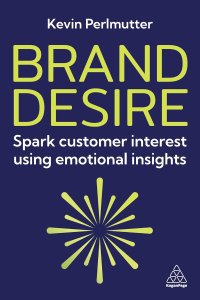 Kevin Perlmutter, author of BRAND DESIRE: Spark Customer Interest Using Emotional Insights, is Chief Strategist and Founder of Limbic Brand Evolution, a brand strategy and neuromarketing consultancy which puts emotional insight at the center of how brands attract and retain customers. Based near New York City, he works with business and brand leaders to create stronger connections between their brand and the people they want to reach.
Did you enjoy this post? If so, I highly encourage you to take about 30 seconds to become a regular subscriber to this blog. It’s free, fun, practical, and only a few emails a week (I promise!). SIGN UP HERE to get the thoughtLEADERS blog conveniently delivered right to your inbox!


Leave a Reply
Want to join the discussion?Feel free to contribute!