Avoid becoming one of the five in ten businesses that fail. Bust the five myths of entrepreneurship to see if you have what it takes to become an entrepreneur.
Today’s post is by May McCarthy, author of The Path to Wealth: Seven Spiritual Steps for Financial Abundance.
With record-breaking stock market levels on the heels of success stories about entrepreneurs like Jeff Bezos of Amazon and Mark Zuckerberg of Facebook, there is a desire for many employees to quit their jobs and start their own businesses. Before you quit your job and deplete your savings to fund your own startup, take a close look at your motivations for wanting your own business.
According to the Small Business Administration, 50% of businesses fail in their first year. This is often due to poor planning and the founders’ belief in five common myths about becoming an entrepreneur. Following is an outline of these myths and what you should know to prevent failure from happening to you:
Your income will increase
Most business start-ups are funded by the founders. Depending upon the type of business you start, your business may not produce a substantial source of income for the first year or two. Whatever amount of money you think you need to get to a level of profitability based on your business plan projections, double it so that you can handle unexpected situations that arise. With good planning and execution, you’ll have a better chance at succeeding and can pay yourself the larger salary that you desire in the future.
If you build it, they will come
Perhaps all of your friends and family have told you that you’ll be successful with your new business. That may be true, but before you empty your nest egg to lease the space, buy the equipment and print the letterhead, do some planning on paper first. Determine the feasibility of your business model, marketing plan, location choice, and competitive landscape so you have the best opportunity to succeed. Customers need to know where you are and to believe in the benefits of buying what you have to offer. It’s better to plan this out on paper than to discover it when very few customers show up after opening day.
https://i0.wp.com/www.thoughtleadersllc.com/wp-content/uploads/2026/02/20260222-Number-5-Balloon.jpg?fit=1920%2C1097&ssl=110971920Trevor Joneshttps://www.thoughtleadersllc.com/wp-content/uploads/2022/04/logo.pngTrevor Jones2026-02-23 08:02:512026-02-22 03:16:01Five Myths to Bust Before Becoming an Entrepreneur
Youth leadership specialist J. Chad Mitchell discusses how habit stacking can help young leaders build their influence and keep them consistent.
Today’s guest post is by J. Chad Mitchell, author of ‘Change Your Game: Empowering Young Leaders to Ditch Doubt, Find Their Voice, and Impact the World.’
Goal setting is everywhere. Promotions. Career pivots. Leadership growth. Personal development. Professionals are often clear about what they want next.
But many well-intentioned goals flame out.
Motivation usually is not the problem. It’s a systems problem.
Goals provide direction. Habits create traction. Learning to focus on consistent systems rather than short bursts of effort is one of the most important leadership shifts emerging leaders can make.
Start With What Matters Most
Before talking about habits, effective leaders begin with a more fundamental question: What matters most?
Sometimes professionals adopt goals without critically considering whether those goals align with their values. Leadership habits are more likely to stick when they reinforce what moves you: integrity, trust, growth, service, or excellence.
When habits align with values, they function as expressions of identity. That alignment helps make consistency more likely.
Goals Point the Direction; Habits Do the Work
Goals are aspirational. They help clarify what success looks like. Habits are the vehicle that gets you there.
Think of a goal as a destination and habits as the road. Without a reliable road, even the clearest destination is iffy. This is a key reason goals fail. The vision exists, but the structure to get there does not.
Modern culture rewards speed, visibility, and instant results. Metrics update in real time. Messages demand immediate replies. Progress is expected quickly.
But leadership development works differently. Trust, influence, credibility, and judgment are built slowly through repeated behaviors.
This is where habit stacking becomes especially powerful.
What Is Habit Stacking?
Habit stacking (hat tip to author S.J. Scott and BJ Fogg from Behavior Design Lab at Stanford) is the practice of attaching a new, intentional behavior to something you already do. Instead of relying on willpower, you rely on structure.
This approach works because it removes friction. When the trigger is already embedded in your day, the habit requires less motivation and mental energy to execute.
For professionals with full calendars and competing demands, this matters. Habit stacking does not require dramatic lifestyle changes. It fits into real life.
Here are a few practical examples:
After opening my laptop each morning, I will write down one leadership behavior to practice that day.
After a meeting ends, I will send one appreciative follow-up.
After reading a challenging message, I will pause for three breaths before deciding how best to proceed (e.g., phone call, email 12-hours later).
After my morning drink at 8:30 a.m., I will make that difficult phone call.
None of these actions are impressive on their own. But relationships are rarely built through big, one-time gestures. Leadership is built through small, repeatable behaviors that shape how others experience working with you.
Why Consistency Beats Intensity
Many emerging leaders believe progress requires bold moves or visible wins. Habit stacking –small actions, practiced consistently, that compound–drives sustainability.
Compounding is easy to understand financially, but applies just as powerfully to leadership. A single well-run meeting may not change much. But consistently well-run meetings build credibility and momentum. One supportive conversation may not feel significant. But repeated support and listening build trust.
Over time, those habits stack into influence.
Building Leadership Systems That Last
Organizations often focus heavily on outcomes: performance metrics, advancement, results. A more durable approach is helping people build systems that make those outcomes likely.
Three principles make habit stacking effective for leadership development:
Start small enough that consistency is almost guaranteed.
Attach the habit to something already embedded in your day.
Anchor the habit to identity, not achievement. Ask, “What kind of leader does this habit help me become?”
When people begin to see themselves as someone who prepares well, follows through, listens carefully, or develops others, leadership becomes how they operate rather than a role they switch on.
Commit to the Long Game
Habits do not change overnight. It takes weeks of repetition before a behavior becomes automatic. This reality is often overlooked in professional development, where quick wins are celebrated and patience is undervalued.
Leadership growth rewards those willing to stay consistent long enough for habits to take root. Across age groups and settings, the pattern is consistent. People grow the most not when they set more aggressive goals, but when they commit to small, repeatable actions aligned with what matters most.
Confidence, integrity, and influence are not activated instantly. They are built through habits practiced over time.
When professionals internalize that habits matter more than hype, progress becomes steadier and more resilient. They stop waiting for motivation. And they start showing up consistently, one deliberate action at a time.
Those actions compound. Reliably.
That is how leaders and healthy cultures are built.
Did you enjoy this post? If so, I highly encourage you to take about 30 seconds to become a regular subscriber to this blog. It’s free, fun, practical, and only a few emails a week (I promise!). SIGN UP HERE to get the thoughtLEADERS blog conveniently delivered right to your inbox!
https://i0.wp.com/www.thoughtleadersllc.com/wp-content/uploads/2026/02/20260207-Stacking-Blocks.jpg?fit=1920%2C1280&ssl=112801920Trevor Joneshttps://www.thoughtleadersllc.com/wp-content/uploads/2022/04/logo.pngTrevor Jones2026-02-09 08:02:512026-02-07 00:30:42Habit Stacking: How Emerging Leaders Build Influence Through Consistency
Use the S.O.A.P. method to quickly identify and analyze business issues and create an effective action plan that makes a real difference in performance.
Today’s guest post is by Dr. Stephanie F. West, author of ‘S.O.A.P. For Success, A Simple Method To Manage Your Business And Revitalize Your Mission.’
As a veterinarian, I knew how to analyze a patient to identify current and potential issues to address to keep the animal in optimal health. When I moved into operational administration, I naturally defaulted to the same thought process and found it surprisingly useful, and so can you.
The medical community uses a problem-oriented method abbreviated S.O.A.P., standing for Subjective, Objective, Assessment, and Plan to collect, organize and analyze data. I look for subjective and objective issues and capture them in a problem list that I then assess and use to create an action plan. I found that treating a business as my “patient” and using the S.O.A.P. process allowed me to quickly identify issues and underlying causes that could be more effectively addressed.
I discovered this process could also be scaled up to a larger operation. As an example, when I was tapped to lead the veterinary hospital program for a noted veterinary college, I suddenly had to review and run five hospitals and multiple partnerships. At first, I started to document issues in a list, but that immediately became overwhelming. I reverted back to using the S.O.A.P. process and found that it led to fast and effective analysis, action plans, and operational success.
How did I approach this?
Subjective
First, I look for the issues that are often hardest to capture, because they relate to how people feel, and thus are often ignored or glossed over. Your clients or customers, employees, even the general public have feelings and thoughts about your business that can directly and indirectly affect your operations.
Check your reviews, net promoter scores, and read the text comments, both good and bad. Interview your employees. Speak with your vendors and support services. It is surprising what you can uncover by taking the time to capture subjective issues.
I discovered that the team was hard working but almost all employees felt unsupported and out of any communication loop. The clients and public had positive feedback, but I knew that unhappy employees would mean this wouldn’t stay positive for long.
Objective
Most companies have easy access to objective data, such as the financial statements, inventory lists, and other operational data. Just because this information is available does not mean that it is analyzed. Spend the time to review and look at actual and potential issues, and log areas of concern.
In this large organization, I found variation in the operational efficiency of various departments which warranted a deeper look. Uneven staffing numbers and historical funding differences needed addressing. I also saw a very flat organizational structure, with dozens reporting to the few available and overworked managers.
Assessment
Block time in your schedule for the deep work of reviewing your problem list to compare, contrast, and analyze. You will likely find problems with similarities or connections. You will start to identify areas to correct first, and those will make the biggest and quickest difference.
In analyzing my problem list at this veterinary college, I realized that the flat organizational chart was a major issue. If I could correct this by adding middle management, then employees would begin to feel supported and communication in the organization would be easier through departmental groups. Uneven staffing and funding could be addressed through this management team.
Plan
Your assessment will include ranking problems and easily lead to action items. From carefully prioritizing those action items, you can quickly come up with a very effective action plan.
In this case, my first action was to start hiring or promoting middle managers and creating a strong administrative team. Once in place, this team became my extension by delegation, and I was able to positively affect many more areas than I could have reached on my own. My initial “to-do” list melted away as these issues were handled by this new, strong team.
Summary
By using the problem-oriented S.O.A.P. method, I discovered not simply all the little issues in this large organization, but identified one change that simplified operations and resulted in a dramatic revenue increase based on management efficiency. This shows the power of using the S.O.A.P. method in your organization as well, whether large or small.
Did you enjoy this post? If so, I highly encourage you to take about 30 seconds to become a regular subscriber to this blog. It’s free, fun, practical, and only a few emails a week (I promise!). SIGN UP HERE to get the thoughtLEADERS blog conveniently delivered right to your inbox!
https://i0.wp.com/www.thoughtleadersllc.com/wp-content/uploads/2026/02/20260202-Sponge.jpg?fit=1920%2C1336&ssl=113361920Trevor Joneshttps://www.thoughtleadersllc.com/wp-content/uploads/2022/04/logo.pngTrevor Jones2026-02-02 08:02:292026-02-02 02:23:46Distill Business Problems for a Quick and Effective Action Plan
Leadership shows up through communication. Learn how the Think–Feel–Do discipline helps leaders communicate with clarity, trust, and intention in 2026.
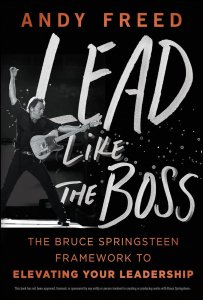
Today’s guest post is by Andy Freed, author of ‘Lead Like The Boss: The Bruce Springsteen Framework to Elevating Your Leadership’
Few skills matter more for leaders than communication. Not because communication is flashy or new, but because it is how leadership shows up most consistently. Long before strategy decks or org charts matter, people experience leadership through words, tone, timing, and follow-through.
Communication is how teams align around goals. It’s how momentum builds. It’s how people decide whether they trust what comes next.
And yet, many leaders don’t put enough intentional work into improving it.
That’s rarely about effort or care. Most leaders communicate constantly. Meetings, updates, presentations, one-on-ones. The volume is high. What’s missing is often intention. Communication becomes something we do automatically instead of something we prepare for deliberately.
As we just entered into 2026, improving communication doesn’t require new tools or better slides. It requires a shift in how leaders think about their responsibility when they speak.
For me, that shift starts with a simple discipline I return to again and again: Think, Feel, Do.
It’s not a formula or a script. It’s a way to slow down before communicating and be more deliberate about how you want your message to land.
Start with intention, not slides
Most leadership communication happens in meetings. Small groups. All-hands. Boardrooms. And more often than not, the first move is to open PowerPoint and start building slides.
I’ve done this myself. A meeting is coming up, so I open the last deck, do a “save as,” and start editing.
Technology makes this easy. That’s exactly why it can get in the way.
Slides make it possible to create content quickly without first thinking through what’s needed. But what’s needed at the start of any communication isn’t content. It’s clarity.
Before opening PowerPoint, leaders should pause and ask three questions. These questions form the backbone of the Think–Feel–Do discipline:
Think: What do I want people to understand when this is over? This isn’t about what you want to explain. It’s about what you want people to walk away believing. If they can’t clearly articulate what changed or why it matters, the message didn’t land.
Feel: How do I want this to land emotionally? People’s ability to hear a message is shaped by how they feel while receiving it. Stress and uncertainty narrow attention. Calm and trust expand it. Ignoring emotion doesn’t remove it. It just means it will shape the message without intention.
Do: What do I want people to do next? Every communication should lead somewhere. Something should be different when it ends. If people leave unsure of what’s expected, the message didn’t do its job.
Only after these questions are answered should slides or messaging take shape. At that point, the visuals support the intent instead of substituting for it.
Anchor to one clear message
As those Think, Feel, Do answers come into focus, they should point to a single central message. Every effective communication has one.
Without a clearly articulated central message, communication becomes unfocused and inconsistent. Leaders introduce nuance, updates, and variations that dilute what matters most. People lose their sense of direction and struggle to distinguish which actions count.
Leadership communication isn’t about novelty. It’s about clarity.
No one would sing along at a concert if the band changed the lyrics every time they played a song. Bruce Springsteen once said he knew he’d written a great pop song when he could hear the audience singing it back to him.
Leadership communication works the same way. When the message is clear and consistent, others begin to carry it forward. They repeat it. They reinforce it. They amplify it.
That’s not just being heard. That’s being followed.
Repeat more than feels necessary
Once isn’t enough to be heard.
Leaders often resist repetition. The desire to say something new pulls them away from their core message. Over time, this creates clutter. Slight variations. Competing signals. Reduced clarity.
The irony is that leaders tire of messages long before teams absorb them.
If something matters, it deserves repetition without apology. Repetition isn’t laziness. It’s how understanding is built and confidence takes hold.
Musicians rehearse. Athletes practice. Actors run lines. Leaders often wing it.
Rehearsal isn’t about sounding scripted. It’s about removing friction. It helps identify awkward phrasing, unclear transitions, and moments where the message loses momentum.
I’ve learned this firsthand. There are phrases I’m comfortable writing but avoid saying out loud because I know I’ll stumble over them. Rehearsal surfaces those issues before the message matters.
Closely related to rehearsal is sweating the details. Technical glitches happen, but if people can’t hear you, they aren’t listening. No rock band takes the stage without a sound check. Leaders shouldn’t either.
Preparation is a form of respect. For the audience. For the moment. For the message.
Bringing it together
Communication and leadership are inseparable. Improving how you communicate is one of the most practical ways to improve how you lead.
Think, Feel, Do isn’t a checklist. It’s a discipline. One that helps leaders slow down, prepare with intention, and take responsibility for how their words shape understanding, emotion, and action.
As leaders head into 2026, the opportunity isn’t to communicate more. It’s to communicate with greater care and clarity. That’s where trust is built. And that’s where leadership becomes felt, not just heard.
Did you enjoy this post? If so, I highly encourage you to take about 30 seconds to become a regular subscriber to this blog. It’s free, fun, practical, and only a few emails a week (I promise!). SIGN UP HERE to get the thoughtLEADERS blog conveniently delivered right to your inbox!
https://i0.wp.com/www.thoughtleadersllc.com/wp-content/uploads/2026/01/20260125-Office-Speech.jpg?fit=1920%2C1281&ssl=112811920Trevor Joneshttps://www.thoughtleadersllc.com/wp-content/uploads/2022/04/logo.pngTrevor Jones2026-01-26 08:02:132026-01-25 01:08:20Upping Your Communication Game for 2026
Innovation is not just about speed or technology. It is about who gets to imagine the future.
Today’s guest post is by John Bamforth, PhD, co-author of ‘Race to Innovation.’
Innovation is often described as a product of capital, technology, and bold ideas. In Race to Innovation, we argue that this story is incomplete. Innovation is also shaped by who is excluded from markets, whose needs are ignored, and how people respond when systems are not designed for them. When viewed through this lens, innovation is not just about invention. It is about agency. Few stories illustrate this more clearly than the arc from Madam C.J. Walker to Rihanna, two entrepreneurs separated by more than a century yet connected by the same innovation logic.
Madam C.J. Walker, born Sarah Breedlove in 1867, came of age in a society that denied Black women access to capital, education, and formal business networks. The beauty industry of her time did not consider Black women a viable market. Hair and scalp conditions were widespread, but largely ignored by manufacturers serving white consumers. This exclusion was not accidental. It was structural.
Walker’s response was not to wait for inclusion. She built her own system. She developed products specifically for Black women’s hair and health needs, but her true innovation extended beyond formulation. She created manufacturing capabilities, training programs, and a nationwide sales network. By recruiting and educating thousands of Black women as sales agents, she turned customers into entrepreneurs and built economic opportunity where none previously existed.
As Race to Innovation explains, this pattern is common when innovators face closed doors. When dominant institutions act as gatekeepers, innovation does not stop. It moves elsewhere. Walker’s company bypassed traditional distribution and marketing channels, proving that innovation often succeeds by redesigning systems, not just products.
More than one hundred years later, Rihanna entered a vastly different marketplace, yet encountered a familiar problem. By the mid-2010s, the global beauty industry was enormous, sophisticated, and data-driven. Brands spoke openly about diversity, yet the products themselves told another story. Foundation lines routinely offered a limited number of skin tones. Consumers of color were expected to compromise or accept invisibility.
Rihanna recognized that this was not a lack of demand, but a failure of imagination. When Fenty Beauty launched in 2017 with 40 foundation shades, it immediately reframed the market. Inclusion was not positioned as a niche offering or marketing campaign. It was built into the product from day one. This decision signaled a shift in strategy, not just aesthetics.
In the language of Race to Innovation, Rihanna leveraged what we call the blind spot advantage. Organizations embedded in dominant perspectives often fail to act on needs they do not personally experience. Rihanna’s proximity to exclusion gave her insight that market research alone had failed to convert into action. Her innovation lay in redefining who the “default” customer was supposed to be.
Like Walker, Rihanna’s success forced the industry to respond. Major beauty brands quickly expanded shade ranges after Fenty’s launch, publicly acknowledging gaps that had long been normalized. This pattern appears repeatedly in the book. Innovation driven by marginalized experiences often reshapes entire industries, even when incumbents resist until market pressure becomes unavoidable.
The leadership lessons from these stories are immediate and practical. First, exclusion is not noise in the system. It is signal. Leaders who pay attention to who is consistently underserved gain access to opportunities competitors overlook. Second, innovation accelerates when decision-making authority moves closer to lived experience. Both Walker and Rihanna retained control over how their products were designed, marketed, and distributed.
There is also a strategic lesson about scale. Neither woman waited for validation from established institutions before building. Walker created alternative pathways when none existed. Rihanna partnered with existing players, but on terms that preserved creative and strategic control. In both cases, innovation succeeded because it challenged assumptions embedded in existing systems.
For today’s leaders, the takeaway is clear. Innovation strategies that rely solely on legacy customer profiles, familiar power structures, or surface-level inclusion efforts will reproduce the same gaps. Inclusive innovation is not about adding diversity at the margins. It is about redesigning systems so that historically excluded perspectives shape decisions from the beginning.
From Madam C.J. Walker to Rihanna, this is not a story of isolated success. It is a recurring pattern. When people are locked out of markets, they do not simply wait to be let in. They build something better. As Race to Innovation makes clear, innovation is not just about speed or technology. It is about who gets to imagine the future, and who finally decides that waiting is no longer an option.
John Bamforth is the co-author of ‘Race to Innovation.’ He is an Entrepreneurial and Commercial Leader who has extensive experience in new business creation, innovation, and global campaigns, culminating in his most recent work as Director, Eshelman Institute for Innovation and previously as Chief Marketing Officer for Lilly’s Global Brands.
Did you enjoy this post? If so, I highly encourage you to take about 30 seconds to become a regular subscriber to this blog. It’s free, fun, practical, and only a few emails a week (I promise!). SIGN UP HERE to get the thoughtLEADERS blog conveniently delivered right to your inbox!
https://i0.wp.com/www.thoughtleadersllc.com/wp-content/uploads/2026/01/20260119-Woman-Using-Makeup.jpg?fit=1920%2C1270&ssl=112701920Trevor Joneshttps://www.thoughtleadersllc.com/wp-content/uploads/2022/04/logo.pngTrevor Jones2026-01-19 08:02:572026-01-19 03:34:23From Madam C.J. Walker to Rihanna: Innovation Born from Exclusion
Fear holds us back from achieving outstanding performance. The more rapidly you can identify the type of fear you’re facing, the more easily you can overcome it. Whether it’s fear of failure, fear of not being liked, or fear of loss, understanding and embracing that fear enables you to move beyond it.
Today’s post is by Mark Divine, author of The Way of the SEAL.
The SEAL leader stands on the ramp and peers into the inky blackness below. His team is inserting from 20,000 feet above ground level on a mission to rescue hostages taken by ISIS. He notes the familiar tightness in his chest, narrowing of focus, pit in the belly. ‘Hello fear, my friend,’ he thinks to himself with a grin. He reviews his mental checklist, taking comfort in the countless hours of training as well as the expertise of his teammates. Connecting once again to his “why” the feelings of fear are soon experienced as determination, intense focus and you might even say… excitement! The light turns green. The SEAL turns, smiles to his team, and with a thumbs up leaps off the ramp into space.
Back in New York, you are getting ready for your speech at the annual gathering of industry titans. That same tightness and pit in the stomach that the SEAL experienced hits you. This creates anxiety as you face an unknown crowd with your first major speech. Public speaking is scary to you, almost as much, you imagine, as jumping into the night out of a C-130. You don’t know how you’re going to perform or what the outcome will be. Tension builds, your field of sight narrows and those nasty “fight-or-flight” symptoms kick in. Your body’s sympathetic reaction creates an extreme hormone imbalance and you want to run, the inner dialogue and emotions spinning out of control. Oh boy…this is gonna suck!
There is good news. You can learn to turn fear into your friend – just like the Navy SEAL leader. It will take dedicated practice with new skills, those not normally taught in business school or leadership courses. Leaders must transform fear into focus, determination and drive. I have learned that the experience of fear can be transformed to energize performance, and firm up your commitment.
The first order of business, though, is to acknowledge that fear is not the enemy, but your friend. Let’s begin to develop a healthy relationship with your new friend.
https://i0.wp.com/www.thoughtleadersllc.com/wp-content/uploads/2026/01/20260112-Submarine.jpg?fit=1920%2C1080&ssl=110801920Trevor Joneshttps://www.thoughtleadersllc.com/wp-content/uploads/2022/04/logo.pngTrevor Jones2026-01-12 08:02:142026-01-12 04:08:15Lead with Courage like a Navy SEAL
Leadership is an endurance activity. Achieving peak leadership fitness requires self-awareness, goal setting, following a game plan, and overcoming challenges.
Today’s post is by Timothy Tobin, author of Peak Leadership Fitness.
As an endurance athlete and someone who has devoted his professional career to leadership development, I have realized some amazing parallels between physical fitness and leadership fitness. Both are journeys into self-discovery. You must set goals, have a game plan, and put in the work in order to achieve optimal results. You will also need to navigate obstacles along your journey.
Two friends – Sandra and Kelly – set a goal to run a marathon together. They were college friends who moved to different towns. They didn’t see each other as often as they would like and welcomed this opportunity to reconnect.
Both led active lifestyles, yet neither had ever run a race over six miles. So, for both this was an ambitious, stretch goal outside of their comfort zone. They identified a race that allowed them eight months to prepare.
Although there were some early similarities in how they prepared for the race, each ultimately took a different path that yielded different results. They each bought their own copy of a first timers guide to marathons with several practical exercises designed to build strength and endurance for the long road ahead. They also both joined a local running club in their town. Both developed a plan. However, the similarities ended here.
Sandra read the book from cover to cover within a week, and she immediately put her plan into action. Her plan incorporated running, strength training, yoga, and rest days. She ran with her local running group once a week. She got to know many of the other local runners. Several had completed marathons, so she asked them for tips and advice. She modified her diet to support her new energy requirements. She kept a journal documenting her fitness activities and how she felt. Not every run Sandra did was great, but she learned something each time she ran. From day one, she had a ‘bring it on’ mindset and fitness became part of her regular routine.
https://i0.wp.com/www.thoughtleadersllc.com/wp-content/uploads/2026/01/20260104-Silhouette-of-Woman-Running.jpg?fit=1920%2C1258&ssl=112581920Trevor Joneshttps://www.thoughtleadersllc.com/wp-content/uploads/2022/04/logo.pngTrevor Jones2026-01-05 08:02:192026-01-04 19:44:43Start Building Your Leadership Fitness Today
Meeting company goals begins with employees and managers working well together. Mark McClain shares his advice for improving business culture.
Today’s post is by Mark McClain, CEO of SailPoint and the ForbesBooks author of Joy and Success at Work: Building Organizations that Don’t Suck (the Life Out of People).
Archived Post: This blog was first published in 2020. We’re bringing it back to spotlight a topic that’s still worth revisiting.
New Year’s resolutions are not only for individuals but businesses too. Company goals set for the year ahead are usually measured in data and tied to categories like revenue production and expense reduction.
After a difficult 2020 due to COVID-19, many enterprises’ bottom-line numbers will take on extra importance in 2021. And business culture will be just as crucial. Any resolutions that company leaders make are an effective way to measure their work environment and help their teams meet performance metrics.
Meeting individual, team, and company goals begins with employees and managers working well together in a vibrant environment. And given the changes and challenges of these times, culture and how leaders pay attention to it have never been more important.
The bottom line falls into place when everyone is on the same page. But even if leaders have established a strong culture, it bears constant vigilance to ensure everyone is rowing in the same direction, especially now when a volatile world can threaten to throw even the most solid companies off course.
These are some business culture resolutions for the New Year that leaders could consider: Read more
https://i0.wp.com/www.thoughtleadersllc.com/wp-content/uploads/2025/12/20251228-Year-2026.jpg?fit=1920%2C1080&ssl=110801920Trevor Joneshttps://www.thoughtleadersllc.com/wp-content/uploads/2022/04/logo.pngTrevor Jones2025-12-29 08:02:142025-12-28 23:59:045 New Year’s Resolutions to Make Your Business Culture a Winner
When you promote top performers to first-time leadership positions, they are faced with major changes. Prepare them with ten components for leadership success.
Today’s post is by Edward Brown, author of The Time Bandit Solution: Recovering Stolen Time You Never Knew You Had.
Archived Post: This blog was first published in 2016. We’re bringing it back to spotlight a topic that’s still worth revisiting.
You’re a CEO whose star salesperson just surpassed all records again. When he did it last year, he asked you about moving up the corporate ladder, and you did not discourage his ambition. Clearly, it’s time to promote him to sales manager, so you do.
Six months later, you’ve got a problem. Monday/Friday sales meetings are perfunctory affairs, the sales manager is back on the road calling on his old accounts, sales positions linger vacant, veteran salespeople have quit, and two big deals were lost to competitors you usually beat easily.
Who is at fault? You. You knew sales manager was a vastly different job from salesperson, but did you make sure your guy was prepared for the differences?
His great skill was selling. That’s a transferable skill, but only if he knows exactly how he did it. “I swing hard in case I hit it,” might be a baseball batter’s motto, but you can bet his batting coach could parse everything that batter does right when he connects – stance, posture, mental attitude, line of sight, shoulder turn, wrist snap, and follow through.
A recent New York Times op-ed titled, “Rising to the Level of Your Misery at Work” was about people who regret accepting promotions and raises. “Those who love being part of teams and creative processes are promoted to management. Happy engineers become stressed-out supervisors. Writers find themselves in charge of other writers and haranguing them over deadlines… happy professors become bitter deans….”
All I could think about was the managers who promoted them. What were they thinking? I don’t mean to stereotype pejoratively, but what exactly about being a great engineer or writer prepares someone to lead?
https://i0.wp.com/www.thoughtleadersllc.com/wp-content/uploads/2025/12/20251222-Number-Ten.jpg?fit=1920%2C1258&ssl=112581920Trevor Joneshttps://www.thoughtleadersllc.com/wp-content/uploads/2022/04/logo.pngTrevor Jones2025-12-22 08:02:432025-12-22 03:16:2210 Steps for Ensuring You Don’t Set Your Leaders Up to Fail
Today’s disruption is silent, constant and complex. A simple Logic–Emotion–Tactics checklist can steady leaders and teams through uncertainty.
Today’s post is by Mau Espinosa, author of LET IT HAPPEN: How To Deal Successfully With Change Through Logic, Emotion And Tactics.
On a Sunday afternoon in March 2020, I walked into my office in Kansas City with a knot in my stomach. The airport in Houston had been eerily empty, the restaurant where my clients and I had just eaten was closing “until further notice”, and the news feeds were turning from worrying to terrifying.
My business depended on groups of auto dealers who met regularly to benchmark performance and share best practices. When the pandemic hit, the threat was clear and immediate: if my clients panicked, memberships would be the first line item they cut. I had no illusions about that.
Logically, I understood the danger. Emotionally, I felt the same fear my clients felt. In that moment I had to choose between waiting for Monday and hoping for the best, or reaching out first and giving my clients a frame for thinking and acting.
I chose the second.
I recorded a short video message for each client and sent it individually. I told them three things: the situation was serious, they didn’t have to go through it alone, and we would begin working on it together the next morning.
The next day we hosted what I called “vomit sessions” — meetings with no agenda other than letting people unload their fear, confusion and anger. Within a couple of weeks those calls began to shift. The conversations turned from panic to possibility. By the end of that spring, we had kept 96% of our client base.
Looking back, I realized something else: the pattern I followed almost instinctively was Logic, Emotion and Tactics. That sequence became the foundation of my L.E.T. framework, but the practice itself is simple and timeless. It helped us survive the chaos of 2020.
And it’s even more relevant today.
Because the world we’re leading in now is different from the world of the pandemic.
In 2020, the threat stood in front of us like a wall. Today, adversity is silent. It comes from every direction at once: economic uncertainty that never fully resolves, geopolitical tension that shifts weekly, supply chains that behave unpredictably, social fatigue that erodes motivation, and the rapid acceleration of artificial intelligence transforming the nature of work faster than most teams can absorb.
Leaders aren’t facing a single crisis. They’re facing complexity — a constant layering of forces that don’t announce themselves and don’t arrive in a straight line.
This kind of environment doesn’t break leaders all at once. It wears them down slowly.
That’s why the L.E.T. sequence matters now more than it did in 2020. It gives you a way to move through complexity one cycle at a time.
Step 1: Logic — name the reality as it is, not as you fear it
When pressure is loud, logic feels urgent. When pressure is subtle, logic becomes blurry. Leaders today are dealing with shifting interest rates, unpredictable customer behavior, talent shortages in critical areas, and AI-driven changes to decision-making. It’s easy to confuse noise with information.
Start with the simplest questions:
What do we actually know right now?
What changed — quietly — in the last 90 days?
Which assumptions no longer match the reality we’re operating in?
During the pandemic, logic told us to watch cash, recalibrate sales expectations and stabilize service operations. Today, logic might tell you that your customer journey needs AI augmentation, that your profitability depends less on volume and more on efficiency, or that your leadership attention must shift from forecasting to building adaptive systems.
Logic grounds you in the present — and complexity always attacks the present first.
Step 2: Emotion — understand the story people are telling themselves
In 2020, the dominant emotions were fear and uncertainty. Today, many teams feel something different: exhaustion, quiet anxiety, or a sense of falling behind. These emotions are harder to detect because people have learned to mask them behind productivity.
Logic frames the present. Emotion reveals the past.
If you don’t acknowledge what your people are carrying — the accumulated fatigue of years of adjustment — your tactics won’t stick. In my sessions today, I ask leaders to write down three words describing what they are feeling before they make a decision. That quick act of honesty reduces emotional static and clears space for real thinking.
Publicly, leaders can simply name what they see: “A lot of us feel stretched. That’s normal in a year of constant change.” It’s not therapy. It’s alignment. When emotion is acknowledged, it stops driving decisions from the shadows.
Step 3: Tactics — define movement, not perfection
Tactics define the future — but only in small, manageable increments. Complexity punishes long-term plans that pretend stability exists. Instead of designing the next year, design the next week.
Ask:
Given what we know and how people are feeling, what are the three most important moves we can make in the next seven days?
In 2020, those moves were about cash protection, customer confidence and stabilizing operations. Today, the moves might look like experimenting with AI-driven workflows, redesigning customer touchpoints, or reallocating leadership attention toward areas where inefficiency silently accumulates.
The goal is forward motion, not perfect clarity.
Past, present and future inside a simple framework
In a straightforward crisis, leaders respond to what is in front of them. In complexity, leaders must respond to all three dimensions at once:
Logic anchors the present.
Emotion brings forward the lessons of the past.
Tactics create a path to the future, one actionable step at a time.
The next time you face silent pressure — a drop in demand no one can explain, a team that feels “off,” or an unexpected shift in customer behavior — try this:
In your notebook: write “Logic” and list what changed.
In your next conversation: acknowledge the emotions you see.
In the next seven days: define three concrete moves and assign ownership.
You can’t eliminate complexity. But you can lead through it with clarity, humanity and action.
And in a world that refuses to slow down, that’s what leadership looks like.
Mau Espinosa, author of LET IT HAPPEN: How To Deal Successfully With Change Through Logic, Emotion And Tactics, is a leadership provocateur and founder of G20, Inc., challenging leaders to stop admiring their problems and start executing on what truly matters. He focuses on clarity, alignment and agility, turning everyday pressure into meaningful progress. For more information visit LetItHappen.net.
Did you enjoy this post? If so, I highly encourage you to take about 30 seconds to become a regular subscriber to this blog. It’s free, fun, practical, and only a few emails a week (I promise!). SIGN UP HERE to get the thoughtLEADERS blog conveniently delivered right to your inbox!
https://i0.wp.com/www.thoughtleadersllc.com/wp-content/uploads/2025/12/20251207-Let-It-Be.jpg?fit=1920%2C1280&ssl=112801920Trevor Joneshttps://www.thoughtleadersllc.com/wp-content/uploads/2022/04/logo.pngTrevor Jones2025-12-08 08:02:312025-12-07 19:31:14Leading Through Complexity: A Logic–Emotion–Tactics Checklist for a World That Won’t Slow Down
Find your internal purpose doesn’t just help you navigate life and your decisions, but also helps make you more productive and successful.
Today’s post is by David Nielson, author of The 9 Dimensions of Conscious Success. This is an archived post, originally published in 2019. We’re bringing it back to spotlight a topic worth revisiting.
“Purpose at Work” is the title of a 2016 Global Report by LinkedIn Business* about the role of purpose in the workplace. It asks the question: “Are your employees and co-workers set up to achieve their highest potential? Are you?” The report further found that companies are seeing that purpose-oriented employees are more productive and successful.
Purpose is an internal foundational element to define your own success. It defines your reason for existence, why you are here, and how you can contribute to an outcome that will provide you with what you need, and want, from life. It is the idea that you know your destination and how you will get there. To experience your definition of success, your purpose must align with the mission and values of the organization for which you are working. When you find an organizational culture and environment and people who align with your purpose, your relationships with yourself and others will thrive. You will be more motivated, productive, successful, and happier in life.
Just “doing” without any direction does not lead you to your purpose or successful outcomes. Think of Lewis Carrol’s story Alice in Wonderland and his famous quote, “If you don’t know where you are going, any road will get you there.” It may be okay to ‘coddiwomple’ occasionally when exploring, experimenting, or on an adventure, but it is not a good long-term practice to accomplish a defined successful goal in a timely manner.
https://i0.wp.com/www.thoughtleadersllc.com/wp-content/uploads/2019/05/20191223-Ship-At-Sea.jpg?fit=1920%2C1279&ssl=112791920Trevor Joneshttps://www.thoughtleadersllc.com/wp-content/uploads/2022/04/logo.pngTrevor Jones2025-12-01 08:02:242025-12-01 03:38:41Living Your Life On Purpose
The fast-paced business environment is sometimes necessary, especially when making a name and space for your brand.
Today’s post is by Francisco Serrano, author of Brain-Ding. This is an archived post, originally published in 2020.
When you talk about branding, you are talking about constant change. This fast-paced environment leaves brand managers with no choice: they need to favor SPEED over perfection. That is, if they want to succeed. Especially when launching products.
When innovation is a key element in the industry, processes must be faster. Great businesses such as Amazon understand that decisions need to be immediate and the ability to adapt means the ability to survive. If companies decide to wait until they have the perfect product or service, they are giving their competitors the opportunity to get ahead of the game.
The truth is that chasing perfection slows down the process and in an increasingly dynamic world, you can’t afford to waste time. It is better to launch a product or a service and then build on it, rather than waiting on a faultlessness that might never come.
Being the first to market often means leadership. If you come in second place you might be perceived as a follower, and followers can’t charge premium prices or get to the top of the industry that easily.
https://i0.wp.com/www.thoughtleadersllc.com/wp-content/uploads/2019/05/20191216-Speed-on-the-Roadway.jpg?fit=1920%2C1440&ssl=114401920Trevor Joneshttps://www.thoughtleadersllc.com/wp-content/uploads/2022/04/logo.pngTrevor Jones2025-11-24 08:00:012025-11-24 03:43:56Speed Over Perfection: Why Being First to Market is Crucial