


Build The Business Wall: Crush The Busyness Noise

Business, not busyness: the Wall fuels brutal focus to win big. Build yours to slash egos and chaos, and drive victories in growth and results.
Today’s guest post is by Jonathan Escobar Marin, author of LEAD TO BEAT: The Leadership Rhythm That Shapes Tomorrow.
The meeting room was a pressure cooker, the kind where careers are forged or shattered. The CEO, a wiry woman with a gaze that could cut steel, stood at the head of the table. Her team, a mix of seasoned executives and hungry upstarts, shifted uneasily. The company was bleeding—market share slipping, competitors circling like vultures. She didn’t mince words. “We’re not here to play defense,” she said, voice low but electric. “We’re here to win. And winning starts with focus—brutal, unrelenting focus.”
The CEO had seen this before: a company drowning in its own ambition, chasing a hundred priorities and catching none. Two years ago, she’d taken the helm of a tech firm teetering on irrelevance. The boardroom was a circus of egos, each department head clutching their pet projects like life rafts. Sales wanted flashy campaigns. Engineering demanded endless R&D. Operations begged for supply chain tweaks. The result? A bloated mess of initiatives, none moving the needle. Customers were defecting, and the stock price was a slow-motion car crash.
She introduced a simple way of working backboned in “The Wall”—a simple, ruthless tool to force clarity. Picture a massive board, visible to every employee, where only the most critical missions lived. Not tasks, not busywork—missions. Each had a clear owner, a measurable outcome, and a deadline that loomed like a guillotine. The Wall wasn’t a suggestion; it was the company’s drumbeat. Every week, every team synced in ten-minute huddles, no fluff, just truth: progress, blockers, next steps. Anything not on The Wall was dead to them. “If it’s not mission-critical,” she’d say, “it’s noise. Kill it.”
The first month was brutal. Marketing’s darling ad campaign? Slashed. Engineering’s shiny prototype? Shelved. The CFO, a numbers wizard with a penchant for micromanaging, fought to keep his pet cost-cutting initiative. The CEO stared at him: “Show me how it doubles our market share in six months, or it’s gone.” It didn’t make the cut. The Wall demanded sacrifices, and the CEO was its high priest. She wasn’t cruel, just clear: winning meant saying no to the good to chase the great.
By quarter’s end, the shift was palpable. The company rallied around a few missions guided by three simple north star metrics: one to dominate a key market segment, a second one to streamline delivery to cut costs without gutting quality and service, and a third one looking to the future to become market makers in a new laser-focused segment. The Wall forced alignment. Sales and engineering, once at war, collaborated on customer-driven features. Operations trimmed fat, not muscle. Weekly syncs kept everyone honest—no one could hide behind vague updates or PowerPoint fluff. The C-suite walked the floor, not to micromanage but to show respect for the work that was done, ask questions to provoke reflection, and keep the ambition high and rhythm tight. People were valued, felt valued, and got value from the top leaders.
Three quarters later, the numbers told the story: sales up 11%, customer retention spiking, stock price climbing, costs consistently reduced with service and quality at highest levels, and seamless execution to make a new market where no one had been brave and ambitious enough to get. The Wall had rewired the company’s DNA. Teams weren’t just working; they were working to win. The CEO didn’t talk to people with speeches and promises in TownHalls. With all the learnings, she and the whole leadership team learned to throw away trophies and start over again, sharpening the Wall after a clear Keep, Improve, Start, Stop reflection. “We don’t rest on wins,” she told her team. “We build on them.”
The lesson here is stark: focus is your sharpest weapon, but it demands discipline most leaders lack. Stop chasing every shiny idea. Build your own Wall—physical or digital—and put only your most critical missions on it. Assign clear owners, measurable outcomes, and unambiguous deadlines. Review progress weekly, in short, brutal syncs that expose truth, not egos. By doing less, you achieve more. Eliminate the 80 percent that dilutes the vital 20 percent. This isn’t about busyness; it’s about winning today and building tomorrow.
The CEO’s story isn’t unique. Leaders who win don’t just set goals—they enforce a rhythm of brutal focus and distributed ownership with a mindset obsessed with impact, not activity. They know the world doesn’t reward effort; it rewards results. In a landscape of chaos—fragmented markets, disruptive tech, relentless competition—your ability to zero in on what matters most isn’t just a strategy. It’s survival. So, build your Wall. Strip away the noise. Lead with clarity, hunger, and rhythm. And don’t just play the game—beat it.
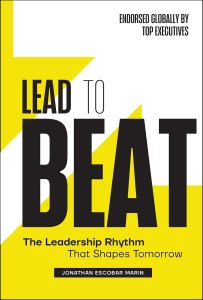 Jonathan Escobar Marin, author of LEAD TO BEAT: The Leadership Rhythm That Shapes Tomorrow, has been bridging the nuanced gap between strategy and execution – and between executives and their associates – for the world’s leading corporations for over two decades. His distinguished efforts have resulted in an exceptional track record, marked by over 320 successful transformations across more than thirty-two countries. For more information, please visit https://www.JonathanEscobarMarin.com/
Did you enjoy this post? If so, I highly encourage you to take about 30 seconds to become a regular subscriber to this blog. It’s free, fun, practical, and only a few emails a week (I promise!). SIGN UP HERE to get the thoughtLEADERS blog conveniently delivered right to your inbox!


Leave a Reply
Want to join the discussion?Feel free to contribute!