• Contact
  • My Account
  • Log In
  • 0Shopping Cart
thoughtLEADERS, LLC: Leadership Training for the Real World
  • About
  • Services
  • eLearning
  • Team
  • Blog
  • Clients
  • Books
  • Contact
  • Menu Menu

Consistency in Leadership: How You Do Anything Is How You Do Everything

February 12, 2024/0 Comments/in Balanced Lifestyle, Books, Business Toolkit, Career, Communications, Guest Blogger, Leadership, Strategy /by Trevor Jones

darts

Consistency allows you to be a leader who is predictable and reliable. 

Today’s guest post is by Joe Judge, coauthor of Leadership is Overcoming the Natural: 52 Maxims to Move Beyond Instinct.

I once had to give an employee constructive feedback about being too impatient, irritable, and unmotivated at work. He shrugged, apparently unwilling to acknowledge the problem.

In response, I asked, “How does this character flaw manifest with your kids at home?” That question got his attention because it shed light on his unproductive pattern of behavior in a whole new context.

Your leadership style cannot be compartmentalized because your behavior and principles at work inevitably reflect your actions outside of work. Your job, family life, and community relationships are all impacted by who you are at your core.

Even when you’re not consciously aware of it, your unconscious controls your actions. Recognizing your character’s positive and negative aspects that influence your leadership style is crucial.

Your leadership qualities will be under the microscope

Since leaders face constant scrutiny, they must have a steadfast leadership approach, even in minor interactions. Your leadership role is not about reaching a goal or destination but rather about a long and arduous journey, and to be an effective leader, every step you take during that long trek must be marked by consistency.

People are watching every move you make. If you want them to know who you are as a leader, show them consistently who you are as a person.

Effective leadership means avoiding confusion in your leadership approach

Consistency allows you to be a leader who is predictable and reliable. When you are steadfast and authentic as a leader, you craft a consistent narrative over time, allowing you to maintain credibility and develop trust with the people under you.

The people following you need to see consistent behavior from you and know what they can expect. Only when they feel secure enough in their roles can they focus on doing great work.

The challenges standing in the way of Consistency and leadership success

As a leader, you will find that external stressors are the greatest challenge to your ability to serve with consistency. You will also face high expectations for results and performance as the people above and below you will challenge your approach.

All of these pressures will tempt you to retreat, change tactics, and make knee-jerk decisions. However, if you make changes without warning, explanation, or communication, people will wonder if they can rely on your leadership. Quick fixes rarely solve problems, but consistency enables you to maintain influence over your team — even when times get tough.

Effective communication is one of the leadership techniques that most promotes consistency

Transparent communication is pivotal in ensuring your consistency as a leader because it keeps everyone on the same page and reduces misunderstandings. When you communicate consistently, team members see how their work fits the bigger picture. They know what is going on, feel included, feel like their part matters, and stay engaged with your vision. With effective communication, there is no room for an “us vs. them” or an “outsider” mentality.

To communicate with transparency, be open about what’s working well and what isn’t. Share your goals, challenges, and plans for moving forward — especially when things aren’t going according to plan. Remember, your team is counting on a leader capable of consistent direction and guidance.

Effective leadership requires the trust-building power of consistency

Consistency is the foundation of trust because it creates stability and a culture of confidence. When people cannot trust you, they will not follow you.

You can’t lead without trust, and you won’t build trust if you don’t show up consistently as yourself in all areas of your life: work, home, and community. Leaders who don’t practice what they preach are not credible — they are talking heads with no real substance behind their words and actions. Everyone is familiar with this kind of leader, and no one wants anything to do with them.

You can’t be a different person at home, at work, and with your friends, so observe how you interact in these environments and become the person who best serves your family, neighbors, and co-workers. As you lead with consistency, you’ll create trust and loyalty. You’ll inspire a team ready to do their best work and stakeholders confident in your vision.

joe judge bookJoe Judge is the coauthor of Leadership Is Overcoming the Natural: 52 Maxims To Move Beyond Instinct (CLICK HERE to get your copy). Joe has spent his entire adult life working with people. As a young pastor within the Lutheran Church, Joe was introduced to Leadership Development through a partnership with the Center for Creative Leadership. In 2000, Joe joined Staub Leadership Solutions in Greensboro, NC, where a year later he was made both partner and president. Joe’s specialty is in helping individuals, teams, and organizations successfully align behaviors in order to achieve their stated objectives.

Dr. Michael Merrill is a distinguished physician executive, author, and educator with a multifaceted career. Dr. Merrill holds the position of Chief Medical Officer at Brook Health, a provider of remote care services. Additionally, he imparts his knowledge by teaching a leadership course at D’Youville University. Dr. Merrill possesses master’s degrees in epidemiology, journalism, and business, showcasing his diverse and extensive expertise. Dr. Merrill offers a unique perspective on healthcare leadership, making him an invaluable resource for navigating the complex healthcare landscape.

Did you enjoy this post? If so, I highly encourage you to take about 30 seconds to become a regular subscriber to this blog. It’s free, fun, practical, and only a few emails a week (I promise!). SIGN UP HERE to get the thoughtLEADERS blog conveniently delivered right to your inbox!

https://i0.wp.com/www.thoughtleadersllc.com/wp-content/uploads/2024/02/20240212-Darts.jpg?fit=1280%2C853&ssl=1 853 1280 Trevor Jones https://www.thoughtleadersllc.com/wp-content/uploads/2022/04/logo.png Trevor Jones2024-02-12 08:02:092024-02-12 04:14:16Consistency in Leadership: How You Do Anything Is How You Do Everything

4 Negotiation Pitfalls to Avoid

February 7, 2024/1 Comment/in Business Toolkit, Communications, Leadership, Strategy /by Trevor Jones

mousetrap

Learning common negotiation pitfalls now can help you avoid them in the future.

In any negotiating process, there are some major pitfalls that you want to avoid. Here are the four most common ones I’ve seen:

Not Knowing the Players or the Process

The first pitfall is not knowing the players or the process. If you don’t understand the people across the table from you, as well as what the overarching process is going to be for that negotiation, you’re going to probably give up more value than you should. I’ve done that personally. I entered a deal and I didn’t really appreciate the entire process. There were many more rounds of negotiating than I was prepared for and the problem was, with each round, I gave up a little bit more value. By understanding the structure, the process, and the players, you can avoid this dynamic. Read more

https://i0.wp.com/www.thoughtleadersllc.com/wp-content/uploads/2021/05/20210526-Mousetrap.jpg?fit=1280%2C854&ssl=1 854 1280 Trevor Jones https://www.thoughtleadersllc.com/wp-content/uploads/2022/04/logo.png Trevor Jones2024-02-07 06:30:592024-02-07 01:34:494 Negotiation Pitfalls to Avoid

Only Time + Empathy = Loyalty

February 5, 2024/0 Comments/in Books, Business Toolkit, Communications, Guest Blogger, Leadership, Strategy, Training /by Trevor Jones


Dr. Sam Adeyemi describes how empathetic executives and C-suite leaders retain top talent and generate loyalty among employees.

Today’s guest post is by Dr. Sam Adeyemi, author of Dear Leader: Your Flagship Guide to Successful Leadership. (CLICK HERE to get your copy).

Over 97% of employers think social skills can significantly impact an individual’s job performance. But are those same leaders practicing what they preach? Is their leadership truly empathetic and capable of inspiring loyalty?

When I ask fellow executives which values guide their leadership, nearly every response is some reiteration of “courage, vision, and perseverance.” While these traits are certainly admirable qualities for any successful leader, their importance often overshadows the softer social skills necessary for organizational well-being, such as empathy, integrity, and authenticity. In fact, 86% of employees report a more sustainable work-life balance when working under leaders they would describe as empathetic. Those employees are more productive, more content, and much more likely to stick around for the long term.

So, what are these executives doing right? How do successful leaders demonstrate empathy to their employees and inspire greater retention as a result? Overall, there are five distinctive traits that define empathetic leaders, and it is these applied behaviors that empower their leadership and inspire long-lasting loyalty from their team members.

1. They make empathy a priority.

As a leader, empathy is your bridge to understanding the needs of others, and it is an essential characteristic for those who hope to get the very best effort from each individual. That said, empathy is certainly not automatic, and even successful leaders are sometimes clueless about how to demonstrate empathy to their employees. More often than not, this failure is rooted in their refusal to make empathy a major priority within the workplace, which inhibits the evolution of compassion both inside and outside each respective team.

The consequences are very real, and can have profound effects on any organization. Nearly 60% of employees have previously left jobs because they did not feel valued by their supervisor, and 85% of those employees believe empathetic leadership increases productivity across the board. By neglecting empathy, an executive is not only creating a less welcoming workspace, but they are also directly undercutting the bottom line.

2. They pay really close attention.

There’s listening — then there’s active listening. Only one is actually meaningful to your employees.

Carl Rogers, one of the founders of humanistic psychology, once wrote, “We think we listen, but very rarely do we listen with real understanding and true empathy.” When the COVID pandemic first started to change the world in 2020, many executives issued universal messages of encouragement to all their employees: “We’re all in this together.” Of course, this statement is fundamentally incorrect and does nothing to consider and accommodate for the realities of each team member. Even when we’re all getting wracked by the same storm, it’s important for empathetic leaders to understand we are all weathering the situation from very different boats with very different resources and demands. The only way for a leader to achieve this level of understanding is through active and inclusive listening.

3. They connect with people — not with process.

When successful employees first move into leadership positions, they can sometimes lose their ability to connect with others. Thanks to newly developed power dynamics, many up-and-coming leaders make the mistake of establishing connections with the workplace itself, as opposed to the people behind the process. These leaders are capable of extraordinary understanding, but only as it applies to the needs of the process — or the end result. When it comes to understanding the needs of actual team members, their empathy and concern is unfortunately MIA.

Truly empathetic leaders apply this heightened level of understanding to every individual. This tactic takes a lot more work, and it certainly demands more nuance, but the results are undeniable. After all, 76% of people with highly empathetic senior leaders report often or always being engaged, compared to only 32% of people with less empathetic senior leadership.

4. They play the long game.

Empathy doesn’t develop overnight. It is something that is slowly demonstrated through your considerate actions as a leader. There is not ONE thing to do or say that will make you an empathetic executive. There is no SINGULAR shortcut you can take to acquire a detailed understanding of your team members. With active listening, the right priorities, and the right connections, empathy will certainly develop naturally, but that development will operate according to its own organic timeline.

Simply put, you can’t fully understand even one of your employees in a short amount of time, much less an entire team of diverse professionals. Empathy is essential, but it isn’t immediate. The most successful executives accept this fact from the very beginning.

5. They are prepared to struggle.

Though unquestionably essential to sustainable success, developing true empathy for your employees isn’t exactly easy. Demonstrating empathy places new demands on your time, and understanding begets misunderstanding, meaning more mediation and one-on-one followup from every executive. This is why any comprehensive effort to become a more empathetic leader will not only take time, but it will also include establishing more inclusive processes, managing conflicts, and facilitating more transparent communication.

If you can’t make an omelet without breaking a few eggs, then you probably can’t become a truly empathetic leader without buying out the whole chicken house. That said, you’ll have enough omelets to feed an army, and that army will be a loyal team of employees who feel authentically heard and understood.

Start your transformation.

Want to be a leader who inspires loyalty? Establish yourself as an empathetic executive. With the right priorities, the right connections, active listening, and just enough patience, your leadership can be empowered by its own empathy — its own ability to understand the needs of every team member. With such empathy and authenticity, your time at the helm can be both highly productive and radically transformational.

adeyemi bookAtlanta-based Dr. Sam Adeyemi (SAY: Ah Day yeh me) is CEO of Sam Adeyemi, GLC, Inc. and founder and executive director of Daystar Leadership Academy (DLA). More than 45,000 alumni have graduated from DLA programs, and more than 3 million CEOs and high performing individuals follow him on top social media sites. Dr. Sam’s new book is “Dear Leader: Your Flagship Guide to Successful Leadership.” He holds a Doctorate in Strategic Leadership from Virginia’s Regent University, and is a member of the International Leadership Association. He and his wife, Nike (say Nee keh) have three children. Learn more at SamAdeyemi.com.

Did you enjoy this post? If so, I highly encourage you to take about 30 seconds to become a regular subscriber to this blog. It’s free, fun, practical, and only a few emails a week (I promise!). SIGN UP HERE to get the thoughtLEADERS blog conveniently delivered right to your inbox!

https://i0.wp.com/www.thoughtleadersllc.com/wp-content/uploads/2024/02/20240205-Two-Men-Working.jpg?fit=1920%2C1310&ssl=1 1310 1920 Trevor Jones https://www.thoughtleadersllc.com/wp-content/uploads/2022/04/logo.png Trevor Jones2024-02-05 08:02:492024-02-05 02:59:40Only Time + Empathy = Loyalty

Changing Your Approach in a Negotiation

January 31, 2024/0 Comments/in Business Toolkit, Career, Communications, Leadership, Sales, Strategy /by Trevor Jones

handshake

During a negotiation, you can change your approach. You don’t have to maintain your initial approach or your initial position; you can change it at any time.

During a negotiation, you can change your approach. You don’t have to maintain your initial approach or your initial position; you can change it at any time. Your opponent won’t maintain their approach or their position, so along the way, throughout the deal, determine your counteroffers and your approach and how it might change and how those changes might benefit your position.

For example, you can become more or less aggressive. You can become cooperative. You might change your anchor. In the initial negotiation, you said the price was here, but you know what? The price just went up or the price went down. You can add negotiating points along the way. Just because you didn’t ask for something right out of the gate, doesn’t mean you can’t add it later on.

Beware of getting locked into a single negotiating approach. Your opponent can and will use that against you. We were involved in a very contentious negotiation at one point. In the beginning, we were very collaborative, but our opponent was very combative. We knew the main points we wanted. They were price and deal structure. We also knew that time was our friend and their enemy. Throughout the negotiations, we continued making concessions and we stayed collaborative the entire time, as long as price and structure were acceptable to us.

But time passed, and the other party changed structure and they got very aggressive at one point. But the thing they missed was so much time had passed that our position was going to change because time was now on our favor. We turned around and got very aggressive in that negotiation and based on the structure and pricing at that point, we pushed very hard for additional concessions. The other party was caught by surprise by our change in approach and overall, it worked out much better for us. Our willingness to take our collaborative approach and set it aside, understand the impact of time and how it had changed, and change our approach to be more aggressive, drove a lot of value for our organization.

As you’re going through your deal process, think through the approach you’re taking now and if there are changes that you can make, as well as what the impact of those changes might be. Be willing to change approach, but only do so when you fully understand the benefits and the risks of doing so.

Want to learn more about strategic negotiation? How about taking an entire course on it? Go directly to the course and start learning how to perform better in negotiations. The entire course is available at LinkedIn Learning. Enjoy!

Did you enjoy this post? If so, I highly encourage you to take about 30 seconds to become a regular subscriber to this blog. It’s free, fun, practical, and only a few emails a week (I promise!). SIGN UP HERE to get the thoughtLEADERS blog conveniently delivered right to your inbox!

https://i0.wp.com/www.thoughtleadersllc.com/wp-content/uploads/2024/01/20240131-Handshake-Over-Table.jpg?fit=1920%2C1280&ssl=1 1280 1920 Trevor Jones https://www.thoughtleadersllc.com/wp-content/uploads/2022/04/logo.png Trevor Jones2024-01-31 06:32:032024-01-31 02:11:27Changing Your Approach in a Negotiation

Unlocking Your Potential: The Transformative Power of Domain Expertise

January 29, 2024/0 Comments/in Books, Business Toolkit, Career, Guest Blogger, Innovation, Leadership, Strategy, Training /by Trevor Jones

whiteboard presentation

When you become an expert in your chosen field, you’re not just improving your job performance; you’re setting yourself up for a future filled with opportunities.

Today’s guest post is by Vincent DeFilippo, author of Braking Point: How Escalation of Commitment Is Destroying the World (and How You Can Save Yourself) (CLICK HERE to get your copy).

The transformative power of domain expertise plays a central role in elevating your career trajectory. When you become an expert in your chosen field, you’re not just improving your job performance; you’re setting yourself up for a future filled with opportunities. This expertise acts as a catalyst, accelerating your career advancement and unlocking doors to leadership roles and innovative opportunities.  

Beyond just about being good at what you do, it’s about becoming a key player in shaping the future of your industry. As you deepen your knowledge and skills, you position yourself as someone who doesn’t just follow trends but sets them, leading to a more dynamic and fulfilling career path. 

Moreover, being an expert in your domain directly impacts your earning potential and growth prospects. In today’s competitive job market, a unique skill set is more than a resume booster — it’s a ticket to higher earning potential and a broader spectrum of career opportunities. Employers value experts for their ability to tackle complex problems and provide innovative solutions, making them more willing to invest in your growth.  

This investment isn’t just financial, but includes furthering your learning and development, positioning you to take on challenging and rewarding roles beyond your current scope. Such expertise increases your value in the job market and expands your horizons for professional growth. 

Apart from enhancing your career and financial prospects, achieving mastery in your field establishes your influence and credibility, increasing personal satisfaction and confidence. As an expert, you’re seen as an authority — someone whose opinions and insights are sought after and respected. This respect translates into a powerful ability to influence critical decisions and inspire others within and outside your organization.  

Furthermore, the journey to expertise is in itself a confidence booster. There’s a profound sense of achievement in knowing you’ve mastered a complex field, which reflects in your self-esteem and overall outlook on life. Your expertise doesn’t just make you a better professional; it shapes you into a more confident and fulfilled individual. 

Follow this roadmap on your journey to domain expertise:  

1. Discover your passion: Start by identifying an area that sparks your interest and aligns with your long-term vision. Let your curiosity guide you. Find your “why” — the one thing you love to do, no matter what you’re doing or where you’re going. It’s the thing that moves you to get out of bed in the morning and engulfs your every thought throughout the day.  

2. Commit to lifelong learning: Embrace continuous education as a lifestyle. Read books, attend workshops, enroll in courses, and always continue expanding your knowledge. There’s a ton of free information on the internet, and many affordable platforms offer low-cost courses to expand your knowledge in a particular field. 

3. Gain hands-on experience: Apply your knowledge in real-life settings. Practical experience is the crucible in which true expertise is forged. Immerse yourself in what you want to learn and what you love to do. Surround yourself with like-minded individuals who share similar goals. Join groups, volunteer time, or gain employment to help you pursue your chosen area. Learn by doing. 

4. Network with industry leaders: Connect with mentors and experts. Their insights and guidance can accelerate your journey to mastery. Seek out people who can guide you, offer advice, and move you forward in your pursuit of knowledge. Ask questions of people you consider experts in your area of interest. Join trade organizations, networking groups, or other industry associations and seek out people within those organizations who can point you in the right direction.  

5. Teach and share your knowledge: Teaching is learning twice. Share your insights and experiences; it reinforces your knowledge and helps others grow. Passing on what you’ve learned is a powerful growth builder for you and others in your circle of influence. Empty your cup of knowledge to fill it up again with more learning experiences and wisdom. 

6. Stay abreast of trends and innovations: Keep your finger on the pulse of your field. Read extensively, attend conferences, and stay connected to emerging trends. Find online sources, magazines, and media platforms that can keep you up to date with current events and any new changes to your area of interest. Create a network and circle of friends that share information and knowledge; this will help you stay aware as an industry or area of focus evolves. 

7. Contribute and give back: Write articles, volunteer for speaking engagements, or conduct research. The more you give, the more you get. Your contributions can inspire and pave the way for others. Put yourself out there and start being recognized as an expert and an industry leader. Help others grow and watch how high you grow in the process. 

Embarking on the journey to domain expertise is about becoming a beacon in your field, a source of knowledge, and inspiration for others. It’s a commitment to not just excel professionally but to grow personally and help others along the way. As you venture down this path, remember that each step you take is a building block in crafting a legacy of knowledge, influence, and personal achievement. Let your passion fuel your pursuit, and let your expertise be a light that guides both your path and that of others seeking their way in the vast landscape of knowledge and skill. 

braking point bookDr. Vincent DeFilippo, DBA, MBA, is a professor in the School of Accounting and Business at Monroe College. Prior to that he was CEO of a private equity fund in Hong Kong, raising several billion dollars in venture capital for entrepreneurs and publicly traded companies throughout the Asia Pacific Region. His new book, Braking Point: How Escalation of Commitment Is Destroying the World (and How You Can Save Yourself), (ViennaRose Publishing, May 3, 2023), is a Wall Street Journal bestseller. Learn more at www.vincentdefilippo.com. 

Did you enjoy this post? If so, I highly encourage you to take about 30 seconds to become a regular subscriber to this blog. It’s free, fun, practical, and only a few emails a week (I promise!). SIGN UP HERE to get the thoughtLEADERS blog conveniently delivered right to your inbox!

https://i0.wp.com/www.thoughtleadersllc.com/wp-content/uploads/2024/01/20240128-Whiteboard-Presentation.jpg?fit=1920%2C1281&ssl=1 1281 1920 Trevor Jones https://www.thoughtleadersllc.com/wp-content/uploads/2022/04/logo.png Trevor Jones2024-01-29 08:02:462024-01-28 21:27:59Unlocking Your Potential: The Transformative Power of Domain Expertise

What is the biggest barrier to retaining high performers in your organization?

January 25, 2024/0 Comments/in Business Toolkit, Career, Leadership, Poll /by Trevor Jones

Our reader poll today asks: What is the biggest barrier to retaining high performers in your organization?

  • We can’t challenge them enough 10.21%
  • We can’t promote them fast enough 25.66%
  • We can’t pay them enough 39.36% 
  • We can’t keep up with them, and they get frustrated 16.03%
  • Something else 8.74%

Challenge, Promote, and Pay Them. It seems creating opportunities for career and financial advancement are the biggest barriers to hanging onto your high performers. There are only so many promotions to go around and budgets are always tight. Given those constraints, it requires you to think creatively as a leader. Are there roles in other functions, departments, or divisions of your company that would be promotions for this person? Sure, it means they leave your team but at least they stay with the company. There’s also a good chance they’ll “boomerang” back to your team in the future when you have an open role that’s a fit for them because you took care of them. On the pay front, are there creative spot bonus programs available? One-time award grants? Other benefits that don’t hit the salary line of your budget? Are you budgeting aggressively enough to create salary space for the next time you have to advance them? Sure, it’s hard keeping your high performers. It’s even harder losing them and hiring/training someone new to fill their shoes. Put in the effort to keep them.

– Mike Figliuolo at thoughtLEADERS, LLC

Did you enjoy this post?  If so, I highly encourage you to take about 30 seconds to become a regular subscriber to this blog.  It’s free, fun, practical, and only a few emails a week (I promise!).  SIGN UP HERE to get the thoughtLEADERS blog conveniently delivered right to your inbox!

Read more

https://i0.wp.com/www.thoughtleadersllc.com/wp-content/uploads/2021/05/20140203-EKG-Pulse-Graph-with-Glowing-Blue-Line-Narrow.jpg?fit=833%2C258&ssl=1 258 833 Trevor Jones https://www.thoughtleadersllc.com/wp-content/uploads/2022/04/logo.png Trevor Jones2024-01-25 13:02:542024-01-20 22:33:45What is the biggest barrier to retaining high performers in your organization?

Assessing What Happened in a Negotiation

January 24, 2024/0 Comments/in Business Toolkit, Career, Communications, Leadership, Sales, Strategy /by Trevor Jones

two people writing

Assessing your negotiations can help you identify what’s really important to the other party.

Throughout a negotiation, you should be assessing what’s happening. Track major negotiating points over time. See what’s a plus or a minus versus the last round of negotiations. If you go back to your initial goals and what the other party’s initial goals were, their must-haves, want-to-haves, nice-to-haves and also evaluate it for your end, you can track over time where are you making concessions? Where’s the other party fighting hard for something? Doing this type of assessment can help you identify what’s really important to them and what’s not.

Assessment can help you identify topics that recur and also areas where they’re more willing to make concessions. Be very aware of prior offers that you make. Make sure you have documentation because the other party can bring them back up later and use them against you. Now the good news is you can do the same thing. But if you’re not aware of an offer you make or an offer, even worse, that somebody on your team makes that you’re not aware of, those things can come back to bite you in the end.

I had a situation where we were negotiating for a long period of time, and after each set of emails, because that was the dominant communication vehicle for those communications, my partners and I sat down and we compared notes. We looked for concessions they were requesting. We also considered negotiating techniques they were using, things like the invisible man where they were saying, “Hey, I need to go check with someone else before I can offer this point.” They were also using a technique called the bogey, where they were making something out to be really important to them, but as we tracked it, it was clear that it really wasn’t. We were able to look at how our old quotes and conversations were being used against us in the deal.

Now the first deal we made with them, we didn’t really understand all of these dynamics, and it didn’t go as well for us as we would have liked. But we learned because we assessed that deal after the fact. It made us much more mindful of how we should structure our future quotes. We knew what was really important to them. We knew how they would use these various tools and techniques against us, like the invisible man or the bogey. And all of our future offers were based on an understanding of how that last negotiation went. We were much more successful in future rounds.

Make sure you’re taking the time to pause and assess what’s going well, what’s not. What are they pushing on, and what are they willing to concede? And think through how that’s going to impact your overall negotiating strategy and the position you take in subsequent rounds.

Want to learn more about strategic negotiation? How about taking an entire course on it? Go directly to the course and start learning how to perform better in negotiations. The entire course is available at LinkedIn Learning. Enjoy!

Did you enjoy this post? If so, I highly encourage you to take about 30 seconds to become a regular subscriber to this blog. It’s free, fun, practical, and only a few emails a week (I promise!). SIGN UP HERE to get the thoughtLEADERS blog conveniently delivered right to your inbox!

https://i0.wp.com/www.thoughtleadersllc.com/wp-content/uploads/2024/01/20240116-Two-People-Writing.jpg?fit=1920%2C1281&ssl=1 1281 1920 Trevor Jones https://www.thoughtleadersllc.com/wp-content/uploads/2022/04/logo.png Trevor Jones2024-01-24 06:32:282024-01-16 23:55:50Assessing What Happened in a Negotiation

Four Resilience Skills You Need to Overcome Challenges and Thrive During Challenging Times

January 22, 2024/1 Comment/in Business Toolkit, Guest Blogger, Innovation, Leadership /by Trevor Jones

number 4

Your resilience as a leader makes or breaks your ability to inspire followership.

Today’s guest post is by Maureen Metcalf, CEO of Innovative Leadership Institute, and a Principal here at thoughtLEADERS.

Leaders face unprecedented challenges as change accelerates; they rush to learn about AI while finding additional market pressures and supply chain disruption. Additionally, they struggle to attract and retain talent and keep them engaged. No matter your sector and career role, you are likely facing more challenges than your current skills can handle. Depression and anxiety are at an all-time high, and we see little change in this trend.

How you navigate those challenges sets you apart from others. Helen Keller, Mahatma Gandhi, Martin Luther King, Jr., and most recently, Greta Thunberg — have embodied the resilience that helped them rebound from setbacks and thrive during and after adversity, including overcoming dire obstacles and challenges.

What Is Resilience?

Resilience: The capacity to adapt to challenges and difficulties; mental flexibility in facing obstacles or external demands. That’s the technical definition. In practice, there’s more nuance to resilience for a leader. First, its strength depends greatly on your physical, psychological, and social well-being. Second, resilience can be amplified by antifragility, a relatively new term that means bouncing back from challenges and improving because of them. Third, you must also be adaptable in your leadership approach and remain focused on your strategic goals (although how you attain them is flexible).

Addressing all aspects of resilience is critical to managing stress and increasing your baseline capacity to function in stressful environments. The goal of resilience is to “thrive” — becoming stronger after facing adversity and challenges.

Resilience can be developed and strengthened over time. As a leader, facing challenges and obstacles is inevitable. Your ability to bounce back is critical to success.

Why Is Resilience Important?

Resilience is essential for leaders because it helps us navigate difficult situations and overcome challenges. Resilient leaders can maintain their focus and motivation amid setbacks and adversity. They’re also better equipped to adapt to change — an ever-present constant in today’s work environment.

Among the elements essential to leadership, resilience is unique; it integrates psychological beliefs and physical actions, creating the foundation of a leader’s inner stability.

This foundation enables you to demonstrate fluidity and endurance as you adapt to ongoing change. There’s a beneficial side effect: your resilience is contagious; it infects the people around you, positively impacting others.

Resilience also builds trust and credibility with your team. Demonstrating it shows your team you can handle challenges and setbacks, inspiring confidence in your leadership.

Resilient leaders set an example for their team, showing them how to bounce back from whatever difficulties cross their path. Underlying resilience is the necessity of being physically and emotionally healthy to do an excellent job as a leader. In addition to physical and emotional health, the resilient leader has a clear sense of life purpose, exceptional emotional intelligence, and strong supportive relationships.

Those are deeply personal traits; as a result, for most people, enhancing resilience requires personal change.

Our Resilience Model has four categories:

resilience model

– Improve Physical Well-Being

– Mindful Thinking

– Lead from the Heart

– Enhance Relationships

These categories are interlinked and must be balanced to create long-term resilience.

Our client leaders often say they are too busy to care for themselves. Finding the balance between self-care and meeting our daily commitments is challenging! Yet, leaders are their own most essential instruments of leadership, so caring for yourself is crucial. Most people fall short of their fitness and self-care goals and, over the long term, make choices for or against resilience and personal health. These choices are sneaky: “I don’t have time for lunch today,” or “It’s easier if I schedule these meetings in place of my morning walk this week.” Those little decisions are cumulative; eventually, they take over. Make it a habit to prioritize self-care daily.

Contrary to your let’s-skip-it-today thoughts, a little downtime to “sharpen your saw” boosts productivity and your leadership influence. Fortunately, as you improve your resilience, you will think more clearly and have a more significant and positive impact on your interactions with others. Investing in resilience supports the entire organization’s effectiveness.

maureen metcalf headshotMaureen Metcalf is the CEO of Innovative Leadership Institute, bringing over 25 years of business experience to the table as she helps professionals grow well beyond their own expectations. Her work is focused on helping leaders innovate how they lead while transforming their organizations. She’s also a principal here at thoughtLEADERS. She teaches our programs on building personal resilience. Contact us if you’re interested in bringing the course into your organization.

Want to learn more about resilience? How about taking an entire course on it? Go directly to the course and start learning how to bounce back from disruption and thrive during uncertainty. The entire course is available here. As a taste, you can take our free online assessment to understand your current level of resilience and your gaps.

Did you enjoy this post? If so, I highly encourage you to take about 30 seconds to become a regular subscriber to this blog. It’s free, fun, practical, and only a few emails a week (I promise!). SIGN UP HERE to get the thoughtLEADERS blog conveniently delivered right to your inbox!

https://i0.wp.com/www.thoughtleadersllc.com/wp-content/uploads/2024/01/20240120-Number-4.jpg?fit=1920%2C1440&ssl=1 1440 1920 Trevor Jones https://www.thoughtleadersllc.com/wp-content/uploads/2022/04/logo.png Trevor Jones2024-01-22 08:02:032024-01-20 23:11:26Four Resilience Skills You Need to Overcome Challenges and Thrive During Challenging Times

How many times in your career have you jumped into an entirely different industry or area of expertise?

January 18, 2024/0 Comments/in Business Toolkit, Career, Leadership, Poll /by Trevor Jones

Our reader poll today asks: How many times in your career have you jumped into an entirely different industry or area of expertise?

  • Never  21.11%
  • 1-2  40.69%
  • 3-5  28.51%
  • More than 5  9.69%

Learning new things. While 62% of you report only moving to a different industry or area of expertise two or less times, 38% have made multiple jumps over the course of your careers. Learning new things can be scary and entering new industries or functions requires you to ascend a steep learning curve. Those jumps are not without risks either. All that said, the benefits of making those jumps can be many. You’ll learn new things and find different ways of looking at the world. You’ll experience new cultures in those new departments or companies. You’ll become a better problem solver because you’ll understand more facets of a problem and be able to make more connections between domains of expertise. If you’re given the opportunity to make a jump and it feels like your current career trajectory is stalled, consider the new role. You’ll learn a lot and it could reinvigorate your career.

– Mike Figliuolo at thoughtLEADERS, LLC

Did you enjoy this post?  If so, I highly encourage you to take about 30 seconds to become a regular subscriber to this blog.  It’s free, fun, practical, and only a few emails a week (I promise!).  SIGN UP HERE to get the thoughtLEADERS blog conveniently delivered right to your inbox!

Read more

https://i0.wp.com/www.thoughtleadersllc.com/wp-content/uploads/2021/05/20140203-EKG-Pulse-Graph-with-Glowing-Blue-Line-Narrow.jpg?fit=833%2C258&ssl=1 258 833 Trevor Jones https://www.thoughtleadersllc.com/wp-content/uploads/2022/04/logo.png Trevor Jones2024-01-18 13:02:012024-01-16 04:59:03How many times in your career have you jumped into an entirely different industry or area of expertise?

The Heartbeat of Change: A Leadership Journey Inspired by Polyvagal Theory

January 17, 2024/0 Comments/in Books, Business Toolkit, Communications, Guest Blogger, Innovation, Leadership, Project Management, Strategy /by Trevor Jones


brain

By understanding and applying the principles of Polyvagal Theory and Neuroception, leaders can create workplaces that not only drive success but also promote well-being and human connection.

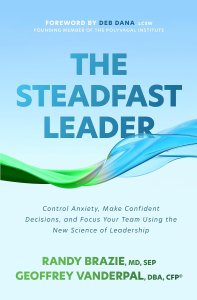
Today’s guest post is by Randy Brazie MD, SEP® and Geoffrey VanderPal DBA, CFP®, PMP, SHRM-SCP, coauthors of The Steadfast Leader: Control Anxiety, Make Confident Decisions, and Focus Your Team Using the New Science of Leadership (CLICK HERE to get your copy).

In the heart of Silicon Valley, nestled among tech giants, stood a modest yet ambitious startup, NewNexxTexx Innovations. Despite its potential, NewNexxTexx was grappling with high employee turnover and low morale. The arrival of their new CEO, David Raynod, marked the beginning of an extraordinary transformation, guided by the principles of Polyvagal Theory and Neuroception.

David’s Challenge: A Disconnected Workforce

David, a seasoned leader with a keen interest in psychology, quickly noticed the signs of a disconnected workforce: strained communication, lack of collaboration, and a pervasive sense of unease. He knew that for NewNexxTexx to thrive, he needed to foster a sense of safety and belonging among his team.

Polyvagal Theory: A New Leadership Lens

David was deeply influenced by Polyvagal Theory, which posits that our autonomic nervous system, responsible for our emotional responses, has three states: fight or flight, shutdown, and social engagement. He realized that the stressful environment at NewNexxTexx was keeping employees in a constant state of fight or flight, hindering creativity and collaboration.

The First Step: Cultivating Safety

David began by addressing the underlying stressors. He initiated open forums for employees to express their concerns and ideas. These weren’t typical meetings; they were structured to be non-hierarchical and inclusive, making every team member feel heard and valued. This approach started to shift the office atmosphere, activating the social engagement system among employees.

Neuroception: The Unseen Guardian

Understanding Neuroception – the body’s subconscious scanning of the environment for cues of safety or danger – David made subtle yet impactful changes to the office layout. He introduced more natural light, comfortable communal spaces, and areas for relaxation. These changes signaled to the employees’ nervous systems that the workplace was a safe space, fostering a sense of security and openness.

Building a Culture of Connection

David knew that lasting change required more than physical alterations; it needed a cultural shift. He introduced team-building activities that emphasized empathy and understanding. Employees participated in workshops on emotional intelligence and communication, which helped them understand their own and others’ emotional responses better.

Foster Psychological Safety: Create an environment where employees feel safe to express themselves without fear of negative consequences. This safety is the foundation for innovation and collaboration.

Understand the Unspoken: Be aware of the non-verbal cues and environmental factors that influence your team’s sense of security and adjust accordingly.

Cultivate Connection: Encourage practices that build empathy and understanding within your team. Strong interpersonal connections are key to a resilient and productive workforce.

Lead with Empathy: Recognize that each employee’s response to stress is different. Tailoring your approach to meet their individual needs can lead to a more harmonious and effective team.

Embrace Continuous Learning: Stay open to new ideas and approaches, especially from fields outside traditional business practices, like psychology.

Implementing Polyvagal Principles

David’s first step was to introduce the concept of Polyvagal Theory to his leadership team. He organized a series of workshops led by a clinical psychologist specializing in this field. The goal was to educate the leaders on how the autonomic nervous system affects workplace behavior and how to foster the ‘social engagement system’ – the state where employees feel safe, connected, and able to innovate.

Practical Steps for a Safer Environment

Redesigning Communication: David replaced the traditional top-down meeting structure with a ’round-table’ approach. Each meeting began with a two-minute mindfulness exercise to help team members transition into a state of calm and presence. He encouraged open dialogue and active listening, making sure every voice was heard.

Physical Environment Tweaks: Understanding the impact of Neuroception, David led an initiative to redesign the workspace. This included adding plants, optimizing natural light, creating open spaces for collaboration, and quiet zones for relaxation. The office’s color scheme was shifted to warmer, calming tones.

Regular Check-ins: David introduced weekly one-on-one check-ins between employees and their managers. These were not status updates on work but rather open conversations about how each employee was feeling, what challenges they were facing, and how they could be supported.

Cultivating Connection and Empathy

Empathy Workshops: NewNexxTexx started hosting monthly workshops focusing on building empathy and emotional intelligence. These workshops included role-playing exercises, where team members would act out scenarios to understand different perspectives.

Team Building Retreats: Quarterly retreats were organized, focusing on team-building activities that were not just fun but also designed to build trust and understanding among employees.

Mentorship Programs: A mentorship program was established, pairing newer employees with experienced ones. This program was not just about professional growth but also about building deeper interpersonal connections within the company.

Measuring the Impact

To track the effectiveness of these changes, David implemented regular employee surveys focused on workplace satisfaction, stress levels, and overall well-being. He also monitored key performance indicators like employee turnover, productivity metrics, and project completion rates.

The Outcome

Within a year, NewNexxTexx saw a dramatic turnaround. Employee satisfaction scores increased, turnover rates dropped, and productivity metrics showed significant improvement. The team was not only working more effectively but also reported higher levels of job satisfaction and well-being.

Key Takeaways for Leaders

Educate Your Team: Understanding the science behind stress responses and social engagement can transform your leadership approach.

Foster Open Communication: Create a space where employees feel safe to share and listen to each other.

Mind the Environment: Small changes in the physical workspace can significantly impact the team’s mood and productivity.

Build Empathy and Connection: Regular team-building and empathy exercises can strengthen team cohesion.

Track and Adapt: Regularly measure the impact of your changes and be ready to adapt your strategies.

We created this story as a powerful example of how integrating psychological insights into leadership can transform an organization. By understanding and applying the principles of Polyvagal Theory and Neuroception, leaders can create workplaces that not only drive success but also promote well-being and human connection. This approach is not just about improving the bottom line; it’s about nurturing a workplace culture where every individual can thrive.

the steadfast leader bookDr. Randy Brazie, MD, SEP®, coauthor of THE STEADFAST LEADER: Control Anxiety, Make Confident Decisions, and Focus Your Team Using the New Science of Leadership, serves as a medical director for Blue Cross Blue Shield of Arizona and has a private practice. He is board certified by the American Board of Psychiatry and Neurology in General Psychiatry and is a Somatic Experience Practitioner.

Dr. Geoffrey VanderPal, DBA, CFP®, coauthor of THE STEADFAST LEADER: Control Anxiety, Make Confident Decisions, and Focus Your Team Using the New Science of Leadership, is a professor in the Master of Science in Finance program at Purdue University Global, where he teaches financial planning–related courses. He has taught at various universities on four continents in the areas of finance, leadership, and business.

For more information visit neuroconsultinggroup.com

Did you enjoy this post? If so, I highly encourage you to take about 30 seconds to become a regular subscriber to this blog. It’s free, fun, practical, and only a few emails a week (I promise!). SIGN UP HERE to get the thoughtLEADERS blog conveniently delivered right to your inbox!

https://i0.wp.com/www.thoughtleadersllc.com/wp-content/uploads/2024/01/20240116-Brain.jpg?fit=1920%2C1459&ssl=1 1459 1920 Trevor Jones https://www.thoughtleadersllc.com/wp-content/uploads/2022/04/logo.png Trevor Jones2024-01-17 08:02:112024-01-16 23:54:47The Heartbeat of Change: A Leadership Journey Inspired by Polyvagal Theory

How long does your organization’s strategic planning process take to complete?

January 11, 2024/0 Comments/in Business Toolkit, Career, Leadership, Poll /by Trevor Jones

Our reader poll today asks: How long does your organization’s strategic planning process take to complete?

  • Less than a month 9.82%
  • 1-3 months 25.77%
  • 3-6 months 23.93%
  • 6-9 months 9.81%
  • More than 9 months 30.67%

Moving from Strategy to Execution. While 60% of you reported your strategic planning process takes less than six months, an alarming 40% report that it takes longer with 30% stating it’s more than nine months. This can be problematic because the world and markets change rapidly. By the time a plan you started writing nine months ago is ready for implementation, your market conditions may have changed so much that the plan is now irrelevant. Consider accelerating your base planning process and then updating the plan more frequently as market conditions change. The faster you start deploying your strategic plan and executing the initiatives it contains, the more likely it is you’ll be successful and get ahead of your competitors who have longer planning and execution cycles.

– Mike Figliuolo at thoughtLEADERS, LLC

Did you enjoy this post?  If so, I highly encourage you to take about 30 seconds to become a regular subscriber to this blog.  It’s free, fun, practical, and only a few emails a week (I promise!).  SIGN UP HERE to get the thoughtLEADERS blog conveniently delivered right to your inbox!

Read more

https://i0.wp.com/www.thoughtleadersllc.com/wp-content/uploads/2021/05/20140203-EKG-Pulse-Graph-with-Glowing-Blue-Line-Narrow.jpg?fit=833%2C258&ssl=1 258 833 Trevor Jones https://www.thoughtleadersllc.com/wp-content/uploads/2022/04/logo.png Trevor Jones2024-01-11 13:00:402024-01-09 22:00:12How long does your organization’s strategic planning process take to complete?

6 Negotiation Techniques You Should Add to Your Playbook

January 10, 2024/1 Comment/in Business Toolkit, Career, Communications, Leadership, Sales, Strategy /by Trevor Jones

six

Your negotiation strategy can make or break a deal. Learning negotiation tactics is key to becoming a more strategic negotiator.

Over the years, I’ve learned some great negotiating techniques and tactics. I’d like to share them now.

The Invisible Man

The first is called The Invisible Man. You can use this technique when you’re in the heat of a deal and you don’t want to give an answer right now, or you don’t like the position that the other party is taking. You just say, “Well, I have to check with my colleagues before I can give you an answer.” That other party isn’t in the room, so you’ve pushed back the negotiation. You’ve bought yourself some time, and now you have the ability to go back to the other party and say, “I know you wanted a 20% discount, but I’ve spoken with my colleagues and the best we can do is 10%.” You’ve created an invisible authority that the other party has to negotiate against. Read more

https://i0.wp.com/www.thoughtleadersllc.com/wp-content/uploads/2024/01/20240109-Six.jpg?fit=1920%2C1460&ssl=1 1460 1920 Trevor Jones https://www.thoughtleadersllc.com/wp-content/uploads/2022/04/logo.png Trevor Jones2024-01-10 06:30:322024-01-09 21:57:256 Negotiation Techniques You Should Add to Your Playbook
Page 26 of 82«‹2425262728›»

Get free blog posts by email NOW!

It’s the best 5 minutes a week you can spend on your development.

Subscribe HERE!

Get new posts FREE via RSS!
Follow thoughtLEADERS on LinkedInFollow thoughtLEADERS on twitter
This site contains affiliate links to products. We may receive a commission for purchases made through these links.
 

Check Out Our Courses

Our courses teach immediately applicable skills that have real impact on your business. From leadership to strategy and negotiation to conflict resolution, we have a broad set of course offerings that will drive immediate performance improvements.
OUR COURSES

Our Courses

Group of Business People Meeting
Puzzle Pieces
Glasses Looking Over Cityscape
Doors on a Wall
Cog Wheels
Man Reading Book
Fishing hook in the sea
Microphone in Lecture Hall
Charts on Blue Background
Wristwatch
Exploding Light Bulb
Man on Summit of Mountain
Lightning Bolts
Man Painting the Word Change on a Wall
Construction Cranes
Plant Growing in a Hand
High Performance Gears
Men Shaking Hands Closeup
Influence Definition
Sailboat at Sunset
Hanging light bulbs with glowing one isolated on dark blue background
Wagon Wheel
Risk
Strategic Client Engagement
Strategic Business Planning
Advanced Meeting Leadership
Building a Growth Mindset
Executive Communications
Structured Problem Solving
Creating Leadership Maxims
Leading inside the Box
Deliberate Decision Making
Simple Strategic Planning
Storytelling for Leaders
Storytelling for Sales
Executive Presence
Principles of Chart Design
Time Management Mastery
Breakthrough Innovation
Leadership Resilience
Conflict Resolution
Leading through Change
Project Management Reality
Coaching for Impact
High Performing Teams
Everything is Negotiable
Leading with Influence
Building Personal Resilience
thoughtLEADERSHIP
Engagement Management
Risk Management
Client Engagement
Strategic Business Planning
Advanced Meeting Leadership
Building a Growth Mindset
previous arrow
next arrow
 

eLearning Courses on TITAN

Structured Thought: Problem Solving
Puzzle Pieces
Structured Thought: Problem Solving

Clearly define a problem, scope all issues related to the problem, generate potential solutions, then analyze and select the best solution by using time-tested critical thinking methods and tools.

VIEW COURSE
Structured Thought and Communication
Group of Business People Meeting
Structured Thought and Communication

Craft clear and compelling recommendations that resonate with stakeholders. Get your ideas approved by using a proven method for delivering executive-level communications.

VIEW COURSE
Principles of Chart Design
Different Types of Line and Bar Charts
Principles of Chart Design

Create well-designed presentation charts that get your message across quickly and clearly to drive your audience to action. From data charts to concept charts, these methods help make your point.

VIEW COURSE
Engagement Management
Wagon Wheel
Engagement Management

Whether you’re an internal or external consultant or a project leader, learn proven methods, techniques, and processes to effectively lead consulting engagements that drive your client’s success.

VIEW COURSE
Strategic Business Planning
Cog Wheels
Strategic Business Planning

Use a straightforward and effective strategic planning process that shows how to craft a clear, compelling plan for your organization - not just one time, but on an ongoing basis year after year.

VIEW COURSE
Deliberate Decision Making

Make better, faster, and more effective decisions. Apply simple yet powerful decision making tools to define decision authority, manage risk, increase accountability, and drive execution.

VIEW COURSE
Everything is Negotiable
Men Shaking Hands
Everything is Negotiable

Become a better negotiator in all situations – from day to day interactions to hammering out large deals. Build the skills required to get what you want and strengthen relationships while you do.

VIEW COURSE
Breakthrough Innovation
Exploding Lightbulb
Breakthrough Innovation

Generate and select unique strategies that separate you from the competition. Construct bold and disruptive solutions then build and execute a plan for taking those strategies to market.

VIEW COURSE
Storytelling for Leaders
Man reading stories from a book
Storytelling for Leaders

Create business stories that inspire people, build connections with your audience, and ultimately advance your organization's goals by using a repeatable, straightforward method.

VIEW COURSE
Storytelling for Salespeople

Create and deliver stories that will take your sales efforts to the next level. Connect with and convince buyers in all situations using memorable stories. These stronger relationships drive more sales.

VIEW COURSE
Leading through Change

Lead your organization through the most challenging times using a proven change management process. Get people through the change and back to driving performance quickly and effectively.

VIEW COURSE
Building Leadership Resilience
Mountain Climbing Expedition
Building Leadership Resilience

Prepare your body and brain to be ready for and recover from your biggest challenges. Build approaches for overcoming stress, managing reactions to difficult events, and leading more effectively.

VIEW COURSE
Compelling Executive Presence

Build your ability to connect with your audience and convey your ideas in a clear and resonant way. Create meaningful connections between you and your audience to build buy-in.

VIEW COURSE
Coaching for Impact
Plant Growing in a Hand
Coaching for Impact: Foundation Course

Coach employees for performance and development more effectively by helping them identify and pursue their own solutions. Create the right environment and conditions to help them grow.

VIEW COURSE
Building Personal Resilience
Boat at Sunset
Building Personal Resilience

Build the habits and learn the behaviors required to manage stress, deal with adversity, and maintain your physical and mental wellbeing. Personal resilience is a key to your ongoing success.

VIEW COURSE
Time Management Mastery
Watches
Time Management Mastery

Learn techniques to manage your time, delegate, say “no,” and be more efficient. Balance your limited supply of time with the overwhelming demands that are placed on you every day.

VIEW COURSE
previous arrow
next arrow

Books You MUST Read

The Elegant Pitch
One Piece of Paper by Mike Figliuolo
Lead Inside the Box
10 Stories Great Leaders Tell
Getting Ahead
Sell with a Story
Lead with a Story
Mastering Communication at Work
The Hook
Innovative Leadership Fieldbook
Innovative Leaders Guide to Transforming Organizations
The Three Commitments of Leadership
The Littlest Green Beret
Storytelling in the Land of Oz
The Camino Way
Hiring Veterans
Disability is Human book
Race to Innovation
The Emergent Leader
Business is Simple
Business is Simple
The Elegant Pitch
One Piece of Paper by Mike Figliuolo
Lead Inside the Box
10 Stories Great Leaders Tell
Getting Ahead
Sell with a Story - Border
Lead with a Story
Leading from Your Best Self
Mastering Communication at Work
The Hook
Innovative Leadership Fieldbook
Innovative Leaders Guide to Transforming Organizations
20120318 Three Commitments
Leadership Vertigo
The Littlest Green Beret
Storytelling in the Land of Oz
The Camino Way
Hijacked by Your Brain
Outthink the Competition
Driving Innovation from Within
Hiring Veterans
Disability is Human
Race to Innovation
The Emergent Leader
Business is Simple
Global Mindset
previous arrow
next arrow
  • The Elegant Pitch
  • Disability is Human
  • Hiring Veterans
  • Race to Innovation
  • The Emergent Leader
  • Business is Simple
  • Global Mindset

Categories

This site contains affiliate links to products. We may receive a commission for purchases made through these links.

Our Course Offerings

Leadership Skills

Creating Your Leadership Maxims
Leading Inside the Box
Leading With Influence
Leading Through Change
Structured Problem Solving
Deliberate Decision Making
High Performing Teams
Simplified Strategic Planning
Strategic Business Planning
Coaching for Impact: Foundations
Coaching for Impact: Applications
Building Leadership Resilience
Engagement Management
Project Management Reality
Risk Management

Communication Skills

Communications: Foundations
Communications: Applications
Principles of Chart Design
Strategic Client Engagement
Storytelling for Leaders
Storytelling for Salespeople
Compelling Executive Presence
Advanced Meeting Leadership

Individual Skills

Conflict Resolution
Everything is Negotiable
Building a Growth Mindset
thoughtLEADERSHIP: Innovation
Building Personal Resilience
Time Management Mastery

Coaching & Consulting

©2026 thoughtLEADERS, LLC: Leadership Training for the Real World. thoughtLEADERS, LLC is a registered trademark of thoughtLEADERS, LLC.
  • Privacy Policy
  • Terms of Use
  • Cookie Policy
Scroll to top