


The Heartbeat of Change: A Leadership Journey Inspired by Polyvagal Theory

By understanding and applying the principles of Polyvagal Theory and Neuroception, leaders can create workplaces that not only drive success but also promote well-being and human connection.
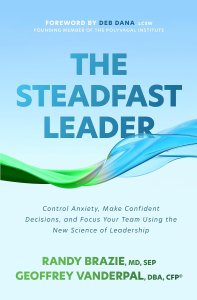
Today’s guest post is by Randy Brazie MD, SEP® and Geoffrey VanderPal DBA, CFP®, PMP, SHRM-SCP, coauthors of The Steadfast Leader: Control Anxiety, Make Confident Decisions, and Focus Your Team Using the New Science of Leadership (CLICK HERE to get your copy).
In the heart of Silicon Valley, nestled among tech giants, stood a modest yet ambitious startup, NewNexxTexx Innovations. Despite its potential, NewNexxTexx was grappling with high employee turnover and low morale. The arrival of their new CEO, David Raynod, marked the beginning of an extraordinary transformation, guided by the principles of Polyvagal Theory and Neuroception.
David’s Challenge: A Disconnected Workforce
David, a seasoned leader with a keen interest in psychology, quickly noticed the signs of a disconnected workforce: strained communication, lack of collaboration, and a pervasive sense of unease. He knew that for NewNexxTexx to thrive, he needed to foster a sense of safety and belonging among his team.
Polyvagal Theory: A New Leadership Lens
David was deeply influenced by Polyvagal Theory, which posits that our autonomic nervous system, responsible for our emotional responses, has three states: fight or flight, shutdown, and social engagement. He realized that the stressful environment at NewNexxTexx was keeping employees in a constant state of fight or flight, hindering creativity and collaboration.
The First Step: Cultivating Safety
David began by addressing the underlying stressors. He initiated open forums for employees to express their concerns and ideas. These weren’t typical meetings; they were structured to be non-hierarchical and inclusive, making every team member feel heard and valued. This approach started to shift the office atmosphere, activating the social engagement system among employees.
Neuroception: The Unseen Guardian
Understanding Neuroception – the body’s subconscious scanning of the environment for cues of safety or danger – David made subtle yet impactful changes to the office layout. He introduced more natural light, comfortable communal spaces, and areas for relaxation. These changes signaled to the employees’ nervous systems that the workplace was a safe space, fostering a sense of security and openness.
Building a Culture of Connection
David knew that lasting change required more than physical alterations; it needed a cultural shift. He introduced team-building activities that emphasized empathy and understanding. Employees participated in workshops on emotional intelligence and communication, which helped them understand their own and others’ emotional responses better.
Foster Psychological Safety: Create an environment where employees feel safe to express themselves without fear of negative consequences. This safety is the foundation for innovation and collaboration.
Understand the Unspoken: Be aware of the non-verbal cues and environmental factors that influence your team’s sense of security and adjust accordingly.
Cultivate Connection: Encourage practices that build empathy and understanding within your team. Strong interpersonal connections are key to a resilient and productive workforce.
Lead with Empathy: Recognize that each employee’s response to stress is different. Tailoring your approach to meet their individual needs can lead to a more harmonious and effective team.
Embrace Continuous Learning: Stay open to new ideas and approaches, especially from fields outside traditional business practices, like psychology.
Implementing Polyvagal Principles
David’s first step was to introduce the concept of Polyvagal Theory to his leadership team. He organized a series of workshops led by a clinical psychologist specializing in this field. The goal was to educate the leaders on how the autonomic nervous system affects workplace behavior and how to foster the ‘social engagement system’ – the state where employees feel safe, connected, and able to innovate.
Practical Steps for a Safer Environment
Redesigning Communication: David replaced the traditional top-down meeting structure with a ’round-table’ approach. Each meeting began with a two-minute mindfulness exercise to help team members transition into a state of calm and presence. He encouraged open dialogue and active listening, making sure every voice was heard.
Physical Environment Tweaks: Understanding the impact of Neuroception, David led an initiative to redesign the workspace. This included adding plants, optimizing natural light, creating open spaces for collaboration, and quiet zones for relaxation. The office’s color scheme was shifted to warmer, calming tones.
Regular Check-ins: David introduced weekly one-on-one check-ins between employees and their managers. These were not status updates on work but rather open conversations about how each employee was feeling, what challenges they were facing, and how they could be supported.
Cultivating Connection and Empathy
Empathy Workshops: NewNexxTexx started hosting monthly workshops focusing on building empathy and emotional intelligence. These workshops included role-playing exercises, where team members would act out scenarios to understand different perspectives.
Team Building Retreats: Quarterly retreats were organized, focusing on team-building activities that were not just fun but also designed to build trust and understanding among employees.
Mentorship Programs: A mentorship program was established, pairing newer employees with experienced ones. This program was not just about professional growth but also about building deeper interpersonal connections within the company.
Measuring the Impact
To track the effectiveness of these changes, David implemented regular employee surveys focused on workplace satisfaction, stress levels, and overall well-being. He also monitored key performance indicators like employee turnover, productivity metrics, and project completion rates.
The Outcome
Within a year, NewNexxTexx saw a dramatic turnaround. Employee satisfaction scores increased, turnover rates dropped, and productivity metrics showed significant improvement. The team was not only working more effectively but also reported higher levels of job satisfaction and well-being.
Key Takeaways for Leaders
Educate Your Team: Understanding the science behind stress responses and social engagement can transform your leadership approach.
Foster Open Communication: Create a space where employees feel safe to share and listen to each other.
Mind the Environment: Small changes in the physical workspace can significantly impact the team’s mood and productivity.
Build Empathy and Connection: Regular team-building and empathy exercises can strengthen team cohesion.
Track and Adapt: Regularly measure the impact of your changes and be ready to adapt your strategies.
We created this story as a powerful example of how integrating psychological insights into leadership can transform an organization. By understanding and applying the principles of Polyvagal Theory and Neuroception, leaders can create workplaces that not only drive success but also promote well-being and human connection. This approach is not just about improving the bottom line; it’s about nurturing a workplace culture where every individual can thrive.
 Dr. Randy Brazie, MD, SEP®, coauthor of THE STEADFAST LEADER: Control Anxiety, Make Confident Decisions, and Focus Your Team Using the New Science of Leadership, serves as a medical director for Blue Cross Blue Shield of Arizona and has a private practice. He is board certified by the American Board of Psychiatry and Neurology in General Psychiatry and is a Somatic Experience Practitioner.
Dr. Geoffrey VanderPal, DBA, CFP®, coauthor of THE STEADFAST LEADER: Control Anxiety, Make Confident Decisions, and Focus Your Team Using the New Science of Leadership, is a professor in the Master of Science in Finance program at Purdue University Global, where he teaches financial planning–related courses. He has taught at various universities on four continents in the areas of finance, leadership, and business.
For more information visit neuroconsultinggroup.com
Did you enjoy this post? If so, I highly encourage you to take about 30 seconds to become a regular subscriber to this blog. It’s free, fun, practical, and only a few emails a week (I promise!). SIGN UP HERE to get the thoughtLEADERS blog conveniently delivered right to your inbox!


Leave a Reply
Want to join the discussion?Feel free to contribute!