Our reader poll today asks: When someone on your team is having trouble seeing the bigger picture and they only focus on the details, what do you do?
I explain things until I’m sure they fully understand the bigger picture 53.34%
I try to explain things for a reasonable time and after that it’s up to them 42.91%
I explain it once and if they don’t get it, I let them stay in the details 3.75%
Patience… to a point. Seeing the big picture is important for team members so they know where their efforts fit into the larger organization. Sometimes it’s hard to understand that bigger picture. It’s easy to get mired in day-to-day activities and the big picture requires team members to stretch their thinking and engage in concepts, departments, and with people they’re unfamiliar with. The majority of you report being willing to help them fully understand that bigger picture no matter how much effort it takes. Another large group of respondents, though, do have a point where they say enough is enough and leave it up to the team member after they’ve tried explaining things in sufficient detail. If you’re getting tired of explaining the big picture to team members who don’t get it, consider having one of their peers explain it to them. It might feel less intimidating and that peer knows the details of the day-to-day and they may have an easier time explaining how it connects to the big picture.
Did you enjoy this post? If so, I highly encourage you to take about 30 seconds to become a regular subscriber to this blog. It’s free, fun, practical, and only a few emails a week (I promise!). SIGN UP HERE to get the thoughtLEADERS blog conveniently delivered right to your inbox!
https://i0.wp.com/www.thoughtleadersllc.com/wp-content/uploads/2021/05/20140203-EKG-Pulse-Graph-with-Glowing-Blue-Line-Narrow.jpg?fit=833%2C258&ssl=1258833Trevor Joneshttps://www.thoughtleadersllc.com/wp-content/uploads/2022/04/logo.pngTrevor Jones2024-03-14 13:00:112024-03-13 00:36:24When someone on your team is having trouble seeing the bigger picture and they only focus on the details, what do you do?
Keep these five things in mind when you’re splitting up the work for your team.
A key task as the leader of a high performing team is how you distribute work across the members of your team. It needs to be done fairly. Note, I didn’t say equally. Work allocation needs to be done fairly because you want perceptions of equality. You want people to work on things they’re good at but also that they’re excited by. There are five criteria to think about when distributing work.
1. Priority
First, consider the priority of the work in terms of the team’s goals and the organization’s goals. Priority needs to drive everything. If a project is a top priority and somebody’s available to do that work, they get that work. And you need to allocate it appropriately.
2. Skill Sets
Second, consider the skill set of the person who you’re thinking about distributing the work to. If they have the right skill set, you’re going to get a high-quality result. This also prevents people from failing. You’re giving them something they can be successful with.
3. Availability
Next, consider availability. All things being equal in terms of priority and skill sets, who is free to do the work? Who has the bandwidth? You shouldn’t be shifting resources from one project to another when you have available resources to pick up that new project. If you start shifting resources around between projects when you have available resources elsewhere, you’re going to lose momentum on that first project and that project might fail.
4. Development Opportunity
Next, you have to think about the development opportunity this project might present for that person because that’s how you’re going to take your team to the next level of performance.
5. Interest
The last consideration is, “Does somebody have an interest in it?” If someone is really interested and passionate about a project, you should let them take it on. They’re going to be really motivated, excited to do it, and hopefully their performance will follow. Now one caveat here: Make sure people don’t just gravitate to the work they enjoy doing and stay away from things that they’re not comfortable with. They’re going to end up getting pigeon-holed and they’ll be very narrow in their focus.
If you think about all these considerations as you distribute work across your team, it’s going to ensure that you tackle the highest priority projects with the people who have the right skills to do them. You’ll be able to successfully execute the project while also developing your team’s skills.
Want to learn more about building high-performing teams? How about taking an entire course on it? Go directly to the course and start learning how to build high-performing teams. The entire course is available at LinkedIn Learning. Enjoy!
Did you enjoy this post? If so, I highly encourage you to take about 30 seconds to become a regular subscriber to this blog. It’s free, fun, practical, and only a few emails a week (I promise!). SIGN UP HERE to get the thoughtLEADERS blog conveniently delivered right to your inbox!
https://i0.wp.com/www.thoughtleadersllc.com/wp-content/uploads/2024/03/20240313-Number-5.jpg?fit=1920%2C1280&ssl=112801920Trevor Joneshttps://www.thoughtleadersllc.com/wp-content/uploads/2022/04/logo.pngTrevor Jones2024-03-13 06:30:542024-03-13 00:44:125 Considerations for Distributing Your Team’s Work
Uncover effective methods for assessing candidate integrity in interviews, from questions to integrating AI analytics and the future of virtual hiring.
In the modern hiring processes, the evaluation of candidate integrity stands as a cornerstone, often determining an organization’s long-term success and cultural health. Integrity is crucial in defining the ethical framework and decision-making fabric of potential employees.
Integrity transcends mere qualifications and experience, embedding itself as a vital component of organizational ethos. In candidates, integrity is a harbinger of trust, responsibility, and ethical behavior — qualities imperative for building strong, sustainable business relationships and a positive work environment.
Why measure candidate integrity
Integrity in a candidate or anyone is crucial in determining how they can handle complex situations and responsibilities, particularly when not under direct supervision. Integrity is a fundamental predictor of a candidate’s dependability, honesty, and ethical behavior in a professional setting. Being able to assess someone’s integrity during the interview process is important and not always easy.
Candidates with strong integrity will likely foster a trustworthy and accountable workplace culture, which is essential for effective teamwork. An interviewers ability to assess a candidate’s integrity helps mitigate risks associated with unethical behaviors, which can have detrimental impact one the workplace and morale.
Questions to ask during interviews
When evaluating a candidate’s integrity during an interview, the questions you ask are the key. These conversations should be designed not just to elicit information but also to offer a window into the candidate’s ethical compass and decision-making process to ensure their character aligns with the values and standards of your organization.
Some questions you to ask may include, “How do you define ethical integrity in the workplace?” and follow that up with “Based on that definition, describe a situation where you faced a significant ethical dilemma and how you handled it?” Or “How do you define integrity, and can you give an example of how you have demonstrated it in a professional setting?”
You may also ask questions related to their trustworthiness, such as, “can you recall a time when your integrity was challenged and explain how you responded?” Or “In your opinion, what is the importance of integrity in this specific role/industry?”
Other questions that could be asked to uncover a candidate’s ethics may include, “Have you ever witnessed unethical behavior in the workplace, and if so, what went through your mind and how did you handle it?” Or “Share an experience where you had to admit to making a significant mistake and how you handled the situation?”
These questions are designed to provide deeper insights into the candidate’s thought process, decision-making, their personal values, and how they align with the organization’s standards. Additionally, role-play-type questions or directly asking what integrity means to them allows you to gauge how thoughtful and reflective they are and how they may fit in your organization.
Beyond behavioral interviewing techniques
When hiring, it’s essential to go beyond traditional behavioral interviewing techniques to thoroughly evaluate a candidate’s integrity. Behavioral questions may not fully probe a candidate’s ethical depth. Integrating innovative methods is key to achieving a more holistic understanding.
Situational Judgement Tests (SJTs) can be invaluable in uncovering how candidates handle ethical dilemmas in real time. Psychometric testing also known as psychological testing or assessment, further enhances this approach by evaluating traits like conscientiousness and honesty, offering a psychological viewpoint on the candidate’s character.
Additionally, discussing real-life ethical challenges or incorporating case studies during interviews helps gauge how candidates have navigated moral decisions in practical scenarios. Integrating AI-driven analytics in interviews also brings a new dimension, analyzing verbal and non-verbal cues to capture nuances that traditional methods might overlook.
These new and advanced approaches enable interviewers to gain a deeper understanding of a candidate’s integrity, which is vital for selecting individuals who align with the organization’s ethical standards and contribute to a principled workforce.
Importance of ongoing training for interviews
Ongoing training for interviewers keeps them updated with the latest interviewing techniques and ethical evaluation practices. Training provides interviewers with current and new methodologies and perspectives, crucial for a comprehensive evaluation of a candidate’s integrity.
Effective training sharpens interviewers’ ability to craft and pose questions that delve deep into a candidate’s ethical reasoning and decision-making. It’s not just about asking the right questions but also framing them to elicit authentic and insightful responses.
Ongoing training also ensures the honing and development of key interviewing skills like emotional intelligence and active listening skills to interpret and understand the nuances in candidates’ responses both verbal and non-verbal and discern their true character. Training helps interviewers learn and sharpen and refine this skill, so interviewers can detect rehearsed answers and recognize inconsistencies.
Ultimately, ongoing training prepares interviewers to adapt their techniques to various interviewing scenarios, including the now prevalent virtual interviews. As remote interviews become more common, interviewers must be skilled in assessing integrity through a screen as adeptly as in-person.
Adapting integrity to virtual interviews and the future of interviewing candidates
Adapting integrity assessments to virtual interviews mirrors the in-person experience and, with the advent of AI and advanced analytics, promises an even more nuanced approach in the future of interviewing.
AI technology brings sophisticated analytics to the table that were previously inaccessible in face-to-face interviews, such as analyzing a candidate’s eye movements, facial expressions, and even the duration they take to respond to complex ethical questions. These metrics can provide deeper insights into a candidate’s sincerity and thought processes, complementing the interviewer’s evaluation.
This integration of AI into virtual interviews signifies a significant leap in how integrity is assessed, allowing for a more comprehensive understanding of a candidate’s ethical makeup beyond what can be discerned through conversation alone. The future of interviewing looks towards a blend of human discernment and AI-powered analytics, ensuring a more complete and accurate assessment of candidate integrity.
Paul Bramson has been described as a powerhouse on keynote stages and in training arenas. He is recognized as a global authority and thought leader in the areas of leadership, sales & communication. With over 25 years of experience, Paul has a unique ability to connect with professionals, leaders, and teams at all levels, providing them with valuable insights and empowering them with the most relevant knowledge and skills. Paul is a true Bostonian, graduated from Boston University, and currently lives in Atlanta, GA.
Did you enjoy this post? If so, I highly encourage you to take about 30 seconds to become a regular subscriber to this blog. It’s free, fun, practical, and only a few emails a week (I promise!). SIGN UP HERE to get the thoughtLEADERS blog conveniently delivered right to your inbox!
https://i0.wp.com/www.thoughtleadersllc.com/wp-content/uploads/2024/03/20240309-Interview-Two-Women.jpg?fit=1920%2C1280&ssl=112801920Trevor Joneshttps://www.thoughtleadersllc.com/wp-content/uploads/2022/04/logo.pngTrevor Jones2024-03-11 08:02:002024-03-09 18:57:18Evaluating Candidate Integrity in Interviews
Our reader poll today asks: How reliant are you on suppliers from other countries?
Extremely: critical amounts of our inputs come from other countries 15.75%
Very: we source several critical inputs from other countries 16.54%
Somewhat: a few important inputs come from other countries 25.20%
Not very: a few less important inputs come from other countries 9.44%
Not at all: barely any inputs come from other countries 33.07%
Protecting your supply chain. 30% of you are very dependent upon out-of-country sources of supply. Given the world turmoil we regularly face, having contingency plans in place in the event of supply disruptions is a wise idea. Consider building an alternate supplier base, having backup stock, and possible product changes to reduce reliance on those key suppliers. For those of you who don’t worry because not much of your input comes from outside the country, ask your suppliers this same question. You might be surprised to find a key “domestic” supplier is very reliant on out-of-country components and your risk might be higher than you originally thought. Bottom line – understand your supply chain risk and be prepared with contingency plans in case the unthinkable happens.
Did you enjoy this post? If so, I highly encourage you to take about 30 seconds to become a regular subscriber to this blog. It’s free, fun, practical, and only a few emails a week (I promise!). SIGN UP HERE to get the thoughtLEADERS blog conveniently delivered right to your inbox!
https://i0.wp.com/www.thoughtleadersllc.com/wp-content/uploads/2021/05/20140203-EKG-Pulse-Graph-with-Glowing-Blue-Line-Narrow.jpg?fit=833%2C258&ssl=1258833Trevor Joneshttps://www.thoughtleadersllc.com/wp-content/uploads/2022/04/logo.pngTrevor Jones2024-03-07 13:00:212024-03-06 01:21:12How reliant are you on suppliers from other countries?
Building chemistry between the members of your team is all about personalities, shared beliefs, and trust.
It’s great to have a clear vision, a mission, a nice set of prioritized initiatives, and all the right people. But what starts differentiating a team from a high-performing team is chemistry and trust. These intangibles are some of the most critical elements of building a high-performing team, but they’re also some of the most elusive ones to build and capture.
Personalities and Shared Beliefs
Building chemistry between the members of your team is all about personalities and shared beliefs. Make sure everyone on your team is involved in the interview process because candidates will show different sides of themselves to different people. And sometimes, those sides can be unattractive detractors from what you’re trying to build. Read more
https://i0.wp.com/www.thoughtleadersllc.com/wp-content/uploads/2024/03/20240306-Team-Planning.jpg?fit=1920%2C1281&ssl=112811920Trevor Joneshttps://www.thoughtleadersllc.com/wp-content/uploads/2022/04/logo.pngTrevor Jones2024-03-06 06:32:542024-03-06 01:31:42Team Chemistry: How Do You Build It?
Dr. Sam Adeyemi offers insight to business executives and C-suite professionals on cultivating innovation within any organization.
Today’s guest post is by Dr. Sam Adeyemi, author of “Dear Leader: Your Flagship Guide to Successful Leadership.”
5 Leadership Tips to Unlock Your Team’s Potential
Innovating is a lot like driving down a road. If the weather is clear, the road is unobstructed, and the light is green, then everything will ceaselessly flow towards its destination. However, when the traffic stops, it often comes to a grinding halt. The wrong kind of leadership stifles innovation at the source, while the right kind of leadership keeps the road ready for new drivers at every turn. What defines the difference?
Discover the five things successful leaders do to encourage nonstop innovation.
1. Alleviate fear
The young British writer Eric Blair was worried his family would be embarrassed by his time living in poverty. So, he published his very first book as the now-famous George Orwell. Charlotte Brontë published most of her early works as Currer Bell, and Victorian novelist George Eliot was born Mary Ann Evans. Why the deceit? Because women writers of the 19th century feared being disregarded based solely on their biological sex, and writers throughout history have feared both misunderstanding and reprisal.
Fear is a roadblock to honest communication and innovative thinking. It’s that simple. In fact, 85% of executives believe fear and apprehension are what prevents progress within their organization. New ideas can come from anyone — from frontline workers to C-suite executives. But none of this matters unless leaders cultivate an open-minded environment that welcomes every idea, challenges conventional thinking, and removes fear from the equation.
2. Show support
From the late 1800s to the early 1900s, Booker T. Washington and W.E.B Du Bois were two of the most prominent civil rights leaders in America. Examined up close, they agreed on almost nothing. Mr. Washington believed discrimination was an inescapable reality, and he promoted the ideas of self-help and skilled labor as a means of elevating the black community. Conversely, Mr. Du Bois believed in the power of the intellectual elite, and his prescription for change involved political action and a liberal arts education. Still, there was one thing that the two men agreed on that superseded everything else: successful leaders show their support.
Even the most self-assured professionals need someone to believe in their future success. As a leader, when you outwardly encourage team members to pursue their own ideas, you are not only exhibiting faith in the individual’s potential, but you are also letting others know that innovation is supported at your organization. As Mr. Washington and Mr. Du Bois proved just over 100 years ago, there are a number of ways for leaders to show that support. All in all, the method matters much less than the authenticity and consistency of the sentiment itself.
3. Release control
There are nearly 200 types of swords throughout the world. So, needless to say, there are many different ways to hold the hilt of one’s blade. But there is one universal piece of advice that applies to almost every weapon-wielding technique: “Only apply pressure when and where it’s necessary.” For example, if you’re holding a katana, you need only squeeze firmly with your pinky and index fingers. This freedom of movement is what makes the elegant cuts of the katana possible, while an overly firm grip reduces mobility and creates a much less effective hacking motion.
As a leader, your management should apply the least amount of pressure possible, relinquishing control to your team at every opportunity. When you excessively supervise or micromanage any collective effort, the results are uninspiring. People want to think for themselves, be empowered to make both small and large decisions, and work in a way that best suits their goals and ambitions. Minimal management and a supportive working culture can give your team the freedom it needs to strike with passion and precision.
4. Welcome failure
The Virtual Boy was a bizarre by-product of Nintendo’s meteoric rise in American pop culture from 1986 to the late 1990s. This clunky headset promised a first-class ticket to the “third dimension” of video games. Ultimately, however, it delivered a single-color 3D experience that was both awkward to play and caused motion sickness in the process. Following the success of the Super Nintendo, the Virtual Boy was an unmitigated failure and seemingly a giant step backward for the company. Yet, its cursed development produced the priceless tacit knowledge that would result in one of the company’s most iconic systems: 1997’s Nintendo 64.
Successful leaders understand that failure is part of every process. What’s more, with the right mindset, failure is often a precursor to a larger success or organizational evolution. In a recent study that examined everything from grant funding applications to terrorist activity, researchers discovered two underlying trends: (1) failure happens to everyone, and (2) the only difference between those who eventually succeed and those who don’t is whether or not they endure the inevitable “stagnation period.” In this way, supporting failure is actually an integral part of supporting the creative process of your entire team.
5. Reward fairly
From 1206 to 1294, the Mongol army captured nearly all of Eurasia and created the world’s largest contiguous empire in history. What gave their military might the upper hand in almost every situation? Well, a number of things. However, perhaps most importantly, the Mongol army was one of the first examples of a completely merit-based military organization. Many Khans were elected to their position, and no one ascended the ranks of the military without succeeding in battle and building their own resumé. Simply put, rewards were given fairly, and the results were undeniable.
If something is working or someone is generating great ideas, it is critical for leaders to acknowledge that success. Nearly 70% of employees say they would work harder if they felt their efforts were more fairly recognized. Of course, defining this fairness is absolutely essential. While justly given rewards can be a positive morale booster, unfair recognition can turn incentives into something demoralizing that only favors the outspoken.
Atlanta-based Dr. Sam Adeyemi (SAY: Ah Day yeh me) is CEO of Sam Adeyemi, GLC, Inc. and founder and executive director of Daystar Leadership Academy (DLA). More than 45,000 alumni have graduated from DLA programs, and more than 3 million CEOs and high performing individuals follow him on top social media sites. Dr. Sam’s new book is “Dear Leader: Your Flagship Guide to Successful Leadership.” He holds a Doctorate in Strategic Leadership from Virginia’s Regent University, and is a member of the International Leadership Association. He and his wife, Nike (say Nee keh) have three children. Learn more at SamAdeyemi.com.
Did you enjoy this post? If so, I highly encourage you to take about 30 seconds to become a regular subscriber to this blog. It’s free, fun, practical, and only a few emails a week (I promise!). SIGN UP HERE to get the thoughtLEADERS blog conveniently delivered right to your inbox!
https://i0.wp.com/www.thoughtleadersllc.com/wp-content/uploads/2024/03/20240303-Light-on-Road.jpg?fit=1920%2C1280&ssl=112801920Trevor Joneshttps://www.thoughtleadersllc.com/wp-content/uploads/2022/04/logo.pngTrevor Jones2024-03-04 08:01:272024-03-03 23:07:12Opening Roads to Innovation
Our reader poll today asks: How do you handle it when a customer is surprised by a fee you charge that is clearly stated in your contract?
We point out the clause and charge the fee 66.14%
We compromise somewhat on the fee but still charge something 11.12%
We forgive the fee the first time and acknowledge the miscommunication 21.69%
We renegotiate the contract to remove controversial fees 1.05%
Profit or Relationship. When a customer is legitimately surprised by a fee that’s in the contract but that they were unaware of or didn’t fully understand, two-thirds of you report explaining the fee and charging it. The other third of you make some form of accommodation in either reducing or forgiving the fee (or even removing them from your contracts). This raises the question for all of you – how clear are you about explaining fees in the first place? It’s easy to gloss over them but you’re setting yourself up for conflict down the road when the customer isn’t aware of the fee or doesn’t understand them. When the time comes to decide how to deal with the fee assessment, recognize that charging it does improve profit in the near term but creates risk of customer loss if they leave the interaction with a bad feeling toward you for fully charging them a “surprise” fee. Consider the long-term profit impacts of making a small concession in the near term to build a customer relationship that lasts for a long time.
Did you enjoy this post? If so, I highly encourage you to take about 30 seconds to become a regular subscriber to this blog. It’s free, fun, practical, and only a few emails a week (I promise!). SIGN UP HERE to get the thoughtLEADERS blog conveniently delivered right to your inbox!
https://i0.wp.com/www.thoughtleadersllc.com/wp-content/uploads/2021/05/20140203-EKG-Pulse-Graph-with-Glowing-Blue-Line-Narrow.jpg?fit=833%2C258&ssl=1258833Trevor Joneshttps://www.thoughtleadersllc.com/wp-content/uploads/2022/04/logo.pngTrevor Jones2024-02-29 13:00:322024-02-28 04:19:35How do you handle it when a customer is surprised by a fee you charge that is clearly stated in your contract?
Recruiting the right people involves creating appropriate role descriptions and knowing where to look.
One of the most exciting aspects of building a high-performing team is recruiting people to be members of that team. There’s nothing better than finding that really talented person who wants to come work with you. So as you think about doing this recruiting and finding the right people, you need to understand how to create role descriptions based on the team’s skill needs. Read more
https://i0.wp.com/www.thoughtleadersllc.com/wp-content/uploads/2021/06/20210609-Businesswomen-Interview.jpg?fit=1910%2C1276&ssl=112761910Trevor Joneshttps://www.thoughtleadersllc.com/wp-content/uploads/2022/04/logo.pngTrevor Jones2024-02-28 06:30:482024-02-28 04:15:07How to Recruit the Right People For Your Team
Explore training and development through the lens of adversity.
Today’s guest post is by Jennifer Schielke, author of Leading for Impact: The CEO’s Guide to Influencing With Integrity.
What is your superpower?
This question has been used as a common icebreaker. Instinctively, for me, various comic book superheroes come to mind, then something practical like a laundry wizard. But the ones that impact me are those I don’t even think of on my own. Maybe an extension of that is something obvious right in front of me that I just see as ugly and want to ignore.
So, who chooses adversity as a superpower? Well, someone bold enough to take unwanted reality and refine it into a badge of GRIT – Gratitude, Resilience, Integrity, and Tenacity.
The worldwide population of people has this one hurdle in common: Everyone wrestles with adversity in different areas of life and with various magnitudes of impact. Each waking day ushers in a playground of obstacles to obstruct our paths in our personal and professional lives. Some difficulties are inherited from the world or environment(s) around us, while other challenges are created all on our own by the choices we make, attitudes we have, and actions (or inactions) we execute.
I admit that the world is not an easy place to make our way, but a simple mind shift can transform how we approach adversity: We can embrace it and use it as a catalyst for growth. Adversity is our ally for achievement.
GRIT
No one needs to remain in a state of serious or continued difficulty and/or misfortune; there is always a way out. Times of affliction and hardship are valuable for building confidence in our ability to overcome any barrier. Adversity becomes an asset as we approach it with GRIT, looking expectantly to the growth that we experience in the process.
Gratitude
Gratitude is a powerful state of mind and a necessary tool for working through the battles we face. Receiving adversity in readiness to reshape it for productive good is a useful life discipline. When we build thankfulness into our life practice, it is contagious.
The individual impact we can appreciate is lowering our stress in those situations and celebrating our ability to harness every opportunity for growth. Gratitude effectively recasts adversity as an ally to our career path, to developing healthy relationships, and to fostering overall well-being.
Resilience
Resilience evidences the capacity – physical, mental, spiritual, and emotional toughness – we are equipped with (and continue building) to withstand, overcome, and be renewed by the obstacles that intersect with our lives and careers.
There are many things in life that only we have the control to effect change in. The risk or fear of blame is far overshadowed by the ability to show accountability and leadership for an outcome we own and embrace or change. Growing in resilience strengthens character and the foundation you draw from in times of adversity.
Integrity
Integrity embodies your full commitment to who you are and the principles that establish your success. It’s the pattern and approach you bring into being for every obstacle and challenge that presents itself. It builds security for yourself and those you lead in knowing that you will indeed find a way through the storm and be better for it.
Integrity holds fast to both intention and influence. Whatever the circumstance, you will navigate a plan toward success and that very behavior will become the beacon of hope for others to develop the same for themselves. People around you learn by what you model. Integrity is being mindful of your own growth through trials, in order that you might also influence others well.
Tenacity
Persistence outpaces adversity for the win. Tenacity is gained not in things gifted, nor in times of ease and simplicity. It is molded and strengthened through challenges, discomfort, and times of trouble.
Determination and hard work are foundational to achieving success. The growth you experience when faced with life’s obstacles – whether physical, mental, spiritual, and/or emotional – is character defining. When you decide for yourself that you hold the courage and resolve to overcome adversity, you become a well-suited warrior for success. The triumphs you are assured of are set in motion by the tenacity that becomes your way of life.
Hero in Action
We can approach every situation through a different lens. The way we view our circumstances can either be paralyzing or propel us forward. Some disruptors we see coming, some catch us by surprise, and some – let’s be honest – linger longer than we might want.
The common thread, regardless of what lies before us, is that we have the power and authority to shape the outcome for the better. Next time someone asks you for your superpower, tell them Adversity is your Superpower!
Jennifer Schielke (www.summitgroupsolutions.com) is the author of Leading for Impact: The CEO’s Guide to Influencing With Integrity and the CEO/co-founder of Summit Group Solutions, LLC, a relationship-focused IT staffing and recruiting partner. Her company is a multi-year Inc. 5000 awardee and a 2023 Inc. Power Partner. Schielke’s 30 years of business leadership experience also includes 20 years of life-on-life ministry, which advanced her commitment to serve others generously and to lead with integrity. Her passion overflows into leadership development and team engagement.
Did you enjoy this post? If so, I highly encourage you to take about 30 seconds to become a regular subscriber to this blog. It’s free, fun, practical, and only a few emails a week (I promise!). SIGN UP HERE to get the thoughtLEADERS blog conveniently delivered right to your inbox!
https://i0.wp.com/www.thoughtleadersllc.com/wp-content/uploads/2024/02/20240226-Walking-Uphill.jpg?fit=1920%2C1280&ssl=112801920Trevor Joneshttps://www.thoughtleadersllc.com/wp-content/uploads/2022/04/logo.pngTrevor Jones2024-02-26 08:02:132024-02-26 02:34:22Adversity as a Superpower
Our reader poll today asks: What’s the view in your company of people taking company time off to volunteer for non-profit causes?
We encourage it strongly and have programs to support it 53.39%
We encourage it but don’t have formal programs 17.80%
We’re okay with it but it needs to be limited 14.84%
We tolerate it but don’t really like to do it 4.23%
We discourage it and only support it in extreme cases 1.69%
We prohibit it. Do it on your own time 8.05%
Supporting Non-Profit Support. 70% of you work for organizations that support employees contributing to non-profit causes (with 53% of you having formal programs at work for doing so). That 70% jumps to 85% when there are clear limits on how much time people dedicate to such support. If your company does support time contributions to non-profit causes, it may be worthwhile to formalize your program. First, doing so sends a strong message to employees that you support those causes. Second, it can put in place limits on how much time people dedicate to those programs. You may as well get credit for supporting things you’re already doing and avoid the headache of not being clear about boundaries. Formalize and communicate your programs now to increase participation and minimize confusion.
Did you enjoy this post? If so, I highly encourage you to take about 30 seconds to become a regular subscriber to this blog. It’s free, fun, practical, and only a few emails a week (I promise!). SIGN UP HERE to get the thoughtLEADERS blog conveniently delivered right to your inbox!
https://i0.wp.com/www.thoughtleadersllc.com/wp-content/uploads/2021/05/20140203-EKG-Pulse-Graph-with-Glowing-Blue-Line-Narrow.jpg?fit=833%2C258&ssl=1258833Trevor Joneshttps://www.thoughtleadersllc.com/wp-content/uploads/2022/04/logo.pngTrevor Jones2024-02-22 13:00:572024-02-21 03:04:58What’s the view in your company of people taking company time off to volunteer for non-profit causes?
Building a high-performing team involves hiring people with technical, functional, and cultural skills.
As the leader of a high-performing team, you’re personally responsible for making sure your team has the required set of skills to succeed and execute against all the initiatives that you have on your prioritization list. You need to evaluate your team’s mission. You need to look at the key initiatives. And then, you need to map out the skills and capabilities required to succeed. Read more
https://i0.wp.com/www.thoughtleadersllc.com/wp-content/uploads/2021/06/20210602-Team-Gathering.jpg?fit=1280%2C853&ssl=18531280Trevor Joneshttps://www.thoughtleadersllc.com/wp-content/uploads/2022/04/logo.pngTrevor Jones2024-02-21 06:30:352024-02-21 03:00:35How to Build Teams With the Right Mix of Skills
Gain insights on the unique nature of innovation teams and the implications for building and supporting them.
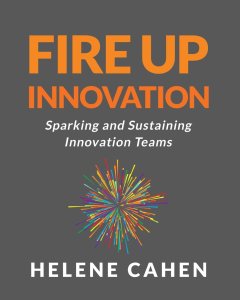
Today’s guest post is by Helene Cahen, author of FIRE UP INNOVATION: Sparking And Sustaining Innovation Teams.
When working with or in an innovation team, it is essential to consider the unique nature of innovation and its implication in building and supporting the team.
Consider the importance of diversity in innovation teams.
Diversity in the composition of the team helps achieve better outcomes. Finding innovative solutions requires multiple perspectives, so different aspects of the problem(s) and the solutions are considered. I once had a client who designed an innovative packaging that the consumers loved when they tested it. However, they did not include manufacturing on their innovation team and discovered after two years on the project that it required manufacturing investments that made the preferred solution unaffordable. If manufacturing had been part of the team, the issue would have been identified earlier, and alternative options, both feasible and liked by customers, would have likely emerged.
In my book, Fire Up Innovation, I highlight the different forms of diversity, including diversity of experiences, culture, and identity, diversity in roles, and diversity of thinking. Having a diverse innovation team helps break silo thinking and better addresses the complexity of the challenge and the acceleration of the pace of innovation, particularly with the growth of AI.
Ensure there are clear processes and tools and good facilitation.
While the discussion around innovation teams is often focused on the outcome, having a shared process and tools that team members know to use, and a trained facilitator, are critical. Team members from different functions and backgrounds may have been trained with different processes and tools or have not been trained at all. There are many innovation-related processes (such as design thinking, Lean Thinking, Agile, etc). While my preference is to use design thinking, the process chosen is not as important as having a known and shared process together with a small list of tools that team members are familiar with. In addition, the role and importance of a facilitator is often forgotten. Whether the facilitator is a team member, an internal facilitator, or a hired facilitator, having a knowledgeable person to facilitate, who has the time to think about ways to optimize the process, prepare and lead the meetings, and manage asynchronous work is critical. Often, internal team members don’t have the time or the skills to do this. Therefore, hiring an external facilitator may save time and money by improving collaboration and moving the project forward more efficiently.
The goals and expectations of the team need to be clear and include the possibility of failure.
It is critical to define criteria for success upfront (so the team can more objectively assess their options throughout the innovation journey) and expected outcomes with precise timing and milestones. It is also essential to acknowledge upfront that innovation is messy, iterative, and likely to fail at times. You may want to consider failures (particularly early on) as part of success, be flexible with the time frame when needed (remember the Challenger O ring failure when issues were identified, but nobody was willing to delay the launch), and embrace failure as an opportunity to learn. The trick here is to build failures by testing early and often and learning from them, which helps avoid costly failures later on when the organization may have invested a lot of time and money.
Adopt a user-centric approach.
No matter how diversified the team is, there will be biases and blind spots. Including the users at the center of your innovation journey ensures that you regularly get input from those affected by the changes created by innovation. The users can be external or internal (if your innovation is focused on internal changes and your users are an internal group). Being user-centric may mean starting with simple ethnographic research where you observe and/or interview your customers or get data about them, test your concepts and prototypes with users, and design pilot programs or small-scale tests once your innovation is finalized.
Protect the innovation teams.
Often, the systems, measurements, and approaches that make an organization successful at managing its business can limit the ability of a team to innovate, particularly in large organizations. For instance, too strict of a goal in the early phase of innovation (such as a high-income expectation for a new product when it involves a change of behavior and therefore hard to predict) or impatience in delivering results can kill innovation projects too early. Organizations, particularly large ones, tend to be conservative in their decision, focusing (and sometimes overfocusing) on the risk of failure rather than the potential for success. For innovation teams to thrive, it is helpful to have a champion who can protect the team, allowing them to try new things and supporting early failures while focusing on lessons learned. Creating a safe climate for the team (within reason and clear expectations on what success looks like), yet being ready to stop a project if it does not show its potential at some point by not being overly attached to any outcome, can help the team be more creative and willing to try new things without fear of career repercussions.
Remember the unique nature of innovation teams.
Whether you are creating or managing an innovation team or are part of one, remember that innovation teams are challenging because of the nature of innovation and the risk of failure. Yet, you can help support a successful outcome by treating the team in a way that matches the unique nature of innovation.
Helene Cahen, M.S., author of FIRE UP INNOVATION: Sparking And Sustaining Innovation Teams, is an innovation consultant, trainer, facilitator, and speaker with over 20 years of experience helping companies navigate innovation challenges. As founder and principal consultant at Fire Up Innovation Consulting, she guides Fortune 500 companies, small businesses, and non-profits to understand innovation, create innovative new products/services, and build effective teams. She is also a coach for the Berkeley Haas School of Business Executive Program.
Did you enjoy this post? If so, I highly encourage you to take about 30 seconds to become a regular subscriber to this blog. It’s free, fun, practical, and only a few emails a week (I promise!). SIGN UP HERE to get the thoughtLEADERS blog conveniently delivered right to your inbox!
https://i0.wp.com/www.thoughtleadersllc.com/wp-content/uploads/2024/02/20240218-Office-Team-Meeting.jpg?fit=1920%2C1281&ssl=112811920Trevor Joneshttps://www.thoughtleadersllc.com/wp-content/uploads/2022/04/logo.pngTrevor Jones2024-02-19 08:02:242024-02-18 23:24:14Five Ways To Make Innovation Teams More Successful