• Contact
  • My Account
  • Log In
  • 0Shopping Cart
thoughtLEADERS, LLC: Leadership Training for the Real World
  • About
  • Services
  • eLearning
  • Team
  • Blog
  • Clients
  • Books
  • Contact
  • Menu Menu

Unlocking Your Potential: The Transformative Power of Domain Expertise

January 29, 2024/0 Comments/in Books, Business Toolkit, Career, Guest Blogger, Innovation, Leadership, Strategy, Training /by Trevor Jones

whiteboard presentation

When you become an expert in your chosen field, you’re not just improving your job performance; you’re setting yourself up for a future filled with opportunities.

Today’s guest post is by Vincent DeFilippo, author of Braking Point: How Escalation of Commitment Is Destroying the World (and How You Can Save Yourself) (CLICK HERE to get your copy).

The transformative power of domain expertise plays a central role in elevating your career trajectory. When you become an expert in your chosen field, you’re not just improving your job performance; you’re setting yourself up for a future filled with opportunities. This expertise acts as a catalyst, accelerating your career advancement and unlocking doors to leadership roles and innovative opportunities.  

Beyond just about being good at what you do, it’s about becoming a key player in shaping the future of your industry. As you deepen your knowledge and skills, you position yourself as someone who doesn’t just follow trends but sets them, leading to a more dynamic and fulfilling career path. 

Moreover, being an expert in your domain directly impacts your earning potential and growth prospects. In today’s competitive job market, a unique skill set is more than a resume booster — it’s a ticket to higher earning potential and a broader spectrum of career opportunities. Employers value experts for their ability to tackle complex problems and provide innovative solutions, making them more willing to invest in your growth.  

This investment isn’t just financial, but includes furthering your learning and development, positioning you to take on challenging and rewarding roles beyond your current scope. Such expertise increases your value in the job market and expands your horizons for professional growth. 

Apart from enhancing your career and financial prospects, achieving mastery in your field establishes your influence and credibility, increasing personal satisfaction and confidence. As an expert, you’re seen as an authority — someone whose opinions and insights are sought after and respected. This respect translates into a powerful ability to influence critical decisions and inspire others within and outside your organization.  

Furthermore, the journey to expertise is in itself a confidence booster. There’s a profound sense of achievement in knowing you’ve mastered a complex field, which reflects in your self-esteem and overall outlook on life. Your expertise doesn’t just make you a better professional; it shapes you into a more confident and fulfilled individual. 

Follow this roadmap on your journey to domain expertise:  

1. Discover your passion: Start by identifying an area that sparks your interest and aligns with your long-term vision. Let your curiosity guide you. Find your “why” — the one thing you love to do, no matter what you’re doing or where you’re going. It’s the thing that moves you to get out of bed in the morning and engulfs your every thought throughout the day.  

2. Commit to lifelong learning: Embrace continuous education as a lifestyle. Read books, attend workshops, enroll in courses, and always continue expanding your knowledge. There’s a ton of free information on the internet, and many affordable platforms offer low-cost courses to expand your knowledge in a particular field. 

3. Gain hands-on experience: Apply your knowledge in real-life settings. Practical experience is the crucible in which true expertise is forged. Immerse yourself in what you want to learn and what you love to do. Surround yourself with like-minded individuals who share similar goals. Join groups, volunteer time, or gain employment to help you pursue your chosen area. Learn by doing. 

4. Network with industry leaders: Connect with mentors and experts. Their insights and guidance can accelerate your journey to mastery. Seek out people who can guide you, offer advice, and move you forward in your pursuit of knowledge. Ask questions of people you consider experts in your area of interest. Join trade organizations, networking groups, or other industry associations and seek out people within those organizations who can point you in the right direction.  

5. Teach and share your knowledge: Teaching is learning twice. Share your insights and experiences; it reinforces your knowledge and helps others grow. Passing on what you’ve learned is a powerful growth builder for you and others in your circle of influence. Empty your cup of knowledge to fill it up again with more learning experiences and wisdom. 

6. Stay abreast of trends and innovations: Keep your finger on the pulse of your field. Read extensively, attend conferences, and stay connected to emerging trends. Find online sources, magazines, and media platforms that can keep you up to date with current events and any new changes to your area of interest. Create a network and circle of friends that share information and knowledge; this will help you stay aware as an industry or area of focus evolves. 

7. Contribute and give back: Write articles, volunteer for speaking engagements, or conduct research. The more you give, the more you get. Your contributions can inspire and pave the way for others. Put yourself out there and start being recognized as an expert and an industry leader. Help others grow and watch how high you grow in the process. 

Embarking on the journey to domain expertise is about becoming a beacon in your field, a source of knowledge, and inspiration for others. It’s a commitment to not just excel professionally but to grow personally and help others along the way. As you venture down this path, remember that each step you take is a building block in crafting a legacy of knowledge, influence, and personal achievement. Let your passion fuel your pursuit, and let your expertise be a light that guides both your path and that of others seeking their way in the vast landscape of knowledge and skill. 
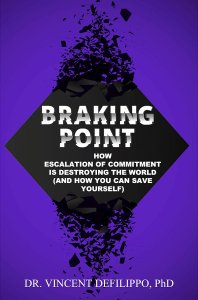
braking point bookDr. Vincent DeFilippo, DBA, MBA, is a professor in the School of Accounting and Business at Monroe College. Prior to that he was CEO of a private equity fund in Hong Kong, raising several billion dollars in venture capital for entrepreneurs and publicly traded companies throughout the Asia Pacific Region. His new book, Braking Point: How Escalation of Commitment Is Destroying the World (and How You Can Save Yourself), (ViennaRose Publishing, May 3, 2023), is a Wall Street Journal bestseller. Learn more at www.vincentdefilippo.com. 

Did you enjoy this post? If so, I highly encourage you to take about 30 seconds to become a regular subscriber to this blog. It’s free, fun, practical, and only a few emails a week (I promise!). SIGN UP HERE to get the thoughtLEADERS blog conveniently delivered right to your inbox!

https://i0.wp.com/www.thoughtleadersllc.com/wp-content/uploads/2024/01/20240128-Whiteboard-Presentation.jpg?fit=1920%2C1281&ssl=1 1281 1920 Trevor Jones https://www.thoughtleadersllc.com/wp-content/uploads/2022/04/logo.png Trevor Jones2024-01-29 08:02:462024-01-28 21:27:59Unlocking Your Potential: The Transformative Power of Domain Expertise

Assessing What Happened in a Negotiation

January 24, 2024/0 Comments/in Business Toolkit, Career, Communications, Leadership, Sales, Strategy /by Trevor Jones

two people writing

Assessing your negotiations can help you identify what’s really important to the other party.

Throughout a negotiation, you should be assessing what’s happening. Track major negotiating points over time. See what’s a plus or a minus versus the last round of negotiations. If you go back to your initial goals and what the other party’s initial goals were, their must-haves, want-to-haves, nice-to-haves and also evaluate it for your end, you can track over time where are you making concessions? Where’s the other party fighting hard for something? Doing this type of assessment can help you identify what’s really important to them and what’s not.

Assessment can help you identify topics that recur and also areas where they’re more willing to make concessions. Be very aware of prior offers that you make. Make sure you have documentation because the other party can bring them back up later and use them against you. Now the good news is you can do the same thing. But if you’re not aware of an offer you make or an offer, even worse, that somebody on your team makes that you’re not aware of, those things can come back to bite you in the end.

I had a situation where we were negotiating for a long period of time, and after each set of emails, because that was the dominant communication vehicle for those communications, my partners and I sat down and we compared notes. We looked for concessions they were requesting. We also considered negotiating techniques they were using, things like the invisible man where they were saying, “Hey, I need to go check with someone else before I can offer this point.” They were also using a technique called the bogey, where they were making something out to be really important to them, but as we tracked it, it was clear that it really wasn’t. We were able to look at how our old quotes and conversations were being used against us in the deal.

Now the first deal we made with them, we didn’t really understand all of these dynamics, and it didn’t go as well for us as we would have liked. But we learned because we assessed that deal after the fact. It made us much more mindful of how we should structure our future quotes. We knew what was really important to them. We knew how they would use these various tools and techniques against us, like the invisible man or the bogey. And all of our future offers were based on an understanding of how that last negotiation went. We were much more successful in future rounds.

Make sure you’re taking the time to pause and assess what’s going well, what’s not. What are they pushing on, and what are they willing to concede? And think through how that’s going to impact your overall negotiating strategy and the position you take in subsequent rounds.

Want to learn more about strategic negotiation? How about taking an entire course on it? Go directly to the course and start learning how to perform better in negotiations. The entire course is available at LinkedIn Learning. Enjoy!

Did you enjoy this post? If so, I highly encourage you to take about 30 seconds to become a regular subscriber to this blog. It’s free, fun, practical, and only a few emails a week (I promise!). SIGN UP HERE to get the thoughtLEADERS blog conveniently delivered right to your inbox!
https://i0.wp.com/www.thoughtleadersllc.com/wp-content/uploads/2024/01/20240116-Two-People-Writing.jpg?fit=1920%2C1281&ssl=1 1281 1920 Trevor Jones https://www.thoughtleadersllc.com/wp-content/uploads/2022/04/logo.png Trevor Jones2024-01-24 06:32:282024-01-16 23:55:50Assessing What Happened in a Negotiation

The Heartbeat of Change: A Leadership Journey Inspired by Polyvagal Theory

January 17, 2024/0 Comments/in Books, Business Toolkit, Communications, Guest Blogger, Innovation, Leadership, Project Management, Strategy /by Trevor Jones


brain

By understanding and applying the principles of Polyvagal Theory and Neuroception, leaders can create workplaces that not only drive success but also promote well-being and human connection.

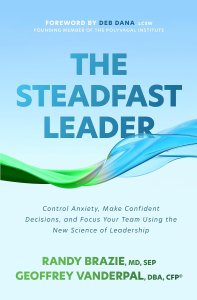
Today’s guest post is by Randy Brazie MD, SEP® and Geoffrey VanderPal DBA, CFP®, PMP, SHRM-SCP, coauthors of The Steadfast Leader: Control Anxiety, Make Confident Decisions, and Focus Your Team Using the New Science of Leadership (CLICK HERE to get your copy).

In the heart of Silicon Valley, nestled among tech giants, stood a modest yet ambitious startup, NewNexxTexx Innovations. Despite its potential, NewNexxTexx was grappling with high employee turnover and low morale. The arrival of their new CEO, David Raynod, marked the beginning of an extraordinary transformation, guided by the principles of Polyvagal Theory and Neuroception.

David’s Challenge: A Disconnected Workforce

David, a seasoned leader with a keen interest in psychology, quickly noticed the signs of a disconnected workforce: strained communication, lack of collaboration, and a pervasive sense of unease. He knew that for NewNexxTexx to thrive, he needed to foster a sense of safety and belonging among his team.

Polyvagal Theory: A New Leadership Lens

David was deeply influenced by Polyvagal Theory, which posits that our autonomic nervous system, responsible for our emotional responses, has three states: fight or flight, shutdown, and social engagement. He realized that the stressful environment at NewNexxTexx was keeping employees in a constant state of fight or flight, hindering creativity and collaboration.

The First Step: Cultivating Safety

David began by addressing the underlying stressors. He initiated open forums for employees to express their concerns and ideas. These weren’t typical meetings; they were structured to be non-hierarchical and inclusive, making every team member feel heard and valued. This approach started to shift the office atmosphere, activating the social engagement system among employees.

Neuroception: The Unseen Guardian

Understanding Neuroception – the body’s subconscious scanning of the environment for cues of safety or danger – David made subtle yet impactful changes to the office layout. He introduced more natural light, comfortable communal spaces, and areas for relaxation. These changes signaled to the employees’ nervous systems that the workplace was a safe space, fostering a sense of security and openness.

Building a Culture of Connection

David knew that lasting change required more than physical alterations; it needed a cultural shift. He introduced team-building activities that emphasized empathy and understanding. Employees participated in workshops on emotional intelligence and communication, which helped them understand their own and others’ emotional responses better.

Foster Psychological Safety: Create an environment where employees feel safe to express themselves without fear of negative consequences. This safety is the foundation for innovation and collaboration.

Understand the Unspoken: Be aware of the non-verbal cues and environmental factors that influence your team’s sense of security and adjust accordingly.

Cultivate Connection: Encourage practices that build empathy and understanding within your team. Strong interpersonal connections are key to a resilient and productive workforce.

Lead with Empathy: Recognize that each employee’s response to stress is different. Tailoring your approach to meet their individual needs can lead to a more harmonious and effective team.

Embrace Continuous Learning: Stay open to new ideas and approaches, especially from fields outside traditional business practices, like psychology.

Implementing Polyvagal Principles

David’s first step was to introduce the concept of Polyvagal Theory to his leadership team. He organized a series of workshops led by a clinical psychologist specializing in this field. The goal was to educate the leaders on how the autonomic nervous system affects workplace behavior and how to foster the ‘social engagement system’ – the state where employees feel safe, connected, and able to innovate.

Practical Steps for a Safer Environment

Redesigning Communication: David replaced the traditional top-down meeting structure with a ’round-table’ approach. Each meeting began with a two-minute mindfulness exercise to help team members transition into a state of calm and presence. He encouraged open dialogue and active listening, making sure every voice was heard.

Physical Environment Tweaks: Understanding the impact of Neuroception, David led an initiative to redesign the workspace. This included adding plants, optimizing natural light, creating open spaces for collaboration, and quiet zones for relaxation. The office’s color scheme was shifted to warmer, calming tones.

Regular Check-ins: David introduced weekly one-on-one check-ins between employees and their managers. These were not status updates on work but rather open conversations about how each employee was feeling, what challenges they were facing, and how they could be supported.

Cultivating Connection and Empathy

Empathy Workshops: NewNexxTexx started hosting monthly workshops focusing on building empathy and emotional intelligence. These workshops included role-playing exercises, where team members would act out scenarios to understand different perspectives.

Team Building Retreats: Quarterly retreats were organized, focusing on team-building activities that were not just fun but also designed to build trust and understanding among employees.

Mentorship Programs: A mentorship program was established, pairing newer employees with experienced ones. This program was not just about professional growth but also about building deeper interpersonal connections within the company.

Measuring the Impact

To track the effectiveness of these changes, David implemented regular employee surveys focused on workplace satisfaction, stress levels, and overall well-being. He also monitored key performance indicators like employee turnover, productivity metrics, and project completion rates.

The Outcome

Within a year, NewNexxTexx saw a dramatic turnaround. Employee satisfaction scores increased, turnover rates dropped, and productivity metrics showed significant improvement. The team was not only working more effectively but also reported higher levels of job satisfaction and well-being.

Key Takeaways for Leaders

Educate Your Team: Understanding the science behind stress responses and social engagement can transform your leadership approach.

Foster Open Communication: Create a space where employees feel safe to share and listen to each other.

Mind the Environment: Small changes in the physical workspace can significantly impact the team’s mood and productivity.

Build Empathy and Connection: Regular team-building and empathy exercises can strengthen team cohesion.

Track and Adapt: Regularly measure the impact of your changes and be ready to adapt your strategies.

We created this story as a powerful example of how integrating psychological insights into leadership can transform an organization. By understanding and applying the principles of Polyvagal Theory and Neuroception, leaders can create workplaces that not only drive success but also promote well-being and human connection. This approach is not just about improving the bottom line; it’s about nurturing a workplace culture where every individual can thrive.

the steadfast leader bookDr. Randy Brazie, MD, SEP®, coauthor of THE STEADFAST LEADER: Control Anxiety, Make Confident Decisions, and Focus Your Team Using the New Science of Leadership, serves as a medical director for Blue Cross Blue Shield of Arizona and has a private practice. He is board certified by the American Board of Psychiatry and Neurology in General Psychiatry and is a Somatic Experience Practitioner.

Dr. Geoffrey VanderPal, DBA, CFP®, coauthor of THE STEADFAST LEADER: Control Anxiety, Make Confident Decisions, and Focus Your Team Using the New Science of Leadership, is a professor in the Master of Science in Finance program at Purdue University Global, where he teaches financial planning–related courses. He has taught at various universities on four continents in the areas of finance, leadership, and business.

For more information visit neuroconsultinggroup.com

Did you enjoy this post? If so, I highly encourage you to take about 30 seconds to become a regular subscriber to this blog. It’s free, fun, practical, and only a few emails a week (I promise!). SIGN UP HERE to get the thoughtLEADERS blog conveniently delivered right to your inbox!

https://i0.wp.com/www.thoughtleadersllc.com/wp-content/uploads/2024/01/20240116-Brain.jpg?fit=1920%2C1459&ssl=1 1459 1920 Trevor Jones https://www.thoughtleadersllc.com/wp-content/uploads/2022/04/logo.png Trevor Jones2024-01-17 08:02:112024-01-16 23:54:47The Heartbeat of Change: A Leadership Journey Inspired by Polyvagal Theory

6 Negotiation Techniques You Should Add to Your Playbook

January 10, 2024/1 Comment/in Business Toolkit, Career, Communications, Leadership, Sales, Strategy /by Trevor Jones

six

Your negotiation strategy can make or break a deal. Learning negotiation tactics is key to becoming a more strategic negotiator.

Over the years, I’ve learned some great negotiating techniques and tactics. I’d like to share them now.

The Invisible Man

The first is called The Invisible Man. You can use this technique when you’re in the heat of a deal and you don’t want to give an answer right now, or you don’t like the position that the other party is taking. You just say, “Well, I have to check with my colleagues before I can give you an answer.” That other party isn’t in the room, so you’ve pushed back the negotiation. You’ve bought yourself some time, and now you have the ability to go back to the other party and say, “I know you wanted a 20% discount, but I’ve spoken with my colleagues and the best we can do is 10%.” You’ve created an invisible authority that the other party has to negotiate against. Read more

https://i0.wp.com/www.thoughtleadersllc.com/wp-content/uploads/2024/01/20240109-Six.jpg?fit=1920%2C1460&ssl=1 1460 1920 Trevor Jones https://www.thoughtleadersllc.com/wp-content/uploads/2022/04/logo.png Trevor Jones2024-01-10 06:30:322024-01-09 21:57:256 Negotiation Techniques You Should Add to Your Playbook

Risky Business – How Do You Manage Risk?

January 8, 2024/0 Comments/in Books, Business Toolkit, Guest Blogger, Leadership, Project Management, Strategy /by Trevor Jones

Risk

Every business venture carries risk. Kim Wasson describes a straightforward process for determining what might go wrong and whether it’s worth worrying about.

Today’s guest post is by Kim Wasson, a principal at thoughtLEADERS and author of The Socially Intelligent Project Manager: Soft Skills That Prevent Hard Days (CLICK HERE to get your copy).

Every business venture, from initial filing to product announcement to hiring, carries risk. And while we certainly focus on risk for the big ticket items, we tend to ignore the possible issues for anything smaller than a product launch – and then get caught unaware when something goes wrong.

Of course, not every possible risk is worth worrying about. Sure, the volcano under Yellowstone might erupt but the changes are vanishingly small and there’s no way to predict or avoid it. But other things, like running over budget or being leapfrogged by competitors, or even setting up some kind of process that ends up causing an exodus at your company, are worth trying to get ahead of.

Where do you start trying to figure out what might go wrong and whether it’s worth worrying about? Fortunately, there’s a process for that.

Let’s back up a bit. Before you start looking at what might go wrong you’ll need to understand how you (and probably your organization) feel about the importance of what you’re doing. Will you damn the torpedoes and full speed ahead no matter what the risk (for example, a new start-up trying to get the first product out)? Is it a bet-the-company proposition? Is it a trial balloon that won’t be worth too much risk because either the reward is small or the possible damage is too serious to continue? The answers to these questions won’t help you identify the risks, but they will help you decide what to do about risks once you see them.

Now that you’re thinking about what’s important to your project, process or decision, brainstorm the things that could go wrong. If you understand the parameters of the endeavor you’ll be able to more easily see what could derail those parameters, so think about the goals while you’re brainstorming.

Let’s assume you have a list of possible issues – or maybe disasters. The next thing to do is to decide whether they are in fact issues or actual disasters and whether you should do anything to address them. The question of where on the scale of issue to disaster a risk falls is called impact. Once you know the impact of a risk, take a look at how likely it is to happen – probability. You can see that some things may have a big impact – like the Yellowstone eruption – but a small probability. You might not want to do anything more about those risks except track them. Some things might have a big probability but they really won’t do much harm and you can see you’d be able to recover. You might not want to spend time on those either.

But for those risks in the sweet spot of high likelihood and large impact, you want to be prepared. Know what they’ll look like if they happen and any warning signs you expect to see. Is there a way you can make them less likely or less destructive? And is that way worth the trouble, money, and/or time?

And what if the risk becomes reality? Contingency plans can help you out there. Knowing what you’re going to do if it happens means you’ll be working on recovery immediately.

While you’re figuring all this out and then applying what you’ve learned, you’ll have to take some time to understand who needs to know about the possible risks and what you’re doing about them. Risk reporting starts with just a red/yellow/green flag and can run the gamut from that high level to a complete risk register and all of your plans and measurements.

The real story here is that you ignore risk at your peril. Using a straightforward process you can anticipate and evaluate potential risks, determine the danger level, reduce the impact and/or probability of some of them, and be ready to respond if an identified risk comes to pass. All you have to do is think about risk in an organized way and then pay attention as you go along.

kim wasson– Kim Wasson is a principal at thoughtLEADERS where she teaches our course on Risk Management. If you’re interested in the course, please contact us.

Did you enjoy this post? If so, I highly encourage you to take about 30 seconds to become a regular subscriber to this blog. It’s free, fun, practical, and only a few emails a week (I promise!). SIGN UP HERE to get the thoughtLEADERS blog conveniently delivered right to your inbox!

https://i0.wp.com/www.thoughtleadersllc.com/wp-content/uploads/2023/12/risk-1945683_1280.jpg?fit=1280%2C853&ssl=1 853 1280 Trevor Jones https://www.thoughtleadersllc.com/wp-content/uploads/2022/04/logo.png Trevor Jones2024-01-08 08:02:582024-01-07 22:35:14Risky Business – How Do You Manage Risk?

Defining the Context of Your Negotiation

January 4, 2024/1 Comment/in Business Toolkit, Strategy /by Trevor Jones


two men using tablet

Understanding the strategic environment of a negotiation will help you achieve your desired outcome.

The first step in any negotiating process is defining and understanding the context you’re operating in. You have to understand the strategic environment of the negotiation in order to be successful. There are several elements to defining this context.

First, who is the decision maker, and why are they doing this? The better you understand these players and what they’re trying to get out of the negotiation, the more successfully you’re going to be able to approach them.

Second, define your goals. What are you interested in, and what do you need? By laying out these objective functions, you can focus on achieving them during the negotiation, and make sure that you don’t accidentally give them up.

Third, what are the outcomes that are in play? What’s at stake? So when you look at the final negotiation, what are those possible end states? What do you risk losing? What do you risk gaining?

Next, define the other options you’re considering. Many negotiations have many different outcomes that you can pursue. By defining what these options are, you’re better able to determine which one you should pursue.

And last, what will it take to close the deal? Trying to get a clear understanding of what’s going to lead the other party to say yes, and what’s going to get approval on your end for the negotiation is critical.

An example of a negotiation I went through where we had to clearly define the context was when we were trying to buy back a franchise operation. The owners were looking to cash out. They wanted to sell their franchise back to us as a corporation. Our goal was to buy access to their market but do so at a reasonable price. So these were the goals of the parties that were involved.

Now, the options we had available to us were either a full purchase of their territory or no sale and they would retain it. We couldn’t buy a portion of it, and we couldn’t enter that market without making the purchase. So we have those two options that we had to think through and evaluate.

And then last we had to understand that it would take significant cash up front and we had to look at our ability to pay that as well as what that offer would be worth to the franchise owners. By laying out this complete context to the negotiation, we made our negotiating position much stronger because we understood what we wanted to get out of the deal.

As you look at negotiations you enter, make sure you take the time to define this context and document it so you can go back to it on a regular basis, test your assumptions, and stay on track to achieve your goals.

Want to learn more about strategic negotiation? How about taking an entire course on it? You can go directly to the course and start learning how to build high-performing teams. The entire course is available at LinkedIn Learning. Enjoy!

Did you enjoy this post? If so, I highly encourage you to take about 30 seconds to become a regular subscriber to this blog. It’s free, fun, practical, and only a few emails a week (I promise!). SIGN UP HERE to get the thoughtLEADERS blog conveniently delivered right to your inbox!

https://i0.wp.com/www.thoughtleadersllc.com/wp-content/uploads/2024/01/20240102-Two-Men-Using-Tablet.jpg?fit=1920%2C1277&ssl=1 1277 1920 Trevor Jones https://www.thoughtleadersllc.com/wp-content/uploads/2022/04/logo.png Trevor Jones2024-01-04 06:32:032024-01-02 20:35:06Defining the Context of Your Negotiation

Bold Moves: Transforming from Executive Leadership to Portfolio Mastery

January 3, 2024/0 Comments/in Books, Business Toolkit, Career, Guest Blogger, Leadership, Strategy /by Trevor Jones

businesswoman

Unlock the path from corporate executive to a thriving portfolio career, showcasing intentional choices and strategic career moves for lasting success.

Today’s guest post is by Merideth Mehlberg, author of YOUR FINEST WORK: Career Fulfillment In A Complicated World (CLICK HERE to get your copy).

Renata, Vice President of Operations for a large fintech company, arrived for coaching ready to leave her role, but fearful of the risks such a shift would include. She had grown fond of the status that came from helping lead a well-known brand. As we began our coaching, Renata sat with two different potential paths: thinking she had “one more big role” in her working at a similar-sized organization, or joining an early-stage company where she could wield greater influence at the C-level.

I recognized this dilemma as one I’d seen many times before when coaching executive clients. I knew that to support Renata best, we needed to help her become her career’s intentional architect, stepping back to clarify her guiding principles. Acting as her compass, they would provide direction from the inside out. To solidify her non-negotiables, I posed questions to distill what she wanted for her next chapter, asking:

What did she value most, and how must those values align with her work?

What did she long to spend her time doing at work?

What type of business problem did she want to help solve?

What type of work environment would bring out her best?

What would make her feel satisfied professionally?

These answers formed a set of criteria that allowed Renata to push past her fears. When we examined what she was afraid of, she recognized that optics felt important. If she moved to a smaller company, she worried that people would think she was wasting her experience. In the future, she wondered whether large companies would consider her for executive roles if she joined a startup now. After strategizing the risks, Renata was able to relax and confirm the intention to join a startup supporting a mission she felt passionate about.

Over time, the conditions at her current employer grew worse. Enduring a tenuous relationship with her boss and pressure to deliver with limited resources, Renata started taking recruiter calls. I coached her to identify and evaluate early-stage opportunities that suited her best. She learned of a startup poised to disrupt an underserved market she cared about. After careful investigation of likely fit, she accepted an offer to join the company as COO and tendered her resignation.

Renata spent the next year leading the startup to implement its operational model. Gradually she grew tired of execution and frustrated as her vision for the company diverged from that of the founder. Although she could have stayed on longer, the desire for freedom was too great, so she decided to leave to pursue a portfolio career.

A portfolio career is one where a professional enjoys multiple income streams, spreading time and effort among different projects, employers, and/or clients. For example, a person might teach at a local university, run a small business, sit on a board, and do fractional work for a company on retainer. The benefits of a portfolio career are many, including diversifying one’s income and gaining a sense of increased control and security.

Renata relished a portfolio career because it allowed her to do the work she loved: engaging customers to understand their needs, defining solutions to meet those requirements, and coaching emerging leaders to develop their professional potential. She could minimize time spent on the tasks she didn’t enjoy: implementing solutions. Shedding the piece that dragged on her energy left Renata feeling delighted in her work.

A key element of Renata’s career portfolio came together when we sketched out her capacity, including the ideal number and types of engagements to carry at one time. This involved solidifying her target client personas. When speaking with a prospective client, she adjusts her approach and pitch to match their needs. She set a cap on the number of engagements she can handle at one time, introducing scarcity that provides her an advantage when negotiating.

Through our coaching, Renata defined her target clients’ needs and what they value in her skillset. We developed her messaging to engage with her network to open doors. Renata now enjoys a variety of projects. The different roles create value in similar ways, AND they allow her to work on disparate business problems. The diversity keeps her interested.

A breakthrough moment came when I observed her penchant for tentative language when discussing her career. Once aware, Renata deliberately shifted her wording to appear resolute, using definitive language with herself and others. For example, she switched from saying “I’m hoping to have…” to “My next phase includes…” when discussing her career transition. That shift helped her embody gravitas and conviction, making her attractive to clients, partners, and employers.

Renata’s portfolio came together over time. She hires herself out as a coach to support individual leaders and companies looking to improve operational excellence. Some clients hired her directly; others she sourced through an agency, trading in some compensation for not having to find and land the business. She engaged in a half-time fractional leadership role with a privately-held fintech company, earning a retainer while accelerating the company’s operational readiness for an acquisition. After a year, she had streamlined the company’s operational model and hired her full-time replacement. She then shifted to an advisory role.

Finally, she also engages with early-stage companies as a retained advisor.

With multiple portfolio components, Renata enjoys a sense of professional detachment. When one engagement ends, she knows that another will take its place. Renata has grown in her confidence as a practitioner and enjoys the lifestyle of her time being her own. Her next move includes investing in startups she believes in, combining compensation and equity to share the upside in companies she is helping to grow.

mehlberg bookMerideth Mehlberg, MCC, author of YOUR FINEST WORK: Career Fulfillment In A Complicated World, is CEO of Merideth Mehlberg Group. An ICF-certified Master Coach, she helps executives look forward to Monday mornings. For almost twenty years, she has walked alongside senior and high-potential leaders to define their career priorities, measure the gap with their current opportunities, and close the space between the two. Clients grow their professional satisfaction, impact, and success, transforming their careers and leadership styles from the inside out.

Did you enjoy this post? If so, I highly encourage you to take about 30 seconds to become a regular subscriber to this blog. It’s free, fun, practical, and only a few emails a week (I promise!). SIGN UP HERE to get the thoughtLEADERS blog conveniently delivered right to your inbox!

https://i0.wp.com/www.thoughtleadersllc.com/wp-content/uploads/2024/01/20240102-Businesswoman-Talking-on-Phone.jpg?fit=1920%2C1280&ssl=1 1280 1920 Trevor Jones https://www.thoughtleadersllc.com/wp-content/uploads/2022/04/logo.png Trevor Jones2024-01-03 08:03:202024-01-05 01:17:09Bold Moves: Transforming from Executive Leadership to Portfolio Mastery

How to Figure Out Where You Should Focus

December 26, 2023/0 Comments/in Books, Guest Blogger, Leadership, Strategy /by Trevor Jones

camera lens

True business leaders stay focused. This is crystal clear. But how can you make sure you are focusing on the most promising business opportunities that can lead your company to success?

Today’s post is by Sharon Tal, co-author of Where to Play (CLICK HERE to get your copy).

In their best-selling book Creativity Inc., Ed Catmull and Amy Wallace present well known pieces of advice that lead you nowhere. One of them is “focus, focus, focus!” As they explain: “When people hear it, they nod their heads as if a great truth has been presented, not realizing that they have been diverted from addressing the far harder problem: deciding what is it that they should be focusing on. There is nothing in this piece of advice that gives you any idea how to figure out where the focus should be.”

Indeed, knowing that you need to focus is the easy part, but choosing which opportunities to focus on is a hard nut to crack. This is true for founders of a small startup, just as it is for managers of a large organization. In any case you will need to assess and prioritize your business opportunities to figure out what horse you are betting on.

Here are few tips that will help you to evaluate and compare your business opportunities in a systematic manner, so you can set your strategic focus more easily.

Spotlight on two key factors

Theories on motivation stress that a great goal should be desirable and feasible – both at the same time. A business opportunity is just the same: it should be highly desirable, i.e., offer a high potential for value creation, yet also highly feasible, i.e., bear limited challenges in capturing this value. So when you assess different opportunities for your company, make sure to evaluate these two key factors. Your aim is to focus on a high potential, low challenge opportunity.

Categorize your options

If you systematically evaluate the potential and the challenge of each business opportunity on your table, you can use it to categorize your options into 4 different types:

Read more

https://i0.wp.com/www.thoughtleadersllc.com/wp-content/uploads/2023/12/20231225-Camera-Lens.jpg?fit=1920%2C1280&ssl=1 1280 1920 Trevor Jones https://www.thoughtleadersllc.com/wp-content/uploads/2022/04/logo.png Trevor Jones2023-12-26 08:02:532023-12-25 22:14:59How to Figure Out Where You Should Focus

Tips for Announcing Bad News

December 11, 2023/0 Comments/in Business Toolkit, Career, Entrepreneur, Guest Blogger, Leadership, Strategy /by Trevor Jones

microphone

No one enjoys being the bearer of bad news. However, if we can deliver it quickly and effectively, our message tends to go over much better.

Today’s guest post is by Thomas Mustac, Medical & Health Industry Specialist — Otter PR

We’ve all been on both ends of this uncomfortable conversation starter: “I have good news and bad news — which do you want first?” According to one study from the Society for Personal and Social Psychology, most people in the position of delivering news choose to open with good news, whereas those people receiving the news overwhelmingly prefer to hear bad news first.

No one enjoys being the bearer of bad news. However, if we can deliver it quickly and effectively, our message tends to go over much better.

Choose a capable spokesperson to announce the bad news

When your organization is in hot water, you need a spokesperson to represent you and convey your message. The spokesperson should be trustworthy, knowledgeable about the circumstances surrounding the announcement and how it affects your business, and able to communicate the bad news honestly and directly. Above all, they must be calm, cool, and collected.

A spokesperson making this type of announcement must keep their tone professional at all times. The goal is to deliver the news concisely while coming across as trustworthy, credible, and empathetic.

If you have more than one person who could serve as a spokesperson, choose someone with experience speaking publicly. If you don’t have anyone on staff who has done this before, consider hiring an expert public relations firm or consultant to help guide your communication efforts during this difficult time.

When announcing bad news, be direct

When breaking bad news, be direct, honest, and transparent. Be clear about what happened, how it happened, and what your company is doing to improve the situation.

When announcing bad news, it’s human nature to want to sugarcoat the worst parts, to show yourself in a better light, or even to give false hope to your listeners. For example, when announcing that an employee has been fired, it’s tempting to sprinkle the announcement with euphemisms such as “involuntary departure.” While this wording may make the message easier to deliver, it can confuse the announcement and drag out the situation.

People want answers when bad news is announced, and they will quickly lose trust in someone who appears to be dodging the truth or hiding the facts. Resist the urge to beat around the bush or cast blame — this will only make you appear defensive. Take responsibility. Remember that people want answers, not excuses.

The key is to make your stance known and be as concise as possible. Deliver your message briefly without skirting the facts and drive that message home as you answer questions.

When there is bad news to announce, honesty is the best policy

Delivering bad news can be extremely stressful. When the pressure becomes too much, a spokesperson may resort to a lie, but no matter how small it might be, a lie can (and will) erode public trust and tarnish your organization’s image. At this point, you must deal with an image problem in addition to your original crisis.

Transparency will always serve you best in the end. Use your announcement to state the facts, limit the damage, and outline your plan for moving forward.

Before announcing bad news, make a game plan

When you are tasked to deliver bad news, a game plan will help you stay on message. Before the announcement, have a clear idea of what you want to say and the message you want to send, and make sure you have a clear idea of what you want the announcement to achieve.

After crafting your message, think through the questions you will likely be asked in the wake of the announcement. Rehearse possible answers to each, keep them concise, and ensure they strike an appropriate tone for the particular situation.

In an emotionally charged setting, people often become flustered or distracted. While breaking bad news, you can easily find yourself rambling or losing your train of thought, but a game plan helps keep you organized and on point. Even if something unexpected happens during the announcement or press conference, you can still get your message across clearly and effectively.

As you announce bad news, be open to feedback

After your announcement, ask for feedback and listen to it carefully. Take time to think about what people are saying and consider how you can use that information to improve your organization’s performance in the future. Be prepared to make changes based on the feedback you receive from employees, customers, and partners impacted by the announcement.

Announcing bad news is never easy, but there are steps you can take to make it less stressful. By choosing a capable spokesperson who can handle the situation professionally, you can be direct and honest with your audience by explaining exactly what happened and what they can expect next. After making the announcement, open yourself up for feedback from those with constructive advice.

thomas headshotThomas Mustac is Otter PR‘s medical and health industry PR specialist. He previously held positions at the “Dr. Oz Show” and New York Medical College. He has his Master’s Degree from Iona College and received an Advanced Certification in Nonprofit Public Relations. He has a diverse background in healthcare, pharmaceutical, telehealth, tech, cosmetics, sports, and interior design public relations.

Did you enjoy this post? If so, I highly encourage you to take about 30 seconds to become a regular subscriber to this blog. It’s free, fun, practical, and only a few emails a week (I promise!). SIGN UP HERE to get the thoughtLEADERS blog conveniently delivered right to your inbox!

https://i0.wp.com/www.thoughtleadersllc.com/wp-content/uploads/2023/12/20231210-Microphone.jpg?fit=1920%2C1276&ssl=1 1276 1920 Trevor Jones https://www.thoughtleadersllc.com/wp-content/uploads/2022/04/logo.png Trevor Jones2023-12-11 08:02:262023-12-10 22:36:08Tips for Announcing Bad News

Handling Politics and Personal Agendas

November 29, 2023/0 Comments/in Business Toolkit, Career, Leadership, Project Management, Strategy, Training /by Trevor Jones

two women side eye

Politics and personal agendas can derail a high-performing team. Learn the difference between being savvy and being political.

Personal agendas and politics can derail the performance of your entire team and your team will no longer be high performing. You have to get the team focused on what matters and enable everyone on the team to rise above the politics and the personal agendas.

Now, there’s a difference between being savvy and being political. Savviness is about knowing who’s influential in the organization and how you can get things done. You’re going to be able to go to them and enlist their aid as you try and advance the agenda of your team. Being political is doing something to get ahead personally and thinking through how you can play people off of one another for your own personal gain. Your job as a leader is to understand the difference between the two and eliminate the latter.

Over time, if you let the politics continue you end up with a caustic culture where people are willing to engage in backstabbing, where people are rumor-mongering, and spreading things about other people in order to, again, advance their own personal agenda. So you have to be mindful of what the politics are, but not engage in them. If you’re good at this in terms of understanding how to be savvy and understanding that some people will have political and personal agendas, you’re going to be able to side step those issues and still help your team achieve what they’ve signed up to do.

A personal example. I worked in an organization where I was tasked with a very difficult project and I told my boss, “I can approach this project one of two ways. Either I can just be the bean counter and do things more administratively or I can take the other end of the spectrum and I can drive change. I can help us think about new ways of doing things. Now, with the first approach we’re going to get some results and people will push for some initiatives that might be uncomfortable, but mostly people will stay safe. In the second approach, we’re going to get a lot more in terms of results, but I will upset people and not just really junior people. There are some senior people who are going to be very upset with the recommendations that I drive.” And he said, “I want the impact.” My boss made the commitment.

Now, fast forward and the project is progressing. I started upsetting some very powerful people in the organization. I upset one of them so much that he went over my boss’s head and tried to get me fired because I was driving an agenda that was so counter to some of the things that he wanted personally, that he was trying to eliminate me from the organization. Fortunately, I had been savvy enough on the front end to get my boss to commit to protecting me during the process when that happened and my boss lived up to that promise.

As you assess whether you’re being savvy or political, simply ask, “Is the action I’m about to take in the best interest of the organization?” If the answer is yes, proceed. And if it’s not, stop it immediately. You have to stop it yourself and you have to stop it if you see it in the members of your team because again, politics can absolutely derail a high-performing team.

Want to learn more about building high-performing teams? How about taking an entire course on it? Check out the video below to learn more about the course and get started. Or you can go directly to the course and start learning how to build high-performing teams. The entire course is available at LinkedIn Learning. Enjoy!

Did you enjoy this post? If so, I highly encourage you to take about 30 seconds to become a regular subscriber to this blog. It’s free, fun, practical, and only a few emails a week (I promise!). SIGN UP HERE to get the thoughtLEADERS blog conveniently delivered right to your inbox!

https://i0.wp.com/www.thoughtleadersllc.com/wp-content/uploads/2023/11/20231129-Two-Women-Side-Eye.jpg?fit=1920%2C1280&ssl=1 1280 1920 Trevor Jones https://www.thoughtleadersllc.com/wp-content/uploads/2022/04/logo.png Trevor Jones2023-11-29 06:32:152023-11-29 01:32:51Handling Politics and Personal Agendas

How to Effectively Navigate a Crisis

November 27, 2023/0 Comments/in Business Toolkit, Career, Entrepreneur, Guest Blogger, Leadership, Strategy /by Trevor Jones


To effectively navigate a crisis scenario, companies must have a clear response plan to react promptly and honestly, and learn from their mistakes.

Today’s guest post is by Thomas Mustac, Publicist — Otter PR

Crises come in all shapes and sizes for businesses, but no matter how big or small, an organization will be overwhelmed if they have not adequately planned how to approach the crisis. Formulating a crisis response plan is one of the most important steps a business leader must take, as this will allow them to not only weather the crisis, but also walk away improved from the lessons they learned.

Everyone knows that time is not on the side of an organization facing a crisis, but few realize there are ways to use time to their advantage. In the face of a crisis, a business leader must consider the role of time in the public’s perception of the company and its crisis response. How long did it take to respond to the crisis — did it take too long, or did it seem like a knee-jerk reaction? Was the response too brief, too long-winded, or just right? And what is the timeline for the company to implement these changes? Considering these essential questions when crafting a crisis response plan will allow a business to reclaim precious time and maintain favor in the eyes of the general public.

Gaining control over a crisis

Often, a company does not have time to formulate a proper crisis response after the crisis hits. Businesses that have not prepared will find themselves scrambling, frequently getting overwhelmed and responding in a way that makes the situation worse.

Canny business leaders realize the intense timeline of a crisis and prepare a crisis response plan early in their organization’s life cycle. Although it is impossible to plan for every obstacle that will come one’s way, it is possible to create a generalized, strategic approach to crises that can be adapted to the unique circumstances of each situation.

Ultimately, a business’s crisis response plan aims to gain control over the narrative by letting the public know it has control over the situation and is working to remedy the situation as quickly as possible. Although no organization will have all the answers right away — and even if they do, it would seem suspicious — business leaders should strive to have enough answers to satiate the public’s chief concerns. If they don’t have the answers, it’s better to acknowledge this and explain that answers are in progress than to make something up that will later be exposed as a lie.

One of the most important characteristics an organization and its spokespeople must exhibit in the face of a crisis is honesty. In today’s increasingly connected and online world, it’s easier than ever for the public to find information. Chances are, if a company lies about something, someone will figure it out, and when the lie is uncovered, the situation will only worsen. Trust is difficult to build — much less rebuild — but lying is the quickest way to lose it.

Lessons learned from a crisis

Beyond honesty, businesses that hope to navigate a crisis successfully must also exhibit transparency and authenticity. If a crisis response is filled with empty promises of change and the company makes the same mistake again, the business will quickly lose consumers’ trust. Although consumers are quick to forgive and forget a mistake these days because of their shorter attention spans, companies that do not learn from their mistakes earn themselves a bad reputation — often one that is extremely difficult to overcome.

Another error companies can make when handling a crisis is over-apologizing. If a company continues to say sorry throughout its crisis response, it is not only admitting to the public that a wrong has been committed, but also continuing to point the focus towards the problem rather than the solution. While a company should acknowledge the situation in an initial crisis response, further steps should emphasize how the company will avoid a similar crisis in the future.

A major crisis is one of the scariest times in an entrepreneur’s career, but there are a few qualities to keep in mind that can help business leaders help their organizations successfully navigate these uncertain waters. By staying on top of time, maintaining composure, remaining honest, and focusing on the solution rather than the problems, the crisis will pass, and the leader and organization will grow with lessons learned.

thomas headshotThomas Mustac is Otter PR‘s medical and health industry PR specialist. He previously held positions at the “Dr. Oz Show” and New York Medical College. He has his Master’s Degree from Iona College and received an Advanced Certification in Nonprofit Public Relations. He has a diverse background in healthcare, pharmaceutical, telehealth, tech, cosmetics, sports, and interior design public relations.

Did you enjoy this post? If so, I highly encourage you to take about 30 seconds to become a regular subscriber to this blog. It’s free, fun, practical, and only a few emails a week (I promise!). SIGN UP HERE to get the thoughtLEADERS blog conveniently delivered right to your inbox!

https://i0.wp.com/www.thoughtleadersllc.com/wp-content/uploads/2023/11/20231121-Crisis.jpg?fit=1920%2C1280&ssl=1 1280 1920 Trevor Jones https://www.thoughtleadersllc.com/wp-content/uploads/2022/04/logo.png Trevor Jones2023-11-27 08:02:232023-11-21 23:50:56How to Effectively Navigate a Crisis

Prioritizing Your Efforts with Strategic Filters

November 22, 2023/0 Comments/in Business Toolkit, Career, Leadership, Project Management, Strategy, Training /by Trevor Jones


pouring coffee filter

Strategic filters can help you prioritize your efforts based on the objectives of your organization.

Once you’ve created a list of initiates that you’re going to pursue to help you achieve your vision, you need to evaluate those initiatives according to objective criteria for comparing them to one another. Because ultimately you need to prioritize those initiatives. The ones you’re going to pursue are the ones that meet the majority of your objective functions.

I like to use a tool that I call strategic filters for doing this evaluation. These strategic filters are going to be based upon the objective functions of your organization and the goals that you find to be important. Once you’ve constructed your strategic filters, you’re going to assess every single initiative relative to that set of filters.

Let’s say our company is growing and we’re also trying to expand internationally and we really want to launch some new products. So we’re going to create two types of filters. The first filter set is going to be qualitative, the second filter set is going to be quantitative. So I may construct evaluation filters that look at things like, “Is the product new? Is it going to leverage our existing brand? Is it white label and non-branded? Is it going to help us be global or does it focus on domestic markets? And lastly, is the product simple or is it going to be complex to launch?”

Those qualitative filters will help me assess those products and those initiatives based upon my goal of taking my brands global. Once I’ve decided if they’re a fit with the qualitative filters, I also need to look at the numbers. I may have three sets of numbers that I consider as my financial filters. I may look at the net present value of the initiative. I might consider the internal rate of return of that initiative. So if I invest money, what’s the return I’m going to get on it? And lastly, I might look at the impact of that initiative on my total growth rate for the organization. Having this complete set of filters will enable me to evaluate initiatives and identify the ones that are going to drive the most objectives as well as rule out or deprioritize the ones that don’t help me achieve my goals.

So your set of strategic filters should be based upon the objectives of your organization. As you evaluate your initiatives against them, you’re going to decide whether it passes a filter or fails. You can use a high, medium, low as you evaluate each initiative against those filters. Having done this evaluation, you’ll be prepared to move into a prioritization process.

Want to learn more about building high-performing teams? How about taking an entire course on it? Check out the video below to learn more about the course and get started. Or you can go directly to the course and start learning how to build high-performing teams. The entire course is available at LinkedIn Learning. Enjoy!

Did you enjoy this post? If so, I highly encourage you to take about 30 seconds to become a regular subscriber to this blog. It’s free, fun, practical, and only a few emails a week (I promise!). SIGN UP HERE to get the thoughtLEADERS blog conveniently delivered right to your inbox!

https://i0.wp.com/www.thoughtleadersllc.com/wp-content/uploads/2023/11/20231121-Pouring-Coffee-Filter.jpg?fit=1920%2C1280&ssl=1 1280 1920 Trevor Jones https://www.thoughtleadersllc.com/wp-content/uploads/2022/04/logo.png Trevor Jones2023-11-22 06:32:012023-11-21 23:06:26Prioritizing Your Efforts with Strategic Filters
Page 15 of 46«‹1314151617›»

Get free blog posts by email NOW!

It’s the best 5 minutes a week you can spend on your development.

Subscribe HERE!

Get new posts FREE via RSS!
Follow thoughtLEADERS on LinkedInFollow thoughtLEADERS on twitter
This site contains affiliate links to products. We may receive a commission for purchases made through these links.
 

Check Out Our Courses

Our courses teach immediately applicable skills that have real impact on your business. From leadership to strategy and negotiation to conflict resolution, we have a broad set of course offerings that will drive immediate performance improvements.
OUR COURSES

Our Courses

Group of Business People Meeting
Puzzle Pieces
Glasses Looking Over Cityscape
Doors on a Wall
Cog Wheels
Man Reading Book
Fishing hook in the sea
Microphone in Lecture Hall
Charts on Blue Background
Wristwatch
Exploding Light Bulb
Man on Summit of Mountain
Lightning Bolts
Man Painting the Word Change on a Wall
Construction Cranes
Plant Growing in a Hand
High Performance Gears
Men Shaking Hands Closeup
Influence Definition
Sailboat at Sunset
Hanging light bulbs with glowing one isolated on dark blue background
Wagon Wheel
Risk
Strategic Client Engagement
Strategic Business Planning
Advanced Meeting Leadership
Building a Growth Mindset
Executive Communications
Structured Problem Solving
Creating Leadership Maxims
Leading inside the Box
Deliberate Decision Making
Simple Strategic Planning
Storytelling for Leaders
Storytelling for Sales
Executive Presence
Principles of Chart Design
Time Management Mastery
Breakthrough Innovation
Leadership Resilience
Conflict Resolution
Leading through Change
Project Management Reality
Coaching for Impact
High Performing Teams
Everything is Negotiable
Leading with Influence
Building Personal Resilience
thoughtLEADERSHIP
Engagement Management
Risk Management
Client Engagement
Strategic Business Planning
Advanced Meeting Leadership
Building a Growth Mindset
previous arrow
next arrow
 

eLearning Courses on TITAN

Structured Thought: Problem Solving
Puzzle Pieces
Structured Thought: Problem Solving

Clearly define a problem, scope all issues related to the problem, generate potential solutions, then analyze and select the best solution by using time-tested critical thinking methods and tools.

VIEW COURSE
Structured Thought and Communication
Group of Business People Meeting
Structured Thought and Communication

Craft clear and compelling recommendations that resonate with stakeholders. Get your ideas approved by using a proven method for delivering executive-level communications.

VIEW COURSE
Principles of Chart Design
Different Types of Line and Bar Charts
Principles of Chart Design

Create well-designed presentation charts that get your message across quickly and clearly to drive your audience to action. From data charts to concept charts, these methods help make your point.

VIEW COURSE
Engagement Management
Wagon Wheel
Engagement Management

Whether you’re an internal or external consultant or a project leader, learn proven methods, techniques, and processes to effectively lead consulting engagements that drive your client’s success.

VIEW COURSE
Strategic Business Planning
Cog Wheels
Strategic Business Planning

Use a straightforward and effective strategic planning process that shows how to craft a clear, compelling plan for your organization - not just one time, but on an ongoing basis year after year.

VIEW COURSE
Deliberate Decision Making

Make better, faster, and more effective decisions. Apply simple yet powerful decision making tools to define decision authority, manage risk, increase accountability, and drive execution.

VIEW COURSE
Everything is Negotiable
Men Shaking Hands
Everything is Negotiable

Become a better negotiator in all situations – from day to day interactions to hammering out large deals. Build the skills required to get what you want and strengthen relationships while you do.

VIEW COURSE
Breakthrough Innovation
Exploding Lightbulb
Breakthrough Innovation

Generate and select unique strategies that separate you from the competition. Construct bold and disruptive solutions then build and execute a plan for taking those strategies to market.

VIEW COURSE
Storytelling for Leaders
Man reading stories from a book
Storytelling for Leaders

Create business stories that inspire people, build connections with your audience, and ultimately advance your organization's goals by using a repeatable, straightforward method.

VIEW COURSE
Storytelling for Salespeople

Create and deliver stories that will take your sales efforts to the next level. Connect with and convince buyers in all situations using memorable stories. These stronger relationships drive more sales.

VIEW COURSE
Leading through Change

Lead your organization through the most challenging times using a proven change management process. Get people through the change and back to driving performance quickly and effectively.

VIEW COURSE
Building Leadership Resilience
Mountain Climbing Expedition
Building Leadership Resilience

Prepare your body and brain to be ready for and recover from your biggest challenges. Build approaches for overcoming stress, managing reactions to difficult events, and leading more effectively.

VIEW COURSE
Compelling Executive Presence

Build your ability to connect with your audience and convey your ideas in a clear and resonant way. Create meaningful connections between you and your audience to build buy-in.

VIEW COURSE
Coaching for Impact
Plant Growing in a Hand
Coaching for Impact: Foundation Course

Coach employees for performance and development more effectively by helping them identify and pursue their own solutions. Create the right environment and conditions to help them grow.

VIEW COURSE
Building Personal Resilience
Boat at Sunset
Building Personal Resilience

Build the habits and learn the behaviors required to manage stress, deal with adversity, and maintain your physical and mental wellbeing. Personal resilience is a key to your ongoing success.

VIEW COURSE
Time Management Mastery
Watches
Time Management Mastery

Learn techniques to manage your time, delegate, say “no,” and be more efficient. Balance your limited supply of time with the overwhelming demands that are placed on you every day.

VIEW COURSE
previous arrow
next arrow

Books You MUST Read

The Elegant Pitch
One Piece of Paper by Mike Figliuolo
Lead Inside the Box
10 Stories Great Leaders Tell
Getting Ahead
Sell with a Story
Lead with a Story
Mastering Communication at Work
The Hook
Innovative Leadership Fieldbook
Innovative Leaders Guide to Transforming Organizations
The Three Commitments of Leadership
The Littlest Green Beret
Storytelling in the Land of Oz
The Camino Way
Hiring Veterans
Disability is Human book
Race to Innovation
The Emergent Leader
Business is Simple
Business is Simple
The Elegant Pitch
One Piece of Paper by Mike Figliuolo
Lead Inside the Box
10 Stories Great Leaders Tell
Getting Ahead
Sell with a Story - Border
Lead with a Story
Leading from Your Best Self
Mastering Communication at Work
The Hook
Innovative Leadership Fieldbook
Innovative Leaders Guide to Transforming Organizations
20120318 Three Commitments
Leadership Vertigo
The Littlest Green Beret
Storytelling in the Land of Oz
The Camino Way
Hijacked by Your Brain
Outthink the Competition
Driving Innovation from Within
Hiring Veterans
Disability is Human
Race to Innovation
The Emergent Leader
Business is Simple
Global Mindset
previous arrow
next arrow
  • The Elegant Pitch
  • Disability is Human
  • Hiring Veterans
  • Race to Innovation
  • The Emergent Leader
  • Business is Simple
  • Global Mindset

Categories

This site contains affiliate links to products. We may receive a commission for purchases made through these links.

Our Course Offerings

Leadership Skills

Creating Your Leadership Maxims
Leading Inside the Box
Leading With Influence
Leading Through Change
Structured Problem Solving
Deliberate Decision Making
High Performing Teams
Simplified Strategic Planning
Strategic Business Planning
Coaching for Impact: Foundations
Coaching for Impact: Applications
Building Leadership Resilience
Engagement Management
Project Management Reality
Risk Management

Communication Skills

Communications: Foundations
Communications: Applications
Principles of Chart Design
Strategic Client Engagement
Storytelling for Leaders
Storytelling for Salespeople
Compelling Executive Presence
Advanced Meeting Leadership

Individual Skills

Conflict Resolution
Everything is Negotiable
Building a Growth Mindset
thoughtLEADERSHIP: Innovation
Building Personal Resilience
Time Management Mastery

Coaching & Consulting

©2026 thoughtLEADERS, LLC: Leadership Training for the Real World. thoughtLEADERS, LLC is a registered trademark of thoughtLEADERS, LLC.
  • Privacy Policy
  • Terms of Use
  • Cookie Policy
Scroll to top