Do you struggle to get things done because you overthink your work? Try these three tips to overcome “analysis paralysis.”
Many times I’ve heard it said that perfect is the enemy of done. A big barrier to executing initiatives is analysis paralysis. The team gets bogged down on proving their case is 100% accurate and risk-free before they act. That slows down execution and leads to missed opportunities. By understanding the risks you face and making appropriate trade-offs between timeliness and accuracy effects, you can speed up execution and break through analysis paralysis. Read more
https://i0.wp.com/www.thoughtleadersllc.com/wp-content/uploads/2024/03/20240327-Man-Using-Laptop.jpg?fit=1920%2C1280&ssl=112801920Trevor Joneshttps://www.thoughtleadersllc.com/wp-content/uploads/2022/04/logo.pngTrevor Jones2024-03-27 06:30:102024-03-27 01:45:51How to Overcome Analysis Paralysis
The start of a new year is a great time to refocus your workforce on the vision that drives your organization. Dialing up your mission and reminding your team why it matters can take engagement to the next level.
However, leaders also must keep in mind that growing and maintaining a successful business is a marathon, rather than a sprint. Inspiring employees at the starting line doesn’t guarantee they will continue to be motivated as the race unfolds.
To see your organization thrive, you must find ways to sustain new year momentum well into the second month and beyond. The following are some steps leaders can take to foster an environment in which the energy generated at the start of the year can drive long-term success.
Dwell on the possibilities
The new year is full of possibilities. Ambitious leaders will have plenty of ideas as to how their organizations can convert possibility into accomplishment, but they should also allow space for their employees to share their aspirations.
If your idea of motivating the troops is a State of the Union address, you probably won’t maximize the potential of New Year’s energy. A “town hall” meeting is a better approach, so take the time early in the year to create a space where team members can share their aspirations as well as hear yours.
Dialogue on possibilities for the new year can involve both personal and professional goals. Ideally, professional goals will flow from the organization’s overall vision. Managers can assist by identifying ways that aspirations can be aligned with corporate goals.
Channel individual aspirations into team goals
Setting the right kind of goals can be a key component in inspiring long-term motivation, which is why setting and adhering to achievable, relevant, and specific goals is crucial. There’s nothing wrong with stretching the team, but overwhelming employees with something that is clearly not attainable will only demotivate them and cause morale to plummet.
Leaders can help teams see how their individual aspirations can be channeled into achievable goals and show how those individual goals can be combined into team goals to maximize their impact. For example, members of a marketing team may have individual goals related to lead generation or increasing brand awareness. By tailoring those goals to focus on certain segments of the market, team members can contribute to an overall company goal of increased market penetration in those segments.
Stacking goals in this way creates alignment, which increases the potential for sustaining the business’s overall momentum.
Revisit goals regularly
Shifting into autopilot is not a sound strategy for creating sustained momentum. Revisiting goals regularly helps to maintain focus, which can fade as the tyranny of the urgent intrudes on daily operations. Revisiting goals allows the entire team to see the progress that has been made, which can play a key role in maintaining momentum.
As goals are revisited, leaders may find that updates need to be made. A variety of things in the business landscape — economic indicators, technology innovations, market sentiment, etc. — can affect the long-term potential of business goals. As the world experienced during the COVID-19 pandemic, events can crop up overnight that profoundly impact the direction businesses must take.
Even under normal business conditions, the actual progress made on goals may not match initial expectations. To keep delays from becoming disappointments, take time to review and update goals periodically. Allowing team members to provide feedback on their progress and weigh in on what factors could contribute to better progress can help keep them motivated.
Build a culture of long-term success
Sustainable momentum will be much easier to achieve if you build a culture of long-term success. This doesn’t mean you can’t celebrate short-term wins, however — just take the time to show how they can be built upon to achieve more substantial goals.
Every win should be a milestone on a year-long journey toward long-term goals. As wins are achieved, leadership should take the time to communicate their significance and encourage sustained effort to reach the ultimate finish line.
Leaders who provide nurturing support can create and sustain momentum throughout the year. Take the time to join your teams in developing, organizing, and pursuing meaningful goals, and then deploy a strategy that keeps those goals in focus, making adjustments when needed to keep teams motivated.
The ultimate result will be a workforce that is more engaged and more motivated to pursue organizational goals.
– Craig Goodliffe, CEO and founder of Cyberbacker, is an entrepreneur, leadership expert, and business coach known for his expertise in cross-cultural business development. Under his visionary leadership, Cyberbacker has become a global leader in virtual assistance and administrative support services, transcending geographical boundaries to empower businesses worldwide.
Did you enjoy this post? If so, I highly encourage you to take about 30 seconds to become a regular subscriber to this blog. It’s free, fun, practical, and only a few emails a week (I promise!). SIGN UP HERE to get the thoughtLEADERS blog conveniently delivered right to your inbox!
https://i0.wp.com/www.thoughtleadersllc.com/wp-content/uploads/2024/03/20240319-Year-2024.jpg?fit=1920%2C1920&ssl=119201920Trevor Joneshttps://www.thoughtleadersllc.com/wp-content/uploads/2022/04/logo.pngTrevor Jones2024-03-19 08:02:022024-03-19 02:00:46Nurturing Support: Leadership’s Role in Sustaining New Year Momentum Beyond January
Explore the shift from toxic positivity to authenticity in the workplace, fostering genuine connections and a culture of empathy.
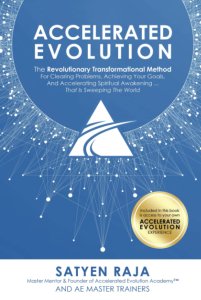
Today’s guest post is by Satyen Raja, Leadership Coach and Founder of WarriorSage.
In an era where the corporate mantra often echoes the need for unwavering positivity, we find ourselves grappling with the unintended consequences of this singular focus. The concept of toxic positivity, though wrapped in the guise of motivational encouragement, can inadvertently create an environment where the authenticity of our human experience is overshadowed by a relentless push for positivity. This cultural phenomenon, while stemming from a place of good intention, can lead to a work environment where genuine emotions are sidelined, and superficial exchanges become the norm.
The essence of toxic positivity lies in its denial of the complex, multifaceted nature of human emotions. It’s similar to applying a one-size-fits-all solution to the diverse challenges and experiences that individuals face in their personal and professional lives. In doing so, we not only invalidate the real struggles and feelings of our team members but also risk creating an environment where people feel isolated in their true experiences, unable to share for fear of being perceived as negative or not a team player.
The danger of such an environment is twofold. On one hand, it stifles the growth and development of individuals who may find themselves unable to express concerns, fears, or challenges openly. On the other hand, it hampers the organization’s ability to address and solve problems effectively, as issues are often swept under the rug in favor of maintaining an appearance of unwavering optimism.
Acknowledging the duality of our experiences, as taught in Eastern philosophies and the WarriorSage traditions, offers a path forward. These traditions emphasize the balance of yin and yang, the acceptance that life is an interplay of light and dark, positive and negative. In the workplace, this means fostering an environment where all emotions are acknowledged and valued, where the challenges are seen not as failures but as opportunities for growth and learning.
Creating such a culture requires intentional leadership. It demands leaders who are not only self-aware but also deeply committed to fostering an environment where authenticity is the cornerstone of the organizational culture. This involves developing empathy, the ability to genuinely connect with and understand the experiences of others, and using this understanding to guide leadership decisions and team interactions.
Empathy in leadership is about more than just listening; it’s about creating a space where team members feel truly heard and understood. This means moving beyond surface-level engagements and diving into the deeper, sometimes more uncomfortable conversations that reveal the heart of the challenges faced by the team. It’s in these moments of vulnerability that true connections are forged, leading to a more cohesive and resilient team dynamic.
Moreover, shifting the focus from toxic positivity to authenticity does not mean abandoning positivity altogether. Instead, it’s about embracing a more balanced and realistic approach to how we navigate our work and interactions. Authentic positivity arises naturally when people feel supported, valued, and understood. It’s a positivity that’s grounded in reality, resilient in the face of challenges, and inclusive of the full range of human emotions.
In practice, cultivating such an environment involves concrete steps and strategies. It starts with leadership modeling the behavior they wish to see, openly sharing their own challenges and vulnerabilities, and encouraging others to do the same. It involves implementing policies and practices that prioritize mental health and well-being, offering support and resources for those navigating difficult times, and creating regular opportunities for open, honest dialogue.
Training and development programs can also play a crucial role in this cultural shift. By incorporating emotional intelligence, active listening, and conflict resolution skills into leadership development initiatives, organizations can equip their leaders with the tools needed to foster an environment of authenticity and empathy.
In conclusion, the journey toward dismantling toxic positivity and fostering a culture of authenticity and empathy is both a personal and organizational endeavor. It requires a commitment to recognizing and valuing the full spectrum of human emotions, a willingness to engage in the deep, sometimes difficult conversations that lead to understanding and connection, and a dedication to creating a workplace where every individual feels empowered to bring their whole self to work. Let’s remember that the strength of our teams and the success of our organizations lie not in the facade of constant positivity but in the depth of our authenticity and the richness of our shared human experience.
Satyen Raja, author of Accelerated Evolution, is a world-renowned teacher, mentor, and guide. Satyen has been building and scaling businesses for over 30 years. His Transcendent Leadership programs at WarriorSage feature exclusive coaching, private mentorship, group trainings and intensives, retreats and Spiritual Adventure Tours, designed to bring CEOs, Founders, and entrepreneurs into deeper work-life balance, self-realization, and illumination of their soul’s mission and purpose.
Did you enjoy this post? If so, I highly encourage you to take about 30 seconds to become a regular subscriber to this blog. It’s free, fun, practical, and only a few emails a week (I promise!). SIGN UP HERE to get the thoughtLEADERS blog conveniently delivered right to your inbox!
https://i0.wp.com/www.thoughtleadersllc.com/wp-content/uploads/2024/03/20240317-Two-Office-Workers-Smiling.jpg?fit=1920%2C1280&ssl=112801920Trevor Joneshttps://www.thoughtleadersllc.com/wp-content/uploads/2022/04/logo.pngTrevor Jones2024-03-18 08:02:312024-03-17 22:47:59False Smiles, Real Consequences: The Impact of Toxic Positivity
Uncover effective methods for assessing candidate integrity in interviews, from questions to integrating AI analytics and the future of virtual hiring.
In the modern hiring processes, the evaluation of candidate integrity stands as a cornerstone, often determining an organization’s long-term success and cultural health. Integrity is crucial in defining the ethical framework and decision-making fabric of potential employees.
Integrity transcends mere qualifications and experience, embedding itself as a vital component of organizational ethos. In candidates, integrity is a harbinger of trust, responsibility, and ethical behavior — qualities imperative for building strong, sustainable business relationships and a positive work environment.
Why measure candidate integrity
Integrity in a candidate or anyone is crucial in determining how they can handle complex situations and responsibilities, particularly when not under direct supervision. Integrity is a fundamental predictor of a candidate’s dependability, honesty, and ethical behavior in a professional setting. Being able to assess someone’s integrity during the interview process is important and not always easy.
Candidates with strong integrity will likely foster a trustworthy and accountable workplace culture, which is essential for effective teamwork. An interviewers ability to assess a candidate’s integrity helps mitigate risks associated with unethical behaviors, which can have detrimental impact one the workplace and morale.
Questions to ask during interviews
When evaluating a candidate’s integrity during an interview, the questions you ask are the key. These conversations should be designed not just to elicit information but also to offer a window into the candidate’s ethical compass and decision-making process to ensure their character aligns with the values and standards of your organization.
Some questions you to ask may include, “How do you define ethical integrity in the workplace?” and follow that up with “Based on that definition, describe a situation where you faced a significant ethical dilemma and how you handled it?” Or “How do you define integrity, and can you give an example of how you have demonstrated it in a professional setting?”
You may also ask questions related to their trustworthiness, such as, “can you recall a time when your integrity was challenged and explain how you responded?” Or “In your opinion, what is the importance of integrity in this specific role/industry?”
Other questions that could be asked to uncover a candidate’s ethics may include, “Have you ever witnessed unethical behavior in the workplace, and if so, what went through your mind and how did you handle it?” Or “Share an experience where you had to admit to making a significant mistake and how you handled the situation?”
These questions are designed to provide deeper insights into the candidate’s thought process, decision-making, their personal values, and how they align with the organization’s standards. Additionally, role-play-type questions or directly asking what integrity means to them allows you to gauge how thoughtful and reflective they are and how they may fit in your organization.
Beyond behavioral interviewing techniques
When hiring, it’s essential to go beyond traditional behavioral interviewing techniques to thoroughly evaluate a candidate’s integrity. Behavioral questions may not fully probe a candidate’s ethical depth. Integrating innovative methods is key to achieving a more holistic understanding.
Situational Judgement Tests (SJTs) can be invaluable in uncovering how candidates handle ethical dilemmas in real time. Psychometric testing also known as psychological testing or assessment, further enhances this approach by evaluating traits like conscientiousness and honesty, offering a psychological viewpoint on the candidate’s character.
Additionally, discussing real-life ethical challenges or incorporating case studies during interviews helps gauge how candidates have navigated moral decisions in practical scenarios. Integrating AI-driven analytics in interviews also brings a new dimension, analyzing verbal and non-verbal cues to capture nuances that traditional methods might overlook.
These new and advanced approaches enable interviewers to gain a deeper understanding of a candidate’s integrity, which is vital for selecting individuals who align with the organization’s ethical standards and contribute to a principled workforce.
Importance of ongoing training for interviews
Ongoing training for interviewers keeps them updated with the latest interviewing techniques and ethical evaluation practices. Training provides interviewers with current and new methodologies and perspectives, crucial for a comprehensive evaluation of a candidate’s integrity.
Effective training sharpens interviewers’ ability to craft and pose questions that delve deep into a candidate’s ethical reasoning and decision-making. It’s not just about asking the right questions but also framing them to elicit authentic and insightful responses.
Ongoing training also ensures the honing and development of key interviewing skills like emotional intelligence and active listening skills to interpret and understand the nuances in candidates’ responses both verbal and non-verbal and discern their true character. Training helps interviewers learn and sharpen and refine this skill, so interviewers can detect rehearsed answers and recognize inconsistencies.
Ultimately, ongoing training prepares interviewers to adapt their techniques to various interviewing scenarios, including the now prevalent virtual interviews. As remote interviews become more common, interviewers must be skilled in assessing integrity through a screen as adeptly as in-person.
Adapting integrity to virtual interviews and the future of interviewing candidates
Adapting integrity assessments to virtual interviews mirrors the in-person experience and, with the advent of AI and advanced analytics, promises an even more nuanced approach in the future of interviewing.
AI technology brings sophisticated analytics to the table that were previously inaccessible in face-to-face interviews, such as analyzing a candidate’s eye movements, facial expressions, and even the duration they take to respond to complex ethical questions. These metrics can provide deeper insights into a candidate’s sincerity and thought processes, complementing the interviewer’s evaluation.
This integration of AI into virtual interviews signifies a significant leap in how integrity is assessed, allowing for a more comprehensive understanding of a candidate’s ethical makeup beyond what can be discerned through conversation alone. The future of interviewing looks towards a blend of human discernment and AI-powered analytics, ensuring a more complete and accurate assessment of candidate integrity.
Paul Bramson has been described as a powerhouse on keynote stages and in training arenas. He is recognized as a global authority and thought leader in the areas of leadership, sales & communication. With over 25 years of experience, Paul has a unique ability to connect with professionals, leaders, and teams at all levels, providing them with valuable insights and empowering them with the most relevant knowledge and skills. Paul is a true Bostonian, graduated from Boston University, and currently lives in Atlanta, GA.
Did you enjoy this post? If so, I highly encourage you to take about 30 seconds to become a regular subscriber to this blog. It’s free, fun, practical, and only a few emails a week (I promise!). SIGN UP HERE to get the thoughtLEADERS blog conveniently delivered right to your inbox!
https://i0.wp.com/www.thoughtleadersllc.com/wp-content/uploads/2024/03/20240309-Interview-Two-Women.jpg?fit=1920%2C1280&ssl=112801920Trevor Joneshttps://www.thoughtleadersllc.com/wp-content/uploads/2022/04/logo.pngTrevor Jones2024-03-11 08:02:002024-03-09 18:57:18Evaluating Candidate Integrity in Interviews
Building chemistry between the members of your team is all about personalities, shared beliefs, and trust.
It’s great to have a clear vision, a mission, a nice set of prioritized initiatives, and all the right people. But what starts differentiating a team from a high-performing team is chemistry and trust. These intangibles are some of the most critical elements of building a high-performing team, but they’re also some of the most elusive ones to build and capture.
Personalities and Shared Beliefs
Building chemistry between the members of your team is all about personalities and shared beliefs. Make sure everyone on your team is involved in the interview process because candidates will show different sides of themselves to different people. And sometimes, those sides can be unattractive detractors from what you’re trying to build. Read more
https://i0.wp.com/www.thoughtleadersllc.com/wp-content/uploads/2024/03/20240306-Team-Planning.jpg?fit=1920%2C1281&ssl=112811920Trevor Joneshttps://www.thoughtleadersllc.com/wp-content/uploads/2022/04/logo.pngTrevor Jones2024-03-06 06:32:542024-03-06 01:31:42Team Chemistry: How Do You Build It?
Dr. Sam Adeyemi offers insight to business executives and C-suite professionals on cultivating innovation within any organization.
Today’s guest post is by Dr. Sam Adeyemi, author of “Dear Leader: Your Flagship Guide to Successful Leadership.”
5 Leadership Tips to Unlock Your Team’s Potential
Innovating is a lot like driving down a road. If the weather is clear, the road is unobstructed, and the light is green, then everything will ceaselessly flow towards its destination. However, when the traffic stops, it often comes to a grinding halt. The wrong kind of leadership stifles innovation at the source, while the right kind of leadership keeps the road ready for new drivers at every turn. What defines the difference?
Discover the five things successful leaders do to encourage nonstop innovation.
1. Alleviate fear
The young British writer Eric Blair was worried his family would be embarrassed by his time living in poverty. So, he published his very first book as the now-famous George Orwell. Charlotte Brontë published most of her early works as Currer Bell, and Victorian novelist George Eliot was born Mary Ann Evans. Why the deceit? Because women writers of the 19th century feared being disregarded based solely on their biological sex, and writers throughout history have feared both misunderstanding and reprisal.
Fear is a roadblock to honest communication and innovative thinking. It’s that simple. In fact, 85% of executives believe fear and apprehension are what prevents progress within their organization. New ideas can come from anyone — from frontline workers to C-suite executives. But none of this matters unless leaders cultivate an open-minded environment that welcomes every idea, challenges conventional thinking, and removes fear from the equation.
2. Show support
From the late 1800s to the early 1900s, Booker T. Washington and W.E.B Du Bois were two of the most prominent civil rights leaders in America. Examined up close, they agreed on almost nothing. Mr. Washington believed discrimination was an inescapable reality, and he promoted the ideas of self-help and skilled labor as a means of elevating the black community. Conversely, Mr. Du Bois believed in the power of the intellectual elite, and his prescription for change involved political action and a liberal arts education. Still, there was one thing that the two men agreed on that superseded everything else: successful leaders show their support.
Even the most self-assured professionals need someone to believe in their future success. As a leader, when you outwardly encourage team members to pursue their own ideas, you are not only exhibiting faith in the individual’s potential, but you are also letting others know that innovation is supported at your organization. As Mr. Washington and Mr. Du Bois proved just over 100 years ago, there are a number of ways for leaders to show that support. All in all, the method matters much less than the authenticity and consistency of the sentiment itself.
3. Release control
There are nearly 200 types of swords throughout the world. So, needless to say, there are many different ways to hold the hilt of one’s blade. But there is one universal piece of advice that applies to almost every weapon-wielding technique: “Only apply pressure when and where it’s necessary.” For example, if you’re holding a katana, you need only squeeze firmly with your pinky and index fingers. This freedom of movement is what makes the elegant cuts of the katana possible, while an overly firm grip reduces mobility and creates a much less effective hacking motion.
As a leader, your management should apply the least amount of pressure possible, relinquishing control to your team at every opportunity. When you excessively supervise or micromanage any collective effort, the results are uninspiring. People want to think for themselves, be empowered to make both small and large decisions, and work in a way that best suits their goals and ambitions. Minimal management and a supportive working culture can give your team the freedom it needs to strike with passion and precision.
4. Welcome failure
The Virtual Boy was a bizarre by-product of Nintendo’s meteoric rise in American pop culture from 1986 to the late 1990s. This clunky headset promised a first-class ticket to the “third dimension” of video games. Ultimately, however, it delivered a single-color 3D experience that was both awkward to play and caused motion sickness in the process. Following the success of the Super Nintendo, the Virtual Boy was an unmitigated failure and seemingly a giant step backward for the company. Yet, its cursed development produced the priceless tacit knowledge that would result in one of the company’s most iconic systems: 1997’s Nintendo 64.
Successful leaders understand that failure is part of every process. What’s more, with the right mindset, failure is often a precursor to a larger success or organizational evolution. In a recent study that examined everything from grant funding applications to terrorist activity, researchers discovered two underlying trends: (1) failure happens to everyone, and (2) the only difference between those who eventually succeed and those who don’t is whether or not they endure the inevitable “stagnation period.” In this way, supporting failure is actually an integral part of supporting the creative process of your entire team.
5. Reward fairly
From 1206 to 1294, the Mongol army captured nearly all of Eurasia and created the world’s largest contiguous empire in history. What gave their military might the upper hand in almost every situation? Well, a number of things. However, perhaps most importantly, the Mongol army was one of the first examples of a completely merit-based military organization. Many Khans were elected to their position, and no one ascended the ranks of the military without succeeding in battle and building their own resumé. Simply put, rewards were given fairly, and the results were undeniable.
If something is working or someone is generating great ideas, it is critical for leaders to acknowledge that success. Nearly 70% of employees say they would work harder if they felt their efforts were more fairly recognized. Of course, defining this fairness is absolutely essential. While justly given rewards can be a positive morale booster, unfair recognition can turn incentives into something demoralizing that only favors the outspoken.
Atlanta-based Dr. Sam Adeyemi (SAY: Ah Day yeh me) is CEO of Sam Adeyemi, GLC, Inc. and founder and executive director of Daystar Leadership Academy (DLA). More than 45,000 alumni have graduated from DLA programs, and more than 3 million CEOs and high performing individuals follow him on top social media sites. Dr. Sam’s new book is “Dear Leader: Your Flagship Guide to Successful Leadership.” He holds a Doctorate in Strategic Leadership from Virginia’s Regent University, and is a member of the International Leadership Association. He and his wife, Nike (say Nee keh) have three children. Learn more at SamAdeyemi.com.
Did you enjoy this post? If so, I highly encourage you to take about 30 seconds to become a regular subscriber to this blog. It’s free, fun, practical, and only a few emails a week (I promise!). SIGN UP HERE to get the thoughtLEADERS blog conveniently delivered right to your inbox!
https://i0.wp.com/www.thoughtleadersllc.com/wp-content/uploads/2024/03/20240303-Light-on-Road.jpg?fit=1920%2C1280&ssl=112801920Trevor Joneshttps://www.thoughtleadersllc.com/wp-content/uploads/2022/04/logo.pngTrevor Jones2024-03-04 08:01:272024-03-03 23:07:12Opening Roads to Innovation
Recruiting the right people involves creating appropriate role descriptions and knowing where to look.
One of the most exciting aspects of building a high-performing team is recruiting people to be members of that team. There’s nothing better than finding that really talented person who wants to come work with you. So as you think about doing this recruiting and finding the right people, you need to understand how to create role descriptions based on the team’s skill needs. Read more
https://i0.wp.com/www.thoughtleadersllc.com/wp-content/uploads/2021/06/20210609-Businesswomen-Interview.jpg?fit=1910%2C1276&ssl=112761910Trevor Joneshttps://www.thoughtleadersllc.com/wp-content/uploads/2022/04/logo.pngTrevor Jones2024-02-28 06:30:482024-02-28 04:15:07How to Recruit the Right People For Your Team
Explore training and development through the lens of adversity.
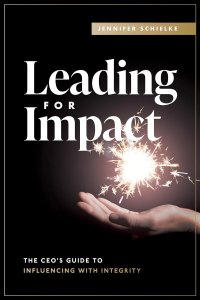
Today’s guest post is by Jennifer Schielke, author of Leading for Impact: The CEO’s Guide to Influencing With Integrity.
What is your superpower?
This question has been used as a common icebreaker. Instinctively, for me, various comic book superheroes come to mind, then something practical like a laundry wizard. But the ones that impact me are those I don’t even think of on my own. Maybe an extension of that is something obvious right in front of me that I just see as ugly and want to ignore.
So, who chooses adversity as a superpower? Well, someone bold enough to take unwanted reality and refine it into a badge of GRIT – Gratitude, Resilience, Integrity, and Tenacity.
The worldwide population of people has this one hurdle in common: Everyone wrestles with adversity in different areas of life and with various magnitudes of impact. Each waking day ushers in a playground of obstacles to obstruct our paths in our personal and professional lives. Some difficulties are inherited from the world or environment(s) around us, while other challenges are created all on our own by the choices we make, attitudes we have, and actions (or inactions) we execute.
I admit that the world is not an easy place to make our way, but a simple mind shift can transform how we approach adversity: We can embrace it and use it as a catalyst for growth. Adversity is our ally for achievement.
GRIT
No one needs to remain in a state of serious or continued difficulty and/or misfortune; there is always a way out. Times of affliction and hardship are valuable for building confidence in our ability to overcome any barrier. Adversity becomes an asset as we approach it with GRIT, looking expectantly to the growth that we experience in the process.
Gratitude
Gratitude is a powerful state of mind and a necessary tool for working through the battles we face. Receiving adversity in readiness to reshape it for productive good is a useful life discipline. When we build thankfulness into our life practice, it is contagious.
The individual impact we can appreciate is lowering our stress in those situations and celebrating our ability to harness every opportunity for growth. Gratitude effectively recasts adversity as an ally to our career path, to developing healthy relationships, and to fostering overall well-being.
Resilience
Resilience evidences the capacity – physical, mental, spiritual, and emotional toughness – we are equipped with (and continue building) to withstand, overcome, and be renewed by the obstacles that intersect with our lives and careers.
There are many things in life that only we have the control to effect change in. The risk or fear of blame is far overshadowed by the ability to show accountability and leadership for an outcome we own and embrace or change. Growing in resilience strengthens character and the foundation you draw from in times of adversity.
Integrity
Integrity embodies your full commitment to who you are and the principles that establish your success. It’s the pattern and approach you bring into being for every obstacle and challenge that presents itself. It builds security for yourself and those you lead in knowing that you will indeed find a way through the storm and be better for it.
Integrity holds fast to both intention and influence. Whatever the circumstance, you will navigate a plan toward success and that very behavior will become the beacon of hope for others to develop the same for themselves. People around you learn by what you model. Integrity is being mindful of your own growth through trials, in order that you might also influence others well.
Tenacity
Persistence outpaces adversity for the win. Tenacity is gained not in things gifted, nor in times of ease and simplicity. It is molded and strengthened through challenges, discomfort, and times of trouble.
Determination and hard work are foundational to achieving success. The growth you experience when faced with life’s obstacles – whether physical, mental, spiritual, and/or emotional – is character defining. When you decide for yourself that you hold the courage and resolve to overcome adversity, you become a well-suited warrior for success. The triumphs you are assured of are set in motion by the tenacity that becomes your way of life.
Hero in Action
We can approach every situation through a different lens. The way we view our circumstances can either be paralyzing or propel us forward. Some disruptors we see coming, some catch us by surprise, and some – let’s be honest – linger longer than we might want.
The common thread, regardless of what lies before us, is that we have the power and authority to shape the outcome for the better. Next time someone asks you for your superpower, tell them Adversity is your Superpower!
Jennifer Schielke (www.summitgroupsolutions.com) is the author of Leading for Impact: The CEO’s Guide to Influencing With Integrity and the CEO/co-founder of Summit Group Solutions, LLC, a relationship-focused IT staffing and recruiting partner. Her company is a multi-year Inc. 5000 awardee and a 2023 Inc. Power Partner. Schielke’s 30 years of business leadership experience also includes 20 years of life-on-life ministry, which advanced her commitment to serve others generously and to lead with integrity. Her passion overflows into leadership development and team engagement.
Did you enjoy this post? If so, I highly encourage you to take about 30 seconds to become a regular subscriber to this blog. It’s free, fun, practical, and only a few emails a week (I promise!). SIGN UP HERE to get the thoughtLEADERS blog conveniently delivered right to your inbox!
https://i0.wp.com/www.thoughtleadersllc.com/wp-content/uploads/2024/02/20240226-Walking-Uphill.jpg?fit=1920%2C1280&ssl=112801920Trevor Joneshttps://www.thoughtleadersllc.com/wp-content/uploads/2022/04/logo.pngTrevor Jones2024-02-26 08:02:132024-02-26 02:34:22Adversity as a Superpower
Building a high-performing team involves hiring people with technical, functional, and cultural skills.
As the leader of a high-performing team, you’re personally responsible for making sure your team has the required set of skills to succeed and execute against all the initiatives that you have on your prioritization list. You need to evaluate your team’s mission. You need to look at the key initiatives. And then, you need to map out the skills and capabilities required to succeed. Read more
https://i0.wp.com/www.thoughtleadersllc.com/wp-content/uploads/2021/06/20210602-Team-Gathering.jpg?fit=1280%2C853&ssl=18531280Trevor Joneshttps://www.thoughtleadersllc.com/wp-content/uploads/2022/04/logo.pngTrevor Jones2024-02-21 06:30:352024-02-21 03:00:35How to Build Teams With the Right Mix of Skills
Over 97% of employers think social skills can significantly impact an individual’s job performance. But are those same leaders practicing what they preach? Is their leadership truly empathetic and capable of inspiring loyalty?
When I ask fellow executives which values guide their leadership, nearly every response is some reiteration of “courage, vision, and perseverance.” While these traits are certainly admirable qualities for any successful leader, their importance often overshadows the softer social skills necessary for organizational well-being, such as empathy, integrity, and authenticity. In fact, 86% of employees report a more sustainable work-life balance when working under leaders they would describe as empathetic. Those employees are more productive, more content, and much more likely to stick around for the long term.
So, what are these executives doing right? How do successful leaders demonstrate empathy to their employees and inspire greater retention as a result? Overall, there are five distinctive traits that define empathetic leaders, and it is these applied behaviors that empower their leadership and inspire long-lasting loyalty from their team members.
1. They make empathy a priority.
As a leader, empathy is your bridge to understanding the needs of others, and it is an essential characteristic for those who hope to get the very best effort from each individual. That said, empathy is certainly not automatic, and even successful leaders are sometimes clueless about how to demonstrate empathy to their employees. More often than not, this failure is rooted in their refusal to make empathy a major priority within the workplace, which inhibits the evolution of compassion both inside and outside each respective team.
The consequences are very real, and can have profound effects on any organization. Nearly 60% of employees have previously left jobs because they did not feel valued by their supervisor, and 85% of those employees believe empathetic leadership increases productivity across the board. By neglecting empathy, an executive is not only creating a less welcoming workspace, but they are also directly undercutting the bottom line.
2. They pay really close attention.
There’s listening — then there’s active listening. Only one is actually meaningful to your employees.
Carl Rogers, one of the founders of humanistic psychology, once wrote, “We think we listen, but very rarely do we listen with real understanding and true empathy.” When the COVID pandemic first started to change the world in 2020, many executives issued universal messages of encouragement to all their employees: “We’re all in this together.” Of course, this statement is fundamentally incorrect and does nothing to consider and accommodate for the realities of each team member. Even when we’re all getting wracked by the same storm, it’s important for empathetic leaders to understand we are all weathering the situation from very different boats with very different resources and demands. The only way for a leader to achieve this level of understanding is through active and inclusive listening.
3. They connect with people — not with process.
When successful employees first move into leadership positions, they can sometimes lose their ability to connect with others. Thanks to newly developed power dynamics, many up-and-coming leaders make the mistake of establishing connections with the workplace itself, as opposed to the people behind the process. These leaders are capable of extraordinary understanding, but only as it applies to the needs of the process — or the end result. When it comes to understanding the needs of actual team members, their empathy and concern is unfortunately MIA.
Truly empathetic leaders apply this heightened level of understanding to every individual. This tactic takes a lot more work, and it certainly demands more nuance, but the results are undeniable. After all, 76% of people with highly empathetic senior leaders report often or always being engaged, compared to only 32% of people with less empathetic senior leadership.
4. They play the long game.
Empathy doesn’t develop overnight. It is something that is slowly demonstrated through your considerate actions as a leader. There is not ONE thing to do or say that will make you an empathetic executive. There is no SINGULAR shortcut you can take to acquire a detailed understanding of your team members. With active listening, the right priorities, and the right connections, empathy will certainly develop naturally, but that development will operate according to its own organic timeline.
Simply put, you can’t fully understand even one of your employees in a short amount of time, much less an entire team of diverse professionals. Empathy is essential, but it isn’t immediate. The most successful executives accept this fact from the very beginning.
5. They are prepared to struggle.
Though unquestionably essential to sustainable success, developing true empathy for your employees isn’t exactly easy. Demonstrating empathy places new demands on your time, and understanding begets misunderstanding, meaning more mediation and one-on-one followup from every executive. This is why any comprehensive effort to become a more empathetic leader will not only take time, but it will also include establishing more inclusive processes, managing conflicts, and facilitating more transparent communication.
If you can’t make an omelet without breaking a few eggs, then you probably can’t become a truly empathetic leader without buying out the whole chicken house. That said, you’ll have enough omelets to feed an army, and that army will be a loyal team of employees who feel authentically heard and understood.
Start your transformation.
Want to be a leader who inspires loyalty? Establish yourself as an empathetic executive. With the right priorities, the right connections, active listening, and just enough patience, your leadership can be empowered by its own empathy — its own ability to understand the needs of every team member. With such empathy and authenticity, your time at the helm can be both highly productive and radically transformational.
Atlanta-based Dr. Sam Adeyemi (SAY: Ah Day yeh me) is CEO of Sam Adeyemi, GLC, Inc. and founder and executive director of Daystar Leadership Academy (DLA). More than 45,000 alumni have graduated from DLA programs, and more than 3 million CEOs and high performing individuals follow him on top social media sites. Dr. Sam’s new book is “Dear Leader: Your Flagship Guide to Successful Leadership.” He holds a Doctorate in Strategic Leadership from Virginia’s Regent University, and is a member of the International Leadership Association. He and his wife, Nike (say Nee keh) have three children. Learn more at SamAdeyemi.com.
Did you enjoy this post? If so, I highly encourage you to take about 30 seconds to become a regular subscriber to this blog. It’s free, fun, practical, and only a few emails a week (I promise!). SIGN UP HERE to get the thoughtLEADERS blog conveniently delivered right to your inbox!
https://i0.wp.com/www.thoughtleadersllc.com/wp-content/uploads/2024/02/20240205-Two-Men-Working.jpg?fit=1920%2C1310&ssl=113101920Trevor Joneshttps://www.thoughtleadersllc.com/wp-content/uploads/2022/04/logo.pngTrevor Jones2024-02-05 08:02:492024-02-05 02:59:40Only Time + Empathy = Loyalty
When you become an expert in your chosen field, you’re not just improving your job performance; you’re setting yourself up for a future filled with opportunities.
The transformative power of domain expertise plays a central role in elevating your career trajectory. When you become an expert in your chosen field, you’re not just improving your job performance; you’re setting yourself up for a future filled with opportunities. This expertise acts as a catalyst, accelerating your career advancement and unlocking doors to leadership roles and innovative opportunities.
Beyond just about being good at what you do, it’s about becoming a key player in shaping the future of your industry. As you deepen your knowledge and skills, you position yourself as someone who doesn’t just follow trends but sets them, leading to a more dynamic and fulfilling career path.
Moreover, being an expert in your domain directly impacts your earning potential and growth prospects. In today’s competitive job market, a unique skill set is more than a resume booster — it’s a ticket to higher earning potential and a broader spectrum of career opportunities. Employers value experts for their ability to tackle complex problems and provide innovative solutions, making them more willing to invest in your growth.
This investment isn’t just financial, but includes furthering your learning and development, positioning you to take on challenging and rewarding roles beyond your current scope. Such expertise increases your value in the job market and expands your horizons for professional growth.
Apart from enhancing your career and financial prospects, achieving mastery in your field establishes your influence and credibility, increasing personal satisfaction and confidence. As an expert, you’re seen as an authority — someone whose opinions and insights are sought after and respected. This respect translates into a powerful ability to influence critical decisions and inspire others within and outside your organization.
Furthermore, the journey to expertise is in itself a confidence booster. There’s a profound sense of achievement in knowing you’ve mastered a complex field, which reflects in your self-esteem and overall outlook on life. Your expertise doesn’t just make you a better professional; it shapes you into a more confident and fulfilled individual.
Follow this roadmap on your journey to domain expertise:
1. Discover your passion: Start by identifying an area that sparks your interest and aligns with your long-term vision. Let your curiosity guide you. Find your “why” — the one thing you love to do, no matter what you’re doing or where you’re going. It’s the thing that moves you to get out of bed in the morning and engulfs your every thought throughout the day.
2. Commit to lifelong learning: Embrace continuous education as a lifestyle. Read books, attend workshops, enroll in courses, and always continue expanding your knowledge. There’s a ton of free information on the internet, and many affordable platforms offer low-cost courses to expand your knowledge in a particular field.
3. Gain hands-on experience: Apply your knowledge in real-life settings. Practical experience is the crucible in which true expertise is forged. Immerse yourself in what you want to learn and what you love to do. Surround yourself with like-minded individuals who share similar goals. Join groups, volunteer time, or gain employment to help you pursue your chosen area. Learn by doing.
4. Network with industry leaders: Connect with mentors and experts. Their insights and guidance can accelerate your journey to mastery. Seek out people who can guide you, offer advice, and move you forward in your pursuit of knowledge. Ask questions of people you consider experts in your area of interest. Join trade organizations, networking groups, or other industry associations and seek out people within those organizations who can point you in the right direction.
5. Teach and share your knowledge: Teaching is learning twice. Share your insights and experiences; it reinforces your knowledge and helps others grow. Passing on what you’ve learned is a powerful growth builder for you and others in your circle of influence. Empty your cup of knowledge to fill it up again with more learning experiences and wisdom.
6. Stay abreast of trends and innovations: Keep your finger on the pulse of your field. Read extensively, attend conferences, and stay connected to emerging trends. Find online sources, magazines, and media platforms that can keep you up to date with current events and any new changes to your area of interest. Create a network and circle of friends that share information and knowledge; this will help you stay aware as an industry or area of focus evolves.
7. Contribute and give back: Write articles, volunteer for speaking engagements, or conduct research. The more you give, the more you get. Your contributions can inspire and pave the way for others. Put yourself out there and start being recognized as an expert and an industry leader. Help others grow and watch how high you grow in the process.
Embarking on the journey to domain expertise is about becoming a beacon in your field, a source of knowledge, and inspiration for others. It’s a commitment to not just excel professionally but to grow personally and help others along the way. As you venture down this path, remember that each step you take is a building block in crafting a legacy of knowledge, influence, and personal achievement. Let your passion fuel your pursuit, and let your expertise be a light that guides both your path and that of others seeking their way in the vast landscape of knowledge and skill.
Dr. Vincent DeFilippo, DBA, MBA, is a professor in the School of Accounting and Business at Monroe College. Prior to that he was CEO of a private equity fund in Hong Kong, raising several billion dollars in venture capital for entrepreneurs and publicly traded companies throughout the Asia Pacific Region. His new book, Braking Point: How Escalation of Commitment Is Destroying the World (and How You Can Save Yourself), (ViennaRose Publishing, May 3, 2023), is a Wall Street Journal bestseller. Learn more at www.vincentdefilippo.com.
Did you enjoy this post? If so, I highly encourage you to take about 30 seconds to become a regular subscriber to this blog. It’s free, fun, practical, and only a few emails a week (I promise!). SIGN UP HERE to get the thoughtLEADERS blog conveniently delivered right to your inbox!
https://i0.wp.com/www.thoughtleadersllc.com/wp-content/uploads/2024/01/20240128-Whiteboard-Presentation.jpg?fit=1920%2C1281&ssl=112811920Trevor Joneshttps://www.thoughtleadersllc.com/wp-content/uploads/2022/04/logo.pngTrevor Jones2024-01-29 08:02:462024-01-28 21:27:59Unlocking Your Potential: The Transformative Power of Domain Expertise
Politics and personal agendas can derail a high-performing team. Learn the difference between being savvy and being political.
Personal agendas and politics can derail the performance of your entire team and your team will no longer be high performing. You have to get the team focused on what matters and enable everyone on the team to rise above the politics and the personal agendas.
Now, there’s a difference between being savvy and being political. Savviness is about knowing who’s influential in the organization and how you can get things done. You’re going to be able to go to them and enlist their aid as you try and advance the agenda of your team. Being political is doing something to get ahead personally and thinking through how you can play people off of one another for your own personal gain. Your job as a leader is to understand the difference between the two and eliminate the latter.
Over time, if you let the politics continue you end up with a caustic culture where people are willing to engage in backstabbing, where people are rumor-mongering, and spreading things about other people in order to, again, advance their own personal agenda. So you have to be mindful of what the politics are, but not engage in them. If you’re good at this in terms of understanding how to be savvy and understanding that some people will have political and personal agendas, you’re going to be able to side step those issues and still help your team achieve what they’ve signed up to do.
A personal example. I worked in an organization where I was tasked with a very difficult project and I told my boss, “I can approach this project one of two ways. Either I can just be the bean counter and do things more administratively or I can take the other end of the spectrum and I can drive change. I can help us think about new ways of doing things. Now, with the first approach we’re going to get some results and people will push for some initiatives that might be uncomfortable, but mostly people will stay safe. In the second approach, we’re going to get a lot more in terms of results, but I will upset people and not just really junior people. There are some senior people who are going to be very upset with the recommendations that I drive.” And he said, “I want the impact.” My boss made the commitment.
Now, fast forward and the project is progressing. I started upsetting some very powerful people in the organization. I upset one of them so much that he went over my boss’s head and tried to get me fired because I was driving an agenda that was so counter to some of the things that he wanted personally, that he was trying to eliminate me from the organization. Fortunately, I had been savvy enough on the front end to get my boss to commit to protecting me during the process when that happened and my boss lived up to that promise.
As you assess whether you’re being savvy or political, simply ask, “Is the action I’m about to take in the best interest of the organization?” If the answer is yes, proceed. And if it’s not, stop it immediately. You have to stop it yourself and you have to stop it if you see it in the members of your team because again, politics can absolutely derail a high-performing team.
Want to learn more about building high-performing teams? How about taking an entire course on it? Check out the video below to learn more about the course and get started. Or you can go directly to the course and start learning how to build high-performing teams. The entire course is available at LinkedIn Learning. Enjoy!
Did you enjoy this post? If so, I highly encourage you to take about 30 seconds to become a regular subscriber to this blog. It’s free, fun, practical, and only a few emails a week (I promise!). SIGN UP HERE to get the thoughtLEADERS blog conveniently delivered right to your inbox!
https://i0.wp.com/www.thoughtleadersllc.com/wp-content/uploads/2023/11/20231129-Two-Women-Side-Eye.jpg?fit=1920%2C1280&ssl=112801920Trevor Joneshttps://www.thoughtleadersllc.com/wp-content/uploads/2022/04/logo.pngTrevor Jones2023-11-29 06:32:152023-11-29 01:32:51Handling Politics and Personal Agendas