• Contact
  • My Account
  • Log In
  • 0Shopping Cart
thoughtLEADERS, LLC: Leadership Training for the Real World
  • About
  • Services
  • eLearning
  • Team
  • Blog
  • Clients
  • Books
  • Contact
  • Menu Menu

The Best Leaders Are Comedians

January 2, 2023/1 Comment/in Books, Business Toolkit, Communications, Guest Blogger, Innovation, Leadership, Strategy /by Trevor Jones


two people laughing

Leaders can learn a lot from comedians. They’re captivating public speakers, they practice economy of language, and they’re experts at insight. Insight is a critical leadership skill.

Today’s post is by Antonio Garrido, author of MY DAILY LEADERSHIP: A Powerful Roadmap For Leadership Success (CLICK HERE to get your copy).

To be clear, I’m not saying that it’s the leader’s job to joke their way through the difficulties of the day. Nor am I saying that the leader’s job is to find something to lampoon in order to amuse others.

No, my argument is this: comedians are experts at insight: they are wonderful at drawing seemingly unrelated pieces of information together in new and unexpected ways. The best leaders have a similar gift: they have the ability to ‘see beyond the data’ and notice patterns, trends, or truths that nobody else sees. And then, like comedians, when they draw attention to the path of their particular perspective, suddenly everyone else sees it too – this is insight in action.

Comedy is Insight in Action

Have you ever noticed how often comedians say, “Have you ever noticed how…?”?

Have you ever noticed how…

you’re never quite sure whether it’s okay to eat green crisps.

triangle sandwiches taste so much better than square ones.

you’ll always pour a glass of water from the sink faucet, but never ever the bath faucet.

“Have you ever noticed how…?” is an example of cultural referencing and looking at the world from a different perspective. Comedians are brilliant at finding ways to come up with a new way of perceiving the world. We don’t see insight till we see it, and then once we do, we can’t ever unsee it. The best leaders do the same. The best leaders use insight to see what others don’t or can’t yet.

Great Leadership is Also Insight in Action

If real leadership is about ‘future proofing’ (future proofing themselves, their people, and their business), then the ability to see the as-yet unseen or unrevealed is critical. This is why Steve Jobs insisted the iMac was launched in four bright colors (not beige), because he realized color is a critical way for people to express themselves. Insight. This is why Bata Shoes opened a shoe factory in Africa where nobody wore shoes, because they saw a potential opportunity where every other shoe manufacturer saw, well, a market where nobody wore shoes. Insight. And this is why Sam Walton of Walmart insisted on building superstores between towns, and not in them, because of lower rates and fewer competitors. Insight.

Insight, as comedians will tell you, can be developed. And you can’t get more insightful without getting more creative. Creative insight is what we’re after. The most creative leaders are, at their core, playful – playing with ideas and scenarios and messages. Great leaders have creativity sessions actually scheduled on their weekly calendar.

Take a look in your calendar right now. Go to next week. How many scheduled, blocked-off slots are there for “thinking” or “creative time” or “idea generation?” How many?

Count again. None? Exactly.

What you should see in your calendar is forty-five minutes peppered here and there for blue-sky thinking and ideation. Or even better, five minutes every morning and evening dedicated to creative thinking in your Leadership Journal. If you don’t make time for creativity, for insight development, you’ll find a million less important tasks to do.

As the extraordinarily insightful Maya Angelou once said, “You can’t use up creativity. The more you use it, the more you have.”

Lighthearted, Not Lightweight

The best leaders, like comedians, are lighthearted, not lightweight: we often confuse the two, but there’s a difference.

I’ll never forget how one of the best leaders that I ever had the pleasure of working for always took time to start every speech with an amusing anecdote or observations (insight). He used this insight skill to great effect too when studying a lengthy balance sheet, or considering the salient KPIs of a particularly complex plan.

He would even charge the HR departments to specifically identify candidates who would test high for insight when recruiting new leaders.

Here’s an example of how this inspirational leader would begin a typical meeting. How’s this for the opening line of an annual general board meeting to announce that year’s performance? It’s probably important to note that the company was a world-leading lock-maker with global revenues of around 100 billion.

He began, “Ladies and gentlemen, thank you for attending our annual general meeting. It’s a little-known fact that my entire work life has been involved in security in one way or another. You probably don’t know this, but my first ever job was selling security alarms door to door. I was really, really good at it. I’d knock and if there was no one at home, I’d always leave a brochure on the kitchen table. They’d call me right away.”

Okay, so that’s not the best joke you ever heard, but for that particular audience it was the perfect opener to a discussion that would at times, he knew, be rather difficult. It probably goes without saying that this particular leader was a master at insightful strategy development.

Insight is a Key Leadership Differentiator

In terms of leadership, insight is one of the key differentiators – it separates the best from the rest. Insight allows the leader to peek into the future and helps them to start creating a pathway into it today.

Too many leaders rely on their intellect, or experience, or tried and tested methodologies. Unfortunately, though, the future is increasingly uncertain. This means that new directions and new and uncertain futures will require, if anything, new insights. Wayne Gretzky skated to where the puck is going to be, and not to where it is now – and that’s the leader’s job too. Intellect and experience might have got you here, but insight, will get you there.

In closing, comedian George Burns probably said it best: “Look to the future – because that is where you’ll be spending the rest of your life.”

garrido bookAntonio Garrido, author of MY DAILY LEADERSHIP: A Powerful Roadmap For Leadership Success, has over twenty-five years in senior leadership positions with world-class businesses. He is a serial entrepreneur, successful business coach, author, and charismatic speaker.

For more information, please visit www.MyDailyLeadership.com

Did you enjoy this post? If so, I highly encourage you to take about 30 seconds to become a regular subscriber to this blog. It’s free, fun, practical, and only a few emails a week (I promise!). SIGN UP HERE to get the thoughtLEADERS blog conveniently delivered right to your inbox!

https://i0.wp.com/www.thoughtleadersllc.com/wp-content/uploads/2023/01/20230102-Two-People-Laughing.jpg?fit=1920%2C1280&ssl=1 1280 1920 Trevor Jones https://www.thoughtleadersllc.com/wp-content/uploads/2022/04/logo.png Trevor Jones2023-01-02 08:00:462023-01-02 03:32:01The Best Leaders Are Comedians

How to Wean Squeaky Wheels on Your Team

December 28, 2022/0 Comments/in Business Toolkit, Communications, Leadership, Project Management, Strategy, Training /by Trevor Jones

blue grocery carts

The key to weaning squeaky wheels is to boost their confidence and make them more independent.

Your high-cost producers are in the upper-left corner of the leadership matrix. They deliver great results, but they consume a lot of your time and energy. The squeaky wheel is the epitome of a high-cost producer. They need to be weaned off of taking up all of your time.

Your goal with a squeaky wheel is to make them more independent. Make their check-ins less frequent. Limit their ability to just drop in and talk. Provide them boundaries within which they’re expected to make decisions on their own. Try boosting their confidence in their abilities so they’ll be more independent.

To improve a squeaky wheel’s performance, leaders must take control of their interactions with them. Put structure to those interactions. Reduce the likelihood that they overuse informal channels with you, like sending you emails or just picking up the phone and calling. Give them clear parameters where they should act autonomously, and reward or praise them when they do.

I had one squeaky wheel on my team who was constantly in my office, and I would always talk with him because he was delivering great results and working on cool projects. Eventually I figured out how much of my time he was consuming, and I decided to make a change. I went to him and said, “Hey, from now on, any decision that’s below $50,000 you need to make it. Just tell me after you’ve made it. I trust that you’re gonna make the right call. When it’s above $50,000, make sure you involve me earlier.”

What happened was all those small decisions were no longer coming across my desk. All that time I had previously been spending on $5,000 or $10,000 decisions became my time again that I could spend somewhere else. The benefit of more effectively leading a squeaky wheel and weaning them off of the need to see you and talk with you all the time is that you reclaim your leadership capital. You can invest that leadership capital in other team members who need it more. You’re also building this individual’s self-sufficiency. You set them up for success and encourage them to be a higher performer on their own.

With a squeaky wheel, the sooner you can pull back from the amount of time and energy you invest in them, the faster you’ll be able to reinvest that time and energy in other members of your team.

Want to learn more about developing your team? How about taking an entire course on it? Check out the video below to learn more about the course and get started. Or you can go directly to the course and start learning how to assess and improve your strategic plans. The entire course is available at LinkedIn Learning. Enjoy!

Did you enjoy this post? If so, I highly encourage you to take about 30 seconds to become a regular subscriber to this blog. It’s free, fun, practical, and only a few emails a week (I promise!). SIGN UP HERE to get the thoughtLEADERS blog conveniently delivered right to your inbox!

https://i0.wp.com/www.thoughtleadersllc.com/wp-content/uploads/2022/12/20221228-Blue-Grocery-Carts.jpg?fit=1920%2C1440&ssl=1 1440 1920 Trevor Jones https://www.thoughtleadersllc.com/wp-content/uploads/2022/04/logo.png Trevor Jones2022-12-28 07:00:532022-12-28 00:54:14How to Wean Squeaky Wheels on Your Team

Improve Your Leadership Skills with Better Planning and Decision-Making

December 22, 2022/0 Comments/in Business Toolkit, Career, Communications, Leadership, Strategy /by Trevor Jones

leaders of B2B cover

I recently sat down with David (Ledge) Ledgerwood from the Leaders of B2B podcast to discuss improving leadership skills through better planning and decision-making.

On this episode of the Leaders of B2B podcast, David Ledgerwood and I discussed some leadership lessons that can help B2B business leaders become more successful.

We talked about the importance of making decisions quickly but rationally. Leaders also need to be flexible enough to recognize new information that allows them to correct a course of action.

We also touched on the importance of maximizing your time by building the right team. Leaders shouldn’t sweat over the small stuff. They need to identify people’s strengths and have them run with tasks that require those skills. It’s equally important to know when someone on your team isn’t in the right place and help them find the right role.

Freeing up time is vital because it allows you to focus more on strategy and development.

Listen to part of our conversation below or CLICK HERE check out the full episode on the Leaders of B2B blog.


Make a Decision and Move

Read more

https://i0.wp.com/www.thoughtleadersllc.com/wp-content/uploads/2022/12/LEDB2B-1920x1080-banner-83-scaled.jpg?fit=2560%2C1440&ssl=1 1440 2560 Trevor Jones https://www.thoughtleadersllc.com/wp-content/uploads/2022/04/logo.png Trevor Jones2022-12-22 10:00:132022-12-21 21:14:12Improve Your Leadership Skills with Better Planning and Decision-Making

How to Identify Squeaky Wheels on Your Team

December 21, 2022/0 Comments/in Business Toolkit, Leadership, Project Management, Strategy /by Trevor Jones

red grocery carts

When you have a squeaky wheel on your team, your biggest challenge as a leader is going to be pulling back on the investment you’re making in them.

One type of high-cost producer you might deal with is a squeaky wheel. They’re in the upper left corner of the Leadership Matrix because they deliver great results, but they take up a lot of your time and energy.

Squeaky wheels are very effective at getting their work done. They just consume a lot of a leader’s time in the process of completing their work. Many times they’re consuming this energy because of their own lack of confidence. They come to their leader frequently with questions they can answer for themselves. They go to the leader for decisions that they’re capable of making on their own. They drive great results, but they demand a lot of leadership capital because of their constant interruptions or because they’re outsourcing decisions to their leader.

Here are some easy ways to spot a squeaky wheel. First, they have strong skills and they produce great results, but they can seem to lack confidence. A lot of times they’re asking for help too frequently. They may come to you for permission on a decision that they can make. They may make decisions and ask for your affirmation of the choice they made. They frequently drop by or send you emails or requests for immediate help. They seek out a lot of time with you in terms of meetings or other interactions.

I had one squeaky wheel on my team who I loved to work with. He was high-energy and drove awesome results. He was also in my office all the time. He was always popping by and saying, “Hey, boss man, I have a question for you.” And I’d let him in and I’d talk to him because he was seeking my advice and guidance, which felt good for me. But I didn’t realize I was making an investment of time and energy that I shouldn’t have been making.

When you have a squeaky wheel on your team, your biggest challenge as a leader is going to be pulling back on the investment you’re making in them.

Want to learn more about developing your team? How about taking an entire course on it? Check out the video below to learn more about the course and get started. Or you can go directly to the course and start learning how to assess and improve your strategic plans. The entire course is available at LinkedIn Learning. Enjoy!

Did you enjoy this post? If so, I highly encourage you to take about 30 seconds to become a regular subscriber to this blog. It’s free, fun, practical, and only a few emails a week (I promise!). SIGN UP HERE to get the thoughtLEADERS blog conveniently delivered right to your inbox!

https://i0.wp.com/www.thoughtleadersllc.com/wp-content/uploads/2022/12/20221221-Grocery-Carts-Red.jpg?fit=1920%2C1280&ssl=1 1280 1920 Trevor Jones https://www.thoughtleadersllc.com/wp-content/uploads/2022/04/logo.png Trevor Jones2022-12-21 07:00:062022-12-21 05:03:00How to Identify Squeaky Wheels on Your Team

The Human Dimension – The Forgotten Element of Performance Measurement (PM)

December 19, 2022/0 Comments/in Books, Business Toolkit, Guest Blogger, Innovation, Leadership, Project Management, Strategy /by Trevor Jones

office presentation

The Leadership Driven Method to Performance Management can help senior leaders in the public and not-for-profit sectors make informed decisions and meet their strategic goals. 

Today’s post is by Bryan Shane and Patricia Lafferty, authors of THE LEADERSHIP-DRIVEN METHOD TO PERFORMANCE MEASUREMENT: The How-To Book on Improving Performance Measurement In The Public And Not-For-Profit Sectors (CLICK HERE to get your copy).

While many articles and approaches focus on the science of Performance Measurement, meaning the step-by-step methodology, and the business processes required to analyze, interpret, report, and the quality of performance measures, this article will focus on the human side or the art of performance measurement.

What are the requirements for employees to fully participate and effectively use the PM System?

The first requirement is to understand the context of performance measurement. In other words what is a Business Plan and why is it important to performance measurement. Well, the answer is easy. The Business Plan provides the strategic direction of the organization in terms of its vision, mission, and objectives. It also provides a framework for decision making so that all decisions support the achievement of the strategic direction of the organization. But, in order to be effective each employee needs to know where they fit and how they contribute to the organization in terms of their function and daily work. Also, the Business Plan provides the standards against which the performance is measured. Without understanding the purpose and their fit within the business plan, the staff member has no context to understand the need or benefits of PM.

So, what is PM?

The next requirement is to understand performance measurement. The most frequent misunderstanding is that it is performance appraisal. It is Not. Many people confuse performance appraisal at the individual level with performance measurement at the organizational level. These are distinct concepts. A collection of individuals working as a group in an organization can achieve dramatic results. But no one person at any level, is responsible for overall organizational performance in isolation from their peers. Dispelling this myth makes performance measurement an innovative and positive force for creativity and achievement.

For our purposes we will define Performance Measurement as a management system – an ongoing process that provides a balanced, methodical attempt to assess the effectiveness of an organization’s operations from multiple vantage points – financial, client satisfaction, internal business and innovation/learning. It is used to provide feedback at all levels – strategic, tactical or operational – on how well strategies and plans are being met. This performance information is necessary to improve decision making within the organization, to enable proactive problem correction and to promote continuous improvement.

Why bother with Performance Measurement?

Performance measurement provides a framework for decision making to:

improve resource utilization,

demonstrate accountability,

facilitate excellent programs/services,

ensure motivated and productive employees,

enable a high level of employee client cooperation and coordination,

allow for the use of innovative best practices, and

provide the ability to deal with unexpected challenges or emergencies.

In short, it is a navigation system that helps management and staff adapt their operations to meet the goals of the organization while adjusting processes to the ever changing requirements in finances, programs, client needs, etc.

Organizations are constantly bombarded with ongoing changes to their finances, personnel, strategies and initiatives. Their external environments, especially client requirements and economic and political changes, are also in constant evolution.

So how does an organization move towards its strategic direction as outlined in its business plan when the foundation upon which it was built keeps shifting. The answer is the PM System. It acts as a navigation System allowing the organization to steer around the changing shoals of business.

How to break down resistances to a threatening project?

A performance measurement system can be perceived as very threatening to staff. In order to break down resistances, a process-oriented approach should be used. This process-oriented approach to developing and implementing a PM system ensures its acceptance through a gradual process of change in organizational culture. Stakeholders begin to understand that the focus is on identifying and dealing with issues that are interfering with attainment of the organizational mission, linking business plans with operational decision making, and on identifying and rewarding achievement within the organization.

As the development process continues, stakeholders in the organization shift their attitudes from awareness to understanding and from acceptance to use of the PM system. Over time this approach allows the development of an organizational culture that values and supports balanced and comprehensive feedback as an essential element in both rewarding achievement and providing the information necessary for effective business and operational decision making.

Is there a code of conduct used to develop and operate the PM System?

Organizations often make decisions based upon an implied set of values. The challenge of this approach is that implied values or principles can be misunderstood or misinterpreted. The LDM (Leadership Driven Method) approach to performance measurement requires that principles be defined, stated and communicated to the entire organization. These principles provide a code of conduct that govern behaviour for the development, implementation and operation of the PM system.

There are numerous techniques that gradually reduce/eliminate resistances and increase ownership of the PM system, the most important being ongoing leadership. Senior management must be directly involved and charged with communication to promote understanding and acceptance and provide financial support. These interventions create a climate of acceptance within the organization by stressing the importance of performance measurement and the need for staff to participate and cooperate fully in this endeavour.

LDM bookBryan Shane and Patricia Lafferty are the authors of THE LEADERSHIP-DRIVEN METHOD TO PERFORMANCE MEASUREMENT: The How-To Book on Improving Performance Measurement In The Public And Not-For-Profit Sectors. They are also co-founders of BPC Management Consultants, a client-centered, management-consulting firm based in Ottawa.

For more information, please visit www.bpcgallery.com.

Did you enjoy this post? If so, I highly encourage you to take about 30 seconds to become a regular subscriber to this blog. It’s free, fun, practical, and only a few emails a week (I promise!). SIGN UP HERE to get the thoughtLEADERS blog conveniently delivered right to your inbox!

https://i0.wp.com/www.thoughtleadersllc.com/wp-content/uploads/2022/12/20221219-Office-Presentation.jpg?fit=1920%2C1440&ssl=1 1440 1920 Trevor Jones https://www.thoughtleadersllc.com/wp-content/uploads/2022/04/logo.png Trevor Jones2022-12-19 08:00:572022-12-19 00:07:47The Human Dimension – The Forgotten Element of Performance Measurement (PM)

How to Grow Your Team’s Rising Stars

December 14, 2022/0 Comments/in Business Toolkit, Leadership, Project Management, Strategy /by Trevor Jones


present with stars

To grow your team’s rising stars, make sure you step back, give them room to grow, and reward their performance accordingly. 

Your rising stars are in that upper right quadrant of the leadership matrix. You don’t put in a lot of time and energy, but you get great results out of them. The issue with rising stars is they want to advance and they can get bored along the way if they don’t have opportunities to grow.

Growing rising stars means promoting them internally. Keep them in your organization, even if it means losing them as a member of your team to go work for another team in your company. Give your rising stars increasing levels of responsibility. Provide them visibility opportunities across the organization and be sure to reward their outstanding performance accordingly.

I was managing a rising star a while back and it was very clear that he was going to do great work. From day one I gave him full responsibility for the profit and loss of his organization. I got him publicity across the entire organization for some great work he did on an internal audit. I also made sure he got the highest rating possible at the end of the year and a raise and a bonus to go along with it. I wanted to keep him in the organization really badly and I made sure that he knew how valuable he was.

Some of the benefits of effectively leading a rising star include getting credit for retaining those people in your organization and building your reputation as someone who develops their people. You have an easier time attracting other rising stars to your team to develop them because people know you’re going to give them the room to grow. And, your rising stars who leave your team can become valuable connections down the road elsewhere in the organization.

The bottom line with developing a rising star is to step back, give them the room to grow, and reward their performance accordingly.

Want to learn more about developing your team? How about taking an entire course on it? Check out the video below to learn more about the course and get started. Or you can go directly to the course and start learning how to assess and improve your strategic plans. The entire course is available at LinkedIn Learning. Enjoy!

Did you enjoy this post? If so, I highly encourage you to take about 30 seconds to become a regular subscriber to this blog. It’s free, fun, practical, and only a few emails a week (I promise!). SIGN UP HERE to get the thoughtLEADERS blog conveniently delivered right to your inbox!

https://i0.wp.com/www.thoughtleadersllc.com/wp-content/uploads/2022/12/20221214-Present-with-Stars.jpg?fit=1920%2C1278&ssl=1 1278 1920 Trevor Jones https://www.thoughtleadersllc.com/wp-content/uploads/2022/04/logo.png Trevor Jones2022-12-14 07:00:052022-12-14 02:43:43How to Grow Your Team’s Rising Stars

Creativity Does Not Make Innovation Happen. Execution and Leadership Does.

December 12, 2022/0 Comments/in Books, Business Toolkit, Guest Blogger, Innovation, Leadership, Strategy /by Trevor Jones


When it comes to innovation, focus is way more important than creativity.

Today’s post is by Alex Goryachev, author of FEARLESS INNOVATION: Going Beyond The Buzzword To Continuously Drive Growth, Improve The Bottom Line, And Enact Change (CLICK HERE to get your copy).

I often hear that innovation is primarily about ideas and creativity. With over 20 years of speaking with top innovators around the globe, I am biased to disagree.

I believe that when it comes down to it, innovation is about leadership, communication and execution. Without strong, informed leadership, there is no strategy, and without strategy, there is no innovation. And communication and execution is what separates ideas from results.

To be truly innovative, it’s not enough to proclaim weak platitudes like “Be creative,” “Spark your imagination,” or “Think Bold”—let’s not confuse corporate propaganda with actual strategy.

To keep their organization innovative, leaders across levels and functions must hold themselves responsible for clearly defined pathways, actions, and measurable outcomes. Remember, innovation doesn’t happen naturally—so an environment for innovation must be incentivized and supported.

As I write in Fearless Innovation, when helping others shape their innovation strategy, I often think about the work of Abraham Maslow. If you’re not familiar with Maslow, he was a  brilliant twentieth-century American psychologist, best known for developing the concept of Maslow’s hierarchy of needs, typically depicted as a pyramid consisting of five levels that address our material and immaterial human needs.

At the bottom level, we have our most basic physiological needs, such as food, shelter, and clothing. The next level up is safety, covering aspects like personal safety and financial security. Level three is that of friendship, family, and a sense of connection, known as the love and belonging level. The fourth level is esteem, including self-esteem, status, and the feeling of accomplishment. And the top level is self-actualization, basically a level that’s all about being the best people we can be, focused on a sense of morality, personal development, and creativity.

I believe that when it comes to innovation, any goal can fall under one of four main categories:

Aspirational Innovation. Human aspirations are a key driving factor, and pretty much every innovation throughout history originally resulted from an individual or a group of individuals pursuing their ambitions. When it comes to the business environment, ambition, curiosity, and legacy play a major role in many leaders’ plans, decisions, and strategy.

Innovation for Survival. Survival is the market position you need to retain to remain in business. If your competitors are on top of innovation and you aren’t, it’s likely that you’ll see a negative change in your market share, or your entire market might just go away. As a goal, “just surviving” may not sound all that exciting, but if you remember Maslow’s pyramid, basic survival is essential to prosperity and growth.

Innovation for efficiency. Operational efficiency relies on optimizing the processes and costs in an effort to increase the speed of production or time to market. This goal, and any of its related strategies, has been popularized through lean methods, some to great fanfare.

Innovation for growth. Growth requires the greatest attention to the future. Here, your company shapes or creates new markets and increases its footprint and revenues. Ideally, innovation will ideally always lead to growth over time.

These innovation goals do not always come in a particular order and will vary based on current market conditions, as well as maturity of your organization. If you’re a sole proprietor launching a new project, you may have different goals than a well-established corporation whose business model is quickly becoming obsolete. Then again, there are times when even their goals will overlap.  Just like in the pyramid, as one set of needs are met, others arise, and they always will. Whether you’re focusing on one or all four, these goals will develop into an actionable innovation strategy.

Many might disagree, and my experience shows that a constant state of creativity does not move a company forward and could be counter-productive to getting results. To survive and grow, organizations need to develop actionable goals and strategy, mapped out in practical terms, that align horizontally and vertically, while identifying where innovation is necessary and efforts should be invested.

Remember, developing a clear innovation strategy is just the first step—you still have to execute on it, and you will surely pivot with time. Taking accountability and communicating to spread clear and measurable goals is where it all begins.

fearless innovation bookAlex Goryachev, author of FEARLESS INNOVATION: Going Beyond The Buzzword To Continuously Drive Growth, Improve The Bottom Line, And Enact Change, is the former managing director of Cisco’s global Co-Innovation Center, where he spearheaded programs and initiatives to accelerate innovation. Goryachev is a Silicon Valley veteran who is a sought-after speaker on innovation and is often referred to as the ‘innovation therapist’.

For more information please visit www.alexgoryachev.com

Did you enjoy this post? If so, I highly encourage you to take about 30 seconds to become a regular subscriber to this blog. It’s free, fun, practical, and only a few emails a week (I promise!). SIGN UP HERE to get the thoughtLEADERS blog conveniently delivered right to your inbox!

https://i0.wp.com/www.thoughtleadersllc.com/wp-content/uploads/2022/12/20221212-Planning-Sticky-Notes.jpg?fit=1920%2C1280&ssl=1 1280 1920 Trevor Jones https://www.thoughtleadersllc.com/wp-content/uploads/2022/04/logo.png Trevor Jones2022-12-12 08:00:082022-12-12 01:42:41Creativity Does Not Make Innovation Happen. Execution and Leadership Does.

Identify Rising Stars on Your Team

December 7, 2022/0 Comments/in Business Toolkit, Leadership, Project Management, Strategy /by Trevor Jones

gold stars

Rising stars are quick to understand their roles, they deliver outstanding results, and they require very little guidance.

Your team members who are in the upper right quadrant of the leadership matrix are your exemplars. One type of exemplar is your rising star. Rising stars are your future leaders. They’re eventually going to be taking over your role. These people require very little leadership capital investment, and they deliver great results. They’re typically quick to understand their roles, they deliver outstanding results, and they require very little guidance or assistance from you as they do their work. They actively seek out new growth opportunities.

There are some pretty easy ways to spot a rising star. First, they make a strong early impression. You put them in the role and they’re on their way. They’re dedicated, they have a strong sense of pride of ownership in their work. They quickly master their role and deliver high-quality results. They’re always seeking out new ways to improve their role, as well as pursuing growth opportunities to improve themselves. They volunteer and help out other people, and a lot of times people from other organizations are going to try and recruit these people away from your team.

I was very fortunate to have a rising star on my team at one point. I brought him in to run one of my business units. One of the first things he did was say, “Mike, give me a couple of weeks. I’m going to come back to you with the strategic plan.” Two weeks later, he came back with a very buttoned-up strategic plan that laid out the next three years, the major initiatives he was going to pursue, and the resource allocation for how he was going to get it done. He then went on to build very strong relationships with every member of his team, as well as the external business partners he worked with. I knew for this individual I could step back, not put in a lot of time and energy, and just get out of his way and let him deliver those outstanding results.

If you have a rising star on your team, make sure you spot them early and give them the space to grow and deliver the results that you expect.

Want to learn more about developing your team? How about taking an entire course on it? Check out the video below to learn more about the course and get started. Or you can go directly to the course and start learning how to assess and improve your strategic plans. The entire course is available at LinkedIn Learning. Enjoy!

Did you enjoy this post? If so, I highly encourage you to take about 30 seconds to become a regular subscriber to this blog. It’s free, fun, practical, and only a few emails a week (I promise!). SIGN UP HERE to get the thoughtLEADERS blog conveniently delivered right to your inbox!

https://i0.wp.com/www.thoughtleadersllc.com/wp-content/uploads/2022/12/20221207-Gold-Stars.jpg?fit=1920%2C1372&ssl=1 1372 1920 Trevor Jones https://www.thoughtleadersllc.com/wp-content/uploads/2022/04/logo.png Trevor Jones2022-12-07 07:00:102022-12-07 02:47:28Identify Rising Stars on Your Team

Watch Out for Silver Bullets!

December 5, 2022/0 Comments/in Books, Business Toolkit, Guest Blogger, Innovation, Leadership, Strategy /by Trevor Jones

silver bullets

Jim Everhart explains why every marketing program needs strategic messaging.

Today’s post is by Jim Everhart, author of BRAND VISION: The Clear Line Of Sight Aligning Business Strategy and Marketing Tactics (CLICK HERE to get your copy).

If you and your company are involved at all in marketing (and who isn’t?), you’re constantly being bombarded by sales reps, each claiming their marketing tactics or services are the silver bullets that will put you over the edge, into viral heaven.

Everything from search ads to email to analytics programs to social media influencers are being promoted as the next big thing.

In all fairness, many of these tactics play important roles in effective marketing campaigns. They wouldn’t exist if they didn’t.

The problem is with the tactics-first approach they seem to be advocating. Let me explain.

Too many companies begin marketing campaigns these days by diving right into tactical execution. Like choosing between Facebook and Twitter. Search marketing or email. They’re casting the TV spot, worried about the media buy. Arguing over product placement. Unleashing PR people, web developers, search marketing experts, email specialists and front-end designers on the world to do their own thing.

They churn out tons of material. Take up gigabits of storage space. Burn through a lot of cash.

But those tactics-first approaches almost always fail.

Oh sure, maybe they get some likes. Or some heart emojis. But sales and leads? Not so much.

So while Marshall McLuhan proclaimed decades ago that the medium is the message, I’m guessing he didn’t mean that the medium should create the message.

And maybe what he meant was that you should choose the medium based on the message you want to deliver.

Not the other way around. The way all too many marketers do – picking a medium and letting that choice dictate your message. Or worse yet, hoping your media choices ferret out the message lurking somewhere in all that stuff you’re generating.

I’m a writer. A content guy. Always have been, always will be. And I think that before you select a social media platform or hire a celebrity influencer to make your pitch, you need to know what you’re going to say.

I have a writer’s solution to the problems marketing faces today – the creation of strategic messaging. A single-source, definitive document that defines the messaging around your offer (whether it’s a product introduction, a market initiative or a brand awareness effort) and presents all the relevant information your creative teams need to understand, present and deliver that message.

Here are the elements of that document:


The strategic landscape – how this project came about and the technology issues, the competitive landscape and the market dynamics.

A list of goals, as specific as possible, laying out what you’d like to accomplish.

A clear definition of the product, initiative or offer and the customer value proposition that differentiates it from the competition.

An integration statement showing how the project fulfills or validates the corporate strategy.

A customer profile (or preferably, a full persona) identifying the prospect and their motivations or hot buttons.

The strategic vision for the campaign: the one-sentence summary that aligns the product with the corporate strategy, connects it to the audience hot buttons and differentiates it from the competition.

The reasons to believe the Strategic Vision and the proof points that support them.

A map of the marketing campaign listing the proposed tactics (like emails, ads, posts and web pages) and showing how they work together to advance the sale.

An accountability plan, not only making it easy to optimize the program, but also measuring your success in achieving the objectives.


That’s not your typical product manager’s brief. Or even a creative director’s instructions to the creative team. But rather a hard-as-nails, comprehensive account that gives the creative team their marching orders.

Above all, it elevates clarity. A clear statement of the product’s advantages, shorn of corporate vanity, marketing voodoo and campy creativity. And lays out the proposed path to success.

It connects corporate strategy to the marketing process by making the brand, service or product the incarnation of the corporate positioning and keeping it top-of-mind as marketing tactics are developed and implemented.

It connects to the audience by highlighting the prospect’s pain points and making them the focus of the key messaging elements, specifically requiring strategists to call them out when they’re defining messaging reasons-to-believe and proof points.

It makes campaign integration possible, issuing a single set of instructions to the array of PR, advertising, social media, email and web teams you have generating the content in different silos. By different people. Working in different buildings. Perhaps for different companies. Maybe on different continents. Soon, on different planets.

It makes the best use of your subject matter expert’s time. You’re capturing all the information at once and working with them to make sure it’s accurate. Before it’s given to the different content teams to disseminate. So they only have to give the final materials a cursory look-through as the campaign is finalized and the paid ads, Tweets, e-mails and videos roll out.

It facilitates accountability and ROI measurement, both of which are not possible without the discipline of campaigns. Sure, you can measure impressions, likes, emojis, clicks and click-through rates. But to what end? Want to show any of that data to your CEO? Not hardly.

By organizing marketing efforts around strategic messaging. we marry strategy and concepts, messaging and campaigns. And we set the stage for program measurement, optimization, accountability, ROI reporting and even predictive analytics.

That’s the goal of strategic messaging. Nothing short of rescuing marketing from the snake-oil salespeople and the tacticians. And giving today’s businesses the marketing they need and deserve.

brand vision bookJim Everhart, author of BRAND VISION: The Clear Line Of Sight Aligning Business Strategy and Marketing Tactics is a freelance strategist and writer, working with corporations and agencies to develop marketing communications tactics and campaigns. He spent more than four decades in the marketing industry, most of it at Godfrey Advertising, one of the largest business-to-business marketing agencies in the United States.

For more information, please visit www.brandvisionbook.com

Did you enjoy this post? If so, I highly encourage you to take about 30 seconds to become a regular subscriber to this blog. It’s free, fun, practical, and only a few emails a week (I promise!). SIGN UP HERE to get the thoughtLEADERS blog conveniently delivered right to your inbox!

https://i0.wp.com/www.thoughtleadersllc.com/wp-content/uploads/2022/12/20221205-Silver-Bullets.jpg?fit=1920%2C1280&ssl=1 1280 1920 Trevor Jones https://www.thoughtleadersllc.com/wp-content/uploads/2022/04/logo.png Trevor Jones2022-12-05 08:00:272022-12-05 01:17:21Watch Out for Silver Bullets!

3 Pitfalls to Avoid When Developing Your Team

November 30, 2022/0 Comments/in Business Toolkit, Entrepreneur, Leadership, Strategy /by Trevor Jones

Avoid these three common pitfalls when developing your team members.

Some common pitfalls I see leaders fall into revolve around not taking a personalized approach to developing their team members.

This includes spreading your time and energy equally across all your team members. I call this the peanut butter approach. Leaders give everyone exactly the same amount of time and energy. They do this because it feels fair to everyone. What’s wrong with this approach is, not everyone needs the same amount of your time. It’s not fair to people who need less of your time. It can feel like micromanagement. It’s also not fair to people who need more of your time. They’re getting slighted on how much attention they’re getting.

Another mistake I see leaders make is using a reactive approach and dealing with issues as they arise. Leaders give people attention whenever they ask, in the order they ask for it. This happens because the approach requires little thought. What’s wrong with this approach is it fails to prioritize the leader’s time and allocate that time and energy to the most important issues. It also encourages team members to constantly take up the leader’s time rather than solving issues on their own.

The final pitfall I often see is leaders taking the path of least resistance, where they only deal with people who are performing well. They spend more time with people who are easiest or the most fun to work with. They avoid team members who give them trouble. Leaders do this because this approach is easy—it avoids conflict. The problem with this approach includes not resolving big issues. You’re dedicating time to low-return efforts. Excessive time with high performers doesn’t contribute a great deal to improving results.

To see if you’re demonstrating these behaviors, ask yourself the following questions. Are you spreading your time equally across all team members? Are you only working with high performers? Are you reacting to people as issues come up?

Once you recognize these tendencies in yourself, you can be more thoughtful about how and where you spend your time with your team members. This means you’ll get better results from that time with them in a more efficient use of that time.

Want to learn more about developing your team? How about taking an entire course on it? Check out the video below to learn more about the course and get started. Or you can go directly to the course and start learning how to assess and improve your strategic plans. The entire course is available at LinkedIn Learning. Enjoy!

Did you enjoy this post? If so, I highly encourage you to take about 30 seconds to become a regular subscriber to this blog. It’s free, fun, practical, and only a few emails a week (I promise!). SIGN UP HERE to get the thoughtLEADERS blog conveniently delivered right to your inbox!

https://i0.wp.com/www.thoughtleadersllc.com/wp-content/uploads/2022/11/20221130-Danger-Sign.jpg?fit=1920%2C1280&ssl=1 1280 1920 Trevor Jones https://www.thoughtleadersllc.com/wp-content/uploads/2022/04/logo.png Trevor Jones2022-11-30 07:00:072022-11-30 01:32:403 Pitfalls to Avoid When Developing Your Team

Developing Your Team Members

November 23, 2022/0 Comments/in Business Toolkit, Entrepreneur, Leadership, Strategy /by Trevor Jones

fist bumps

It’s never a great idea to work in a silo. You have make sure you’re working with a strong team.  Learn how you can strengthen your team and your leadership.

Today’s post is by Mike Figliuolo, Managing Director of thoughtLEADERS.

Personalizing Your Leadership Approach

Do you feel like you’re investing a ton of time in your people and not getting the results you expect? Do you have team members who are performing well, but you just can’t get them to improve? Are some of your team members disengaged and you worry about them leaving your organization? 

I’ve dealt with all of these situations, and I’ve taught countless leaders how to overcome these challenges. As a result, I developed a framework called the Leadership Matrix to help deal with these issues. I’ve also written a book that explains this matrix in depth. 

Here, I’ll cover how to assess how you’re spending your time and energy. How to reward and inspire your high performers. How to get results out of team members who aren’t contributing. How to train and motivate your low performers. And how to reclaim your time from team members who tend to waste it. By using this approach, you can generate better results by being more efficient in how you lead your team members.

Read more

https://i0.wp.com/www.thoughtleadersllc.com/wp-content/uploads/2022/11/20221123-Fist-Bumps.jpg?fit=1920%2C1211&ssl=1 1211 1920 Trevor Jones https://www.thoughtleadersllc.com/wp-content/uploads/2022/04/logo.png Trevor Jones2022-11-23 07:00:192022-11-23 05:17:04Developing Your Team Members

4 Easy Ways to Become a Leader with Executive Presence

November 16, 2022/0 Comments/in Books, Business Toolkit, Career, Leadership, Strategy /by Trevor Jones


number 4

Become a leader with executive presence by being vocal, stating ideas with conviction, being decisive, and radiating calm.

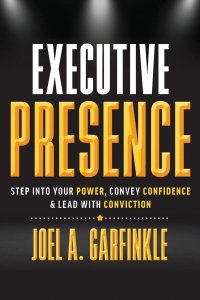
Today’s post is by Joel Garfinkle, thoughtLEADERS instructor, executive coach, and author of Executive Presence: Step Into Your Power, Convey Confidence, and Lead with Conviction. (CLICK HERE to get your copy).

If you want to advance to high levels in your career—and make the greatest possible impact—you need to become a leader with executive presence. Here are 4 areas of focus I urge you to begin with. You can easily begin making these changes in your next meeting, one-on-one, or virtual call.

  1. Be vocal, yet concise.

No, this is not an oxymoron. Great leaders speak up often, participating actively in discussions—yet they don’t drone on endlessly. They make smart, incisive comments that spark discussion. They voice thoughts succinctly, so others grasp them immediately. They participate throughout every discussion, but they don’t dominate it. When they speak, others want to hear more, not less.

Many people fall into the “I don’t have anything to say” trap. But I promise you, you do have plenty to contribute. Challenge yourself to bring a mental list of key points you want to make in a meeting. As you speak up more, you’ll get more comfortable thinking of things to say in the moment. But even then, it will be helpful to gather your thoughts about each agenda item, particularly those that pertain to your expertise.

Every idea doesn’t need to be earth-shattering in order to advance the discussion in some way. For instance, you might make comments like these:

  • Summarizing how the group feels about the issue at hand.
  • Commending a colleague for her amazing work on a project being discussed, highlighting what might have gone unrecognized.
  • Pointing out where two disagreeing colleagues have common ground.

Speaking up in ways like these will benefit the group and give you a strong presence in the discussion.

  1. State ideas with conviction.

When you speak up, let your conviction for your opinions shine through. Practice eliminating qualifier words and phrases like “I’m not sure if it’s relevant, but…” and voice ideas boldly.

When you speak, try to project your voice so you’ll sound more confident. Use open body language, maintaining good posture, which will reflect in your voice as well. And when a topic comes up that you want to weigh in on, don’t hesitate. This will present you as more self-assured. Pay attention to your tone and cadence as well. If you’re speaking too quickly, you’ll sound more nervous. Use the power of the pause, or vary your pacing, to give your words the gravity they deserve.

  1. Be decisive.

Most of us are prone to deliberating for far too long unless we challenge ourselves to make decisions quickly. Building your decision-making muscle takes practice, but you will get more confident over time. Start by going with your gut about minor choices. Then, when faced with a big decision, set a time frame appropriate to the importance and urgency of the choice. Here are a couple of examples:

  • You’re considering whether you need to add a specific new role to your team. You meet with several people whose perspectives are most important, then consider their input during your weekly reflection time. As a result, you use your time efficiently rather than mulling over the possibilities in an unfocused way.
  • You need to approve or disapprove a proposed marketing strategy that diverges sharply from your current one. So, after watching a presentation by the marketing team, you meet with key staff to discuss follow-up questions. Satisfied with their thorough research and clear answers, you give the approval and announce the change enthusiastically.

You’ll never have all of the information, so prioritize taking action. Most leaders find it’s better to correct course later, if needed, then delay an important decision.

  1. Radiate calm.

In difficult situations, be the calm within the storm. Whether it’s a major crisis or an annoying problem, maintain your composure. You’ll become the person that others can rely on to steer the ship toward calmer waters.

Of course, that’s easier said than done. Here are some steps you can take to develop that calm presence:

  • Adopt simple practices you can do during your workday to find calm, like taking a short walk.
  • Try to remain emotionally balanced and mentally composed by sleeping, eating, and exercising well.
  • Pay attention to your voice—is the pitch rising? Take a breath and try to speak in a more relaxed tone.
  • Delegate effectively. Who can take on what roles to help? Giving people clear tasks will help them stay calm in turn, knowing they’re contributing to a solution.

It may feel counterintuitive, but by exuding calm, you’ll reconcile problems more quickly and with better results.

Follow these principles during the course of the day. They will benefit you in every situation, and you’ll find yourself drawing upon them countless times throughout your work week. Before long, others will begin to perceive you as a more capable and powerful leader, which will grow your influence, charisma, and ability to drive change. And most importantly, as you become a leader with executive presence, you’ll win their trust.

executive presence bookJoel Garfinkle is the author of Executive Presence: Step Into Your Power, Convey Confidence, and Lead with Conviction. He has 23 years of experience as an executive presence coach, conducting webinars, keynotes, and one-on-one coaching programs. He is recognized as one of the top 50 coaches in the U.S. Subscribe to his Fulfillment at Work newsletter and his YouTube channel, which has over 200 easily actionable 2-minute inspirational video clips.

Did you enjoy this post? If so, I highly encourage you to take about 30 seconds to become a regular subscriber to this blog. It’s free, fun, practical, and only a few emails a week (I promise!). SIGN UP HERE to get the thoughtLEADERS blog conveniently delivered right to your inbox!

https://i0.wp.com/www.thoughtleadersllc.com/wp-content/uploads/2022/11/20221116-Number-4.jpg?fit=1920%2C1278&ssl=1 1278 1920 Trevor Jones https://www.thoughtleadersllc.com/wp-content/uploads/2022/04/logo.png Trevor Jones2022-11-16 08:00:422022-11-17 17:46:554 Easy Ways to Become a Leader with Executive Presence
Page 21 of 46«‹1920212223›»

Get free blog posts by email NOW!

It’s the best 5 minutes a week you can spend on your development.

Subscribe HERE!

Get new posts FREE via RSS!
Follow thoughtLEADERS on LinkedInFollow thoughtLEADERS on twitter
This site contains affiliate links to products. We may receive a commission for purchases made through these links.
 

Check Out Our Courses

Our courses teach immediately applicable skills that have real impact on your business. From leadership to strategy and negotiation to conflict resolution, we have a broad set of course offerings that will drive immediate performance improvements.
OUR COURSES

Our Courses

Group of Business People Meeting
Puzzle Pieces
Glasses Looking Over Cityscape
Doors on a Wall
Cog Wheels
Man Reading Book
Fishing hook in the sea
Microphone in Lecture Hall
Charts on Blue Background
Wristwatch
Exploding Light Bulb
Man on Summit of Mountain
Lightning Bolts
Man Painting the Word Change on a Wall
Construction Cranes
Plant Growing in a Hand
High Performance Gears
Men Shaking Hands Closeup
Influence Definition
Sailboat at Sunset
Hanging light bulbs with glowing one isolated on dark blue background
Wagon Wheel
Risk
Strategic Client Engagement
Strategic Business Planning
Advanced Meeting Leadership
Building a Growth Mindset
Executive Communications
Structured Problem Solving
Creating Leadership Maxims
Leading inside the Box
Deliberate Decision Making
Simple Strategic Planning
Storytelling for Leaders
Storytelling for Sales
Executive Presence
Principles of Chart Design
Time Management Mastery
Breakthrough Innovation
Leadership Resilience
Conflict Resolution
Leading through Change
Project Management Reality
Coaching for Impact
High Performing Teams
Everything is Negotiable
Leading with Influence
Building Personal Resilience
thoughtLEADERSHIP
Engagement Management
Risk Management
Client Engagement
Strategic Business Planning
Advanced Meeting Leadership
Building a Growth Mindset
previous arrow
next arrow
 

eLearning Courses on TITAN

Structured Thought: Problem Solving
Puzzle Pieces
Structured Thought: Problem Solving

Clearly define a problem, scope all issues related to the problem, generate potential solutions, then analyze and select the best solution by using time-tested critical thinking methods and tools.

VIEW COURSE
Structured Thought and Communication
Group of Business People Meeting
Structured Thought and Communication

Craft clear and compelling recommendations that resonate with stakeholders. Get your ideas approved by using a proven method for delivering executive-level communications.

VIEW COURSE
Principles of Chart Design
Different Types of Line and Bar Charts
Principles of Chart Design

Create well-designed presentation charts that get your message across quickly and clearly to drive your audience to action. From data charts to concept charts, these methods help make your point.

VIEW COURSE
Engagement Management
Wagon Wheel
Engagement Management

Whether you’re an internal or external consultant or a project leader, learn proven methods, techniques, and processes to effectively lead consulting engagements that drive your client’s success.

VIEW COURSE
Strategic Business Planning
Cog Wheels
Strategic Business Planning

Use a straightforward and effective strategic planning process that shows how to craft a clear, compelling plan for your organization - not just one time, but on an ongoing basis year after year.

VIEW COURSE
Deliberate Decision Making

Make better, faster, and more effective decisions. Apply simple yet powerful decision making tools to define decision authority, manage risk, increase accountability, and drive execution.

VIEW COURSE
Everything is Negotiable
Men Shaking Hands
Everything is Negotiable

Become a better negotiator in all situations – from day to day interactions to hammering out large deals. Build the skills required to get what you want and strengthen relationships while you do.

VIEW COURSE
Breakthrough Innovation
Exploding Lightbulb
Breakthrough Innovation

Generate and select unique strategies that separate you from the competition. Construct bold and disruptive solutions then build and execute a plan for taking those strategies to market.

VIEW COURSE
Storytelling for Leaders
Man reading stories from a book
Storytelling for Leaders

Create business stories that inspire people, build connections with your audience, and ultimately advance your organization's goals by using a repeatable, straightforward method.

VIEW COURSE
Storytelling for Salespeople

Create and deliver stories that will take your sales efforts to the next level. Connect with and convince buyers in all situations using memorable stories. These stronger relationships drive more sales.

VIEW COURSE
Leading through Change

Lead your organization through the most challenging times using a proven change management process. Get people through the change and back to driving performance quickly and effectively.

VIEW COURSE
Building Leadership Resilience
Mountain Climbing Expedition
Building Leadership Resilience

Prepare your body and brain to be ready for and recover from your biggest challenges. Build approaches for overcoming stress, managing reactions to difficult events, and leading more effectively.

VIEW COURSE
Compelling Executive Presence

Build your ability to connect with your audience and convey your ideas in a clear and resonant way. Create meaningful connections between you and your audience to build buy-in.

VIEW COURSE
Coaching for Impact
Plant Growing in a Hand
Coaching for Impact: Foundation Course

Coach employees for performance and development more effectively by helping them identify and pursue their own solutions. Create the right environment and conditions to help them grow.

VIEW COURSE
Building Personal Resilience
Boat at Sunset
Building Personal Resilience

Build the habits and learn the behaviors required to manage stress, deal with adversity, and maintain your physical and mental wellbeing. Personal resilience is a key to your ongoing success.

VIEW COURSE
Time Management Mastery
Watches
Time Management Mastery

Learn techniques to manage your time, delegate, say “no,” and be more efficient. Balance your limited supply of time with the overwhelming demands that are placed on you every day.

VIEW COURSE
previous arrow
next arrow

Books You MUST Read

The Elegant Pitch
One Piece of Paper by Mike Figliuolo
Lead Inside the Box
10 Stories Great Leaders Tell
Getting Ahead
Sell with a Story
Lead with a Story
Mastering Communication at Work
The Hook
Innovative Leadership Fieldbook
Innovative Leaders Guide to Transforming Organizations
The Three Commitments of Leadership
The Littlest Green Beret
Storytelling in the Land of Oz
The Camino Way
Hiring Veterans
Disability is Human book
Race to Innovation
The Emergent Leader
Business is Simple
Business is Simple
The Elegant Pitch
One Piece of Paper by Mike Figliuolo
Lead Inside the Box
10 Stories Great Leaders Tell
Getting Ahead
Sell with a Story - Border
Lead with a Story
Leading from Your Best Self
Mastering Communication at Work
The Hook
Innovative Leadership Fieldbook
Innovative Leaders Guide to Transforming Organizations
20120318 Three Commitments
Leadership Vertigo
The Littlest Green Beret
Storytelling in the Land of Oz
The Camino Way
Hijacked by Your Brain
Outthink the Competition
Driving Innovation from Within
Hiring Veterans
Disability is Human
Race to Innovation
The Emergent Leader
Business is Simple
Global Mindset
previous arrow
next arrow
  • The Elegant Pitch
  • Disability is Human
  • Hiring Veterans
  • Race to Innovation
  • The Emergent Leader
  • Business is Simple
  • Global Mindset

Categories

This site contains affiliate links to products. We may receive a commission for purchases made through these links.

Our Course Offerings

Leadership Skills

Creating Your Leadership Maxims
Leading Inside the Box
Leading With Influence
Leading Through Change
Structured Problem Solving
Deliberate Decision Making
High Performing Teams
Simplified Strategic Planning
Strategic Business Planning
Coaching for Impact: Foundations
Coaching for Impact: Applications
Building Leadership Resilience
Engagement Management
Project Management Reality
Risk Management

Communication Skills

Communications: Foundations
Communications: Applications
Principles of Chart Design
Strategic Client Engagement
Storytelling for Leaders
Storytelling for Salespeople
Compelling Executive Presence
Advanced Meeting Leadership

Individual Skills

Conflict Resolution
Everything is Negotiable
Building a Growth Mindset
thoughtLEADERSHIP: Innovation
Building Personal Resilience
Time Management Mastery

Coaching & Consulting

©2026 thoughtLEADERS, LLC: Leadership Training for the Real World. thoughtLEADERS, LLC is a registered trademark of thoughtLEADERS, LLC.
  • Privacy Policy
  • Terms of Use
  • Cookie Policy
Scroll to top