Learn how an Italian gardener’s simple principle can make problem solving much easier.
Critical thinking doesn’t only apply to coming up with recommendations. You need to think critically about the way you’re going to spend your time and energy. Those things are limited. You have too many problems to solve and not enough time. I encourage people to follow the 80/20 rule, also known as the Pareto principle.
The Pareto Principle
The Pareto principle was coined by Vilfredo Pareto when he noticed that 80% of the land in Italy was owned by 20% of the population. He was also a gardener, and he noticed 80% of the peas coming out of his garden came from 20% of the pods. He said, “That’s interesting. Two totally different realms demonstrating the same principle.” 20% led to 80% of the impact, and that’s the 80/20 rule. 20% of the drivers will drive 80% of the results. You need to think about your work the same way. You can’t focus on that 80% that only drives 20% of the results. Focus your efforts on the meaningful. Let me offer an example. Read more
https://i0.wp.com/www.thoughtleadersllc.com/wp-content/uploads/2022/08/20220801-Coffee-Cup-8020.jpg?fit=1920%2C1113&ssl=111131920Trevor Joneshttps://www.thoughtleadersllc.com/wp-content/uploads/2022/04/logo.pngTrevor Jones2022-08-03 06:30:082022-08-01 02:27:03Using The 80/20 Rule to Think Critically
Stopping and considering decisions before you make them is only the start to critical thinking and building on those skills makes all the difference.
The importance of critical thinking
Let’s look at the importance of critical thinking. So many times when people ask us, “Can you go solve this problem,” we rush off and start solving it without stopping to think before we do.
We’re facing new demands that require extensive amounts of information before we can make a decision. There are multiple departments involved in all of your problem-solving efforts, and each department is contributing its own input. As part of your problem-solving process, there are going to be multiple stakeholders involved. This increases the complexity of trying to get to an answer.
When you do ultimately come up with a recommendation, those big decisions will involve numerous trade-offs. Not everyone is going to be happy with what you recommend. There are going to be long lag times in acquiring the required data to make your decision, and when you finally do make the call, there’s going to be high scrutiny over whether you were right or wrong. And a bad call can have both business as well as personal and professional implications. Add to this unforeseen bottlenecks in getting the process done of getting to that answer, multiply it by the number of problems you’re trying to solve every single day, and then divide by the limited amount of time you have to get to an answer.
The importance of stopping and thinking critically before you rush off and undertake all these very comprehensive efforts is very high. That critical thinking process is what’s going to differentiate you and the solutions you develop versus rushing off without any thought at all.
Distinguish causes vs. consequences
As you begin your critical thinking efforts, I’d like you to think about causes and consequences. One of the biggest challenges we’re going to face with any problem solving is that desire to rush off and get to an answer quickly because we feel like we’re being responsive to our stakeholders when we do. But think about it.
Have you ever solved a symptom only to find out there are other symptoms that arise after you solve it? Have you ever put in place a recommendation only to find out you created new problems down the road? When you’re going through this critical thinking process, first, consider causes.
Look at the symptom that is problematic. Then figure out the real reason it’s happening. And come at that possible symptom from multiple perspectives. Once you generate a recommendation, stop and think critically. What new problems can you create if you implement this recommendation? What are the new symptoms that will be caused? Think that through before you implement your recommendation.
Let me offer an example. I know a client situation where the organization was going to roll out a brand-new website that would be facing their customers. The problem was they continued to miss deadlines for rolling the website out and going live. Now let’s look at causes and consequences. What was the cause of the website not rolling out? Well, the code wasn’t ready. Yeah, but that’s a symptom. That’s a symptom of a problem. Why wasn’t the code ready? Well, the specifications weren’t done. Okay. Well, that’s also a symptom. Why weren’t the specs done? Well, because they didn’t agree on the features and functionality of the new website. But let’s not stop there. Why was that symptom happening? Well, they weren’t given clarity by leadership around one aspect that was a major strategic decision in terms of how they would roll the website out. That was the cause of all these issues and why the rollout wasn’t happening.
Now let’s think this through. Once that strategic decision is made, what are the consequences of it? So leadership finally decided to make the website a closed network. Therefore, new customers would have to call in to register instead of registering on a website. Let’s look at the consequences of that decision and the new problems that can emerge. New customers are now going to have to call a call center associate. That’s then going to flood the call center with incremental calls. The consequence of that is the staff in the call center is going to be over-worked. And then the consequence of that is current customers are going to experience service issues. They won’t get their calls answered as quickly. And then the consequence of that is we might lose current customers.
By stopping and thinking about causes first and then consequences, once you do make a recommendation, you’re going to identify the true problem that you need to solve and, hopefully, you’ll be able to avoid causing future problems. When you go out to solve a problem, think backwards about the causes and think forward about the consequences.
As you go to apply these notions to your critical thinking processes, I’d like you to think about a problem you’re working on. Look at the causes. Spend some time thinking about what’s really causing this issue. Continue to work backward until it’s clear you’re solving a problem and not a symptom. Then, once you’ve generated a recommendation, think through the consequences. What are the new problems that could emerge if you implement your recommendation? Think about a problem that you made a recommendation on where it didn’t go so well. Which of these two did you miss? Did you miss the real root cause? Did you miss possible consequences of your recommendation?
By spending this extra time thinking about these aspects and putting in the critical thought, there’s a much higher likelihood that whatever recommendation you come up with is going to solve the true problem and you’re going to account for some of the possible consequences down the road.
Want to learn more about critical thinking? How about taking an entire course on it? Go directly to the course and start learning about critical thinking. The entire course is available at LinkedIn Learning. Enjoy!
Did you enjoy this post? If so, I highly encourage you to take about 30 seconds to become a regular subscriber to this blog. It’s free, fun, practical, and only a few emails a week (I promise!). SIGN UP HERE to get the thoughtLEADERS blog conveniently delivered right to your inbox!
https://i0.wp.com/www.thoughtleadersllc.com/wp-content/uploads/2022/08/20220801-Man-Thinking.jpg?fit=1920%2C1280&ssl=112801920Trevor Joneshttps://www.thoughtleadersllc.com/wp-content/uploads/2022/04/logo.pngTrevor Jones2022-08-01 08:00:482022-08-01 02:27:28The Importance of Critical Thinking
Strategic focus often involves saying no to intriguing project requests.
One of the shortest words you can say is also the most important. Saying no is about choice. Shifting your mindset from “I have to” to “I choose to” requires saying no to tasks and activities that are off track.
There are many reasons why saying no is hard. You might not want to miss an opportunity. You might feel like you’re not being a team player. It may feel like you’re not getting to work on something fun and interesting. To achieve focus though, saying no is required. It can be hard to say no to someone’s idea or a group’s request of your team. When you say no, it feels like you’re not helping somebody out.
Try saying, “yes if,” instead. Essentially, what you’re doing is putting conditions around that yes. Those conditions can include things like, “You have to give me budget, you have to give me time, or you have to give me people to get this idea done.”
I had a boss who was full of ideas. He was always coming to me with new project requests. A lot of them were off strategy. They were distractions. I used to say no to all of them because to me it was clear that they weren’t strategic. After a few months, I started getting some negative feedback from him. He said, “All you do is say no, Mike. Nothing is ever positive with you.”
At that point, I shifted to the behavior of saying, “Yes if.” Whenever he came to me with a new project, I said, “That’s a really great idea. I’m happy to do it if you give me this much budget or this much time or if you give me that team member from that team to come work on the project.” A lot of times he would say, “Well no, I’m not giving you that budget or time or people.” And I said, “Well, then I can’t pursue the idea.”
Essentially, I was making him say no to the idea because it was clear that the idea wasn’t big enough or on-strategy enough to prioritize it properly. By getting the requester to focus, I was being positive and contributing to the team but also maintaining focus.
Saying no keeps your team members focused on their core responsibilities. When you do say no, you might have to back them up and say no for them. The point is, that short little word is the key to keeping your team focused on its strategic priorities.
Want to learn more about strategic focus for managers? How about taking an entire course on it? Go directly to the course and start learning about strategic focus. The entire course is available at LinkedIn Learning. Enjoy!
Did you enjoy this post? If so, I highly encourage you to take about 30 seconds to become a regular subscriber to this blog. It’s free, fun, practical, and only a few emails a week (I promise!). SIGN UP HERE to get the thoughtLEADERS blog conveniently delivered right to your inbox!
https://i0.wp.com/www.thoughtleadersllc.com/wp-content/uploads/2022/07/20220727-Nope.jpg?fit=1920%2C1280&ssl=112801920Trevor Joneshttps://www.thoughtleadersllc.com/wp-content/uploads/2022/04/logo.pngTrevor Jones2022-07-27 06:30:592022-07-27 05:37:43Saying No
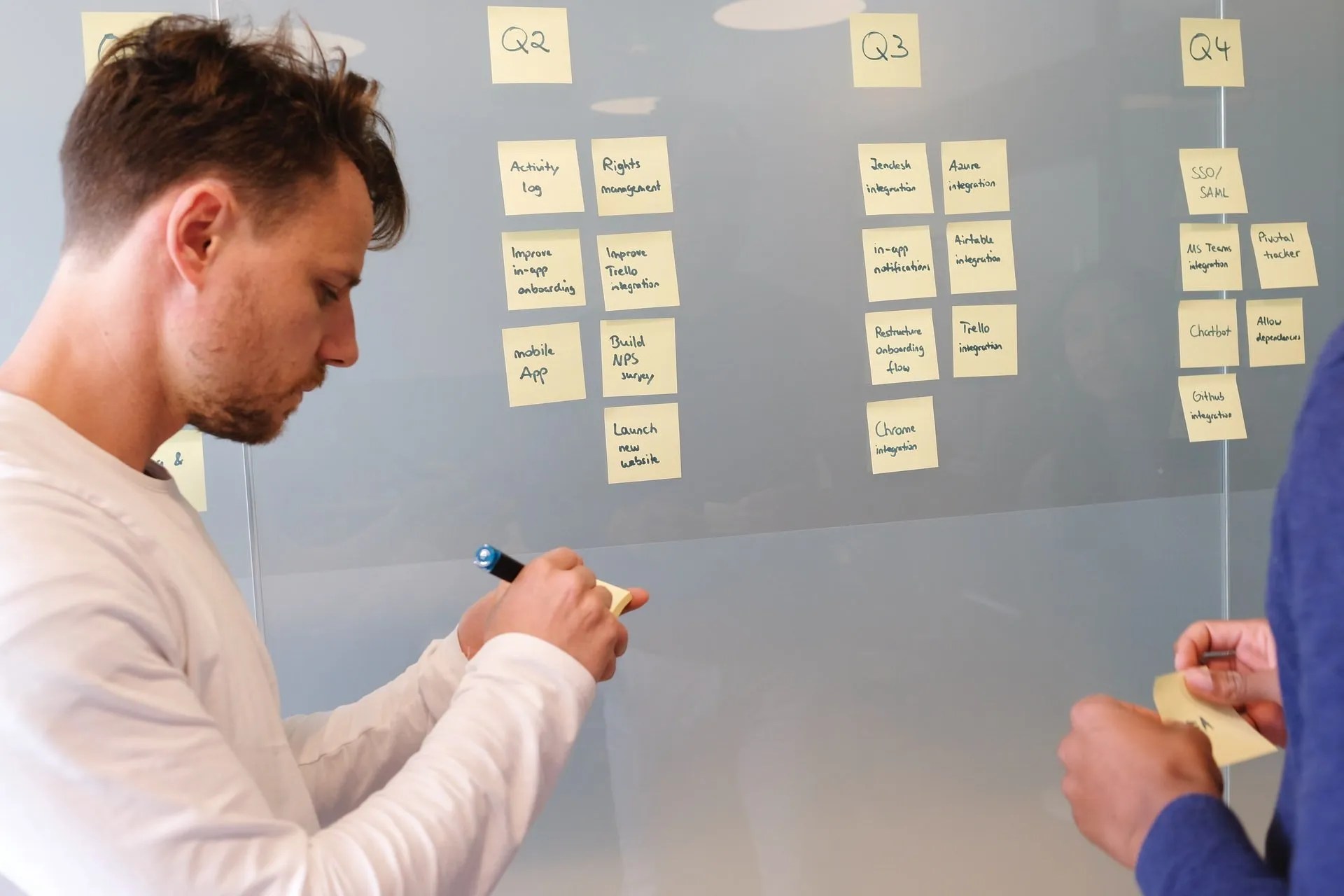
Building a prioritization process for your organization can help you eliminate distractions and focus your efforts on the most meaningful projects.
A consistent and regularly-scheduled prioritization process helps eliminate distractions and focus your efforts on the most meaningful projects. Some processes are formal while others are simply frequent conversations about priorities.
Choose a process that’s appropriate for the size of your organization. I’ve worked for two very different organizations. One was large and one was a small business unit. In the large one, we had a very formal prioritization process. All departments were involved and you had to have a very rigorous business case to get your idea on the list. In the small business unit, it was an informal process. We achieved prioritization by allocating budget to different budget owners. We then gave them discretion to choose their own priorities.
In the large organization, it was very rigorous, but sometimes we lacked agility. It kept us focused, but at the cost of innovating every once in a while. In the small organization, it enabled a lot of distractions to happen. People pursued some pet projects, but it was an environment where people could try things pretty easily.
When you’re running a prioritization process, it’s important to ensure resources are allocated only to high-priority projects. Pet projects and distractions should not be worked on if they haven’t been prioritized.
In my large organization, we got big projects done. They had a huge impact. In the small business unit I was in, we got a lot of small things done, but a lot of times they were disjointed, they lacked impact, and some of them weren’t even on strategy.
Build a prioritization process that is appropriate for the size and complexity of your organization, and make sure that process is in charge of of allocating resources accordingly.
Want to learn more about strategic focus for managers? How about taking an entire course on it? Go directly to the course and start learning about strategic focus. The entire course is available at LinkedIn Learning. Enjoy!
Did you enjoy this post? If so, I highly encourage you to take about 30 seconds to become a regular subscriber to this blog. It’s free, fun, practical, and only a few emails a week (I promise!). SIGN UP HERE to get the thoughtLEADERS blog conveniently delivered right to your inbox!
https://i0.wp.com/www.thoughtleadersllc.com/wp-content/uploads/2022/07/20220720-Sticky-Note-Scheduling.jpg?fit=1920%2C1300&ssl=113001920Trevor Joneshttps://www.thoughtleadersllc.com/wp-content/uploads/2022/04/logo.pngTrevor Jones2022-07-20 07:00:262022-07-20 06:26:39Running a Prioritization Process
Avoid these six pitfalls as you create your organization’s strategic plan.
As you look at your organization’s strategy and your current strategic planning process, it’s critical to understand there are some really large pitfalls out there that you can fall into.
First, do you lack a clear direction? If your organization can’t clearly articulate, “Here’s where we’re going, here’s why we exist, and here’s what we look like three to five years from now,” you may lack direction.
Second, do you know how to say no? Or do you say yes to everything? Look at the latest set of initiatives you’ve pursued over the past year. How many of them have been failures? How many of them should you have walked away from? That’s an indicator that you’re not saying no.
The next pitfall is failure to prioritize. Go look at everything everybody’s working on right now in terms of major initiatives. Are they all properly resourced or are some of them lagging? If you have a bunch of projects that are stalled or are behind schedule, you probably haven’t resourced appropriately and your prioritization process may be broken.
Lacking diversification is another pitfall. When you look at your portfolio of initiatives, do you have excessive concentration either in a specific market or a specific product? Or are your bets spread out?
The next pitfall is starving the kids. Are all of your resources going to the one big core business that generates most of your profits, and all the great new ideas are never getting funded?
Finally, the last pitfall is not revisiting your strategy on a regular basis. You should be refreshing your strategic plan at least once a year. That doesn’t mean doing all of these exercises again, but it does mean sitting down, validating the market, and looking at your spot. Look at your core competencies, your vision, your mission, and ask, “Are these still valid and relevant?”
Let me make this real because these risks are huge. I know a consumer package goods company that failed on several of these dimensions. First, they lacked a clear direction. Everything looked interesting, and they were more than willing to pursue something as long as the financial returns looked attractive. Second, they weren’t very good at saying no. When something came along with a high enough rate of return, they would tend to pursue it. And third, they didn’t look at diversification risk. They were so concentrated on a specific set of new initiatives and new markets they wanted to get into that they took on excessive risk.
The way these failures manifested was that they made an acquisition for approximately $100 million in an entirely new market that they didn’t know a lot about. They made the acquisition based on the fact that the financial return seemed like they would be very attractive. Fast forward three years from that decision and every year they lost between $2 and $5 million. After three years, they realized they couldn’t run the business well. They didn’t understand the market. They wrote off the entire business and shut it down.
So these pitfalls are real. Do the diagnostics and ask yourself these questions as you look at your overarching strategy to make sure you’ve got a strategy that’s viable and will help you achieve your overall goals.
Want to learn more about strategic planning? How about taking an entire course on it? Go directly to the course and start learning how plan strategically. The entire course is available at LinkedIn Learning. Enjoy!
Did you enjoy this post? If so, I highly encourage you to take about 30 seconds to become a regular subscriber to this blog. It’s free, fun, practical, and only a few emails a week (I promise!). SIGN UP HERE to get the thoughtLEADERS blog conveniently delivered right to your inbox!
Strategic filters are tools you can use to prioritize your organization’s initiatives.
Being able to evaluate the initiatives you’re going to pursue as part of your strategic plan is at the core of the strategic planning process. You need to be able to identify what the high-priority initiatives are and what the low-priority initiatives are. To do so, you need a common set of criteria that everyone across the organization is going to use to conduct those evaluations. I call them strategic filters.
These filters are going to be things that are important to your organization, things like this idea meets a customer need, or it helps us be differentiated versus our competition, or it has an acceptable level of complexity. Sometimes your filters aren’t qualitative; they’re quantitative. So what’s the net present value of this initiative? What’s the financial return? What’s the return on investment? By articulating this set of criteria, you’re going to have a common lens to evaluate your initiatives through.
These filters are going to screen out initiatives that aren’t consistent with the stated direction of the organization. And they’re going to be customized based upon the needs of the organization. For example, if you need to grow internationally, you probably need a filter that says, “Helps us be more global.” If the initiative does that and gets you into new countries and new geographies, then it would be high on the priority list. If it doesn’t and it keeps you domestic, that initiative would be low.
Once you’ve generated your set of strategic filters, you need to understand how much risk they’re going to have you take on. There are five things to look at as you evaluate that risk.
First, consider how relevant your existing capabilities are. Are the strengths you have today going to be relevant to the initiatives you pursue tomorrow?
Second, look at your channels. Will we be distributing our products through the same channels, or will we be entering new channels? For example, if we sell through retail today and we’re looking at selling online only tomorrow, you’re going to be taking on more risk with a newer channel.
Third, look at your cost structure or the infrastructure. If the cost structure and infrastructure required to pursue an initiative is similar to what you do today, then it’s lower risk, and if it’s not, then it’s higher risk.
The fourth thing to look at is your customers. Will you be serving the same customers or are you going after new customers? Obviously, new customers carry higher risk.
And lastly, will you be running against the same competitors or are you going to compete with different ones?
Once you’ve generated your filters, do this back-check against these five criteria to understand whether your filters are going to direct you in a riskier direction or a safer direction. The right answer lies somewhere in the middle. You want to take on some risk because that’s going to create new opportunities for you, but not so much risk that you’re risking the enterprise.
By creating this consistent set of filters, you’re going to be able to evaluate your initiatives quickly and effectively and stay on your stated path to reach your goals.
Want to learn more about strategic planning? How about taking an entire course on it? Go directly to the course and start learning how plan strategically. The entire course is available at LinkedIn Learning. Enjoy!
Did you enjoy this post? If so, I highly encourage you to take about 30 seconds to become a regular subscriber to this blog. It’s free, fun, practical, and only a few emails a week (I promise!). SIGN UP HERE to get the thoughtLEADERS blog conveniently delivered right to your inbox!
Define your mission, vision, guiding principles, and goals to set the direction of your organization.
When you set direction for your organization as part of the strategic planning process, there are four elements to doing so: Articulating your mission, your vision, your guiding principles, and your goals.
A mission is: Why does your organization exist? What is its purpose in the world? The vision is then saying: If we’re fulfilling that purpose, at some point in time, where are we going to be? What do we want to achieve? What do want the organization to look like at some future point? Your guiding principles are the rules you want your team to live by. How do you want people in the organization behaving, especially when the boss isn’t around? What are the lenses you’re going to look through as you try to evaluate decisions? And lastly, your goals. Try to quantify these. It may be X number of customers by a certain date, or dollars of revenue, dollars of profit, a margin percentage, being able to put out hard numbers by a certain point in time to orient the organization and say, “Here’s what we’re shooting for.”
Here are some of the pitfalls that I’ve seen during this step of defining where you’re going.
First, many vision statements and mission statements are way too long. I’ve seen some that have spanned multiple pages. To the extent possible, make them short, clear, and free of buzzwords.
Next, your guiding principles need to be clear enough that everyone in the organization understands them and can apply them, even to the smallest actions.
And last, your goals need to be aggressive, but pragmatic. If they’re not aggressive, the organization isn’t going to push itself. They’re not going to innovate to try and fill that gap between where they are and where the goal says they should be. If the goals are too aggressive and you’re not pragmatic, people will look at the goal and say, “There’s no way we can achieve that,” and they just give up.
As you define it for your organization and set out that mission, vision, guiding principles, and goals, you’ll be providing clarity for where you want the organization to be in the future.
Want to learn more about strategic planning? How about taking an entire course on it? Go directly to the course and start learning how plan strategically. The entire course is available at LinkedIn Learning. Enjoy!
Did you enjoy this post? If so, I highly encourage you to take about 30 seconds to become a regular subscriber to this blog. It’s free, fun, practical, and only a few emails a week (I promise!). SIGN UP HERE to get the thoughtLEADERS blog conveniently delivered right to your inbox!
https://i0.wp.com/www.thoughtleadersllc.com/wp-content/uploads/2022/06/20220629-Compass.jpg?fit=1920%2C1200&ssl=112001920Trevor Joneshttps://www.thoughtleadersllc.com/wp-content/uploads/2022/04/logo.pngTrevor Jones2022-06-29 06:00:102022-06-29 01:06:204 Ways to Define the Direction of Your Organization
Laying out your organization’s strategic plan can be overwhelming. Follow these steps to keep your strategic planning process simple and effective.
Strategic planning is an inherently simple process. There are some major tools and steps that you’re going to follow as you pull together your strategic plan.
First, you need to set direction and stay in a lane. That begins with articulating the vision, the mission, and the goals of the organization.
Once you’ve set that destination, it’s important to define the organization’s core competencies. What are you great at? And how are you going to compete in the market?
The next step of the process is defining strategic filters. This is the heart of the method. These filters are going to be the objective functions you’re trying to achieve. They’ll be the evaluation criteria you’ll use as you analyze the initiatives that you are or are not going to pursue.
Next, you’re going to say no to distractions. You’re going to stay focused. You’ll use tools like a two by two matrix to evaluate which opportunities you should pursue and which ones you should avoid. You’ll take all the initiatives on your list and run them through those strategic filters to identify the ones that are high value and high potential and the ones that should be avoided.
Next, you’re going to draw the line. Strategic planning is about focus and you’ll have your list of initiatives. You’re going to identify the top ones, the bottom ones, and resource them appropriately. You should only work on things above the line for which you have resources.
Next is making sure you have a diversified portfolio of initiatives, and then executing the strategic plan. You’ll look at your initiatives in the following ways. Are they long term? Short term? Do they balance your core competencies? Are they balanced across products or markets or services? You’ll look at your portfolio and how it evolves over time.
As you go through the strategic planning process, there will be major tools and frameworks you’ll apply at each step, and you’re going to come up with a very clear plan with a prioritized set of initiatives.
Want to learn more about strategic planning? How about taking an entire course on it? Go directly to the course and start learning how plan strategically. The entire course is available at LinkedIn Learning. Enjoy!
Did you enjoy this post? If so, I highly encourage you to take about 30 seconds to become a regular subscriber to this blog. It’s free, fun, practical, and only a few emails a week (I promise!). SIGN UP HERE to get the thoughtLEADERS blog conveniently delivered right to your inbox!
https://i0.wp.com/www.thoughtleadersllc.com/wp-content/uploads/2022/06/20220622-Sticky-Notes-Board.jpg?fit=1920%2C1280&ssl=112801920Trevor Joneshttps://www.thoughtleadersllc.com/wp-content/uploads/2022/04/logo.pngTrevor Jones2022-06-22 06:00:172022-06-22 03:10:06The Strategic Planning Process
Create better strategic plans by avoiding these five common mistakes.
Strategic planning takes a lot of time and energy. It is a high-resource type of exercise. Unfortunately, many times that process can be a worthless pain, and the worst thing that can happen with a strategic plan is everybody puts in all this effort, and then it gets archived, put on a shelf, and never looked at again. Here are some warning signs that you can look for to determine if your strategic planning process is flawed.
First, initiative proliferation. Do you have to use multiple pages just to add up all the different initiatives you’re thinking about pursuing?
The second risk is thinking too small. All the initiatives that are on your list are really small, incremental improvements to your business. They don’t really advance you to your strategic goals.
A third is thinking too big. All the initiatives are huge, everything has to line up perfectly, and it’s a really large bet that you’re taking with the organization.
A fourth risk is what I call starving the kids. Many organizations have a large, profitable business unit, and then they have a lot of smaller ideas that are going to be more rapid growth. The risk is you invest all your resources in the big known business and you starve those smaller businesses. The problem is you’re starving your future in doing so.
Finally, I call this fifth risk the random initiative generator. You look at all your initiatives, and they all seem really great, but when you try to figure out where they’re taking you, there’s no clear direction. An example I’ve seen was when I worked in a strategic planning group. When I first arrived in the group, I said, “Let me see our strategic plan.” I was handed a list of 37 acquisition targets. I said, “This is great. These all look like interesting companies that we should think about pursuing, but where’s the plan?” Well, that was the plan. It wasn’t a plan. It was a random list of companies that competed in the market we were in, and we didn’t know which of those acquisitions was going to be attractive and which ones were distractions. Our first task was fixing that strategic planning process, setting direction, and putting some focus to the initiatives that we pursue.
Take a look at your strategic planning process. Ask yourself if you’re showing some of these symptoms and make sure you set direction so that you can pursue initiatives that will add value and help you reach your destination.
Want to learn more about strategic planning? How about taking an entire course on it? Go directly to the course and start learning how plan strategically. The entire course is available at LinkedIn Learning. Enjoy!
Did you enjoy this post? If so, I highly encourage you to take about 30 seconds to become a regular subscriber to this blog. It’s free, fun, practical, and only a few emails a week (I promise!). SIGN UP HERE to get the thoughtLEADERS blog conveniently delivered right to your inbox!
https://i0.wp.com/www.thoughtleadersllc.com/wp-content/uploads/2022/06/20220615-Five-Hand.jpg?fit=1920%2C1280&ssl=112801920Trevor Joneshttps://www.thoughtleadersllc.com/wp-content/uploads/2022/04/logo.pngTrevor Jones2022-06-15 06:00:062022-06-15 00:40:21Avoid These 5 Strategic Planning Risks
Learn about the three principles of strategic planning and how they can focus your efforts.
What is a strategic plan, and why is it important? A strategic plan defines what your organization stands for. It defines the market where you compete and how you compete in that market. It’s the definition of the goals you’re going to pursue and, more importantly, the initiatives you’re going to pursue to achieve those goals. It’s also going to help you allocate your very limited resources to pursue those initiatives and reach those goals.
Why is a strategic plan so important? First, it provides focus for your efforts and your limited investments. It gives your team something to rally around and be excited about. And lastly, it helps you identify the risks and opportunities you’re going to face in the market, and then plan for those risks or exploit those opportunities. There are three principles of strategic planning that you should follow.
First, set a clear direction and stay in your lane, versus meandering and pursuing strategies that change every year.
Second, say no to distractions. It’s very easy to get caught up in the “Wow, that looks like a cool initiative, let’s pursue that.”
The third is making sure you diversify your bets. You have limited pools of money and people and time. Make sure you don’t put all your eggs in one basket and instead pursue initiatives that are spread across different time horizons, different markets, and different products.
If you follow these three principles of strategic planning, you’re going to have a clear direction that you’re able to follow over time and achieve your goals.
Want to learn more about strategic planning? How about taking an entire course on it? Go directly to the course and start learning how plan strategically. The entire course is available at LinkedIn Learning. Enjoy!
Did you enjoy this post? If so, I highly encourage you to take about 30 seconds to become a regular subscriber to this blog. It’s free, fun, practical, and only a few emails a week (I promise!). SIGN UP HERE to get the thoughtLEADERS blog conveniently delivered right to your inbox!
https://i0.wp.com/www.thoughtleadersllc.com/wp-content/uploads/2022/06/20220608-Sticky-Note-Board.jpg?fit=1920%2C1300&ssl=113001920Trevor Joneshttps://www.thoughtleadersllc.com/wp-content/uploads/2022/04/logo.pngTrevor Jones2022-06-08 06:00:272022-06-08 03:13:08Understanding the Principles of Strategic Planning
Changing your approach in the middle of a negotiation is a great way to surprise the other party and drive value for your organization.
During a negotiation, you can change your approach. You don’t have to maintain your initial approach or your initial position. You can change it at any time. Your opponent won’t maintain their approach or their position, so throughout the deal, determine your counteroffers and your approach. Think about how these might change and how those changes might benefit your position.
For example, you can become more or less aggressive. You can become cooperative. You might change your anchor. In the initial negotiation, you said the price was here, but you know what? The price just went up or the price went down. You can add negotiating points along the way. Just because you didn’t ask for something right out of the gate, doesn’t mean you can’t add it later on. Beware of getting locked into a single negotiating approach. Your opponent can and will use that against you.
We were involved in a very contentious negotiation at one point. In the beginning, we were very collaborative, but our opponent was very combative. We knew the main points we wanted. They were price and deal structure. We also knew that time was our friend and their enemy. Throughout the negotiations, we continued making concessions and we stayed collaborative the entire time as long as price and structure were acceptable to us. But time passed and the other party changed structure. They got very aggressive at one point. But the thing they missed was that so much time had passed. Our position was going to change because time was now on our side. We turned around and got very aggressive in that negotiation. We pushed very hard for additional concessions related to the structure and pricing of the deal. The other party was caught by surprise by our change in approach and overall, it worked out much better for us. Our willingness to change our approach to be more aggressive drove a lot of value for our organization.
As you’re going through your deal process, think through the approach you’re taking and if there are changes you can make. Think about what the impact of those changes might be. Be willing to change your approach, but only do so when you fully understand the benefits and the risks of doing so.
Want to learn more about strategic negotiation? How about taking an entire course on it? Go directly to the course and start learning how to negotiate. The entire course is available at LinkedIn Learning. Enjoy!
Did you enjoy this post? If so, I highly encourage you to take about 30 seconds to become a regular subscriber to this blog. It’s free, fun, practical, and only a few emails a week (I promise!). SIGN UP HERE to get the thoughtLEADERS blog conveniently delivered right to your inbox!
https://i0.wp.com/www.thoughtleadersllc.com/wp-content/uploads/2022/06/20220601-Handshake.jpg?fit=1920%2C1282&ssl=112821920Trevor Joneshttps://www.thoughtleadersllc.com/wp-content/uploads/2022/04/logo.pngTrevor Jones2022-06-01 06:00:362022-06-01 00:31:41Changing Your Approach in a Negotiation
By laying out your position before a negotiation, you’ll be more prepared to fight for the things that are important to you.
Before you even enter into conversations with the other party, you have to define your goals. Consider several things for your side of the negotiation.
First, who’s involved from your side and who’s ultimately going to make the decision? By getting an understanding of the stakeholders who are going to have an interest in the outcome as well as who the final decision maker is, you’re going to be able to better generate support on your side of things to get a deal done.
Next, think through your must-haves, want-to-haves, and nice-to-haves. By clearly laying out all of those positions in multiple columns on a single page, you’ll have clarity throughout the negotiations on what you’re trying to get and what you’re willing to concede. It’ll make you more successful in each phase of the negotiation.
Next, lay out what’s the desired outcome and what happens if there’s no deal? You have to understand what your alternatives are going to be. Also know when have you achieved success and when do you need to stop negotiating. Once you get to yes, you shouldn’t push things much further because you could ruin the deal.
And lastly, lay out your alternatives to a deal. This isn’t the only deal on the table. Think through the other options you have because that’s also going to inform your negotiating strategy.
One of the acquisitions I was looking at doing involved a leadership team as well as our board of directors. We couldn’t do a deal unless the board finally approved. One of our must-haves was an expandable platform, that was a must. When we bought this company, we needed to be able to grow it. We wanted high-quality operations and techniques, but we could bring our own to the party if those didn’t exist. We also wanted a fair price and wanted control over the operations of the combined company.
In terms of outcomes, we laid out that we desired a deal but we had alternatives. We could buy someone else if this deal fell through. We could also build our own capability if we weren’t able to buy it. The risk of no deal was that they could sell their company to a competitor. By understanding everything we wanted as a company when we went into the negotiations, we were much better prepared to fight for the things that were really important to us and to make concessions that we could easily make. We also had a higher chance of success of bringing back a deal to our approving authority, the board of directors, that was going to satisfy their needs.
By laying out your position, you’re going to be able to go into negotiations knowing what you want and also understand what’s going to get you approval on your side of the deal.
Want to learn more about strategic negotiation? How about taking an entire course on it? Go directly to the course and start learning how to negotiate. The entire course is available at LinkedIn Learning. Enjoy!
Did you enjoy this post? If so, I highly encourage you to take about 30 seconds to become a regular subscriber to this blog. It’s free, fun, practical, and only a few emails a week (I promise!). SIGN UP HERE to get the thoughtLEADERS blog conveniently delivered right to your inbox!
https://i0.wp.com/www.thoughtleadersllc.com/wp-content/uploads/2022/05/20220525-Goals-Typewriter.jpg?fit=1920%2C1280&ssl=112801920Trevor Joneshttps://www.thoughtleadersllc.com/wp-content/uploads/2022/04/logo.pngTrevor Jones2022-05-25 08:00:472022-05-25 07:50:02Defining Your Goals in a Negotiation