• Contact
  • My Account
  • Log In
  • 0Shopping Cart
thoughtLEADERS, LLC: Leadership Training for the Real World
  • About
  • Services
  • eLearning
  • Team
  • Blog
  • Clients
  • Books
  • Contact
  • Menu Menu

How to Keep from Being Thrown Under the Bus

October 14, 2015/1 Comment/in Business Toolkit, Career, Communications /by Mike Figliuolo

School BusOffice politics suck but they’re a fact of life. The risk you face is someone “throwing you under the bus” to protect themselves politically. There are steps you can take to reduce the risk of this happening to you.

Office politics can be nasty. People have their own agendas and, unfortunately, those agendas aren’t always above board. There will be times when a boss, a stakeholder, or a peer gets themselves in a jam. Rather than facing the consequences of their errors, they’ll look to “throw someone under the bus” to take the fall for them.

Sometimes that person being sacrificed is you.

When you get thrown under the bus and blamed for problems caused by someone else’s incompetence, you risk receiving poor reviews, losing promotion opportunities, or even being fired. No, it’s not fair and yes it’s ugly.

You can either ignore these possibilities and be intellectually pure by saying “this is a logical organization and our culture wouldn’t tolerate that type of behavior” or you can protect yourself. If you take the former approach, you might be making those comments from the unemployment line. So let’s focus on protecting yourself.

Know Who’s Doing the Throwing

There are a lot of folks out there who could look to throw you under the bus. Your boss (or their boss), a peer, a project team leader/member, and a senior stakeholder in another department are all candidates to shove you into oncoming traffic. They all face risks if things they’re working on don’t go well. Many of them could have new advancement opportunities created if you weren’t around. Anyone who stands to personally gain if you fail or anyone who can deflect blame in your direction is a candidate for throwing you under the bus.

Once you know who these folks are, assess their possible motivations. If they can sidestep blame and have it land directly on you, they have motive. If they can advance if you’re no longer around, they have motive. Once you understand their possible motivations, you know which direction a bus might be coming from.

Last, assess the likelihood they’ll throw you under the bus. The guy you’ve been friends with for 15 years? Not likely. The new boss who joined the company a year ago and he’s struggling with his new role? Prime candidate. That peer who you’ve beaten out for promotions three performance periods in a row? Watch out. The strength or weakness of your relationship with the individual is an indicator of how possible it is that they’ll harm you.

Know Who’s Driving the Bus

Read more

https://www.thoughtleadersllc.com/wp-content/uploads/2022/04/logo.png 0 0 Mike Figliuolo https://www.thoughtleadersllc.com/wp-content/uploads/2022/04/logo.png Mike Figliuolo2015-10-14 06:02:062018-08-06 10:11:56How to Keep from Being Thrown Under the Bus

9 Reasons You Should Write All the Time

September 30, 2015/2 Comments/in Books, Business Toolkit, Communications, Leadership, Training /by Mike Figliuolo

Medieval WritingWriting is a powerful habit that can improve your performance in several ways. It also makes you smarter, more relaxed, and more disciplined. Here are 9 reasons you should build a writing habit of your own.

I write. A lot. Emails. Blog posts. Books. More books. Articles. Tweets. I’m surprised I don’t have full-on carpal tunnel syndrome. Writing is draining, laborious, frustrating, and tiring.

You should write too.

What?!?! Mike, you just said a whole bunch of negative things about writing. Why are you telling me to write too?

There are 9 great reasons you should write regardless of your role or occupation.

1. Writing improves your vocabulary. When I write, I tend to be precise with my words. When I don’t know what a word means but it sounded cool when I heard it, I look it up. When I use new words in written form, it solidifies their meaning and use in my vocabulary. I’m then more comfortable using those words in conversation. That enables me to express my ideas more clearly and intelligently than I could with a limited vocabulary.

2. Writing clarifies your ideas. When you write about a concept, the vague becomes clear. Writing forces you to take the generalities and amorphous or ambiguous thoughts in your head and put structure to them. It solidifies ideas. It generates new insights and understanding of your thoughts thereby making them more concrete concepts that can be acted upon.

3. Writing alleviates stress. When I write, I set aside all the stressors that are typically swirling in my mind. Believe me, there are plenty of them. My writing pushes those thoughts aside – albeit temporarily – while I focus on the topic at hand. That timeout from my stressors gives my nervous system a break from being overloaded.

4. Writing creates business opportunities. I get calls and emails all the time from people who say “I read your book/post/article and loved it. Would you be interested in teaching/coaching me on that topic? Because I have a pile of money I want to throw at you.” Um, yeah. Content marketing 101. I’ve had opportunities to travel to Greece, China, Florida, Utah, California, and other great places because of my writing.

Read more

https://www.thoughtleadersllc.com/wp-content/uploads/2022/04/logo.png 0 0 Mike Figliuolo https://www.thoughtleadersllc.com/wp-content/uploads/2022/04/logo.png Mike Figliuolo2015-09-30 06:52:232018-07-19 13:30:429 Reasons You Should Write All the Time

3 Common – and Dangerous – Myths About Business Plans

September 2, 2015/0 Comments/in Business Toolkit, Customer Service, Entrepreneur, Leadership, Sales, Strategy /by Mike Figliuolo

Business PlanBusiness plans aren’t only for entrepreneurs. Any new venture requires thorough planning before you launch it if you want a reasonable chance of success. There are a lot of myths about business plans out there. Today I’d like to debunk three of the biggest ones.

It’s exciting launching a new business. Whether you’re building a new venture from scratch or creating something new within a large corporation, remember the old adage that “only fools rush in.”

One of the biggest mistakes you can make during an exciting launch is saying, “I’m too busy to write a business plan.” More often than not, that lack of planning will come back to haunt you.

There are three common myths about writing a business plan—and buying into them can signal the beginning of the end for your venture.

Myth 1: Business plans are only for new startups seeking funding

“I don’t have to write a business plan! I’m not launching some brand new startup.”

Notice it’s called a “business plan”—not a “startup plan.” If you’re going to invest in building a business venture, you need to think things through. You’ll be risking money, time, energy, and effort in the hopes of building something great. Isn’t that investment worth a little planning?

A good business plan will help you think through how you’re going to spend those investments wisely. It’ll also point out where your biggest risks are and provide direction on how you can mitigate them.

If you are launching a startup, you absolutely need a business plan even if you’re not seeking outside funding. You’ll be investing your own personal time, energy, and funds and those investments come with a true opportunity cost as well.

But business plans for existing organizations looking to expand or build new divisions are even more critical than business plans for startups. The stakes are much higher for larger businesses simply because the investments are larger and a failure of the new venture can also harm the existing business.

Myth 2: Writing a business plan is a huge ordeal

“Business plans take forever! I don’t have time for that! I need to be working on launching the business!”

Read more

https://www.thoughtleadersllc.com/wp-content/uploads/2022/04/logo.png 0 0 Mike Figliuolo https://www.thoughtleadersllc.com/wp-content/uploads/2022/04/logo.png Mike Figliuolo2015-09-02 06:40:022018-07-19 13:20:343 Common – and Dangerous – Myths About Business Plans

11 Business Lessons You Can’t Survive Without

August 26, 2015/1 Comment/in Balanced Lifestyle, Books, Business Toolkit, Customer Service, Entrepreneur, Leadership, Sales, Strategy /by Mike Figliuolo

Birthday Cake with 11 CandlesRunning a business is an exercise in fear, excitement, fear, elation, fear, hard work, and fear. Did I mention fear? In the 11 years I’ve been running my firm, I’ve learned a few indispensable lessons that apply no only to entrepreneurs but to business folks in all walks of life.

Yesterday was our 11th birthday.  11.  thoughtLEADERS, LLC turned 11 yesterday.  I’m still in shock over the milestone.

“Why are you in shock, Mike? Don’t you believe in yourself and your business?”

Absofrickinlutely. That’s the only reason it’s survived 11 years. I believe in it more than you can imagine.

During that time, I’ve learned a great deal and I’ve grown as a businessman every single day. Every setback was a learning opportunity. Every success has pushed me closer to the next chasm to jump.  What I’d like to do today is share 11 pieces of advice that can hopefully help you be more successful in your work (and life) as well.  This guidance doesn’t only apply to entrepreneurs. It’s for business people in all walks of life. I hope you find them helpful.

1. Your business will change. Either you can change it or the market will change it for you. Change is the constant. It’s easy to get locked in on a model that works to the exclusion of other opportunities or ideas. For the longest time I railed against putting our content in video form. “You can’t learn our stuff from online videos.” It took me a while to come around and only once I met the amazing folks at lynda.com did I warm to the idea. My fear was putting our stuff on video would cannibalize our core in-person training. Instead, it’s reinforced that training and has given us broader visibility to new customers. So far I’ve put a bunch of our courses online and more will follow. I’m thrilled with the results. Be open to changing your business. When the market makes changes for you, it usually sucks.

2. A deal’s not a deal until it’s a deal. I’m an excitable guy. If I had a nickel for every deal I thought would go through that subsequently fell through for some reason, I’d be retired by now. Early on, I placed a lot of value in those “tentative but definitely coming through” deals and I planned for that. When they didn’t materialize, fear and panic ensued. Since then I’ve learned to temper my enthusiasm. In my eyes, it’s not a deal until I’m stepping onto the podium. Be sure you balance your expectations with reality and have contingency plans for when things don’t go as expected.

Read more

https://www.thoughtleadersllc.com/wp-content/uploads/2022/04/logo.png 0 0 Mike Figliuolo https://www.thoughtleadersllc.com/wp-content/uploads/2022/04/logo.png Mike Figliuolo2015-08-26 06:08:512018-08-13 10:22:2511 Business Lessons You Can’t Survive Without

Which method do you use when allocating work?

July 30, 2015/0 Comments/in Business Toolkit, Leadership, Poll /by Mike Figliuolo

EKG Pulse Graph with Glowing Blue Line

Our reader poll today asks: Which method do you use when allocating work?

– To the first person available: 0.75%
– Based on skill set only: 5.09%
– Based on skill, availability and interest: 84.88%
– I shift resources to the highest priority item: 9.28%
– Based on first-in, first-out: 0%

Work allocation is multi-dimensional. Clearly allocating work requires multiple factors be considered. If you’re one of the small minority of leaders using only skill set or shifting resources based on priority, consider viewing work allocation more broadly and evaluating all the critical aspects of doling out assignments. Your team will perform better, be happier, and you’ll get more work done than you will by constantly shifting things around.

Do you agree with these poll results? Let us know in the comments below!

– Mike Figliuolo at thoughtLEADERS, LLC

Did you enjoy this post?  If so, I highly encourage you to take about 30 seconds to become a regular subscriber to this blog.  It’s free, fun, practical, and only a few emails a week (I promise!).  SIGN UP HERE to get the thoughtLEADERS blog conveniently delivered right to your inbox! Read more

https://www.thoughtleadersllc.com/wp-content/uploads/2022/04/logo.png 0 0 Mike Figliuolo https://www.thoughtleadersllc.com/wp-content/uploads/2022/04/logo.png Mike Figliuolo2015-07-30 13:04:382014-09-21 11:06:43Which method do you use when allocating work?

How well do you balance the workload across your team?

July 2, 2015/0 Comments/in Business Toolkit, Entrepreneur, Leadership, Poll, Project Management /by Mike Figliuolo

EKG Pulse Graph with Glowing Blue Line

Our reader poll today asks: How well do you balance the workload among the members of your team?

– Very well — work is allocated fairly and effectively: 28.57%
– Well — work allocations are fair for the most part: 61.9%
– Not well — work allocations are often unfair and ineffective: 7.79%
– Poorly — I have a great deal of difficulty allocating work: 1.73%

5 Considerations for Work Allocation. Balancing workload across your team is tricky business. As you do so, you need to consider 5 major aspects of workload distribution before you dole out assignments: priority, skill, availability, professional development, and personal interest. In considering all five of those elements you’ll not only allocate work more efficiently and effectively but you’ll also be building the skills of the members of your team in the process.

Do you agree with these poll results? Let us know in the comments below!

– Mike Figliuolo at thoughtLEADERS, LLC

Did you enjoy this post?  If so, I highly encourage you to take about 30 seconds to become a regular subscriber to this blog.  It’s free, fun, practical, and only a few emails a week (I promise!).  SIGN UP HERE to get the thoughtLEADERS blog conveniently delivered right to your inbox!

Read more

https://www.thoughtleadersllc.com/wp-content/uploads/2022/04/logo.png 0 0 Mike Figliuolo https://www.thoughtleadersllc.com/wp-content/uploads/2022/04/logo.png Mike Figliuolo2015-07-02 13:23:312014-08-25 07:27:10How well do you balance the workload across your team?

Keys to More Efficient Decision Making

June 10, 2015/1 Comment/in Business Toolkit, Communications, Entrepreneur, Leadership /by Mike Figliuolo

Many decision making processes are burdensome and slow. The faster you can make better decisions, the better your organization will perform.  Here’s some guidance on how to make those better, faster decisions.

The other day I had the privilege of being interviewed by Dave Crenshaw on the topic of decision making. Here’s a piece of our conversation.

DAVE: So let’s talk a little bit about decision-making. Funny, just before this call, I was working with somebody. They said they were a horrible decision maker. What do you typically see as the biggest problem people have when it comes to making decisions?

MIKE: I think there are issues in terms of the style. It’s the biggest one that I see. And in organizations, we tend to default to a consensus-based decision-making style, where we can’t make a decision until everybody has been briefed, and everybody agrees. Unfortunately, that’s not necessary with the right decision-making style for a lot of decisions we are making every day. That approach tends to slow things down and gum things up.

DC: Why do you feel we’re so dependent on the opinions of others when it comes to that decision?

Read more

https://www.thoughtleadersllc.com/wp-content/uploads/2022/04/logo.png 0 0 Mike Figliuolo https://www.thoughtleadersllc.com/wp-content/uploads/2022/04/logo.png Mike Figliuolo2015-06-10 06:58:102018-07-18 10:46:29Keys to More Efficient Decision Making

4 Ways Your Competencies Drive Your Strategy

June 3, 2015/0 Comments/in Business Toolkit, Leadership, Strategy /by Mike Figliuolo

Definition of the word Competency highlighted with green markerCore competencies can help you decide which initiatives to pursue and which ones to avoid. By appreciating what you’re great at and applying it to your initiative portfolio, you can achieve a much higher level of success.

One critical aspect of strategic planning is deciding where you will or will not compete. A way I encourage organizations to think about that is to look at their core competencies. A core competency is something your organization is great at. I know your organization is probably good at a lot of things. But what are the two things you would hold up and say “we’re better than anyone else at these two competencies”?

Core competencies could be things like the quality of your product, your ability to innovate, the efficiency of your supply chain, the strength of your brands, or your technology infrastructure. There are a lot of things that you could be good at, so take a step back and ask “how do we compete in the marketplace?” Your organization likely has a primary and secondary core competency. The primary competency is the one you’re going to play to first. The secondary competency is often a “platform” for making your primary competency strong.

Allow me to offer a couple of examples.

Starbucks. I would argue that their two core competencies are the quality of their product (primary) and their service (secondary).

Procter & Gamble. Their core competencies would be product development (primary) and marketing (secondary).

Once you’ve identified your two primary core competencies, it’s helpful to evaluate your initiative portfolio using those competencies as a lens. Look at Competency One and Competency Two relative to one another. Get an understanding of whether the market, the product, or the initiative you’re pursuing relies upon that core competency. Analyze the relative importance of those competencies as they relate to your ability to successfully complete that initiative, launch that product, or enter that market.

Prioritizing Your Efforts Based on Competencies

Read more

https://www.thoughtleadersllc.com/wp-content/uploads/2022/04/logo.png 0 0 Mike Figliuolo https://www.thoughtleadersllc.com/wp-content/uploads/2022/04/logo.png Mike Figliuolo2015-06-03 05:34:232018-07-18 10:45:264 Ways Your Competencies Drive Your Strategy

Overcoming the E-Mail as a Default Mindset

May 18, 2015/0 Comments/in Business Toolkit, Communications, Guest Blogger, Leadership, Project Management /by Mike Figliuolo

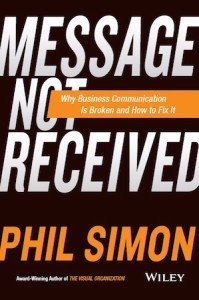
Message Not ReceivedThere are many fantastic collaboration tools that are much better than email.  To get your organization to use them effectively, you need to lead that cultural change for how you communicate.

Today’s post is by Phil Simon, author of Message Not Received (CLICK HERE to get your copy).

Peter Drucker once famously said, “Culture eats strategy for breakfast.”

Truer words have never been spoken. Before I started writing and speaking for a living, I spent nearly a decade as a consultant implementing enterprise systems. More often than not, I would see Drucker’s very statement play out firsthand. A CEO’s grand vision would quickly go awry because of thorny personnel issues, cultural impediments, and just plain bad management. You know, the “soft stuff.”

Let me put this as bluntly as I can: In most organizations today, the biggest challenge is not technology. It’s people.

It’s Easy to Blame Technology; It Can’t Blame Us Back

Of course, many people fail to recognize this. Case in point: A while back, I attended an interactive one-day event with 40 other industry thought leaders. The agenda was fairly loose: The group participated in a wide array of discussions on tech-related topics.

Read more

https://www.thoughtleadersllc.com/wp-content/uploads/2022/04/logo.png 0 0 Mike Figliuolo https://www.thoughtleadersllc.com/wp-content/uploads/2022/04/logo.png Mike Figliuolo2015-05-18 07:05:402015-03-08 10:42:54Overcoming the E-Mail as a Default Mindset

The Secret Keys to a Great Pitch

May 6, 2015/1 Comment/in Books, Business Toolkit, Communications, Entrepreneur, Leadership, Sales /by Mike Figliuolo

Pitcher Delivering a PitchPeople pitch ideas all the time. Most of those pitches never get heard. Why? Because they don’t consider the audience.

I get pitched ideas all the time.  My inbox is flooded by emails from PR professionals asking me to carry guest blog posts, do book reviews, share their infographics, and interview the people they represent.  The vast majority of all those pitches have one thing in common.

They suck.

Honestly.  They’re horrible.  It’s some out-of-context, ponderous press release on a topic I may or may not care about.  The request is opaque at best and nonexistent at worst.  They’re ham-handed ways to get me to do their bidding.  They’re lazy and are banking on the recipient having nothing better to do than jump all over their pitch and do a ton of work on it.

I’ll bet you send similar pitches.  No?  Really?

Have you ever emailed a sales prospect and sent them a big presentation or white paper on why your products are awesome?

Have you ever written a senior executive trying to get time on their calendar to share your awesome idea and get their support?

Were you successful in these efforts?  If so, you’re either lucky or good (or some combination of the two).  If the answer is “no” it’s probably because your pitch sucked.

Here’s the secret to fixing it:

Read more

https://www.thoughtleadersllc.com/wp-content/uploads/2022/04/logo.png 0 0 Mike Figliuolo https://www.thoughtleadersllc.com/wp-content/uploads/2022/04/logo.png Mike Figliuolo2015-05-06 13:25:452018-07-18 10:36:24The Secret Keys to a Great Pitch

SWOTting Your Strategic Problems Away

April 29, 2015/0 Comments/in Business Toolkit, Communications, Leadership, Strategy /by Mike Figliuolo

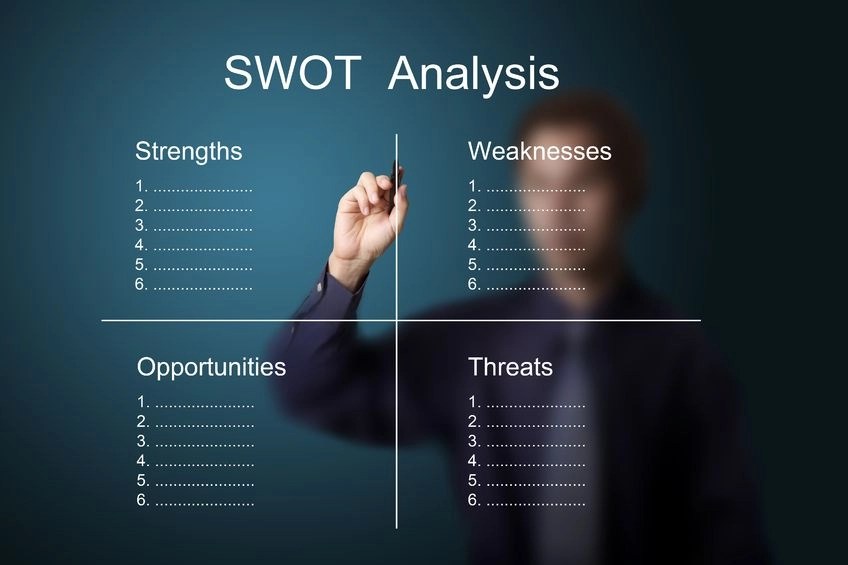
SWOT AnalysisUnderstanding the strategic environment you’re competing in is the foundation of any worthwhile strategic plan.  Fortunately there’s an easy way to get your arms around the complex market dynamics you face.

Strategic planning requires you to understand the competitive landscape in which you’re operating. A great tool you can use to assess the environment is called a SWOT Analysis. SWOT stands for Strengths, Weaknesses, Opportunities, and Threats.

For strengths and weaknesses, those are typically within your own organization. They’re capabilities you have or don’t have. As far as opportunities and threats, they can either be internal or external market-facing opportunities and threats.

As you build a SWOT Analysis you’ll want to have the team together and have people throw out their ideas in each of those quadrants. It’s generally a brainstorming session. Your job is to capture all the ideas. We’ll synthesize them later. Let me walk through an example.

Strengths

Perhaps we start our SWOT Analysis and we look at our strengths. Our strengths consist of:

Read more

https://www.thoughtleadersllc.com/wp-content/uploads/2022/04/logo.png 0 0 Mike Figliuolo https://www.thoughtleadersllc.com/wp-content/uploads/2022/04/logo.png Mike Figliuolo2015-04-29 13:02:102015-04-26 12:16:40SWOTting Your Strategic Problems Away

A Better Way to Resolve Conflict

April 15, 2015/2 Comments/in Business Toolkit, Communications, Leadership /by Mike Figliuolo

Herdbeast Locking HornsConflict is a part of life. Being a great leader requires you to stop being a mediator of that conflict and instead teach your team members how to resolve the conflict themselves.

More often than not, high performing teams operate in high pressure environments. Many times on a high performing team you have some strong personalities at play. When you combine pressure plus strong personalities, there are plenty of opportunities for conflict between the members of your team.

Your job as a leader is not to mediate those conflicts and be a referee. Instead you need to teach the members of your team how to resolve those conflicts with one another because it’s going to help them build relationships. Ultimately it will build their interpersonal skills.

Teaching them to work things out on their own keeps you from having to dedicate a significant amount of time and energy every time somebody has a conflict with another member of the team. Your job when there’s conflict is first to recognize it. Identify when you have team members who are butting heads and figure out what the root issue is. Then suggest that they go figure it out and come back to you when they have developed a solution on their own.

Hopefully if they’re really high performers they can go in a room, hash it out, and come up with a solution that will be acceptable to both of them. However there will be certain opportunities that you’re going to have to take advantage of to get involved in it and teach them how to resolve conflict better. When you do so, first sit them down and acknowledge the conflict and get to the root of the issue.

Read more

https://www.thoughtleadersllc.com/wp-content/uploads/2022/04/logo.png 0 0 Mike Figliuolo https://www.thoughtleadersllc.com/wp-content/uploads/2022/04/logo.png Mike Figliuolo2015-04-15 02:51:142018-08-13 10:36:41A Better Way to Resolve Conflict
Page 70 of 82«‹6869707172›»

Get free blog posts by email NOW!

It’s the best 5 minutes a week you can spend on your development.

Subscribe HERE!

Get new posts FREE via RSS!
Follow thoughtLEADERS on LinkedInFollow thoughtLEADERS on twitter
This site contains affiliate links to products. We may receive a commission for purchases made through these links.
 

Check Out Our Courses

Our courses teach immediately applicable skills that have real impact on your business. From leadership to strategy and negotiation to conflict resolution, we have a broad set of course offerings that will drive immediate performance improvements.
OUR COURSES

Our Courses

Group of Business People Meeting
Puzzle Pieces
Glasses Looking Over Cityscape
Doors on a Wall
Cog Wheels
Man Reading Book
Fishing hook in the sea
Microphone in Lecture Hall
Charts on Blue Background
Wristwatch
Exploding Light Bulb
Man on Summit of Mountain
Lightning Bolts
Man Painting the Word Change on a Wall
Construction Cranes
Plant Growing in a Hand
High Performance Gears
Men Shaking Hands Closeup
Influence Definition
Sailboat at Sunset
Hanging light bulbs with glowing one isolated on dark blue background
Wagon Wheel
Risk
Strategic Client Engagement
Strategic Business Planning
Advanced Meeting Leadership
Building a Growth Mindset
Executive Communications
Structured Problem Solving
Creating Leadership Maxims
Leading inside the Box
Deliberate Decision Making
Simple Strategic Planning
Storytelling for Leaders
Storytelling for Sales
Executive Presence
Principles of Chart Design
Time Management Mastery
Breakthrough Innovation
Leadership Resilience
Conflict Resolution
Leading through Change
Project Management Reality
Coaching for Impact
High Performing Teams
Everything is Negotiable
Leading with Influence
Building Personal Resilience
thoughtLEADERSHIP
Engagement Management
Risk Management
Client Engagement
Strategic Business Planning
Advanced Meeting Leadership
Building a Growth Mindset
previous arrow
next arrow
 

eLearning Courses on TITAN

Structured Thought: Problem Solving
Puzzle Pieces
Structured Thought: Problem Solving

Clearly define a problem, scope all issues related to the problem, generate potential solutions, then analyze and select the best solution by using time-tested critical thinking methods and tools.

VIEW COURSE
Structured Thought and Communication
Group of Business People Meeting
Structured Thought and Communication

Craft clear and compelling recommendations that resonate with stakeholders. Get your ideas approved by using a proven method for delivering executive-level communications.

VIEW COURSE
Principles of Chart Design
Different Types of Line and Bar Charts
Principles of Chart Design

Create well-designed presentation charts that get your message across quickly and clearly to drive your audience to action. From data charts to concept charts, these methods help make your point.

VIEW COURSE
Engagement Management
Wagon Wheel
Engagement Management

Whether you’re an internal or external consultant or a project leader, learn proven methods, techniques, and processes to effectively lead consulting engagements that drive your client’s success.

VIEW COURSE
Strategic Business Planning
Cog Wheels
Strategic Business Planning

Use a straightforward and effective strategic planning process that shows how to craft a clear, compelling plan for your organization - not just one time, but on an ongoing basis year after year.

VIEW COURSE
Deliberate Decision Making

Make better, faster, and more effective decisions. Apply simple yet powerful decision making tools to define decision authority, manage risk, increase accountability, and drive execution.

VIEW COURSE
Everything is Negotiable
Men Shaking Hands
Everything is Negotiable

Become a better negotiator in all situations – from day to day interactions to hammering out large deals. Build the skills required to get what you want and strengthen relationships while you do.

VIEW COURSE
Breakthrough Innovation
Exploding Lightbulb
Breakthrough Innovation

Generate and select unique strategies that separate you from the competition. Construct bold and disruptive solutions then build and execute a plan for taking those strategies to market.

VIEW COURSE
Storytelling for Leaders
Man reading stories from a book
Storytelling for Leaders

Create business stories that inspire people, build connections with your audience, and ultimately advance your organization's goals by using a repeatable, straightforward method.

VIEW COURSE
Storytelling for Salespeople

Create and deliver stories that will take your sales efforts to the next level. Connect with and convince buyers in all situations using memorable stories. These stronger relationships drive more sales.

VIEW COURSE
Leading through Change

Lead your organization through the most challenging times using a proven change management process. Get people through the change and back to driving performance quickly and effectively.

VIEW COURSE
Building Leadership Resilience
Mountain Climbing Expedition
Building Leadership Resilience

Prepare your body and brain to be ready for and recover from your biggest challenges. Build approaches for overcoming stress, managing reactions to difficult events, and leading more effectively.

VIEW COURSE
Compelling Executive Presence

Build your ability to connect with your audience and convey your ideas in a clear and resonant way. Create meaningful connections between you and your audience to build buy-in.

VIEW COURSE
Coaching for Impact
Plant Growing in a Hand
Coaching for Impact: Foundation Course

Coach employees for performance and development more effectively by helping them identify and pursue their own solutions. Create the right environment and conditions to help them grow.

VIEW COURSE
Building Personal Resilience
Boat at Sunset
Building Personal Resilience

Build the habits and learn the behaviors required to manage stress, deal with adversity, and maintain your physical and mental wellbeing. Personal resilience is a key to your ongoing success.

VIEW COURSE
Time Management Mastery
Watches
Time Management Mastery

Learn techniques to manage your time, delegate, say “no,” and be more efficient. Balance your limited supply of time with the overwhelming demands that are placed on you every day.

VIEW COURSE
previous arrow
next arrow

Books You MUST Read

The Elegant Pitch
One Piece of Paper by Mike Figliuolo
Lead Inside the Box
10 Stories Great Leaders Tell
Getting Ahead
Sell with a Story
Lead with a Story
Mastering Communication at Work
The Hook
Innovative Leadership Fieldbook
Innovative Leaders Guide to Transforming Organizations
The Three Commitments of Leadership
The Littlest Green Beret
Storytelling in the Land of Oz
The Camino Way
Hiring Veterans
Disability is Human book
Race to Innovation
The Emergent Leader
Business is Simple
Business is Simple
The Elegant Pitch
One Piece of Paper by Mike Figliuolo
Lead Inside the Box
10 Stories Great Leaders Tell
Getting Ahead
Sell with a Story - Border
Lead with a Story
Leading from Your Best Self
Mastering Communication at Work
The Hook
Innovative Leadership Fieldbook
Innovative Leaders Guide to Transforming Organizations
20120318 Three Commitments
Leadership Vertigo
The Littlest Green Beret
Storytelling in the Land of Oz
The Camino Way
Hijacked by Your Brain
Outthink the Competition
Driving Innovation from Within
Hiring Veterans
Disability is Human
Race to Innovation
The Emergent Leader
Business is Simple
Global Mindset
previous arrow
next arrow
  • The Elegant Pitch
  • Disability is Human
  • Hiring Veterans
  • Race to Innovation
  • The Emergent Leader
  • Business is Simple
  • Global Mindset

Categories

This site contains affiliate links to products. We may receive a commission for purchases made through these links.

Our Course Offerings

Leadership Skills

Creating Your Leadership Maxims
Leading Inside the Box
Leading With Influence
Leading Through Change
Structured Problem Solving
Deliberate Decision Making
High Performing Teams
Simplified Strategic Planning
Strategic Business Planning
Coaching for Impact: Foundations
Coaching for Impact: Applications
Building Leadership Resilience
Engagement Management
Project Management Reality
Risk Management

Communication Skills

Communications: Foundations
Communications: Applications
Principles of Chart Design
Strategic Client Engagement
Storytelling for Leaders
Storytelling for Salespeople
Compelling Executive Presence
Advanced Meeting Leadership

Individual Skills

Conflict Resolution
Everything is Negotiable
Building a Growth Mindset
thoughtLEADERSHIP: Innovation
Building Personal Resilience
Time Management Mastery

Coaching & Consulting

©2026 thoughtLEADERS, LLC: Leadership Training for the Real World. thoughtLEADERS, LLC is a registered trademark of thoughtLEADERS, LLC.
  • Privacy Policy
  • Terms of Use
  • Cookie Policy
Scroll to top