• Contact
  • My Account
  • Log In
  • 0Shopping Cart
thoughtLEADERS, LLC: Leadership Training for the Real World
  • About
  • Services
  • eLearning
  • Team
  • Blog
  • Clients
  • Books
  • Contact
  • Menu Menu

5 Managerial Behaviors to Improve (and 5 Habits to Avoid) for Hybrid Managers

November 21, 2022/0 Comments/in Business Toolkit, Career, Guest Blogger, Leadership, Poll, Project Management /by Trevor Jones

number 5

We took a recent survey of 1,000 employees and compiled the top behaviors that hybrid managers can improve (and avoid) to keep their team engaged and productive.

Today’s post is by Alyssa Mertes, Lead Copywriter at Quality Logo Products

Managers face unique challenges leading hybrid teams across multiple work environments. The good news is that many hybrid managers appear to excel at it. A new Quality Logo Products survey on boss habits reveals that over half (51%) of hybrid employees think their bosses manage employees “very well.” On this measure, hybrid managers outperformed both their remote (45%) and on-site (39%) counterparts.

In today’s challenging employment landscape, however, businesses need to do all they can to retain and engage quality employees. This often starts with improving relationships and satisfaction in the workplace. In fact, around 64% of employees surveyed said that their relationship with their boss is their most important one at work.

In this article, we’ll discuss five managerial behaviors to improve and five to avoid to keep your hybrid team happy and productive.

The Top 5 Managerial Behaviors to Improve

  1. Communicate well

If you want to improve your workplace leadership in a hurry, your communication skills make a great place to start. While nearly half (48%) of employees say that hybrid bosses communicate “very well,” it’s hard to overestimate the importance of this skill. In fact, employees ranked interpersonal communication style as the second most important management quality in a boss.

Your team members need useful information that helps them understand what they are doing and why they are doing it. Good communication requires both clarity and transparency, whether that means explaining your expectations well, providing the necessary context for projects, or owning up to your own mistakes as a manager.

  1. Listen thoughtfully

Good communication starts with careful listening. If you’ve always thought that strong leadership means doing most of the talking, try to flip the script and spend more time listening. Keeping your ear on the ground not only generates goodwill with your employees, but can also lead to improvements in team productivity and maybe even some innovative ideas for the company.

  1. Respect your team’s opinion

Make your listening even more meaningful by valuing what team members bring to the table. An overwhelming 83% of employees said that respecting others’ opinions is a key attribute of a good boss. Employees who feel valued are more likely to respond in kind by respecting others, exhibiting honesty, and maybe even going the extra mile for you.

  1. Treat employees fairly

Full-time employees spend around one-third of their waking hours at work. So, feeling that their boss treats them fairly can make a huge difference in overall satisfaction—in fact, 91% of employees say they want fairness from their boss. Try to delegate tasks equitably, give credit where it’s due, and present any negative feedback privately rather than calling out employees in front of others.

  1. Give feedback often and positively

Nearly half (46%) of hybrid employees think their bosses give feedback “very well,” but that means over half think otherwise. No one likes to work in a vacuum, but the dangers of disconnection rise for employees working remotely.

Take steps to raise your visibility by regularly acknowledging your employees, encouraging informal check-ins, and letting them know they can contact you with questions or feedback. Always remember to keep it positive: providing actionable feedback in a constructive rather than destructive style can make the difference between demoralizing team members and inspiring them to do their best.

The Top 5 Managerial Habits to Avoid

  1. Talking down to employees

More than any other attribute, employees dislike condescension in their boss. Around 78% of professionals indicated this as a mark of a bad manager. When a boss exhibits arrogance—whether by acting superior, talking down to employees, or simply wasting people’s time in meetings—workplace morale can suffer.

  1. Creating a negative work environment

Striving for a competitive edge in business does not mean that your business’s work environment needs to feel competitive. Nearly three-quarters of employees surveyed named “creating a hostile or competitive work environment” as a major negative in a boss.

Just like in sports or any other team environment, infighting weakens the group rather than strengthens it. A great leader knows how to make a team competitive without pitting its members against each other in a negative way.

  1. Micromanaging your employees

If you think that micromanaging poses less of an issue for remote employees, you are right—but that doesn’t make it any less important. In fact, hybrid bosses may rate more highly with employees because they don’t stand over them telling them what to do. Micromanaging ranked as the number three characteristic of the worst bosses, with 75% of employees saying they dislike it in a manager.

  1. Appearing out of touch

When describing a bad boss, one of the worst characteristics that employees chose was “out of touch.” Even more than “pushy,” “annoying,” or “inept” bosses, employees don’t like leaders who don’t seem to understand the realities of what they do every day. Listening thoughtfully and respecting your team’s opinion will help you stay in touch with their needs.

  1. Blaming employees when things go wrong

Good managers give credit to their team. Great managers never take credit themselves, unless they’re taking credit for failures. While it may not always seem fair, part of being a leader is having extra responsibility. Your job involves figuring out how to get the best out of your employees, not blaming them when things go wrong.

Conclusion

If you manage a hybrid team, take heart that hybrid employees are generally more satisfied with their bosses than their remote or in-person counterparts. To make sure your team members feel the same, keep raising your own personal bar with some of the tips suggested in this article. Your employees will appreciate it—and hopefully stick around for the long haul!

Did you enjoy this post? If so, I highly encourage you to take about 30 seconds to become a regular subscriber to this blog. It’s free, fun, practical, and only a few emails a week (I promise!). SIGN UP HERE to get the thoughtLEADERS blog conveniently delivered right to your inbox!


https://i0.wp.com/www.thoughtleadersllc.com/wp-content/uploads/2022/11/20221121-Number-5.jpg?fit=1920%2C1280&ssl=1 1280 1920 Trevor Jones https://www.thoughtleadersllc.com/wp-content/uploads/2022/04/logo.png Trevor Jones2022-11-21 08:00:562022-11-21 02:46:395 Managerial Behaviors to Improve (and 5 Habits to Avoid) for Hybrid Managers

How often do you give family and friends professional or work advice?

November 17, 2022/0 Comments/in Business Toolkit, Career, Leadership, Poll /by Trevor Jones

Our reader poll today asks: How often do you give family and friends professional or work advice?

  • All the time 6.67%
  • Sometimes when I think they need to hear it 25.08%
  • Sometimes but only when they ask for it 51.12%
  • Rarely — only if I see them making a big mistake 12.06%
  • Never — I keep business and personal separate 5.07%

Trying to help. Over 80% of respondents are willing to offer professional and work advice with more than 30% offering it whether it’s solicited or not. For the 51% of you offering advice upon request, ask yourself if you’re telling them what they want to hear or what they need to hear. Sometimes people are looking for confirmation of a decision they’ve already made and they might not be open to advice counter to that position. If that’s the case, you run the risk of shouldering the blame if things don’t work out for them even if they had already made the decision you tacitly approve. For those offering unsolicited advice, be sure you understand their wants and goals. Often we give advice based on what we want our futures to look like. As good as that advice might be for you, it could be exactly the wrong advice for them if they have different goals and aspirations. The bottom line is consider their wants and needs first before giving any advice. If your suggestions are consistent with helping them achieve their goals, it should help them drive the outcomes they desire.

– Mike Figliuolo at thoughtLEADERS, LLC

Did you enjoy this post?  If so, I highly encourage you to take about 30 seconds to become a regular subscriber to this blog.  It’s free, fun, practical, and only a few emails a week (I promise!).  SIGN UP HERE to get the thoughtLEADERS blog conveniently delivered right to your inbox!
Read more

https://i0.wp.com/www.thoughtleadersllc.com/wp-content/uploads/2021/05/20140203-EKG-Pulse-Graph-with-Glowing-Blue-Line-Narrow.jpg?fit=833%2C258&ssl=1 258 833 Trevor Jones https://www.thoughtleadersllc.com/wp-content/uploads/2022/04/logo.png Trevor Jones2022-11-17 13:00:562022-11-14 06:19:24How often do you give family and friends professional or work advice?

4 Easy Ways to Become a Leader with Executive Presence

November 16, 2022/0 Comments/in Books, Business Toolkit, Career, Leadership, Strategy /by Trevor Jones


number 4

Become a leader with executive presence by being vocal, stating ideas with conviction, being decisive, and radiating calm.

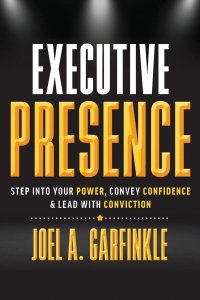
Today’s post is by Joel Garfinkle, thoughtLEADERS instructor, executive coach, and author of Executive Presence: Step Into Your Power, Convey Confidence, and Lead with Conviction. (CLICK HERE to get your copy).

If you want to advance to high levels in your career—and make the greatest possible impact—you need to become a leader with executive presence. Here are 4 areas of focus I urge you to begin with. You can easily begin making these changes in your next meeting, one-on-one, or virtual call.

  1. Be vocal, yet concise.

No, this is not an oxymoron. Great leaders speak up often, participating actively in discussions—yet they don’t drone on endlessly. They make smart, incisive comments that spark discussion. They voice thoughts succinctly, so others grasp them immediately. They participate throughout every discussion, but they don’t dominate it. When they speak, others want to hear more, not less.

Many people fall into the “I don’t have anything to say” trap. But I promise you, you do have plenty to contribute. Challenge yourself to bring a mental list of key points you want to make in a meeting. As you speak up more, you’ll get more comfortable thinking of things to say in the moment. But even then, it will be helpful to gather your thoughts about each agenda item, particularly those that pertain to your expertise.

Every idea doesn’t need to be earth-shattering in order to advance the discussion in some way. For instance, you might make comments like these:

  • Summarizing how the group feels about the issue at hand.
  • Commending a colleague for her amazing work on a project being discussed, highlighting what might have gone unrecognized.
  • Pointing out where two disagreeing colleagues have common ground.

Speaking up in ways like these will benefit the group and give you a strong presence in the discussion.

  1. State ideas with conviction.

When you speak up, let your conviction for your opinions shine through. Practice eliminating qualifier words and phrases like “I’m not sure if it’s relevant, but…” and voice ideas boldly.

When you speak, try to project your voice so you’ll sound more confident. Use open body language, maintaining good posture, which will reflect in your voice as well. And when a topic comes up that you want to weigh in on, don’t hesitate. This will present you as more self-assured. Pay attention to your tone and cadence as well. If you’re speaking too quickly, you’ll sound more nervous. Use the power of the pause, or vary your pacing, to give your words the gravity they deserve.

  1. Be decisive.

Most of us are prone to deliberating for far too long unless we challenge ourselves to make decisions quickly. Building your decision-making muscle takes practice, but you will get more confident over time. Start by going with your gut about minor choices. Then, when faced with a big decision, set a time frame appropriate to the importance and urgency of the choice. Here are a couple of examples:

  • You’re considering whether you need to add a specific new role to your team. You meet with several people whose perspectives are most important, then consider their input during your weekly reflection time. As a result, you use your time efficiently rather than mulling over the possibilities in an unfocused way.
  • You need to approve or disapprove a proposed marketing strategy that diverges sharply from your current one. So, after watching a presentation by the marketing team, you meet with key staff to discuss follow-up questions. Satisfied with their thorough research and clear answers, you give the approval and announce the change enthusiastically.

You’ll never have all of the information, so prioritize taking action. Most leaders find it’s better to correct course later, if needed, then delay an important decision.

  1. Radiate calm.

In difficult situations, be the calm within the storm. Whether it’s a major crisis or an annoying problem, maintain your composure. You’ll become the person that others can rely on to steer the ship toward calmer waters.

Of course, that’s easier said than done. Here are some steps you can take to develop that calm presence:

  • Adopt simple practices you can do during your workday to find calm, like taking a short walk.
  • Try to remain emotionally balanced and mentally composed by sleeping, eating, and exercising well.
  • Pay attention to your voice—is the pitch rising? Take a breath and try to speak in a more relaxed tone.
  • Delegate effectively. Who can take on what roles to help? Giving people clear tasks will help them stay calm in turn, knowing they’re contributing to a solution.

It may feel counterintuitive, but by exuding calm, you’ll reconcile problems more quickly and with better results.

Follow these principles during the course of the day. They will benefit you in every situation, and you’ll find yourself drawing upon them countless times throughout your work week. Before long, others will begin to perceive you as a more capable and powerful leader, which will grow your influence, charisma, and ability to drive change. And most importantly, as you become a leader with executive presence, you’ll win their trust.

executive presence bookJoel Garfinkle is the author of Executive Presence: Step Into Your Power, Convey Confidence, and Lead with Conviction. He has 23 years of experience as an executive presence coach, conducting webinars, keynotes, and one-on-one coaching programs. He is recognized as one of the top 50 coaches in the U.S. Subscribe to his Fulfillment at Work newsletter and his YouTube channel, which has over 200 easily actionable 2-minute inspirational video clips.

Did you enjoy this post? If so, I highly encourage you to take about 30 seconds to become a regular subscriber to this blog. It’s free, fun, practical, and only a few emails a week (I promise!). SIGN UP HERE to get the thoughtLEADERS blog conveniently delivered right to your inbox!

https://i0.wp.com/www.thoughtleadersllc.com/wp-content/uploads/2022/11/20221116-Number-4.jpg?fit=1920%2C1278&ssl=1 1278 1920 Trevor Jones https://www.thoughtleadersllc.com/wp-content/uploads/2022/04/logo.png Trevor Jones2022-11-16 08:00:422022-11-17 17:46:554 Easy Ways to Become a Leader with Executive Presence

Even the Best Leaders Can Be Ageist – Make Sure You’re Not One of Them

November 14, 2022/0 Comments/in Books, Business Toolkit, Career, Guest Blogger, Leadership /by Trevor Jones


Learn how leaders can get ahead of any age-related problems in their workplace and create a truly diverse and age-inclusive workforce.

Today’s post is by Patti Temple Rocks, author of I’m STILL Not Done: It’s Time to Talk About Ageism in the Workplace (CLICK HERE to get your copy).

If there is a common trait among all the great leaders that I have worked with throughout my 4-decade career it is that they have high standards – for themselves and those they lead. They are measured (rigorously) on their performance so if you bring them a problem, they will solve it quickly. Sales are down? Let’s mix up territories. Growth has stalled? Invest in the innovation pipeline. Recession headwinds getting stronger? Tighten spending. Wrongful dismissal due to age discrimination lawsuit? Call HR and write a settlement check.

But there is another common trait I have observed among those leaders – at least the ones I admire and like the best – they genuinely and deeply care about their people. Those leaders would not just write the check to make the problem go away, they will understand that behind that litigation there is a much longer story and most likely an employee who is hurting.

Here is how leaders can get ahead of any age-related problems in their workplace and create a truly diverse and age-inclusive workforce.

Do Your Research. Assess Your Organization

The first and not surprising task is data based and straight-forward. Do some Google searching, and it will take no time at all to confirm that ageism is rampant in the workplace. In May of 2021, an AARP reported that an astounding 78% of workers between 40 and 65 had either witnessed or experienced ageism on the job. That is the highest number they’ve ever reported and up a whopping 17% since before the pandemic. Your Google search will also find all the stats on the cost of litigation and that the American Bar Association predicts even more age-related lawsuits post-pandemic. You will conclude that ageism is in the workplace is an issue

But…maybe you might think, ‘well yes, but not here.’ That is when you need to move on to the next phase of your research.

The Mirror Test

You can’t solve a problem you don’t understand so I recommend engaging your teams to hold a mirror up to your own organization. Direct your HR team to conduct an employee census to determine if the age groups that work for you represent the general population (spoiler alert: most do not). Look at the stats of the voluntary and involuntary quits. I can assure you very few of your voluntary quits will be over 50. Research shows that the most loyal and engaged employees are in that age cohort. Ask your recruiting department to review your job postings for ageist language. Your marketing team should review your website – all your external messages – to ensure that all age groups are represented visually as well is in the written word. Re-read your DE& I policy – does it specifically call out age as category for protecting (don’t be shocked if it doesn’t). What is your standard practice for discussing retirement with your employees? And if you have a practice at all, congratulations, you’re in the 10% club.

By looking honestly at your company, the chances are good that you will discover that ageism is an issue for your organization as well. And an issue that you must address.

But, as a leader as empathetic as you are decisive, there is a much more important task you must take on.

Lead by Walking Around

This is not a new idea – it was originated by HP’s David Packard in the 1940’s and popularized by 80’s and 90’s business guru, Tom Peters – but it remains viable today, even if walking around is now a Zoom call.

As concrete and definitive as some of the legal markers of age discrimination are there are many more that are not. Older workers talk constantly of feeling marginalized from being excluded from meetings or talked over in the meetings they are invited to. They don’t understand why they are no longer considered for training opportunities or for that new job opportunity in an expanding market or division. They tell me about having to smile through gritted teeth at some of the ageist comments or jokes people make. I suspect that much of this ageist behavior is non-intentional and likely based on some unconscious and long-held biases about older people in general. But intentional or not, these all add up to an employee who can’t help but feel devalued or diminished – some even go so far as to say they feel “invisible” in the workplace.

Ugh. It hurts my heart to hear about what the end years of long, successful careers are like for many. Leaders do so many things right to make sure they have an engaged, happy, and productive workforce but many miss the boat when it comes to ensuring the same for their older workers. No one should have to feel this way (presuming the obvious, that they are adding value to the company) simply because they got older.

I promise you, if you walk around – virtually or otherwise – and talk to your workers over 40, and especially those over 50 and invite them to talk freely and without judgement about their feelings and experiences as an older worker you will be both enlightened and motivated to do better.

I know I was.

Im Still Not Done BookOver the course of an impressive four-decade career, Patti Temple Rocks has held senior leadership positions in three different sectors of the communications industry: PR, advertising, and client side. She served as the Chief Communications Officer for The Dow Chemical Company and Chief Reputation Officer for Leo Burnett Worldwide. She is an inspirational leader, builder of teams, creative thinker, problem-solver, and agent of change.

The author of I’m Still Not Done: It’s Time to Talk About Ageism in The Workplace, Patti is passionate about discussing and fighting age discrimination and helping people understand how ageism stunts business growth and reflects poorly on our society. As a public speaker and consultant, Patti works with businesses that wish to change for the better and implement effective practices to fight ageism in the workplace. During her impressive career in marketing and advertising, her valuable ideas and strategies were implemented by world-class organizations including McDonalds, Unilever, Bacardi, and Walmart. To learn more about ageism and get in touch with Patti, visit http://imnotdone.rocks.

Did you enjoy this post? If so, I highly encourage you to take about 30 seconds to become a regular subscriber to this blog. It’s free, fun, practical, and only a few emails a week (I promise!). SIGN UP HERE to get the thoughtLEADERS blog conveniently delivered right to your inbox!


https://i0.wp.com/www.thoughtleadersllc.com/wp-content/uploads/2022/11/20221114-Four-Women-Talking.jpg?fit=1920%2C1280&ssl=1 1280 1920 Trevor Jones https://www.thoughtleadersllc.com/wp-content/uploads/2022/04/logo.png Trevor Jones2022-11-14 08:00:342022-11-14 07:00:57Even the Best Leaders Can Be Ageist – Make Sure You’re Not One of Them

Questions to Ask Yourself Before Making a Big Decision

November 9, 2022/0 Comments/in Business Toolkit, Career, Leadership, Strategy /by Trevor Jones

cornfield decision

Before you make a big decision, make sure you pause and spend some time considering these questions.

As you get ready to make an important decision and take action, there are some critical questions you need to ask yourself before you move forward. Take the time to think this stuff through. As you get ready to move forward, ask yourself, how big is this decision? Can I break this big decision into smaller ones to reduce the risk that I face? How irrevocable is this decision? Can you roll it back if you’re wrong or do you have to get it right on the first shot? You should know the difference.

What’s the cost of being wrong, and what’s the value of being right? And is that an appropriate trade-off that you’re making? How long do you have to make the decision? Many times, we impose a deadline on ourselves which isn’t real. What’s the real deadline for making this call and moving forward? What’s the cost of waiting, and what’s the value of acting now? For example, I had a decision I had to make, and if we had acted sooner, we would have saved a lot more money. And if we waited, those savings were going to be gone. Understanding that trade-off of time is critical.

What are my personal biases that might be affecting this decision? Perhaps you made a decision in the past and it didn’t go well, and this decision feels a lot like that last decision that didn’t go so well. You should know that you have a bias that might be affecting your decision to move forward. How do I mitigate the biases that I might have to make clearer decisions? Can you bring somebody in as a sounding board to help push you on those biases? Who do I need to involve in the decision, and how do I need to involve them? Spend the time populating that RACI matrix, and understand who’s consulted and who’s informed.

Lastly, who needs to know I made a decision, and how should I inform them? For some decisions, it’s fine to send out an email. For other decisions, that would be highly inappropriate. You need to think through the communication plan for how you’re going to get the message out there.

So before you move forward and take that final action, make sure you pause, spend some time considering these questions, and document your answers so you can be sure to make the best decision possible.

– Mike Figliuolo at thoughtLEADERS, LLC

Want to learn more about developing your decision-making strategies? How about taking an entire course on it? Check out the video below to learn more about the course and get started. Or you can go directly to the course and start learning how to make better decisions. The entire course is available at LinkedIn Learning. Enjoy!

Did you enjoy this post? If so, I highly encourage you to take about 30 seconds to become a regular subscriber to this blog. It’s free, fun, practical, and only a few emails a week (I promise!). SIGN UP HERE to get the thoughtLEADERS blog conveniently delivered right to your inbox!

https://i0.wp.com/www.thoughtleadersllc.com/wp-content/uploads/2022/11/20221109-Cornfield-Decision.jpg?fit=1920%2C1280&ssl=1 1280 1920 Trevor Jones https://www.thoughtleadersllc.com/wp-content/uploads/2022/04/logo.png Trevor Jones2022-11-09 07:00:162022-11-09 04:13:12Questions to Ask Yourself Before Making a Big Decision

Strategic Creativity is Your Secret Business Weapon

November 7, 2022/0 Comments/in Books, Business Toolkit, Guest Blogger, Innovation, Leadership /by Trevor Jones

woman with laptop and paint brushes

Strategic creativity is a secret superpower. It provides a handle on what people desire or need—even before people know they want it or need it.

Today’s post is by Robin Landa, author of Strategic Creativity: A Business Field Guide to Advertising, Branding, and Design. (CLICK HERE to get your copy).

Strategic creativity is a secret superpower.

The person who possesses strategic creativity is tactical, resourceful, ingenuous, and extremely attractive (perhaps I’m getting carried away). An infiltrator, influencer, and eavesdropper. Strategic creativity provides a handle on what people desire or need—even before people know they want it or need it.

For you—sitting in the C-suite, a business owner, a CEO, or a business professional—to get what you need to launch a brand, organization, or individual, to move a brand forward, to grow business, or to raise funds, you need to understand how creative professionals work their magic to conceive and construct strategically creative solutions. You also need to know what will work and why it’s well-conceived, well-designed, and well-written; and why pedestrian ideas won’t get you anywhere except overlooked. Think of me as your personal “Alfred Pennyworth”—I’m your special creative forces wingman, who will supply all you need to commission and evaluate creative solutions.

It’s Really About the Insight into the Target Audience

A consumer insight is a realization—a real eye-opener—about the target audience’s need, behavior, or the true nature of how they think, feel, or behave—a human truth no one has yet noticed brought to light.

That insight warrants a response—a change in the way you look at a behavior, situation, branded product, or service—and it should be the catalyst for strategically creative idea generation and brand storytelling.

Insights into the audience are vital to breakthrough creative solutions. What does the audience need? Desire? Why does the audience do what they do? On which media platforms do they spend their time? Which causes do they care deeply about? Will they align themselves with your organization’s or brand’s values?

Jeff Fromm, president of Futurecast, believes that insights are more about the category than the brand; insights reveal more about how people want to feel, than what they think; and insights inspire new ideas, not the same old stuff.

Be An Antenna of the External Zeitgeist

It’s challenging to read the political news due to so many alarming events. If you can’t manage the political zeitgeist (though I heartily recommend being informed), at least stay abreast of the cultural climate that affects our collective critical and creative thinking. For goodness sake and your business’ sake, don’t be out of touch with what your audience (and beyond) is thinking and feeling or oblivious to the issues of a diversity of people and communities.

Once you are aware, make your organization or brand an antenna of the external zeitgeist, one that transmits relevant messages that will resonate.

Know What Drives People

Most of us in corporate leadership positions, advertising, marketing, and branding don’t hold PhDs in psychology, however we must have a handle on human behavior to best understand people. Human behavior is first and foremost a kind of investment. Individuals do what they do because of either implicit or explicit benefits. Ask: How does your idea serve the audience’s self-interest?

Respect Everyone

Commit to uplifting all members of society, including people living with disabilities, people who are unsheltered, different socioeconomic groups, races, ethnicities, gender identities, sexualities, religions, and ages.

Take up the mantra: Do No Harm. Nothing in culture happens in a vacuum.

Do your part to build a better culture, a culture of respect.

Employ strategic creativity. Quash pedestrian ideas.

An idea has the power to affect people; it can change the way people think about a brand, entity, cause, issue, individual, or even themselves. It can offer proof, create desire, or stir an emotion that imprints the message. An idea can reframe a conversation, do social good, taunt a competitor, empower, motivate, endear the audience, or simply entertain.

Put an end to pedestrian ideas. Because no one will take notice of uninteresting messaging.

My hope for you, dear reader, is that this knowledge will be your strategic advantage, equipping you with a secret superpower—Strategic Creativity. Please feel free to invent your own code name.

Carry on.

strategic creativity book

Robin Landa is a distinguished professor at Kean University (her Walden’s Pond) and a globally recognized ideation expert. She is a well-known “creativity guru” and a best-selling author of books on ideation, creativity, branding, advertising, and design. She has won numerous awards and The Carnegie Foundation counts her among the “Great Teachers of Our Time.” She is the author of twenty-five books including Strategic Creativity: A Business Field Guide to Advertising, Branding, and Design.

Did you enjoy this post? If so, I highly encourage you to take about 30 seconds to become a regular subscriber to this blog. It’s free, fun, practical, and only a few emails a week (I promise!). SIGN UP HERE to get the thoughtLEADERS blog conveniently delivered right to your inbox!


https://i0.wp.com/www.thoughtleadersllc.com/wp-content/uploads/2022/11/woman-with-laptop-and-paint-brushes.jpg?fit=1920%2C1280&ssl=1 1280 1920 Trevor Jones https://www.thoughtleadersllc.com/wp-content/uploads/2022/04/logo.png Trevor Jones2022-11-07 08:00:202022-11-07 06:16:36Strategic Creativity is Your Secret Business Weapon

How willing are you to “blow up” to force overdue action to occur?

November 3, 2022/0 Comments/in Business Toolkit, Career, Leadership, Poll /by Trevor Jones

Our reader poll today asks: How willing are you to “blow up” to force overdue action to occur?

  • Very: I’ll blow up whenever anything slows down unreasonably 4.04%
  • Somewhat: I’ll blow up when something important gets bogged down 22.43%
  • Not very: It takes an extreme situation to get me to blow up 49.77%
  • Not at all: I don’t see any value in losing my temper 23.76%

Keeping your cool. While 26% of you are willing to “blow up” when something is overdue, the other 74% report taking a calmer approach and avoiding blow-ups. While getting heated may feel good in the moment and can even prompt the right action, there are costs to doing so. Those explosions might damage relationships, negatively impact your personal brand, and can make you stress out more easily. Ask yourself if it’s really worth it to lose your cool. Most of the time the person who made the mistake knows they erred. Getting upset won’t necessarily change their behavior or performance. Consider walking away for a few moments then asking what needs to get done to rectify the situation and channel your energy in that direction. It seems like the vast majority of respondents to the poll take that approach.

– Mike Figliuolo at thoughtLEADERS, LLC

Did you enjoy this post?  If so, I highly encourage you to take about 30 seconds to become a regular subscriber to this blog.  It’s free, fun, practical, and only a few emails a week (I promise!).  SIGN UP HERE to get the thoughtLEADERS blog conveniently delivered right to your inbox!

Read more

https://i0.wp.com/www.thoughtleadersllc.com/wp-content/uploads/2021/05/20140203-EKG-Pulse-Graph-with-Glowing-Blue-Line-Narrow.jpg?fit=833%2C258&ssl=1 258 833 Trevor Jones https://www.thoughtleadersllc.com/wp-content/uploads/2022/04/logo.png Trevor Jones2022-11-03 13:00:132022-11-02 03:20:03How willing are you to “blow up” to force overdue action to occur?

3 Ways to Reduce Decision-Making Risk

November 2, 2022/0 Comments/in Business Toolkit, Career, Leadership, Strategy /by Trevor Jones

number 3

All decision-making involves risk. Use these three strategies to reduce risk when making decisions.

You face risk in all decision-making. A goal of yours should be to reduce that risk as much as is reasonable. There are three primary methods for reducing risk.

First, involve more people in the decision-making process. They’re going to give you additional information and offer perspectives you may not have thought of. Additionally, by involving them early, you’re reducing execution risk on the back end. You’re getting people to buy into the decision now so when it comes time to execute, they’re onboard.

The second way to reduce risk is take more time. Today, the future may be completely uncertain. A month from now, maybe you’ve resolved some of those sources of ambiguity. A year from now, you have even better information as to the environment you’re going to make your decision in.

The third way to reduce decision-making risk is break big decisions into smaller decisions. If you’re trying to decide whether to relaunch the entire company website, perhaps you break that decision down and you make a smaller decision today of launching a pilot website, gather some additional information, and then make the bigger decision down the road.

There’s a balance between gathering information and making a decision in a timely manner because gathering information takes time and money. And yes, you’re reducing uncertainty by doing so, but remember, there are always new sources of uncertainty entering the equation. So find that balance between having enough information to make your decision.

As you look at ultimately reducing decision-making risk, remember to involve more people, take more time in making the decision, and break those bigger decisions into smaller ones.

– Mike Figliuolo at thoughtLEADERS, LLC

Want to learn more about developing your decision-making strategies? How about taking an entire course on it? Check out the video below to learn more about the course and get started. Or you can go directly to the course and start learning how to make better decisions. The entire course is available at LinkedIn Learning. Enjoy!

Did you enjoy this post? If so, I highly encourage you to take about 30 seconds to become a regular subscriber to this blog. It’s free, fun, practical, and only a few emails a week (I promise!). SIGN UP HERE to get the thoughtLEADERS blog conveniently delivered right to your inbox!

https://i0.wp.com/www.thoughtleadersllc.com/wp-content/uploads/2022/11/20221102-Number-3.jpg?fit=1920%2C1280&ssl=1 1280 1920 Trevor Jones https://www.thoughtleadersllc.com/wp-content/uploads/2022/04/logo.png Trevor Jones2022-11-02 07:00:092022-11-02 03:50:463 Ways to Reduce Decision-Making Risk

How do leaders in your organization view the world?

October 27, 2022/0 Comments/in Business Toolkit, Career, Leadership, Poll /by Trevor Jones

Our reader poll today asks: How do leaders in your organization view the world?

  • They’re exceedingly, and sometimes dysfunctionally, optimistic 17.05%
  • They’re reasonably optimistic 39.21%
  • They balance optimism and pessimism 32.95%
  • They’re somewhat pessimistic 7.95%
  • They’re exceedingly pessimistic 2.84%

Balanced optimism. While most of you reported your leaders skew optimistic, there’s a large group (17%) that believes the optimism is excessive. Being too optimistic can lead you to ignore risks, minimize obstacles, and not be as diligent as you need to be. Excessive optimism can also lead to lofty and soon to be missed expectations which can then cause a downward performance spiral. While optimism is important, if you find you’re too optimistic, find a skeptic in your organization who can help you find a more balanced view. Actively consider risks and challenges and accept some level of probability that they might occur. Balanced optimism can keep people engaged and motivated but not set them up for discouragement if things don’t play out as expected.

– Mike Figliuolo at thoughtLEADERS, LLC

Did you enjoy this post?  If so, I highly encourage you to take about 30 seconds to become a regular subscriber to this blog.  It’s free, fun, practical, and only a few emails a week (I promise!).  SIGN UP HERE to get the thoughtLEADERS blog conveniently delivered right to your inbox!

Read more

https://i0.wp.com/www.thoughtleadersllc.com/wp-content/uploads/2021/05/20140203-EKG-Pulse-Graph-with-Glowing-Blue-Line-Narrow.jpg?fit=833%2C258&ssl=1 258 833 Trevor Jones https://www.thoughtleadersllc.com/wp-content/uploads/2022/04/logo.png Trevor Jones2022-10-27 13:00:232022-10-24 00:42:22How do leaders in your organization view the world?

How to Find Your Internal Motivation in Difficult Times

October 26, 2022/1 Comment/in Books, Business Toolkit, Career, Leadership /by Trevor Jones

As a leader, you won’t always have someone to pick you up and dust you off when you fall. Develop a leadership maxim that motivates you to push through hard times.

As leaders, we’re always going to go through difficult times. When we were more junior we had other people to pick us up when we fell down. As a kid it was a parent or a coach who would dust us off and say “Get back out there.” We’ve had bosses who have been helpful when we faced crises.

But now, the higher you are in terms of leadership roles in your organization and the more people you’re leading, the fewer people there are to pick you up and dust you off. You need to be in a position where you can lead yourself out of those difficult situations.

Your team is watching you to see how you behave when you face adversity. Having a leadership maxim to help you motivate yourself and lead yourself through that difficult situation to get to the other side can be a very powerful tool to have.

I’d like to ask: when you fall down, how do you pick yourself back up?

For me my leadership maxim is “But man is not made for defeat. A man can be destroyed, but not defeated.”

That quote is from Ernest Hemingway’s The Old Man and the Sea. I read that book when I was in eighth grade. You’re not exactly the most cerebral kind of guy as a 15 or 16-year old boy but I remember reading those words “Man is not made for defeat.” To me, defeat is about giving up. It’s about surrendering. “A man can be destroyed but not defeated.” That maxim has served me very, very well through some very difficult times in my life.

I’ve relied on it to say “I can’t give up. I can’t be defeated. I need to pick myself up and get back out there.” That maxim drives my behavior.

As you think about motivating and inspiring yourself, what’s your anchor going to be? What’s that situation where you overcame a huge obstacle on your own? Or where you watched somebody else overcome something that was hugely challenging and you really respect the way they got themselves through it?

Do you have a phrase that you always think about when times get tough? That reminder of getting yourself out of that situation is what you need to have now so when you run into the next difficult situation, you can reach out, grab that maxim, find that source of strength, and reorient yourself to moving forward. Your ability to do so is what the members of your team are going to look at and say “Wow! The boss got back up! This was a really tough place to be and look at what they did! That inspires me as member of their team. I’m going to trust that the boss will always get back up and get back out there.”

Finding that maxim that can be that touchstone you can rely upon during difficult situations is going to be a critical aspect of leading yourself. Hopefully, you won’t need it very often, but when you do, you know it’s going to be there for you.

– Mike Figliuolo at thoughtLEADERS, LLC

Want to learn more about developing your leadership philosophy? How about taking an entire course on it? Check out the video below to learn more about the course and get started. Or you can go directly to the course and start learning how to develop your leadership philosophy. The entire course is available at LinkedIn Learning. Enjoy!

Did you enjoy this post? If so, I highly encourage you to take about 30 seconds to become a regular subscriber to this blog. It’s free, fun, practical, and only a few emails a week (I promise!). SIGN UP HERE to get the thoughtLEADERS blog conveniently delivered right to your inbox!

https://i0.wp.com/www.thoughtleadersllc.com/wp-content/uploads/2022/10/20221026-Man-Looking-at-Ocean.jpg?fit=1920%2C1280&ssl=1 1280 1920 Trevor Jones https://www.thoughtleadersllc.com/wp-content/uploads/2022/04/logo.png Trevor Jones2022-10-26 07:00:312022-10-26 05:17:11How to Find Your Internal Motivation in Difficult Times

How decisive are the leaders in your organization?

October 20, 2022/0 Comments/in Business Toolkit, Career, Leadership, Poll /by Trevor Jones

Our reader poll today asks: How decisive are the leaders in your organization?

  • Extremely: They make decisions quickly as soon as they have enough information 11.90%
  • Very: They make rapid decisions but can occasionally get bogged down 37.30%
  • Somewhat: It takes a lot of effort to move them to make a decision 30.27%
  • Not very: They’re hesitant to make decisions and only do so when forced 13.51%
  • Not at all: They’re paralyzed by the notion of making a decision 7.02%

A 50/50 toss-up. It’s interesting that 50% of you report your organizations are decisive and the other 50% are indecisive. So what’s the difference? Risk tolerance? A need for information? A desire for consensus? When making decisions, weigh both decision risk and execution risk. Decision risk is whether or not you’re making the right choice. That’s driven by how much information you have and how much ambiguity you face. While it’s tempting to continue gathering more and more information to reduce decision risk, remember it takes time to do that which introduces new sources of risk. Execution risk is once you’ve made a hopefully good decision, does it get implemented or not. If you haven’t built the proper support in the organization for the choice you’re making, you might run into resistance which can prevent decision execution. And in those cases, you may as well have not made a decision at all. Balance time, information, decision risk, and execution risk. Know when you have enough information and support to move forward and make the call.

– Mike Figliuolo at thoughtLEADERS, LLC

Did you enjoy this post?  If so, I highly encourage you to take about 30 seconds to become a regular subscriber to this blog.  It’s free, fun, practical, and only a few emails a week (I promise!).  SIGN UP HERE to get the thoughtLEADERS blog conveniently delivered right to your inbox!

Read more

https://i0.wp.com/www.thoughtleadersllc.com/wp-content/uploads/2021/05/20140203-EKG-Pulse-Graph-with-Glowing-Blue-Line-Narrow.jpg?fit=833%2C258&ssl=1 258 833 Trevor Jones https://www.thoughtleadersllc.com/wp-content/uploads/2022/04/logo.png Trevor Jones2022-10-20 13:00:022022-10-19 05:47:40How decisive are the leaders in your organization?

Achieving Balance at Work

October 19, 2022/0 Comments/in Balanced Lifestyle, Business Toolkit, Career, Leadership, Strategy /by Trevor Jones

balanced rocks

When most people think of balance at work, they think of work/life balance. Learn about a new type of balance—work/work balance.

Leading a balanced life is a critical aspect of performing well as a leader. And there are two types of balance. We always think about work-life balance in terms of how much time we spend away from the office. But there’s another kind of balance that I encourage you to think about. I call it work/work balance. We need a balance of work that we love to do to balance out the work that we don’t enjoy doing. Because if those get out of balance, we’re gonna be miserable at work. And you probably spend more hours at the office than you do away from it with your friends and your family.

To achieve this work/work balance, you need to set boundaries. Because without boundaries, people are going to violate them all the time. You’re going to be upset, they’re going to be upset, and nobody’s going to know why. So we need to draw those lines. One of my maxims to remind me to set those boundaries is, “I’m going home, you’re doing my job.” This maxim reminds me of a situation where I had a boss who was a bit of a micromanager.

My boss came in one day, very well intended, and got in front of my desk. He said, “Hey Mike, I want you to start thinking about this and this and this and working on that.” I tried to stop him to say, “I have this,” but he kept going. He said, “And think about this and to do that and think about this project.” He kept going on and on.

I kept trying to interrupt, but I was unsuccessful in doing so. The reason I wanted to interrupt was because I had a whiteboard on my wall behind him, and on that whiteboard was every project he was ticking off. Along with the status of it. As he was talking, I was ticking down that list.

I wanted to tell him that I had it covered. But it became clear that I wasn’t going to get my point across so I picked up my briefcase, I put my laptop in it while he was still talking, and put my bag on my shoulder. He had a moment where he said, “What are you doing?” I said, “I’m going home, you’re doing my job.”

He looked at me a bit puzzled. I said, “Turn around and look at the whiteboard.” He turned around and he looked at the whiteboard. He said, “Okay, I get it.” And I said, “Look, I love working for you. I love getting to do these projects, but if you’re gonna come in here and micromanage me, I’m not going to be satisfied with that work environment, so let me do the work. Now this is on me—I haven’t updated you well on the projects and I’ll try to do a better job of that going forward.”

I had a very good relationship with this boss so it wasn’t really a career limiting move, but I drew a very firm boundary. I said for me to be satisfied with the work that I do, I need to have a certain amount of control and self-direction over that.

So as you think about your work, I’d like you to think about work that you love to do. What separates it? What is it that’s so special about it that you are really excited to go do it? Then think about work you don’t enjoy doing. How do you create a boundary between them? How do you draw a balance to make sure that you’re still getting enough of the work you love to do to balance out the stuff that you’re less satisfied with?

Think about a situation where you were able to clarify that boundary for somebody and get more of the work you enjoy doing. That story about drawing that boundary is good fodder for your maxim on creating work/work balance. If you’re able to then adhere to that maxim and communicate it to others, you’ll be much more satisfied with the work that you do.

– Mike Figliuolo at thoughtLEADERS, LLC

Want to learn more about developing your leadership philosophy? How about taking an entire course on it? Check out the video below to learn more about the course and get started. Or you can go directly to the course and start learning how to develop your leadership philosophy. The entire course is available at LinkedIn Learning. Enjoy!

Did you enjoy this post? If so, I highly encourage you to take about 30 seconds to become a regular subscriber to this blog. It’s free, fun, practical, and only a few emails a week (I promise!). SIGN UP HERE to get the thoughtLEADERS blog conveniently delivered right to your inbox!

https://i0.wp.com/www.thoughtleadersllc.com/wp-content/uploads/2022/10/20221012-Balanced-Rocks.jpg?fit=1920%2C1280&ssl=1 1280 1920 Trevor Jones https://www.thoughtleadersllc.com/wp-content/uploads/2022/04/logo.png Trevor Jones2022-10-19 07:30:142022-10-19 07:25:31Achieving Balance at Work
Page 39 of 82«‹3738394041›»

Get free blog posts by email NOW!

It’s the best 5 minutes a week you can spend on your development.

Subscribe HERE!

Get new posts FREE via RSS!
Follow thoughtLEADERS on LinkedInFollow thoughtLEADERS on twitter
This site contains affiliate links to products. We may receive a commission for purchases made through these links.
 

Check Out Our Courses

Our courses teach immediately applicable skills that have real impact on your business. From leadership to strategy and negotiation to conflict resolution, we have a broad set of course offerings that will drive immediate performance improvements.
OUR COURSES

Our Courses

Group of Business People Meeting
Puzzle Pieces
Glasses Looking Over Cityscape
Doors on a Wall
Cog Wheels
Man Reading Book
Fishing hook in the sea
Microphone in Lecture Hall
Charts on Blue Background
Wristwatch
Exploding Light Bulb
Man on Summit of Mountain
Lightning Bolts
Man Painting the Word Change on a Wall
Construction Cranes
Plant Growing in a Hand
High Performance Gears
Men Shaking Hands Closeup
Influence Definition
Sailboat at Sunset
Hanging light bulbs with glowing one isolated on dark blue background
Wagon Wheel
Risk
Strategic Client Engagement
Strategic Business Planning
Advanced Meeting Leadership
Building a Growth Mindset
Executive Communications
Structured Problem Solving
Creating Leadership Maxims
Leading inside the Box
Deliberate Decision Making
Simple Strategic Planning
Storytelling for Leaders
Storytelling for Sales
Executive Presence
Principles of Chart Design
Time Management Mastery
Breakthrough Innovation
Leadership Resilience
Conflict Resolution
Leading through Change
Project Management Reality
Coaching for Impact
High Performing Teams
Everything is Negotiable
Leading with Influence
Building Personal Resilience
thoughtLEADERSHIP
Engagement Management
Risk Management
Client Engagement
Strategic Business Planning
Advanced Meeting Leadership
Building a Growth Mindset
previous arrow
next arrow
 

eLearning Courses on TITAN

Structured Thought: Problem Solving
Puzzle Pieces
Structured Thought: Problem Solving

Clearly define a problem, scope all issues related to the problem, generate potential solutions, then analyze and select the best solution by using time-tested critical thinking methods and tools.

VIEW COURSE
Structured Thought and Communication
Group of Business People Meeting
Structured Thought and Communication

Craft clear and compelling recommendations that resonate with stakeholders. Get your ideas approved by using a proven method for delivering executive-level communications.

VIEW COURSE
Principles of Chart Design
Different Types of Line and Bar Charts
Principles of Chart Design

Create well-designed presentation charts that get your message across quickly and clearly to drive your audience to action. From data charts to concept charts, these methods help make your point.

VIEW COURSE
Engagement Management
Wagon Wheel
Engagement Management

Whether you’re an internal or external consultant or a project leader, learn proven methods, techniques, and processes to effectively lead consulting engagements that drive your client’s success.

VIEW COURSE
Strategic Business Planning
Cog Wheels
Strategic Business Planning

Use a straightforward and effective strategic planning process that shows how to craft a clear, compelling plan for your organization - not just one time, but on an ongoing basis year after year.

VIEW COURSE
Deliberate Decision Making

Make better, faster, and more effective decisions. Apply simple yet powerful decision making tools to define decision authority, manage risk, increase accountability, and drive execution.

VIEW COURSE
Everything is Negotiable
Men Shaking Hands
Everything is Negotiable

Become a better negotiator in all situations – from day to day interactions to hammering out large deals. Build the skills required to get what you want and strengthen relationships while you do.

VIEW COURSE
Breakthrough Innovation
Exploding Lightbulb
Breakthrough Innovation

Generate and select unique strategies that separate you from the competition. Construct bold and disruptive solutions then build and execute a plan for taking those strategies to market.

VIEW COURSE
Storytelling for Leaders
Man reading stories from a book
Storytelling for Leaders

Create business stories that inspire people, build connections with your audience, and ultimately advance your organization's goals by using a repeatable, straightforward method.

VIEW COURSE
Storytelling for Salespeople

Create and deliver stories that will take your sales efforts to the next level. Connect with and convince buyers in all situations using memorable stories. These stronger relationships drive more sales.

VIEW COURSE
Leading through Change

Lead your organization through the most challenging times using a proven change management process. Get people through the change and back to driving performance quickly and effectively.

VIEW COURSE
Building Leadership Resilience
Mountain Climbing Expedition
Building Leadership Resilience

Prepare your body and brain to be ready for and recover from your biggest challenges. Build approaches for overcoming stress, managing reactions to difficult events, and leading more effectively.

VIEW COURSE
Compelling Executive Presence

Build your ability to connect with your audience and convey your ideas in a clear and resonant way. Create meaningful connections between you and your audience to build buy-in.

VIEW COURSE
Coaching for Impact
Plant Growing in a Hand
Coaching for Impact: Foundation Course

Coach employees for performance and development more effectively by helping them identify and pursue their own solutions. Create the right environment and conditions to help them grow.

VIEW COURSE
Building Personal Resilience
Boat at Sunset
Building Personal Resilience

Build the habits and learn the behaviors required to manage stress, deal with adversity, and maintain your physical and mental wellbeing. Personal resilience is a key to your ongoing success.

VIEW COURSE
Time Management Mastery
Watches
Time Management Mastery

Learn techniques to manage your time, delegate, say “no,” and be more efficient. Balance your limited supply of time with the overwhelming demands that are placed on you every day.

VIEW COURSE
previous arrow
next arrow

Books You MUST Read

The Elegant Pitch
One Piece of Paper by Mike Figliuolo
Lead Inside the Box
10 Stories Great Leaders Tell
Getting Ahead
Sell with a Story
Lead with a Story
Mastering Communication at Work
The Hook
Innovative Leadership Fieldbook
Innovative Leaders Guide to Transforming Organizations
The Three Commitments of Leadership
The Littlest Green Beret
Storytelling in the Land of Oz
The Camino Way
Hiring Veterans
Disability is Human book
Race to Innovation
The Emergent Leader
Business is Simple
Business is Simple
The Elegant Pitch
One Piece of Paper by Mike Figliuolo
Lead Inside the Box
10 Stories Great Leaders Tell
Getting Ahead
Sell with a Story - Border
Lead with a Story
Leading from Your Best Self
Mastering Communication at Work
The Hook
Innovative Leadership Fieldbook
Innovative Leaders Guide to Transforming Organizations
20120318 Three Commitments
Leadership Vertigo
The Littlest Green Beret
Storytelling in the Land of Oz
The Camino Way
Hijacked by Your Brain
Outthink the Competition
Driving Innovation from Within
Hiring Veterans
Disability is Human
Race to Innovation
The Emergent Leader
Business is Simple
Global Mindset
previous arrow
next arrow
  • The Elegant Pitch
  • Disability is Human
  • Hiring Veterans
  • Race to Innovation
  • The Emergent Leader
  • Business is Simple
  • Global Mindset

Categories

This site contains affiliate links to products. We may receive a commission for purchases made through these links.

Our Course Offerings

Leadership Skills

Creating Your Leadership Maxims
Leading Inside the Box
Leading With Influence
Leading Through Change
Structured Problem Solving
Deliberate Decision Making
High Performing Teams
Simplified Strategic Planning
Strategic Business Planning
Coaching for Impact: Foundations
Coaching for Impact: Applications
Building Leadership Resilience
Engagement Management
Project Management Reality
Risk Management

Communication Skills

Communications: Foundations
Communications: Applications
Principles of Chart Design
Strategic Client Engagement
Storytelling for Leaders
Storytelling for Salespeople
Compelling Executive Presence
Advanced Meeting Leadership

Individual Skills

Conflict Resolution
Everything is Negotiable
Building a Growth Mindset
thoughtLEADERSHIP: Innovation
Building Personal Resilience
Time Management Mastery

Coaching & Consulting

©2026 thoughtLEADERS, LLC: Leadership Training for the Real World. thoughtLEADERS, LLC is a registered trademark of thoughtLEADERS, LLC.
  • Privacy Policy
  • Terms of Use
  • Cookie Policy
Scroll to top