Learn how to make a decision when there are two distinct possible outcomes.
In situations where there are distinct, possible outcomes involving more parties in the decision-making process is going to help you handicap the odds of each outcome and assist you in contingency planning for whatever’s going to happen.
Let’s look at an example. Imagine you’re launching a new product where there’s a lot of demand for it, but the product is highly regulated, and we have a political election coming up in a couple of years. Now there’s two parties that can be elected, party A or party B. If the candidate from party A is elected, they’re likely to pass regulations that will be favorable to your product. If the candidate from party B gets elected, they’re likely to pass regulations that are unfavorable to your product. So there are two distinct possible outcomes here. But the result of that outcome is going to have a dramatic effect on your product. So how can you reduce the ambiguity around this and contingency plan appropriately?
You may look at midterm election results and analyze political maps to see which party is more likely to be elected. You can do some market research on the features of that product and look at features that might be harmed or eliminated if one party is elected, or features that could be promoted in the marketplace if the other party is elected and see what the result might be on your product sales. You could do market research on features you could replace in a product that would cause fewer political issues. So knowing that you have a distinct set of two possible outcomes here, you can build your contingency plans now so when that ambiguity gets resolved later, you know which path to take and what decisions to make at that time.
So if you find yourself in a situation where the ambiguity is a set of distinct possible outcomes, the critical thing you need to do is look at each of those outcomes and put in place contingency plans, so when that ambiguity gets resolved, you know what actions you’re going to take.
Want to learn more about decision-making strategies? How about taking an entire course on it? Go directly to the course and start learning decision-making strategies. The entire course is available at LinkedIn Learning. Enjoy!
Did you enjoy this post? If so, I highly encourage you to take about 30 seconds to become a regular subscriber to this blog. It’s free, fun, practical, and only a few emails a week (I promise!). SIGN UP HERE to get the thoughtLEADERS blog conveniently delivered right to your inbox!
https://i0.wp.com/www.thoughtleadersllc.com/wp-content/uploads/2026/02/20260225-Sign-with-Two-Arrows.jpg?fit=1920%2C1280&ssl=112801920Trevor Joneshttps://www.thoughtleadersllc.com/wp-content/uploads/2022/04/logo.pngTrevor Jones2026-02-25 06:32:542026-02-25 01:37:59Decision-Making Strategies: Assessing Distinct Possible Outcomes
The first state of ambiguity you might find yourself in is one with highly predictable outcomes.
As we make decisions, there’s always the unknown out there. We face ambiguity in every decision we make. There are four states of ambiguity that you need to appreciate and understand, as you’re trying to make decisions. The first state of ambiguity you might find yourself in is one with highly predictable outcomes.
Let’s imagine I’m going to deal you some cards. I give you the two of clubs, three of clubs, four of clubs, five, six, seven, eight, nine of clubs. If I gave you a hundred dollars to bet on what that next card would be, what are the odds you’re going to pick the 10 of clubs? It’s highly predictable. You don’t need a lot of incremental information to say what’s going to happen next. The next outcome is reasonably easy to forecast. You require little incremental input to eliminate that ambiguity and decisions can be made with fewer parties involved because you don’t need additional information.
Now, let me offer an example of a situation with a highly predictable outcome and how you could react to it. Let’s imagine you have a service and you’re going to make a very small change to a long standing service offering. The source of ambiguity is how are customers going to receive that change? How are they going to react when you make that change? And how many are going to buy that modified service?
What if I told you your customer counts have been stable and predictable for years and that change you’re making is based on an existing and very popular service. You know what’s going to happen in this situation. Now there’s some additional ambiguity you’ll need to resolve. You’ll need to confirm your customer count, but it’s pretty easy to forecast and you may want to do a small focus group to see how that service offering is going to be received once you make those changes.
So again, you don’t need to gather a lot of additional information and you can make the call pretty quickly in a state of ambiguity, where there are highly predictable outcomes.
Want to learn more about decision-making strategies? How about taking an entire course on it? Go directly to the course and start learning decision-making strategies. The entire course is available at LinkedIn Learning. Enjoy!
Did you enjoy this post? If so, I highly encourage you to take about 30 seconds to become a regular subscriber to this blog. It’s free, fun, practical, and only a few emails a week (I promise!). SIGN UP HERE to get the thoughtLEADERS blog conveniently delivered right to your inbox!
https://i0.wp.com/www.thoughtleadersllc.com/wp-content/uploads/2026/02/20260218-3-Playing-Cards.jpg?fit=1920%2C1235&ssl=112351920Trevor Joneshttps://www.thoughtleadersllc.com/wp-content/uploads/2022/04/logo.pngTrevor Jones2026-02-18 06:30:312026-02-18 00:06:52Decision-Making Strategies: How to Evaluate Highly Predictable Outcomes
When making decisions, you have to appreciate and understand the impact that that ambiguity is going to have on the decision you’re going to make and the risks it carries with it.
As we make decisions, there’s always the unknown out there. We face ambiguity in every decision we make. There are four states of ambiguity that you need to appreciate and understand, as you’re trying to make decisions.
The first state is highly predictable. You know what the future’s going to bring. And with that knowledge, you can make an appropriate decision.
The second state of ambiguity is distinct possibilities, where there are two, three, maybe four possible future alternatives. And what you can do in a situation where there’s distinct possibilities is you can contingency plan based on which of those four might happen.
The third state of ambiguity is a spectrum of outcomes where there’s a very broad, but definable set of outcomes that could happen.
And the last state of ambiguity is complete unpredictability. There’s no way to know what the future is going to hold.
So as you look at making decisions, you have to appreciate and understand the impact that that ambiguity is going to have on the decision you’re going to make and the risks it carries with it.
Want to learn more about decision-making strategies? How about taking an entire course on it? Go directly to the course and start learning decision-making strategies. The entire course is available at LinkedIn Learning. Enjoy!
Did you enjoy this post? If so, I highly encourage you to take about 30 seconds to become a regular subscriber to this blog. It’s free, fun, practical, and only a few emails a week (I promise!). SIGN UP HERE to get the thoughtLEADERS blog conveniently delivered right to your inbox!
https://i0.wp.com/www.thoughtleadersllc.com/wp-content/uploads/2026/02/20260210-Man-Entering-a-Maze.jpg?fit=1920%2C1034&ssl=110341920Trevor Joneshttps://www.thoughtleadersllc.com/wp-content/uploads/2022/04/logo.pngTrevor Jones2026-02-11 06:30:042026-02-10 23:31:41Accepting Ambiguity When Making Decisions
Youth leadership specialist J. Chad Mitchell discusses how habit stacking can help young leaders build their influence and keep them consistent.
Today’s guest post is by J. Chad Mitchell, author of ‘Change Your Game: Empowering Young Leaders to Ditch Doubt, Find Their Voice, and Impact the World.’
Goal setting is everywhere. Promotions. Career pivots. Leadership growth. Personal development. Professionals are often clear about what they want next.
But many well-intentioned goals flame out.
Motivation usually is not the problem. It’s a systems problem.
Goals provide direction. Habits create traction. Learning to focus on consistent systems rather than short bursts of effort is one of the most important leadership shifts emerging leaders can make.
Start With What Matters Most
Before talking about habits, effective leaders begin with a more fundamental question: What matters most?
Sometimes professionals adopt goals without critically considering whether those goals align with their values. Leadership habits are more likely to stick when they reinforce what moves you: integrity, trust, growth, service, or excellence.
When habits align with values, they function as expressions of identity. That alignment helps make consistency more likely.
Goals Point the Direction; Habits Do the Work
Goals are aspirational. They help clarify what success looks like. Habits are the vehicle that gets you there.
Think of a goal as a destination and habits as the road. Without a reliable road, even the clearest destination is iffy. This is a key reason goals fail. The vision exists, but the structure to get there does not.
Modern culture rewards speed, visibility, and instant results. Metrics update in real time. Messages demand immediate replies. Progress is expected quickly.
But leadership development works differently. Trust, influence, credibility, and judgment are built slowly through repeated behaviors.
This is where habit stacking becomes especially powerful.
What Is Habit Stacking?
Habit stacking (hat tip to author S.J. Scott and BJ Fogg from Behavior Design Lab at Stanford) is the practice of attaching a new, intentional behavior to something you already do. Instead of relying on willpower, you rely on structure.
This approach works because it removes friction. When the trigger is already embedded in your day, the habit requires less motivation and mental energy to execute.
For professionals with full calendars and competing demands, this matters. Habit stacking does not require dramatic lifestyle changes. It fits into real life.
Here are a few practical examples:
After opening my laptop each morning, I will write down one leadership behavior to practice that day.
After a meeting ends, I will send one appreciative follow-up.
After reading a challenging message, I will pause for three breaths before deciding how best to proceed (e.g., phone call, email 12-hours later).
After my morning drink at 8:30 a.m., I will make that difficult phone call.
None of these actions are impressive on their own. But relationships are rarely built through big, one-time gestures. Leadership is built through small, repeatable behaviors that shape how others experience working with you.
Why Consistency Beats Intensity
Many emerging leaders believe progress requires bold moves or visible wins. Habit stacking –small actions, practiced consistently, that compound–drives sustainability.
Compounding is easy to understand financially, but applies just as powerfully to leadership. A single well-run meeting may not change much. But consistently well-run meetings build credibility and momentum. One supportive conversation may not feel significant. But repeated support and listening build trust.
Over time, those habits stack into influence.
Building Leadership Systems That Last
Organizations often focus heavily on outcomes: performance metrics, advancement, results. A more durable approach is helping people build systems that make those outcomes likely.
Three principles make habit stacking effective for leadership development:
Start small enough that consistency is almost guaranteed.
Attach the habit to something already embedded in your day.
Anchor the habit to identity, not achievement. Ask, “What kind of leader does this habit help me become?”
When people begin to see themselves as someone who prepares well, follows through, listens carefully, or develops others, leadership becomes how they operate rather than a role they switch on.
Commit to the Long Game
Habits do not change overnight. It takes weeks of repetition before a behavior becomes automatic. This reality is often overlooked in professional development, where quick wins are celebrated and patience is undervalued.
Leadership growth rewards those willing to stay consistent long enough for habits to take root. Across age groups and settings, the pattern is consistent. People grow the most not when they set more aggressive goals, but when they commit to small, repeatable actions aligned with what matters most.
Confidence, integrity, and influence are not activated instantly. They are built through habits practiced over time.
When professionals internalize that habits matter more than hype, progress becomes steadier and more resilient. They stop waiting for motivation. And they start showing up consistently, one deliberate action at a time.
Those actions compound. Reliably.
That is how leaders and healthy cultures are built.
Did you enjoy this post? If so, I highly encourage you to take about 30 seconds to become a regular subscriber to this blog. It’s free, fun, practical, and only a few emails a week (I promise!). SIGN UP HERE to get the thoughtLEADERS blog conveniently delivered right to your inbox!
https://i0.wp.com/www.thoughtleadersllc.com/wp-content/uploads/2026/02/20260207-Stacking-Blocks.jpg?fit=1920%2C1280&ssl=112801920Trevor Joneshttps://www.thoughtleadersllc.com/wp-content/uploads/2022/04/logo.pngTrevor Jones2026-02-09 08:02:512026-02-07 00:30:42Habit Stacking: How Emerging Leaders Build Influence Through Consistency
Learn about the consensus-based decision-making style and the situations when it’s most appropriate.
The fourth style of decision-making is consensus-based decision-making. This is where decisions are reached with a cross-functional team. People from different departments are having their input, and buy-in is essential.
You should reserve this style of decision-making for the biggest decisions you’re trying to make. However, recognize this can take a lot of time. You have to get everybody saying yes before that decision is made. So you’re going to have individuals from multiple groups, multiple functions, all working together, coming up with that final perspective for the final decision. And performance of the individuals is measured by the team’s outcomes since everyone is involved in making that call.
Allow me to offer an example. At one point, we were launching a brand new website for our company. This was a major investment for the organization, and we needed to make sure we got it right. Now, there was no urgency around making this call, and we knew there would be a lot of meetings, a lot of analysis that needed to be done. And ultimately, we needed agreement before we turned that website on that finance, IT, marketing, sales, operations, and customer service were all on board with that decision.
Needless to say, the steering committee’s job of getting all those people together and driving the input from those organizations was a monstrous task. But in the end, because we had taken our time and gotten everybody to give their input, we had buy-in on the final decision, and when we executed it, it went very quickly and very well.
So as you think about situations where you’re going to use a consensus-based approach to your decision-making, understand it’ll take a long time and you’re going to get input from a lot of different groups, but ultimately, you have that buy-in when you say go.
Want to learn more about decision-making strategies? How about taking an entire course on it? Go directly to the course and start learning decision-making strategies. The entire course is available at LinkedIn Learning. Enjoy!
Did you enjoy this post? If so, I highly encourage you to take about 30 seconds to become a regular subscriber to this blog. It’s free, fun, practical, and only a few emails a week (I promise!). SIGN UP HERE to get the thoughtLEADERS blog conveniently delivered right to your inbox!
https://i0.wp.com/www.thoughtleadersllc.com/wp-content/uploads/2026/02/20260204-Silouette-of-Ten-People.jpg?fit=1920%2C1310&ssl=113101920Trevor Joneshttps://www.thoughtleadersllc.com/wp-content/uploads/2022/04/logo.pngTrevor Jones2026-02-04 06:30:102026-02-04 00:48:51When to Make Consensus-Based Decisions
Learn about the democratic decision-making style and the situations when it’s most appropriate.
The third style of decision-making that you can use is democratic decision-making. And this is where a decision is reached by a majority vote. Buy-in is desirable, but it’s not essential.
These are the decisions we’ve just got to to make, and we’ve got to move on with life. So individuals are going to interact. You may have a committee where people are going to come together, form an opinion, but ultimately, we set a deadline, we vote, and we move on.
Imagine a situation where you’re trying to choose a new color and floor plan for the office. This is not a huge decision. It’s not a make or break call for the organization, but we do need to make the call and then execute so we can get back to work.
You may assign a committee of people to ultimately choose that color, and you’re going to put it to a vote. Now, not everyone is going to be happy because this is a matter of personal taste so many times. We want as many people as possible to be happy, but we want to make the call and get it done.
So as you think about situations where you’re going to apply democratic decision-making, they should be for those smaller decisions that aren’t going to have a huge impact. But you need to set a deadline for things to get decided so you can move on and execute.
Want to learn more about decision-making strategies? How about taking an entire course on it? Go directly to the course and start learning decision-making strategies. The entire course is available at LinkedIn Learning. Enjoy!
Did you enjoy this post? If so, I highly encourage you to take about 30 seconds to become a regular subscriber to this blog. It’s free, fun, practical, and only a few emails a week (I promise!). SIGN UP HERE to get the thoughtLEADERS blog conveniently delivered right to your inbox!
https://i0.wp.com/www.thoughtleadersllc.com/wp-content/uploads/2026/01/20260127-Voting-Box.jpg?fit=1920%2C1280&ssl=112801920Trevor Joneshttps://www.thoughtleadersllc.com/wp-content/uploads/2022/04/logo.pngTrevor Jones2026-01-28 06:32:402026-01-27 23:38:24When to Make Democratic Decisions
Leadership shows up through communication. Learn how the Think–Feel–Do discipline helps leaders communicate with clarity, trust, and intention in 2026.
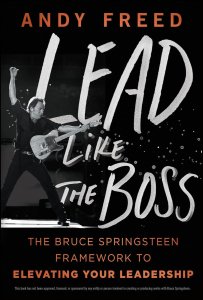
Today’s guest post is by Andy Freed, author of ‘Lead Like The Boss: The Bruce Springsteen Framework to Elevating Your Leadership’
Few skills matter more for leaders than communication. Not because communication is flashy or new, but because it is how leadership shows up most consistently. Long before strategy decks or org charts matter, people experience leadership through words, tone, timing, and follow-through.
Communication is how teams align around goals. It’s how momentum builds. It’s how people decide whether they trust what comes next.
And yet, many leaders don’t put enough intentional work into improving it.
That’s rarely about effort or care. Most leaders communicate constantly. Meetings, updates, presentations, one-on-ones. The volume is high. What’s missing is often intention. Communication becomes something we do automatically instead of something we prepare for deliberately.
As we just entered into 2026, improving communication doesn’t require new tools or better slides. It requires a shift in how leaders think about their responsibility when they speak.
For me, that shift starts with a simple discipline I return to again and again: Think, Feel, Do.
It’s not a formula or a script. It’s a way to slow down before communicating and be more deliberate about how you want your message to land.
Start with intention, not slides
Most leadership communication happens in meetings. Small groups. All-hands. Boardrooms. And more often than not, the first move is to open PowerPoint and start building slides.
I’ve done this myself. A meeting is coming up, so I open the last deck, do a “save as,” and start editing.
Technology makes this easy. That’s exactly why it can get in the way.
Slides make it possible to create content quickly without first thinking through what’s needed. But what’s needed at the start of any communication isn’t content. It’s clarity.
Before opening PowerPoint, leaders should pause and ask three questions. These questions form the backbone of the Think–Feel–Do discipline:
Think: What do I want people to understand when this is over? This isn’t about what you want to explain. It’s about what you want people to walk away believing. If they can’t clearly articulate what changed or why it matters, the message didn’t land.
Feel: How do I want this to land emotionally? People’s ability to hear a message is shaped by how they feel while receiving it. Stress and uncertainty narrow attention. Calm and trust expand it. Ignoring emotion doesn’t remove it. It just means it will shape the message without intention.
Do: What do I want people to do next? Every communication should lead somewhere. Something should be different when it ends. If people leave unsure of what’s expected, the message didn’t do its job.
Only after these questions are answered should slides or messaging take shape. At that point, the visuals support the intent instead of substituting for it.
Anchor to one clear message
As those Think, Feel, Do answers come into focus, they should point to a single central message. Every effective communication has one.
Without a clearly articulated central message, communication becomes unfocused and inconsistent. Leaders introduce nuance, updates, and variations that dilute what matters most. People lose their sense of direction and struggle to distinguish which actions count.
Leadership communication isn’t about novelty. It’s about clarity.
No one would sing along at a concert if the band changed the lyrics every time they played a song. Bruce Springsteen once said he knew he’d written a great pop song when he could hear the audience singing it back to him.
Leadership communication works the same way. When the message is clear and consistent, others begin to carry it forward. They repeat it. They reinforce it. They amplify it.
That’s not just being heard. That’s being followed.
Repeat more than feels necessary
Once isn’t enough to be heard.
Leaders often resist repetition. The desire to say something new pulls them away from their core message. Over time, this creates clutter. Slight variations. Competing signals. Reduced clarity.
The irony is that leaders tire of messages long before teams absorb them.
If something matters, it deserves repetition without apology. Repetition isn’t laziness. It’s how understanding is built and confidence takes hold.
Musicians rehearse. Athletes practice. Actors run lines. Leaders often wing it.
Rehearsal isn’t about sounding scripted. It’s about removing friction. It helps identify awkward phrasing, unclear transitions, and moments where the message loses momentum.
I’ve learned this firsthand. There are phrases I’m comfortable writing but avoid saying out loud because I know I’ll stumble over them. Rehearsal surfaces those issues before the message matters.
Closely related to rehearsal is sweating the details. Technical glitches happen, but if people can’t hear you, they aren’t listening. No rock band takes the stage without a sound check. Leaders shouldn’t either.
Preparation is a form of respect. For the audience. For the moment. For the message.
Bringing it together
Communication and leadership are inseparable. Improving how you communicate is one of the most practical ways to improve how you lead.
Think, Feel, Do isn’t a checklist. It’s a discipline. One that helps leaders slow down, prepare with intention, and take responsibility for how their words shape understanding, emotion, and action.
As leaders head into 2026, the opportunity isn’t to communicate more. It’s to communicate with greater care and clarity. That’s where trust is built. And that’s where leadership becomes felt, not just heard.
Did you enjoy this post? If so, I highly encourage you to take about 30 seconds to become a regular subscriber to this blog. It’s free, fun, practical, and only a few emails a week (I promise!). SIGN UP HERE to get the thoughtLEADERS blog conveniently delivered right to your inbox!
https://i0.wp.com/www.thoughtleadersllc.com/wp-content/uploads/2026/01/20260125-Office-Speech.jpg?fit=1920%2C1281&ssl=112811920Trevor Joneshttps://www.thoughtleadersllc.com/wp-content/uploads/2022/04/logo.pngTrevor Jones2026-01-26 08:02:132026-01-25 01:08:20Upping Your Communication Game for 2026
Learn about the participatory decision-making style and the situations when it’s most appropriate.
The second style of decision you can make is participatory. And this is where you’re going to make a decision with input from the people who are going to be impacted in that final call.
Now remember, participatory decisions are made when the decision is much bigger, there’s a lot more risk involved. So getting that additional information from more people is going to reduce that decision-making risk. Also, by getting that buy-in, you’re reducing execution risk because people have had an opportunity to give their input and have a say in the final call that’s made.
Now as far as that final call in participatory decision-making, there’s still that smaller decision making authority. It may be an individual or a smaller group. So that aspect of it can feel a little autocratic, but we’ve gotten input along the way. And those individuals are going to interact with each other as this decision is being made. So getting all the people in the room so they can hear each other’s perspectives is going to help you drive to a better decision.
Allow me to offer an example. Recently in my firm, we looked at raising prices on some of the services that we offer. Now this is a really big decision and it has a huge impact on the financials of my firm. So I couldn’t rush off and just make an autocratic decision without getting input from the other people I work with.
So we sat down, we had a conversation, we weighed the pros and cons. People had their say, they brought up things that I hadn’t thought of. And we highlighted some risks that we were going to have to mitigate along the way. Now, ultimately as the leader of the firm, I had to make that call. But I got the input from the people who are going to be involved in executing the decision so we get better execution on the back end.
So as you think about making decisions in a participatory environment, remember you should be using this style where the decisions are bigger, you have a little bit more time to make it because you need to gather more input along the way which takes time and takes meetings. But ultimately, that smaller decision-making body is going to make the call.
Want to learn more about decision-making strategies? How about taking an entire course on it? Go directly to the course and start learning decision-making strategies. The entire course is available at LinkedIn Learning. Enjoy!
Did you enjoy this post? If so, I highly encourage you to take about 30 seconds to become a regular subscriber to this blog. It’s free, fun, practical, and only a few emails a week (I promise!). SIGN UP HERE to get the thoughtLEADERS blog conveniently delivered right to your inbox!
https://i0.wp.com/www.thoughtleadersllc.com/wp-content/uploads/2026/01/20260114-5-People-Office-Meeting.jpg?fit=1920%2C1280&ssl=112801920Trevor Joneshttps://www.thoughtleadersllc.com/wp-content/uploads/2022/04/logo.pngTrevor Jones2026-01-14 06:32:132026-01-14 01:04:39When to Make Participatory Decisions
Learn about the autocratic decision-making style and the situations when it’s most appropriate.
The first style of decision-making is autocratic, and this is where decisions are made at the top. Buy-in is not seen as an important aspect of making this decision, and actually, it may be counterproductive to involve a lot of people in making the call.
Typically, in an environment where you’re making autocratic decisions, work activities and roles are very tightly structured, they’re monitored and well-controlled, and command and control is a very important aspect of making these types of decisions.
Now, performance on an autocratic decision is measured based on the individual’s execution of that call.
Allow me to offer an example:
At one point, I ran a call center organization and every once in a while, we’d get a pretty angry customer calling in.
Now, these were going to be small decisions. Should we offer a refund at that moment?
And there was very high urgency on making that call. It’s not like you can tell an upset customer, “Hey, hang on a couple minutes and I’ll get back to you when we actually have a decision.”
You need to make the call in that moment, so I empowered my managers to make those autocratic decisions because they were small, there was high urgency, and there was very low risk.
If they were wrong, it wasn’t a big deal, and in the broader scheme of things, having that speed and having that decision-making authority pushed down to the lowest level was a critical success factor.
So as you look at the decisions of yours that are more autocratic, make sure you’re focused on the speed of the decision, as well as the risk that you’re going to take.
Want to learn more about decision-making strategies? How about taking an entire course on it? Go directly to the course and start learning decision-making strategies. The entire course is available at LinkedIn Learning. Enjoy!
Did you enjoy this post? If so, I highly encourage you to take about 30 seconds to become a regular subscriber to this blog. It’s free, fun, practical, and only a few emails a week (I promise!). SIGN UP HERE to get the thoughtLEADERS blog conveniently delivered right to your inbox!
https://i0.wp.com/www.thoughtleadersllc.com/wp-content/uploads/2026/01/20260107-Three-Call-Center-Employees.jpg?fit=1920%2C1080&ssl=110801920Trevor Joneshttps://www.thoughtleadersllc.com/wp-content/uploads/2022/04/logo.pngTrevor Jones2026-01-07 06:32:142026-01-07 01:38:06When to Make Autocratic Decisions
Learn when to use each of the four decision-making styles.
When you make decisions, there are four decision-making styles that you can use. There’s an autocratic style, a participatory one, a democratic style, and a consensus-based decision making style.
Your choice of which of those four styles to use is driven by two things. First, the urgency of making the decision. From low urgency so you’ve got plenty of time to make the call, to high urgency, we need a decision right now. The second dimension to consider is the size or impact of the decision from small decisions that won’t have a large impact, to big decisions that are going to have a huge impact. So as you look at which style of decision-making to use, you need to consider both of these dimensions.
So for situations where you have low impact and they’re reasonably small decisions, but they get larger as urgency goes up, an autocratic decision-making style is the most appropriate.
For larger decisions where there’s higher urgency and you need to make a call soon but the impact is going to be big, you’re looking at a situation where you need to use a participatory decision-making style.
For situations where it’s a large decision but there’s no urgency around it, you’ve got plenty of time. You can be using a consensus based decision making style.
And last, for midsize decisions where there’s not a lot of urgency but you do need to make a decision and move on, a democratic style is the most appropriate.
As you go to select a decision-making style, just remember to consider the urgency of making the call and the size or impact of that decision. In future posts, I’ll go into much more depth in each of these four styles to give you a better sense of which one you should be using in various situations.
Want to learn more about decision-making strategies? How about taking an entire course on it? Go directly to the course and start learning decision-making strategies. The entire course is available at LinkedIn Learning. Enjoy!
Did you enjoy this post? If so, I highly encourage you to take about 30 seconds to become a regular subscriber to this blog. It’s free, fun, practical, and only a few emails a week (I promise!). SIGN UP HERE to get the thoughtLEADERS blog conveniently delivered right to your inbox!
https://i0.wp.com/www.thoughtleadersllc.com/wp-content/uploads/2025/12/20251217-Doors.jpg?fit=1920%2C1280&ssl=112801920Trevor Joneshttps://www.thoughtleadersllc.com/wp-content/uploads/2022/04/logo.pngTrevor Jones2025-12-17 06:30:322025-12-17 00:50:39Choosing a Decision-Making Style
Think through this set of five questions to clearly define the decision you’re trying to make.
The first step in the decision-making process is clearly defining the decision you’re going to make. There are some key questions you should be asking as you’re defining the decision.
First, what’s the desired outcome?
Is there a specific metric that you’re trying to drive?
What are the choices that we’re trying to make and what are the possible choices that we can choose from?
When do we have to decide?
Who is this decision going to affect?
If you don’t go through these steps of defining the decision, you’re going to have unclear objectives, and that may lead you to make a bad choice. If you don’t define all the possible alternatives, you might miss a great opportunity. And last, not being clear about timelines or who’s going to be involved is going to increase risk, it’ll cause confusion, and it’s going to frustrate people in the decision-making process.
Allow me to offer an example of when we clearly defined a decision to be made. In my corporate life, one of the organizations I ran had paper-based payments that we were getting from our business partners, and we wanted to move from paper to electronic. So we define the desired outcome, no more paper. We said, “The choice we’re trying to make is how to best make that shift for our business partners.” We said, “The possible choices are going paper, electronic or some hybrid.” We clearly define the timeline. We said, “We need to decide by the end of the month. And within six months, we need all the paper to go away.” And we thought through who is going to be impacted by the decision, our organization, our business partners, as well as ultimately, our customers. And by going through this step of clearly defining the decision, we were able to successfully make a decision upfront and execute it well on the back end.
So as you go to make your own decisions, think through this set of five questions and drive that clarity of the decision you’re trying to make.
Want to learn more about decision-making strategies? How about taking an entire course on it? Go directly to the course and start learning decision-making strategies. The entire course is available at LinkedIn Learning. Enjoy!
Did you enjoy this post? If so, I highly encourage you to take about 30 seconds to become a regular subscriber to this blog. It’s free, fun, practical, and only a few emails a week (I promise!). SIGN UP HERE to get the thoughtLEADERS blog conveniently delivered right to your inbox!
https://i0.wp.com/www.thoughtleadersllc.com/wp-content/uploads/2025/12/20251210-Question-Marks.jpg?fit=1920%2C960&ssl=19601920Trevor Joneshttps://www.thoughtleadersllc.com/wp-content/uploads/2022/04/logo.pngTrevor Jones2025-12-10 06:32:412025-12-10 02:53:425 Questions to Ask Before Making a Decision
There are 5 important steps to keep in mind when making a decision.
It’s important to realize that decision-making is actually a process. And it’s the process of selecting a choice from my range of possible options, with a goal of achieving a very specific objective. Now, contrast that with judgment. Judgment is the ability to form an opinion or reach a conclusion based on available information plus prior experience. So as you go to make a decision, there are some important principles to keep in mind.
Prepare
First, be clear about the objective. You need to understand what you’re optimizing for or trying to achieve as you make that particular decision.
Decide Who Gets to Decide
Second, decide who gets to decide and who doesn’t. Be clear about who’s going to be involved in the decision-making process. You need to define who to involve and how to involve them. Some people are going to provide input, other people will provide perspective on implementation, other people will actually make the decision, and having clarity of roles is critical for successful decision-making.
Gather Information
Next, you’ll need to reduce ambiguity and risk as much as is reasonable before making your decision. The way to do that is to gather information, but realize that gathering information takes time. And as you’re taking that time, new sources of uncertainty are going to emerge.
Decide and Communicate
Next, you’ll need to make your choice and make that choice known to the organization. Tell people you’ve made a decision, what the decision is, and why you made it.
Measure and Adjust
And then last, once you’ve made the decision, you need to evaluate and adjust based on new information.
So the decision-making cycle that you should think about following is first, prepare to make the decision, then you actually make the decision, communicate it to people in the organization, execute, which is put the decision into action, and measure and adjust accordingly.
Want to learn more about decision-making strategies? How about taking an entire course on it? Go directly to the course and start learning decision-making strategies. The entire course is available at LinkedIn Learning. Enjoy!
Did you enjoy this post? If so, I highly encourage you to take about 30 seconds to become a regular subscriber to this blog. It’s free, fun, practical, and only a few emails a week (I promise!). SIGN UP HERE to get the thoughtLEADERS blog conveniently delivered right to your inbox!
https://i0.wp.com/www.thoughtleadersllc.com/wp-content/uploads/2025/12/20251203-Number-5.jpg?fit=1920%2C1280&ssl=112801920Trevor Joneshttps://www.thoughtleadersllc.com/wp-content/uploads/2022/04/logo.pngTrevor Jones2025-12-03 06:30:142025-12-03 01:01:27The 5-Step Decision-Making Process