


Upping Your Communication Game for 2026

Leadership shows up through communication. Learn how the Think–Feel–Do discipline helps leaders communicate with clarity, trust, and intention in 2026.
Today’s guest post is by Andy Freed, author of ‘Lead Like The Boss: The Bruce Springsteen Framework to Elevating Your Leadership’
Few skills matter more for leaders than communication. Not because communication is flashy or new, but because it is how leadership shows up most consistently. Long before strategy decks or org charts matter, people experience leadership through words, tone, timing, and follow-through.
Communication is how teams align around goals. It’s how momentum builds. It’s how people decide whether they trust what comes next.
And yet, many leaders don’t put enough intentional work into improving it.
That’s rarely about effort or care. Most leaders communicate constantly. Meetings, updates, presentations, one-on-ones. The volume is high. What’s missing is often intention. Communication becomes something we do automatically instead of something we prepare for deliberately.
As we just entered into 2026, improving communication doesn’t require new tools or better slides. It requires a shift in how leaders think about their responsibility when they speak.
For me, that shift starts with a simple discipline I return to again and again: Think, Feel, Do.
It’s not a formula or a script. It’s a way to slow down before communicating and be more deliberate about how you want your message to land.
Start with intention, not slides
Most leadership communication happens in meetings. Small groups. All-hands. Boardrooms. And more often than not, the first move is to open PowerPoint and start building slides.
I’ve done this myself. A meeting is coming up, so I open the last deck, do a “save as,” and start editing.
Technology makes this easy. That’s exactly why it can get in the way.
Slides make it possible to create content quickly without first thinking through what’s needed. But what’s needed at the start of any communication isn’t content. It’s clarity.
Before opening PowerPoint, leaders should pause and ask three questions. These questions form the backbone of the Think–Feel–Do discipline:
Think: What do I want people to understand when this is over?
This isn’t about what you want to explain. It’s about what you want people to walk away believing. If they can’t clearly articulate what changed or why it matters, the message didn’t land.
Feel: How do I want this to land emotionally?
People’s ability to hear a message is shaped by how they feel while receiving it. Stress and uncertainty narrow attention. Calm and trust expand it. Ignoring emotion doesn’t remove it. It just means it will shape the message without intention.
Do: What do I want people to do next?
Every communication should lead somewhere. Something should be different when it ends. If people leave unsure of what’s expected, the message didn’t do its job.
Only after these questions are answered should slides or messaging take shape. At that point, the visuals support the intent instead of substituting for it.
Anchor to one clear message
As those Think, Feel, Do answers come into focus, they should point to a single central message. Every effective communication has one.
Without a clearly articulated central message, communication becomes unfocused and inconsistent. Leaders introduce nuance, updates, and variations that dilute what matters most. People lose their sense of direction and struggle to distinguish which actions count.
Leadership communication isn’t about novelty. It’s about clarity.
No one would sing along at a concert if the band changed the lyrics every time they played a song. Bruce Springsteen once said he knew he’d written a great pop song when he could hear the audience singing it back to him.
Leadership communication works the same way. When the message is clear and consistent, others begin to carry it forward. They repeat it. They reinforce it. They amplify it.
That’s not just being heard. That’s being followed.
Repeat more than feels necessary
Once isn’t enough to be heard.
Leaders often resist repetition. The desire to say something new pulls them away from their core message. Over time, this creates clutter. Slight variations. Competing signals. Reduced clarity.
The irony is that leaders tire of messages long before teams absorb them.
If something matters, it deserves repetition without apology. Repetition isn’t laziness. It’s how understanding is built and confidence takes hold.
Consistency creates stability. Novelty rarely does.
Rehearse and respect the moment
Musicians rehearse. Athletes practice. Actors run lines. Leaders often wing it.
Rehearsal isn’t about sounding scripted. It’s about removing friction. It helps identify awkward phrasing, unclear transitions, and moments where the message loses momentum.
I’ve learned this firsthand. There are phrases I’m comfortable writing but avoid saying out loud because I know I’ll stumble over them. Rehearsal surfaces those issues before the message matters.
Closely related to rehearsal is sweating the details. Technical glitches happen, but if people can’t hear you, they aren’t listening. No rock band takes the stage without a sound check. Leaders shouldn’t either.
Preparation is a form of respect. For the audience. For the moment. For the message.
Bringing it together
Communication and leadership are inseparable. Improving how you communicate is one of the most practical ways to improve how you lead.
Think, Feel, Do isn’t a checklist. It’s a discipline. One that helps leaders slow down, prepare with intention, and take responsibility for how their words shape understanding, emotion, and action.
As leaders head into 2026, the opportunity isn’t to communicate more. It’s to communicate with greater care and clarity. That’s where trust is built. And that’s where leadership becomes felt, not just heard.
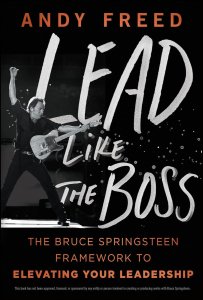 Andy Freed is the Chairman of Virtual, Inc and has more than 30 years of experience leading organizations through growth and transformation. He is the author of Lead Like The Boss: The Bruce Springsteen Framework to Elevating Your Leadership. For more information, please visit, https://wwww.andyfreed.com.
Did you enjoy this post? If so, I highly encourage you to take about 30 seconds to become a regular subscriber to this blog. It’s free, fun, practical, and only a few emails a week (I promise!). SIGN UP HERE to get the thoughtLEADERS blog conveniently delivered right to your inbox!


Leave a Reply
Want to join the discussion?Feel free to contribute!