Unlocking Productivity: The Power of Effective Conversations in Meetings

Meetings shouldn’t be obligations; they should be opportunities for growth and collective progress. By embracing the right conversations, you can turn your meetings into transformative experiences.
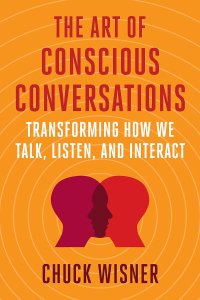
Today’s guest post is by Chuck Wisner, author of The Art of Conscious Conversations: Transforming How We Talk, Listen, and Interact (CLICK HERE to get your copy).
Whether you love them or loathe them, meetings are a fundamental part of the modern workplace. They play a crucial role in driving collaboration, decision-making, and progress within organizations. Far too often, though, people believe that meetings are a waste of time, and they often leave participants feeling drained and unproductive.
In this article, we unravel the transformative potential of conversations, the unsung heroes of successful meetings, capable of turning routine gatherings into dynamic, meaningful, and effective forums.
Elevating Your Meetings with Transformative Conversations
Aristotle once noted, “Anybody can become angry—that is easy, but to be angry with the right person and to the right degree and at the right time and for the right purpose, and in the right way—that is not within everybody’s power and is not easy.” Similarly, anyone can convene a meeting, but orchestrating one with the right people, at the right time, for the right purpose, and driven by the right conversations is an art well worth mastering.
Conversations have the potential to transmute ineffective meetings into efficient decision-making gatherings. The success of these conversations depends on your organization’s culture, which is defined by the conversations your team engages in.
The Four Conversations
Meetings serve three fundamental purposes: information sharing, information processing, and decision making. These three pillars are supported by four distinct types of conversations, which constitute a new framework for meetings. Let’s delve into each of these conversations.
- Storytelling Conversations
Participants bring their unique stories to every meeting. These narratives encompass what individuals know, what they’ve heard, what they’ve researched, or even what they assume. One person might arrive at a meeting confident a project’s progress is on track, while another person might be livid about the scarcity of resources.
These stories aren’t just information; they’re the essence of personal experiences and perspectives, which seep into our presentation of information. While these narratives are life-affirming, they can also be loaded with ego energy, leading to patterns of defensiveness and unproductive interactions.
The antidote is to acknowledge that your story, as convincing as it may seem, isn’t the ultimate truth. It’s only one of many perspectives. We can all introspect and analyze our thinking and emotions before entering a meeting, and when we do so, we must ask ourselves what stories, feelings, and fears we’re bringing with us. Are we entering the meeting with an unwavering determination to win arguments, or are we open and humble enough to reveal our thinking and to consider alternative viewpoints?
Thinking about our thinking is the initial step toward fostering productive storytelling conversations. It encourages us to expose our thoughts, leading to open, constructive interactions. Our demeanor and approach, whether in virtual or physical meetings, also significantly influence how others perceive and engage with us.
- Collaborative Conversations
Meetings often become mired in the sharing of objective data—the exchange of information, report summaries, and metric reviews.
Collaborative conversations are the collective sharing of not only objective information but also personal perspectives. To be successful, they demand a shift from an “I”-centric storytelling mindset to a “we”-focused approach. When our ego staunchly defends our position, we tend to advocate for it with a closed fist, leading to conflicts and standstills. Conversely, if we shift to a “we”-focused conversation, we can share our thoughts and positions with humility, free from defensiveness, and we can explore others’ perspectives openly.
This transition from a close-fisted to an open-handed conversational style encourages listening, learning, and wiser decision-making. It’s a transformational shift that sets the stage for constructive, productive dialogues.
Stagnant meetings can be reinvigorated when a leader or facilitator introduces thought-provoking subjects that encourage participants to voice their opinions, to respectfully challenge one another, and to explore diverse viewpoints. Robust collaborative conversations give rise to creative conversations.
- Creative Conversations
Brainstorming sessions often suffer from premature judgments that stifle innovation. Comments like, “That will never work!” or “The boss will never go for that” often stifle creative ideas. Creative conversations, on the other hand, create a safe space, where participants can bravely put forth their ideas without fear of judgment.
In a successful creative conversation, there’s ample room for ideas to percolate and emerge for consideration. Tools such as drawings, whiteboards, pictures, and out-of-the-box thinking find their fullest expression in an environment that nurtures collaboration, where open minds and open hearts synchronize.
- Commitment Conversations
Commitment conversations are the final piece of the conversation puzzle. This is where action plans take shape and decisions are made. Business operations thrive on commitments made within organizations, but commitments are often made hastily and without careful consideration.
In the quest to make timely decisions, leaders sometimes rush into this conversation, skipping essential collaborative and creative conversations. This conversational bypass leads to hasty, poorly informed decisions.
Commitment conversations require careful attention to metrics for success, clear deadlines and checkpoints, accountability, and transparent decision-making.
This conversation is often thought of as the purpose of a meeting, but it should be the outcome of a conscious process of considering multiple perspectives and possibilities. By purposefully engaging in collaborative and creative conversations, unforeseen solutions are often the result.
The “Who” Factor
Many meetings suffer from “attendee bloat.” Participants often feel undervalued if they aren’t included, and addressing this issue requires explicit communication about the nature and expected outcomes of meetings.
Determining who should participate in a meeting hinges on its purpose and objectives. Information sharing, a form of storytelling, often requires a broader audience. But information processing, a form of collaborative and creative conversation, are more efficient with smaller, specialized groups. Recognizing this distinction and aligning participants accordingly is vital for productive collaborations.
Meetings as Catalysts for Success
Meetings are your organization’s pulse. Done correctly, they foster collaboration, innovation, and open-mindedness, leading to more effective meetings and, ultimately, to greater success.
Meetings shouldn’t be obligations; they should be opportunities for growth and collective progress. By embracing the right conversations, you can turn your meetings into transformative experiences.
 Chuck Wisner is president of Wisner Consulting. His client list includes companies such as Google, Rivian, Apple, Tesla, Harvard Business School, Ford, and Chrysler. Wisner was a senior affiliated mediator with the Harvard Mediation Program and was among the first to be certified through the Mastering the Art of Professional Coaching program at the Newfield Institute. He was also a specialist in organizational learning and leadership as an affiliate with MIT’s Center for Organizational Learning. Check out his website @ chuckwisner.com and get social with Chuck on IG, FaceBook, Linktree. Linkedin, Twitter, and Tiktok!
Did you enjoy this post? If so, I highly encourage you to take about 30 seconds to become a regular subscriber to this blog. It’s free, fun, practical, and only a few emails a week (I promise!). SIGN UP HERE to get the thoughtLEADERS blog conveniently delivered right to your inbox!