


The Question Every CEO Should Ask Before a Global Hire

Before a global hire, look beyond experience. Three practical checks help CEOs assess whether an executive can adapt when familiar approaches stop working well.
Today’s post is by Steve McKinney, coauthor of ‘Global Mindset: A Guide for Cross-Cultural Leadership’ with Bryan McKinney.
Consider a manufacturing executive who had successfully led a plant with 5,000 employees before taking on a much smaller team in another country. On paper, the move looked straightforward. Why would someone who had managed that much complexity struggle with a smaller team?
But the executive’s direct questions produced polite agreement rather than candid discussion. Decisions announced in meetings stalled afterward. The executive pushed harder, interpreting the delay as an execution problem. What he had misread was how people raised concerns and built commitment.
That executive was me. The experience shaped a question I have returned to throughout two decades of building global teams and evaluating senior leaders across markets: What evidence tells us this person can adapt when the conditions behind their previous success change?
That question belongs alongside every discussion of an executive’s track record. Past results matter. But they tell us what someone achieved in a particular setting, not automatically how that person will perform in the next one.
Before a major acquisition, a leadership team examines the assumptions behind the numbers. An executive appointment deserves the same discipline. Beyond asking whether a candidate delivered growth or improved operations, we should ask what made those results possible. Which relationships, decision rights, resources, and working habits supported that success? Which will be different in the new role?
This is where I find Proactive Agility useful: anticipating changes in the operating environment and adjusting before they force costly correction. In hiring, the task is not to ask whether a candidate considers themselves adaptable. It is to look for evidence that they noticed a mismatch, questioned an assumption, and changed their approach.
I call these three checks the Proactive Agility Screen. They complement a rigorous assessment by examining behavior that a list of achievements can leave unexplored.
First comes the ambiguity test. Ask for two specific examples of situations in which authority, process, or expectations were unclear or contested. These should involve more than a difficult target or a demanding deadline. Look for situations in which the candidate had to work out how to proceed without a settled plan.
Then stay with each example. What did the candidate initially assume? Which signal challenged that assumption? What changed as a result? Listen to how they created clarity for others, not just how they personally coped. If every answer describes executing a plan someone else had defined, ask again for evidence of judgment under uncertainty.
The point is not to reward improvisation for its own sake. It is to understand how the person learns and helps a team move forward when the familiar approach no longer fits.
Second, reframe the reference conversation. Asking what a candidate accomplished is necessary, but it should not end the discussion. Ask the reference to describe a moment when a plan failed, or the candidate misread a situation. What was the candidate’s first reaction? What did they do next?
Did they dismiss the concern, investigate it, or revise their approach? Speed alone is not the test; a thoughtful adjustment matters more than a quick reversal. If a reference can describe results but cannot recall a course correction, seek another perspective before drawing a conclusion. That person may simply not have witnessed the relevant situation.
Third, put an insider in the room. Before the final decision, include someone who has personally operated in the destination market or function. Give that person explicit permission to flag a mismatch the rest of the panel might miss. Their task is not merely to endorse the shortlist.
Ask where this executive’s communication style might create misunderstanding and which relationships they would need to build. What support would help them establish credibility? Use those insights to guide further inquiry, not to make assumptions about how everyone in a country behaves. If no panel member has relevant operating experience, acknowledge that gap rather than assuming headquarters’ perspective is sufficient.
This is not a search for cultural sameness. A leader may need to challenge established habits. The distinction is between someone who understands the context well enough to change it thoughtfully and someone who assumes that previous success makes understanding it unnecessary.
Selection is only part of the responsibility. Even an adaptable executive needs clear expectations, candid feedback, and access to people who can explain an unfamiliar environment. The assessment should help shape that support, not create an expectation that the right hire will need none.
My experience leading 5,000 people was real. So was my difficulty leading a much smaller team in a different setting. When decisions stalled, pushing harder did not address what I had missed: polite agreement was not the same as commitment. The lesson was not to discard my experience, but to question how I was applying it.
At your next hiring committee meeting, look beyond the scale of a candidate’s previous responsibilities. Ask what they noticed when their usual approach stopped working, what they changed, and who can confirm it. I know why those questions matter. I was the executive whose track record did not tell the whole story.
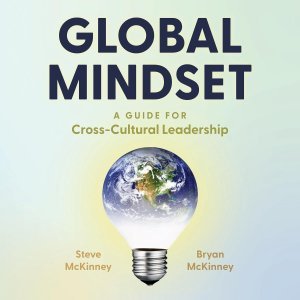 Steve McKinney is the founder of McKinney Consulting, a Seoul-based executive search and leadership coaching firm. He co-authored Global Mindset: A Guide for Cross-Cultural Leadership with Bryan McKinney.
Did you enjoy this post? If so, I highly encourage you to take about 30 seconds to become a regular subscriber to this blog. It’s free, fun, practical, and only a few emails a week (I promise!). SIGN UP HERE to get the thoughtLEADERS blog conveniently delivered right to your inbox!


Leave a Reply
Want to join the discussion?Feel free to contribute!