


The Power of the Mind in Decision Making

The inner voice, or what is more commonly referred to as “intuition,” is a powerful tool in the decision-making process. Opportunities open when the guidance of the inner voice is used because it is a reflection and compilation of the knowledge, experience, and conclusions thus far in a career and/or lifetime.
Today’s post is by Gabrielle V. Taylor, author of Legacy of Wisdom (CLICK HERE to get your copy).
Imagine you lead a $1.5 billion company in the United States that sells financial products and services. The firm offers everything from mutual funds, derivatives and money market instruments to financial management and insurance. There is an opportunity to expand into virtual currency, the most widely known type being Bitcoin. The Blockchain technology, which is the encryption method used for many types of virtual currencies, has come a long way; but there is a trail of investors that have fallen victim to hackers who have targeted Bitcoin-based accounts and investments. Do you take advantage of this opportunity? What does your inner voice tell you?
At first, you ponder the expansion into virtual currency. Your firm might be able to position itself on the cutting edge of the virtual currency revolution that is in the nascent stage in the U.S. but further along in other countries such as China, United Kingdom, and Germany. Early entry into this market by a U.S. firm may facilitate new innovations that prepare you to take advantage of opportunities for growth.
Then, your inner voice no longer throws caution to the wind and gives you doubts about the viability of this opportunity. There is considerable risk and many financial firms are deferring to the Central Banks to explore this market first. Why should you risk losing share value and possibly customers through increased liability by participating in the complicated world of virtual currency that is still prey for hackers? The situation is riddled with pros and cons but your inner voice plays a critical role as a trusted advisor that no one can see. For many leaders, the inner voice guides us when sorting through opportunities in order to make decisions.
Have you ever heard your inner voice telling you what to do and then you don’t listen to it? In that moment of realization that you could have, should have, would have, you wince as you struggle with the thought of how to double back, change direction, and reverse in an effort to create the desired outcome. After all the inner voice is not fool-proof. Why trust it?
When leaders use their inner voice as a tool in decision-making, they understand how the risk associated with listening to that inner voice correlates with the rate of successful outcomes. Does listening to the inner voice always result in desirable outcomes? No, it does not. But, does listening to the inner voice result in an increased rate of success overall? Yes, it does.
In order to understand the inner voice, I refer back to a personal relationship and how it shaped my understanding of the inner voice that functions as a guide to many of life’s situations. Over the course of many years, I had several conversations with my grandmother as it related to decision-making in business as well as my personal life and the use of the inner voice, or what she referred to as “intuition.”
My grandma and I both believed and trusted in the power of intuition. My grandmother was so intuitive that she almost seemed psychic, but neither of us believed that intuition was some sort of supernatural sixth sense. Rather, we viewed it as the brain’s ability to subconsciously process past experience, remembered knowledge, current sensory input, and imaginings about the future with a greater capability and at higher speeds than we can consciously realize. To trust intuition is to trust one’s own mind.
Wherever our life’s path takes us, we run into key decisions that require an active response to move in a positive direction. Decision-making requires an individual to trust one’s own mind. Opportunities open when the guidance of the inner voice plays a role because the inner voice is a reflection and compilation of the knowledge, experience, and conclusions thus far in a career or a lifetime.
The inner voice is customized by an individual’s aspirations that incubate in one’s mind perhaps in the form of unspoken dreams, true ambitions and ultimate goals. Early on, the use of one’s inner voice is a measured process as one learns to trust it. The slow adoption of guidance from within is held back by the outcomes of a whole set of other experiences and knowledge that have taught us caution. This sense of caution usually results from some of our decisions involving our inner voice that failed. We automatically discount the failures but they are important in building the inner voice that can serve as a trusted resource. However, failures are usually assigned little value in what they do for us. So, typically an inner voice who has supported a failed decision is not trusted as easily the next time. However, the inner voice actually takes the learnings from failure and incorporates them into the knowledge and experience base as it further develops itself into a trusted resource. Failure being a positive force in the development of the inner voice may sound counter-intuitive, but it is not as the value of failure is folded into its development.
Most often when I speak of the inner voice, it is in relation to the overall development of personal wisdom. Wisdom is what we use to make decisions and it is conveyed to us through our inner voice. Whether we are world leaders, leaders of the workplace or household, or simply leaders of our own lives, wisdom communicated through our inner voice helps us make better decisions so we can take more effective action.
When I reflect on my grandmother’s actions throughout her life, she would have put all of this more succinctly. Her advice to leaders would have been: “Use your mind. Know what you’re doing. Do the right thing.” And I would add, most importantly, understand the role your inner voice plays as a strategic tool unique to every leader.
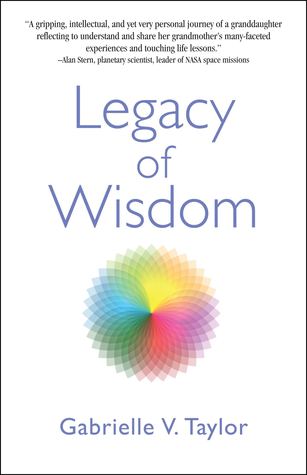 – Gabrielle V. Taylor leads a strategic management consultancy based in Littleton, Colorado and is author of Legacy of Wisdom (CLICK HERE to get your copy), a book about passing memories and wisdom from one generation to the next. She holds an MBA in finance and marketing from the University of Chicago and a BA in economics from the School of Liberal Arts at the University of Illinois. She resides with her husband and two daughters in Columbine Valley, Colorado. For more information please visit LegacyOfWisdom.zone.
Did you enjoy this post? If so, I highly encourage you to take about 30 seconds to become a regular subscriber to this blog. It’s free, fun, practical, and only a few emails a week (I promise!). SIGN UP HERE to get the thoughtLEADERS blog conveniently delivered right to your inbox!
Leave a Reply
Want to join the discussion?Feel free to contribute!