


Change Starts At The Top

Leadership cannot be do as I say, leadership must also be do as I do, show your team how you want to operate.
Today’s post is by Pat McManamon, author of The Intentional Sales Manager (CLICK HERE to get your copy).
As a sales leader, you have to admit it’s been an interesting year.
You’ve been faced with business challenges you never even imagined you would encounter. Guess what? Your sales people are in the same situation! Your decisions, like theirs, are going to be crucial. What criteria will you use to make them?
Business is still being conducted; prospects are reaching out; your competition is on the phones and on the streets; customers are buying. Many companies I’ve spoken to had a record month in March despite the disruption of a nationwide shutdown. All signs point to a strong recovery in the near future for those who are prepared. But we must be prepared to make constructive changes, and we must accept that the most important change starts with us!
So as leaders, what things do we have to be ready to change? To answer this question, we must be prepared to make a personal inventory of our own mindset/outlook, activities/behaviors, and skills/techniques. If our outlook about what is possible and what the future will bring is not optimistic, our people will sense that, and will hide behind excuses and procrastination. We must accept the cards we have been dealt and avoid the trap of wasting our energy on wanting different cards. Our people must do the same.
The routines and habits we had prior to the work disruption we all experienced must be reviewed and updated. Communication, for example, may need to be more frequent, and we will probably need to update what goes into being a good resource for our people. We must also be prepared to help people think strategically about their role, as many of them will revert to old habits in the absence of a new direction.
The business landscape moving forward will require sharpened skills related to organization, negotiation, and communication. Those skills won’t come naturally. They will require intentional actions like self-study courses, a search for industry best practices, and skills training. If your organization begins to make these adjustments, your role is then to coach your people through the planning, execution, and lessons learned. This process builds upon itself and ultimately makes your people self-sufficient professionals.
When you think about the characteristics of a true professional, what comes to mind? For me, the list looks like this: continuous improvement, drive, focus, a willingness to lead by example, commitment to practice and execute new skills, and optimism. Are these the attributes of members of your team? Would you like them to be attributes of your whole team? I thought so.
Okay, next question. Warning: This one might sting a little bit: are all of these your attributes as a leader? Be honest!
Here’s the point. A commitment to improve your skills as a leader is the very best way to ensure that your team and your organization thrives in the current, unfamiliar selling environment. Make that commitment. Don’t fall into the trap of exuding a persona of “I’ve arrived” and/or “Do as I say, not as I do.” These are not the hallmarks of the true professional. Is it realistic to think that our people will accept or implement our coaching and guidance if they don’t see us as professional leaders?
The coach’s role in any field of endeavor is to decide on the appropriate strategy, ensure that the team understands and embraces the strategy, and prepare the team to be successful with skills, practice, and resources. In the context of business, a sales leader, in the role of coach, must strive to make his or her team proficient and highly functional as independent contributors. If leaders constantly find themselves taking corrective measures or needing to intercede in a given situation to “save the day,” they need to recognize that it is they who have the most work to do. A leader’s job is to develop people. If the job is not seen from that perspective, the leader is only creating an unhealthy codependent relationship. Teams and organizations that allow this state of affairs to persist will have limited potential for growth.
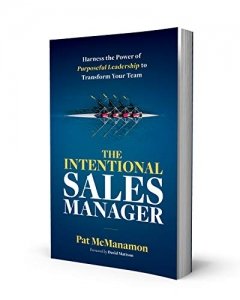
Pat McManamon is a certified trainer for Sandler Training in North Florida and author of The Intentional Sales Manager: Harness The Power of Purposeful Leadership to Transform Your Team (CLICK HERE to get your copy). Having been with the Sandler network for over 20 years, he has significant experience with helping organizations hire, retain and develop world-class sales professionals.
Did you enjoy this post? If so, I highly encourage you to take about 30 seconds to become a regular subscriber to this blog. It’s free, fun, practical, and only a few emails a week (I promise!). SIGN UP HERE to get the thoughtLEADERS blog conveniently delivered right to your inbox!


Leave a Reply
Want to join the discussion?Feel free to contribute!