


16 Questions That Keep Your Leadership Philosophy from Sucking
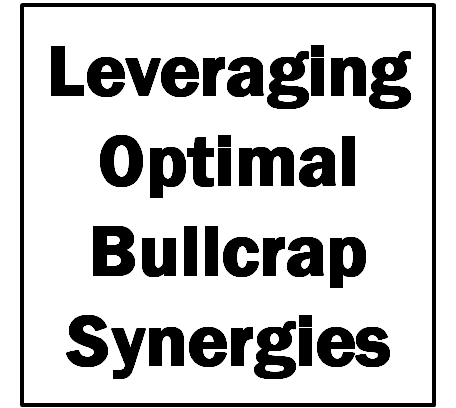 Buzzwords sound great but they have no place in your leadership philosophy. If you’re looking to be authentic and build trust with your team, tell your personal story in a way that conveys the type of leader you truly are.
Today’s post is by Paul Smith, thoughtLEADERS instructor and bestselling author of Lead With a Story. It contains the summary of a discussion between Paul and Mike Figliuolo. The audio version of the interview is available for replay at the end of this post.
Anyone who’s spent any time in the corporate world has been in this situation. Somebody new joins your department — could be a peer, a new boss, or even a new direct report of yours. And you’re having one of those first get-to-know-you meetings with them.
Then, at some point, they pull out a sheet of paper and hand it to you. At the top, it says, “My leadership philosophy” or “My leadership values” or something like that. They suggest you read it after the meeting to get to know them better and what it will be like to work with them.
It’s a great concept. I’ve always been impressed with people forward thinking enough to have their own personal leadership philosophy. But I’ve rarely been impressed with what that leadership philosophy is.
It’s usually a bunch of vague, hackneyed platitudes and meaningless buzzwords, like “think strategically” and “manage decisively” and “win as a team.” In his book,  One Piece of Paper: The Simple Approach to Powerful, Personal, Leadership, thoughtLEADERS’ very own Mike Figliuolo gives the following as an example of the kind of mind-numbing leadership philosophy that drove him to come up with a better way:
“My leadership philosophy is to optimally leverage the passions of my people such that at the end of the day we maximize employee engagement to get them to think outside the box and synergistically drive value-added activities in a profit-maximizing way that is a win-win for our people, our shareholders, and our customers.”
As Mike points out, even if that did make sense, those are the kind of things anyone could agree with, and therefore, they don’t tell you a single unique thing about that person as an individual. You could take their name off the top and add just about anyone else’s name and it would make just as much, or little, sense. And that’s probably why I never bothered to create one myself. I assumed it would be just as worthless as all the others I’ve seen.
But Mike has a very different (and much more effective) method of coming up with that list of leadership beliefs — what he calls leadership maxims. And he’s my guest on this week’s podcast.
Mike’s method to develop your own leadership maxims includes four parts, which capture your philosophy in the areas of 1) leading yourself, 2) leading the thinking, 3) leading your people, and 4) leading a balanced life. It starts with 16 questions you have to ask yourself and seriously consider. How you answer those questions will determine your leadership maxims.
But instead of a list of common buzzwords, you’ll come up with essentially a list of words or phrases that have deep meaning for you, personally. They may not mean anything to anyone else, yet. But they mean the world to you.
For example, in the podcast Mike shares one of his maxims, which is simply the acronym, STEMI. Most people have no idea what it means. It stands for “ST-Segment Elevated Myocardial Infarction” — in other words, a heart attack. And Mike’s had two of them. That acronym now lives in Mike’s personal leadership philosophy in the section on leading a balanced life.
And like all leadership maxims, it’s a tool to help him make better decisions. When he’s working late on a Friday night and thinking about putting in two more hours, or he’s in a hurry at O’hare airport and thinking about just grabbing a cheeseburger, or feeling too tired or lazy to go to the gym, he thinks about his leadership maxim: STEMI. And it helps him make a better decision.
But to really understand and appreciate all that about Mike, you really have to hear him tell you the story about his first heart attack. And that’s where having real personal leadership maxims shine.
Instead of a list of common buzzwords that everyone thinks they understand (but really don’t), your leadership maxims are a list of things that only you really understand. And it’s obvious that only you will understand them. As a result, you can’t just hand your piece of paper to the new person in your office and say “Here, read this.” You hand it to them and say, “Let’s talk about these.”
Then, one at a time, perhaps over the course of several weeks as time permits, you share the stories that led you to each of your maxims. So, instead of a list of buzzwords, your maxims are really a list of stories — very personal stories. And after sharing those stories with your new colleague, they’ll truly know you better, and have a much better understanding of what it will be like to work with you.
16 Questions to a More Powerful, Personal Leadership Philosophy
Leading yourself:
1. Why do you get out of bed every day?
2. How will you shape your future?
3. What guidelines do you live by?
4. When you fall, how do you pick yourself up?
5. How do you hold yourself accountable?
Leading the thinking:
6. What standards do you hold your team to?
7. Where are you taking your people?
8. How will you foresee the future?
9. After all that thinking, how will you drive action?
Leading your people:
10. What is your natural style?
11. How will you remember to treat your team members as individuals?
12. How will you stay connected to their reality?
13. How will you commit to their growth?
Leading a balanced life:
14. How will you define your boundaries?
15. How will you keep things in perspective?
16. What are you passionate about?
Click the play button above to hear the full interview.
If you’re interested in a live presentation on Mike’s method, along with a dozen other inspiring and practical leadership keynotes, join us at Executive Insight 16 at the Waldorf Astoria in NYC on November 10-11. CLICK HERE for the full agenda, bios on speakers, and registration information.
Mike is Managing Director of the executive training firm, thoughtLEADERS, LLC. You can learn more about his book and approach to developing your own leadership maxims at www.onepieceofpaper.com. Or to learn more about our training class on the same topic, visit here.
 – Paul Smith is a former director and 20-year veteran of the Procter & Gamble Company, and author of Lead with a Story: A Guide to Crafting Business Narratives that Captivate, Convince, and Inspire and his most recent book Parenting With a Story (CLICK HERE to get your copy). Paul is also the primary architect of a thoughtLEADERS course on Influencing through Storytelling and loves teaching every minute of it.
Did you enjoy this post? If so, I highly encourage you to take about 30 seconds to become a regular subscriber to this blog. It’s free, fun, practical, and only a few emails a week (I promise!). SIGN UP HERE to get the thoughtLEADERS blog conveniently delivered right to your inbox!
Excellent advice from Mike. I read the book, wrote my maxims, and shared them with the team I took over a few months ago. That document coupled with a personal mission statement set a very positive tone because they know who I am, who I aspire to be and how I lead. Read the book, write the maxims!