


The Reach – Why Smart Executives Make Stupid Choices

Today’s guest post is by Brian Gast, author of The Business of Wanting More: Why Some Executives Move from Success to Fulfillment and Others Don’t.
My account value was 20% of what it was just a week earlier. All I wanted was a little extra passive income and now look at the mess I’m in. Okay, I’ll admit it. I wanted the 20% annual return they had promised me. Maybe that was asking too much. Maybe I was reaching a bit.
The news began to break when, at ten o’clock on a Wednesday morning, I called to talk to my broker. I immediately knew something was wrong when a polite but constricted female voice said, “He’s not in at the moment.” I’m thinking, “It’s close to the peak of the trading day for commodities. Jack’s always in. How about a little bit more information please?” She says she’s not sure when he’ll be back. It’s not long before I’m talking to an analyst with the Commodities and Futures Trading Commission (CFTC). He explains that the CFTC has shut down the operations of the trading firm with which I had been doing business for the last year.
It turns out the CFTC didn’t like the activities of one division of the firm and shut the whole thing down; at a very bad time for the fund in which I was invested. Another well-established commodities firm bites the dust.
The CTFC analyst asked, “Where should we send your check?” I was silent, still processing the 80% loss. My feeling in that moment was familiar—the hangover of a risky financial bet gone bad.
The Executive Development School of Hard Knocks
I made a lot of money investing in the stock market over a fifteen year period beginning at age twenty-one. Then, in my mid-thirties, I began making big bets. Never in Vegas mind you. That was too crass. I had to disguise my gambling by calling it investing and making it appear skill-based and sophisticated. Two bets blew up big and I was in my mid-forties when the commodities bet turned against me; this was getting old.
I called my executive coach and said, “I’m right in the thick of a very painful situation. It’s a pattern and I want it to stop.”
There are executives who play by the rules and avoid short cuts through their twenties and thirties and then, in their forties or fifties, they begin to reach. The reaching takes different forms. For some, it’s a one-time act, for others it becomes an addiction. For me it was making financial bets that involved too high a percentage of my net worth. For you, it may be investing in an area you know nothing about or with a person you know nothing about. It could be spending too much money. Maybe it comes in the form of taking a sexy job with prestige, big compensation and comfortable or unique trappings like access to a plane, but one that requires you to compromise your values. Some reach across ethical or legal boundaries. Others reach outside their marriage.
If you haven’t reached I know you’ve thought about it. You may be denying your reach. Or maybe you’re just young. You’re constantly presented choices and the temptation to reach will get bigger before it gets smaller. This kind of reaching is something you might later regret for a long time.
Developing Your Inner Executive Coach
My coach helped me identify my pattern of reaching. For me, I seemed drawn to self-sabotage. Things would be going just fine and seemingly overnight I’d get an urge to goose my investment returns, and I would then put this enormous faith in some new scheme. I’d convince my wife with iron-clad reasoning. I’d make the bet and then, as things fell apart, feel like a victim and idiot.
This list of red flags can help you notice your blind spot. You may be about to reach if you are:
1. In a hurry and not taking time to reflect or sleep on the decision.
2. Obsessing that you “have to have it” or think this is a once-in-a-lifetime opportunity.
3. Making the decision without consulting peers and experts; your spouse doesn’t count.
4. Believing you’re justified in doing it. Your rationale is air-tight and you’re not short of supporting arguments about why this is right or why you deserve this.
5. Comparing yourself to others and think you need to catch up or keep up.
6. Outside your area of expertise, experience or knowledge.
7. Dealing with someone you don’t know.
If any of these red flags apply to your situation it’s time to get honest with yourself. A core, universal need is not being met. Tragically, your reach strategy will not meet this need. In fact, it will most likely make matters worse. If you’re reaching, get reflective and ask yourself, “What’s missing in my life?”
Here is a partial list of core unmet needs that drive the urge to reach:
– Acceptance
– Connection
– Purpose
– Service
– Intimacy
– Making a difference
– Affirmation
– Being responsible or providing for others
– Creative expression
Everything you Really Need is Always within Reach
These and other unmet needs represent cavernous holes inside us that we try to fill with experiences, money, titles, and stuff. The bottom line is there is no shortcut to fulfillment. The road to happiness takes you right through the heart of these unmet needs. Internal needs that once you address (yes, this can take some work) make you feel full and grounded and able to make conscious choices that create a life you won’t regret.
If you have reached, it may be time to give yourself some empathy. To understand what it was you were hungry for. Most of us are need illiterate so we don’t even know something is driving our choice. Healing from a reach gone bad starts with radical self-acceptance.
So what’s really missing in your life? Once you identify what’s driving you, it gets a lot easier (and cheaper) to become satisfied. What’s most important to us is available right now, no reaching necessary.
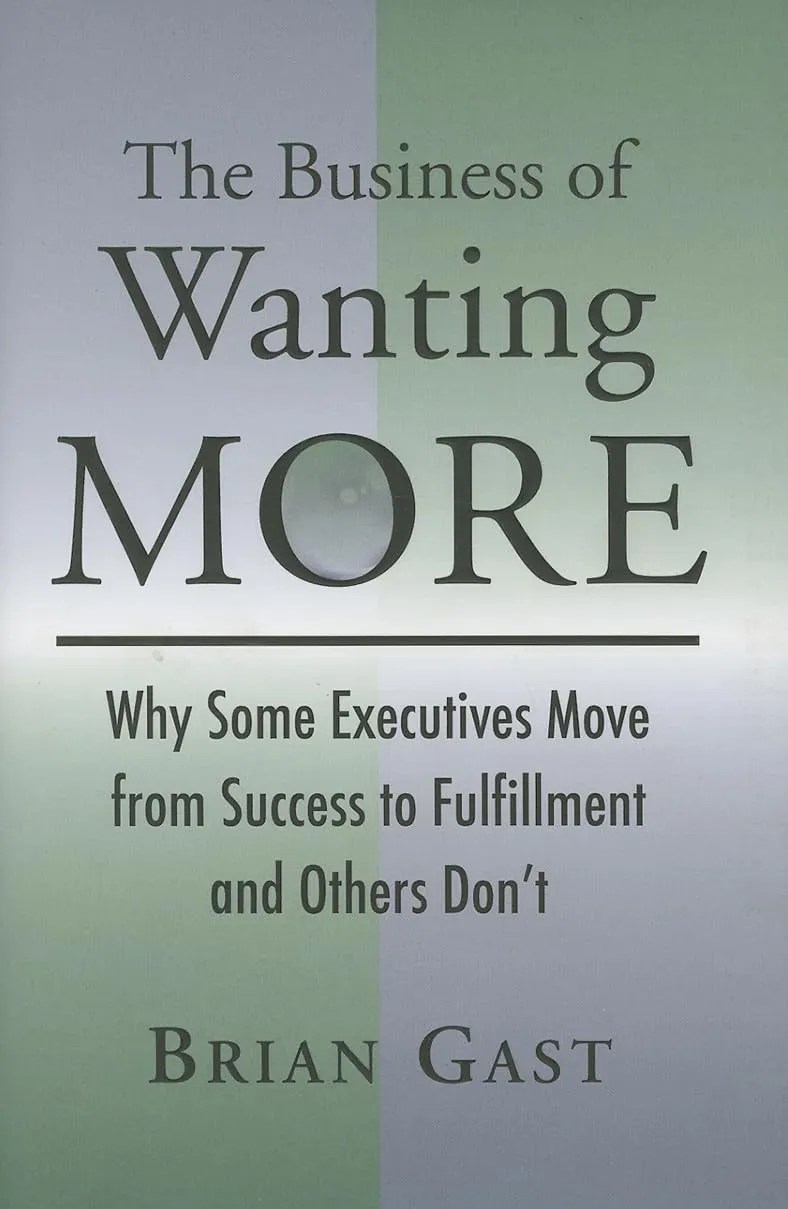 Brian Gast is an executive coach, top team alignment expert, author and speaker. He is the author of The Business of Wanting More: Why Some Executives Move from Success to Fulfillment and Others Don’t (CLICK HERE to get your copy now).


Leave a Reply
Want to join the discussion?Feel free to contribute!