


The Shocking Trait That Undermines Your Leadership Credibility

Credibility is the foundation of effective leadership.
Today’s post is by Alain Hunkins, author of Cracking the Leadership Code (CLICK HERE to get your copy).
Clint is the co-founder of a software company that’s experienced rapid growth over the past three years. He’s smart, outgoing, and great in front of customers. In fact, Clint is the sales team’s go-to to close big accounts. The sales team has nicknamed him Midas, because everything he touches turns to gold. On top of all that, Clint’s a genuinely nice guy.
However, for all of his strengths, Clint has a tragic flaw. He’s consistently late for meetings. Ten, twenty, thirty minutes late is par for the course with Clint, and sometime more. Clint is also the master of coming up with reasons why he’s late—this customer meeting went long, that operational issue needed his time, the traffic from the airport was atrocious.
However, as much as Clint tries to explain each instance away, his team’s not having it anymore. Clint’s invisibility is having a visible impact on engagement and morale—from the top straight on down. Whether he realizes it or not, Clint’s been shooting his credibility in the foot. It’s hurting his leadership and having an impact on the company.
If you want to be a great leader, and have those you lead perform at their best, the onus is on you to create an effective leader-follower relationship. You set the tone. You lay the groundwork of connection for what that relationship will become. The first step on that journey is establishing your credibility.
What is credibility?
Credibility comes from the Latin credibilis, meaning, “worthy to be believed.” It shares the same etymological root as the word credit—a loan, a thing entrusted to another. Employees don’t give you their intellect, skills, and efforts; they loan them to you and your organization on a day-to-day basis. For people to truly follow you, they must believe you’re worth following.
Credibility is the basis of predictive trust. Predictive trust means that I know I can count on you to do something. How do I know? Based on the track record of your previous actions. Or, as Albert Schweitzer more poetically put it, “Example is not the main thing in influencing others. It is the only thing.”
If you could only choose one practice to exercise growing your credibility, choose this one: Showing up on time. You should treat your performance in this arena as a big deal: it is. Think about it—timeliness is the easiest and most visible thing to measure. You’re either here or you’re not.
Lateness is about much more than just a few wasted minutes. There’s a reason one of the key metrics that kids have throughout their schooling is “Days Tardy.” In life, being on time is the most basic social contract: that of presence. When you’re late, your behavior sends the message that “I had other things going on that were a higher priority than being here with you.” When you’re on time, you send a message that you value the other person.
Clint’s actions certainly sent a clear message: “You’re not that important to me”. If that wasn’t enough, Clint’s battery of excuses makes things worse. If Clint was consistently on time, his team might be interested in listening to the story of his delay. But, because Clint is like the boy who cried wolf too many times, no one believes him, and no one cares. As a co-founder and key stakeholder of his company, Clint’s lateness is wreaking havoc on scheduling, coordination, and decision making.
The habit of showing up on time is a keystone habit. While all habits affect us, certain ones are particularly significant. Keystone habits have the power to spawn other habits. This becomes a virtuous cycle—creating small wins, boosting motivation, and building momentum.
Credibility is the foundation of effective leadership. As Jim Kouzes and Barry Posner, authors of The Leadership Challenge write, “If you don’t believe the messenger, you won’t believe the message.” So, if you’re committed to being credible, then get into the habit of showing up on time.
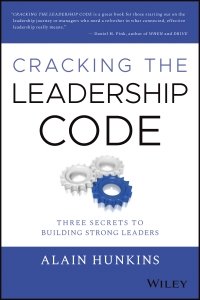
Alain Hunkins, author of CRACKING THE LEADERSHIP CODE: Three Secrets to Building Strong Leaders (CLICK HERE to get your copy) is a sought-after speaker, consultant, trainer, and coach. Over his twenty-year career, Alain has designed and facilitated seminars on numerous leadership topics, including teambuilding, communication, peak performance, innovation, and change. His clients include Wal-Mart, Pfizer, Citigroup, IBM, General Motors, and Microsoft.
Did you enjoy this post? If so, I highly encourage you to take about 30 seconds to become a regular subscriber to this blog. It’s free, fun, practical, and only a few emails a week (I promise!). SIGN UP HERE to get the thoughtLEADERS blog conveniently delivered right to your inbox!


Very True Alain. Credibility of a leader based on mutual trust is central to a successful leader-team relationship.
Teena Singh
Its one issue that we face on a daily basis. Being late is being seen as flexibility. Essential to understand its effect on your co- workers and your ones’s credibility. Alain, issue might be seen as small, but you have hit the point. CREDIBILITY is key to any relationship – leader- follower, personal or social. Very well said.