


The Right Way to Leave Your Job

Leaving your job can be difficult. Don’t make it harder than it needs to be. Be classy on the way out the door because you never know what the future will bring.
Today’s post is by Denise Dudley, author of Work it! Get In, Get Noticed, Get Promoted (CLICK HERE to get your copy).
Sometimes, it’s simply time to go—and you know it. You’ve carefully weighed the pros and cons of leaving your job, and the exit door keeps looking more and more inviting.
Perhaps you’ve looked for opportunities in your current company, and none of them appeal to you, or there aren’t any to begin with. Maybe you’re working for Attila the Hun and you know nothing’s going to change in terms of how you’re being treated. Or you’re simply really, really bored.
So now you’ve come to the conclusion that you’ll be better off leaving both your job and the company. If you’re lucky or resourceful enough to have another position lined up, go ahead and accept it, and find out how soon they want you to start. If you don’t have another job lined up, you’ll have to decide whether to quit now and start hunting for a job once you’re unemployed, or search for another position while keeping your current one.
Experts will tell you that the employed always stand a better chance of getting hired than the unemployed, and I agree with this. I’m far more comfortable hiring a person who’s logically and calmly conducting a job search than one who’s desperately looking to make next month’s rent. Still, the logistics of conducting a job search while you’re still working can be tricky. For starters, how much should you tell your boss? If you flat-out announce that you’re looking for another job, she just might tell you to start packing now. But if you keep it a secret, how do you discreetly handle phone calls from prospective employers and get time off to go to interviews?
Whether you’re leaving your job because you’ve found a better position, or you just can’t take another day, it’s oh-so-important to leave on a positive note. Do your utmost to make a good impression on one and all as you exit. The contacts you’ve made there may be valuable sources of information, jobs, or referrals down the line, so you don’t want to ruffle any feathers if at all possible. You may also end up working with or for some of these people someday, especially if your industry is small. Or you may find yourself returning to this company—it happens more often than you think! So, to the best of your ability, be the kind of person they would welcome back with open arms.
With this in mind, no matter how exuberant, impatient, fed up, relieved, resentful, or happy you may feel on the way out the door, be a living example of a team player and class act by doing the following:
Tell your boss you’re leaving before you tell anyone else at work.
Your boss will most likely feel disrespected and think less of you if he hears of your plans through the grapevine. Grant him the courtesy of hearing it from you first, and include why you’re leaving and when. Once he understands that you’re truly serious, he might come up with a very attractive offer that persuades you to stay. If not, at least he will respect your decision and the way you conduct yourself.
Give at least two weeks’ notice.
This is the standard amount of time employees agree to stay on after announcing their intention to leave. But, depending on the position you’ve held, if your employer is truly left in the lurch with just two weeks’ notice, you might agree to stay on a little longer. Don’t hang in there for more than a month, however. You may lose your resolve and end up staying indefinitely.
It’s also possible that your employer will ask you to leave the day you resign and, if so, don’t take it personally—it may be company policy. However, if you’re asked to leave immediately, know that it’s customary, but not mandatory, for employees to be paid for the full two-week period—yet another reason not to ruffle feathers upon your departure.
Tie up loose ends.
A lot of employees (possibly most of them) completely lose interest in the job on their way out and leave things in a mess for their replacements. Don’t do it. Be the kind of person who leaves things in better shape than she found them. Finish as many projects as possible, clean out your files, box up old materials for storage, and leave the place in good working order. If for no other reason, you should do it as a courtesy to your replacement.
Offer to help train your replacement.
This person deserves to start on a level playing field, so no matter how you may feel about the job or the company, help him get established. You know all the ins and outs of the job, so be a sport. Don’t make him figure everything out by himself. It’s quite simply the decent thing to do.
If asked, agree to participate in an exit interview.
Exit interviews are usually conducted by a representative of the HR department. You will be asked to evaluate, either orally or in writing, your overall experience at the company, and you might also be asked to evaluate your boss, your co-workers, the working environment, the company’s benefits package—pretty much anything related to the job you’re leaving.
It’s very important to be honest, but it’s equally important to remain professional. There’s a big difference between delivering constructive feedback to help improve working conditions at the company and bad-mouthing every last aspect of your soon-to-be former job. Be sure to stick to what’s helpful and productive.
In short, stay as positive, courteous, respectful, and helpful as you possibly can while making your get-away. In the immortal words of Ron Burgundy, “Stay classy…” Both he and I promise you’ll reap rewards for your efforts.
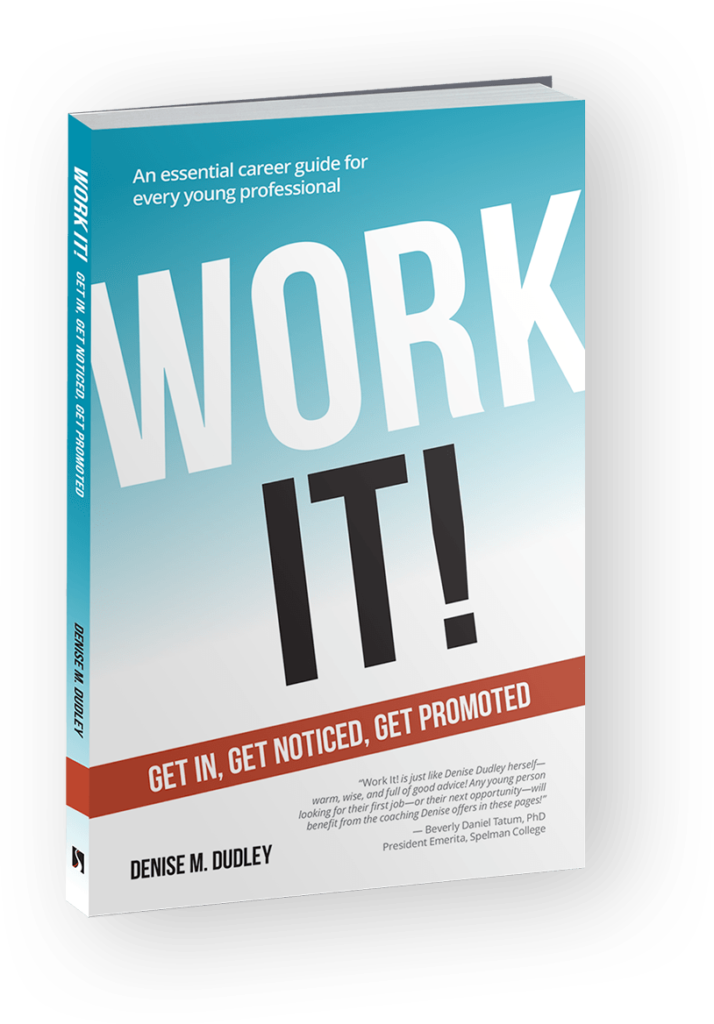
Denise Dudley is the author of Work it! Get In, Get Noticed, Get Promoted (CLICK HERE to get your copy). Learn more at denisemdudley.com.
Did you enjoy this post? If so, I highly encourage you to take about 30 seconds to become a regular subscriber to this blog. It’s free, fun, practical, and only a few emails a week (I promise!). SIGN UP HERE to get the thoughtLEADERS blog conveniently delivered right to your inbox!
Leave a Reply
Want to join the discussion?Feel free to contribute!