


Innovate or Evaporate
 Innovation requires dedicated time and a specific mindset around breaking out of old norms. Leaders can create this environment relatively easily.
Today’s post is by Dr. Rob Fazio, author of Simple is the New Smart (CLICK HERE to get your copy).
Many people talk about innovation, but very few are actually innovative, let alone create an atmosphere of innovation. Too often we get caught up in the land of “have to” rather than “would love to do.” While daily tasks need to be done to keep a business running, they do not need to be the only thing you do and certainly you want inspire people to innovate.
Innovation is about seeing things differently, so you have the opportunity to do things differently. When people think about innovation, they tend to think of it more of a revolution, like the creation of the iPhone. While the iPhone is brilliant and changed the way people communicate, operate, and live, not every innovation has to be earth shattering.
The trap people typically fall into is saying to themselves, “it’s the way we’ve always done things.” As complex as our minds are, they are also simple. Once we write a script, our minds like to stick with it, similar to a code in software development. If “it’s the way we’ve always done things” is your typical reaction, you need to ramp up on the innovation.
Simple Success Strategy: Innovation Creation
Being disruptive in a positive way is a theme for a lot of clients I work with. The idea is to rock the boat just enough to get people thinking differently, or innovatively, but no so much that you lose focus of your direction and sink the ship. Being disruptive in a positive way is about creating space for people to think differently without repercussion. There are three phases in getting started on innovation: contemplation, concentration, and creation.
Contemplation
Contemplation is when you start to ask yourself questions about the status quo. It is both an emotional and logical process. In the contemplation phase you are negotiating with yourself on if and how to move forward.
Let’s set up a simple decision flow chart. The way this works is simple. Depending on what your answer is to the first question you either move on to the next step or you stand still.
- Are you unhappy or frustrated with the way things are going?
- If no, congratulations and enjoy
- If yes, go to the next question
- Do you have the courage to do something differently?
- If no, see question 1
- If yes, go to question 3
- Do you have the capability to do something differently?
- If no, identify what you need and who can help you get started
- If yes, start and take your first step today
Concentration
Shift. Sometimes you just need to make the shift from contemplation to concentration. You made the decision that you are moving toward something else. This is where you plan and focus what you could do differently. Concentration is about focus.
The Five “Whats” of Concentration
- What if?
- What can get in the way?
- What will help me get there?
- What will I do today?
- What do I need from others?
Creation
No thinking, no parameters, just open-minded creating. The best way to get into a creation mindset is to set aside a period of time, let’s say two hours a month. In Daniel Pink’s Ted Talk about “Drive,” he describes a company that gives their employees a certain amount of time to innovate. All they need to do is to share their innovation with the group in a fun meeting. Over time, groups have come up with great and beneficial innovations that they might have missed had they not been encouraged to spend time simply creating.
In my work with financial institutions on Wall Street, I have heard every reason why this approach can’t work. I understand that you can’t give people a half-day a week to “be innovative.” However, could you give yourself a half hour a month to focus on innovation or thinking about what could be better if you had no parameters? What about presenting the idea to people you work with and seeing if you could allow for a half hour a month to focus on innovation? Think about how devoting that time now could allow you to be proactive, or innovative, rather than reactive. Reactivity often consumes much more time and has far more limited options.
Creating an Atmosphere for Innovation
If you want to be a leader that creates a culture of innovation, there are some things to pay attention to: Space and Pace. Space is setting up the rules and guidelines, such as having a process for how all ideas are given a chance. One strategy is creating a basic high-level template for idea creation. People put down some big picture ideas and answer a few questions. Then you can have people present other’s ideas at random so there is not bias based on personal relationships or positional power.
Pace is about how slowly or quickly you move through ideas, debate, and conversations. I’m personally a fan of fast. However, I realize that some times it pays off to take time to let ideas evolve. What you can do here is vary the time and pace of conversations around innovation. I would also suggest giving people time outside of a group discussion to think through their ideas by providing them with a few points to think about ahead of time. With this approach, you take advantage of those people who like to think and innovate in the moment and those that like to have some time to prepare.
Best of luck as you become an influencer in innovation creation, it’s the best way to innovation evaporation.
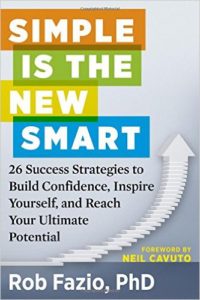 – Dr. Rob Fazio is the author of Simple is the New Smart (CLICK HERE to get your copy). He is the Managing Partner of OnPoint Advising, Inc. Rob partners with executives, athletes, and businesses internationally to guide them toward success. He can be reached at Rob@OnPointAdvising.com.
Did you enjoy this post? If so, I highly encourage you to take about 30 seconds to become a regular subscriber to this blog. It’s free, fun, practical, and only a few emails a week (I promise!). SIGN UP HERE to get the thoughtLEADERS blog conveniently delivered right to your inbox!
Leave a Reply
Want to join the discussion?Feel free to contribute!