


Why We Have Extension and Escape Fantasies and What to Do with Them

Fleeting images of extending a deadline or escaping the situation can accompany emotions that motivate successful task completion.
Today’s post is by Mary Lamia, Ph.D. and author of What Motivates Getting Things Done: Procrastination, Emotions, and Success (CLICK HERE to get your copy).
Highly successful people, according to what I have found, rarely extend a deadline or withdraw from a project, even though they may contemplate doing so. Extension and escape fantasies are simply our mind’s way of trying to find a solution for our discomfort. Even so, those who imagine the possibility of extending a deadline are often limited by anticipating humiliation about asking for more time. Instead, they give it up, and as a solution they will take action regarding the task at hand.
High achieves have learned that an extension is just another deadline at which time they would likely muse about yet another extension. Unfortunately, some people repeatedly make extension fantasies a reality, and they are more likely to fail as a result. They may also blame their failure on procrastinating rather than explore what’s really going on within them.
Contrary to popular belief, procrastination does not necessarily interfere with success, and early action does not inevitably result in a favorable outcome. Thus, procrastination should not be linked with failure, just as early action should not be tied to success.
Fantasies of escape might take the form of a natural disaster, a weather-related obstacle, or a physical ailment that might get one out of what one has to do. If only it would happen. Yet, achieving success necessitates eventually giving up our fantasies of fate or illness helping us escape the situation and get to work. Lindsey, for instance, described the enormous stress she experienced around a keynote presentation she was to deliver. She imagined being relieved of the task by circumstances beyond her control—a power outage or a broken leg. Ultimately, she refocused her attention on the presentation, imagining her prideful enjoyment as well as her relief when it was over.
Emotions are intrinsic to all human motivation, and extension or escape fantasies are imagery that occur in response to emotions that help us get things done. Both deadlines and tasks themselves can activate positive emotions like interest or excitement, but often they trigger negative emotions, such as distress or shame-anxiety.
Labeling emotions as positive or negative has little to do with their value, but instead involves how they motivate us through the ways they make us feel. Negative emotions motivate us to do something to avoid experiencing them, or they urge us to behave in ways that will relieve their effects. Consider the last time you were motivated to get something done because you wanted to avoid the shame you might feel if you failed, or because you anticipated feeling good once you were relieved of the punishing effects of negative emotion about it. In fact, negative emotions are a powerful and often misunderstood source of motivation.
However, when in the throes of a project and highly motivated by the octane that negative emotions provide, you may need a little relief. Thus, in response to emotion that you automatically interpret as a vague threat, your brain provides you with images and suggestions to help you alter the situation or circumstance—perhaps only momentarily.
On a daily basis, you encounter numerous situations where emotions are activated and your brain creates corresponding images. Your action or inaction often is based on an instantaneous assessment of what the emotion is telling you relative to what’s going on around you and the images you create. Thus, optimize your motivational style by just sitting with the images for a minute, and recognize that your creative mind is forming a scenario that corresponds with whatever emotion you are feeling at the time. Acknowledge the emotion and remind yourself that it is just trying to help motivate and prepare you for action.
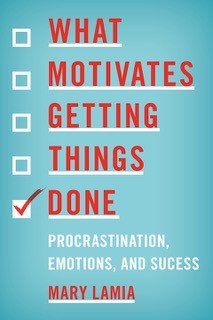
Mary Lamia is a clinical psychologist and professor in the San Francisco Bay Area. She has authored five books, including What Motivates Getting Things Done: Procrastination, Emotions, and Success (CLICK HERE to get your copy). Learn more about her at marylamia.com.
Did you enjoy this post? If so, I highly encourage you to take about 30 seconds to become a regular subscriber to this blog. It’s free, fun, practical, and only a few emails a week (I promise!). SIGN UP HERE to get the thoughtLEADERS blog conveniently delivered right to your inbox!
Photo: Escape by Martin Brigden
Leave a Reply
Want to join the discussion?Feel free to contribute!