


Simple Techniques for Creating a More Respectful Workplace

When the lines between personal and professional get blurred or people use language that makes others uncomfortable, workplace morale and performance suffer. Fortunately there are some simple phrases you can use to deal with those situations.
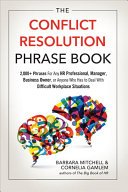
Today’s post is by Cornelia Gamlem and Barbara Mitchell, authors of The Conflict Resolution Phrase Book (CLICK HERE to get your copy).
Once, the lines around public and private were clear. Certain personal issues weren’t discussed or disclosed in a public, much less a business setting. Modern technology has blurred those lines and the respect for boundaries is eroding. Modern workplaces have become more relaxed. Boundaries and individual privacy are currently being chipped away in the modern world, not just on social media but in other forums and situations as well. Yet boundaries – those invisible lines that help define roles and manage interpersonal relationships at work – are important. They define limits – where you end and others begin.
Consider this situation. While meeting with a client, she closed the door to her office behind us. No sooner had we sat down when there was a knock on the door and it immediately burst open. The individual behind the knock didn’t wait to be invited in or be greeted by my host. He started talking with no regard or respect for my client’s privacy nor the business she was conducting. She could have been engaged in a discussion of a sensitive or proprietary nature. The intruder didn’t seem to care.
Boundaries also define limits for language and communication. In the lobby of another client’s building, I observed and heard an employee talking on her cell phone, having what sounded like a personal call. As soon as she turned the corner I heard her scream an expletive, presumably into the phone. All I could think was, “What if I were a client of this firm? Would I think twice about my business relationship?” I only hope someone counseled her.
Even in non-hierarchical organizations, boundaries at work establish clarity for job responsibilities and relationships. They define who’s responsible for giving job assignments and feedback and help to foster accountability. If leaders in an organization are committed to building a corporate culture where fairness and respect for people is a central tenet, then they will encourage boundaries because they lead to civility and professionalism in the workplace.
Organizations should take heed of this trend of eroding boundaries in workplaces and in society. When boundaries are crossed, it can have detrimental effects on organizations. When boundaries are not clearly defined or are violated, the result could be an unhealthy working environment with poor performance, reduced morale and motivation, workplace bullying, harassment and legal liability.
What should you do when boundaries are crossed? Here are some phrases that employees and leaders can use:
- “I’m not comfortable talking about personal issues such as problems with your spouse/partner or personal finances.”
- “Gossiping about our co-workers’ personal lives is not professional. Please stop.”
- “That’s my personal business. I really don’t want to talk about it.”
- “You said some things earlier that were personal which made me feel embarrassed and uncomfortable. Those types of comments don’t belong at work.”
- “I know that this situation is upsetting for you, but we need to have this discussion in a more private place. Let’s step into an office.”
- “If you want to have a conversation, please honor my personal space and don’t get so close when you speak to me.”
- “Those types of comments/jokes that you are making don’t belong in the workplace. Let’s keep things professional.”
If organizations are committed to respectful workplaces, they will create an environment where everyone can respectfully confront unprofessional behavior, or worse. This means that they can speak up to anyone, including members of management or the leadership team. The following are some helpful phrases for dealing with those uncomfortable situations:
- “You probably intended that joke to be funny, and it may be among your friends. But jokes about (e.g. someone’s looks, sexual orientation) don’t belong at work.”
- “It’s unacceptable to tell offensive jokes or send/forward offensive e-mails.”
- “I don’t appreciate (that type of humor, those remarks or comments).”
- “It’s not appropriate to be making jokes at someone else’s expense.”
- “If you’re not sure if language or behavior is offensive, then err on the side of caution and don’t say/do it.”
Business leaders should reinforce professional and civil behavior and lead by example. Set limits and don’t accept behavior that does not support the organizations’ values of ethics and integrity. Insist on professional courtesy in the workplace – behavior that cultivates mutual respect and consideration for others.
 – Cornelia Gamlem and Barbara Mitchell are the authors of The Conflict Resolution Phrase Book (CLICK HERE to get your copy) and The Essential Workplace Conflict Handbook (CLICK HERE to get your copy). Gamlem is President of GEMS Group ltd, Mitchell is Managing Partner of The Mitchell Group LLC
Did you enjoy this post? If so, I highly encourage you to take about 30 seconds to become a regular subscriber to this blog. It’s free, fun, practical, and only a few emails a week (I promise!). SIGN UP HERE to get the thoughtLEADERS blog conveniently delivered right to your inbox!
Leave a Reply
Want to join the discussion?Feel free to contribute!